

QT12-15 Fully Automatic Block Machine Manufacturer for Sale
The biggest bottleneck in your block plant is not the machine speed, but the mold changeover time.
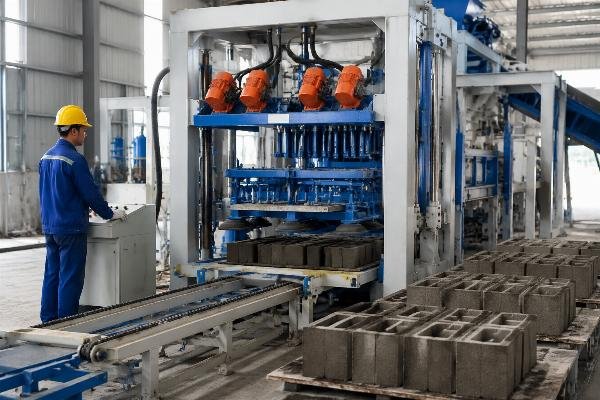
Successful sourcing of a fully automatic block machine requires aligning the QT series capacity with your specific mold inventory, shift patterns, and actual daily output needs rather than simply selecting the highest tonnage model available. Most buyers over-specify equipment, leading to extended payback periods and operational inefficiencies caused by poor production planning rather than mechanical limitations.
I still remember the silence on the phone line when a client in West Africa called me three months after installation. He had purchased a high-output stationary line, convinced that maximum tonnage equated to maximum profit. The machine was a beast, capable of churning out thousands of units per hour. But he had only ordered standard paver molds. Every time he needed to switch from interlocking bricks to curbstone, the line sat idle for six hours. He blamed the hydraulic system. He blamed the PLC. In reality, the machine was performing exactly as designed; his planning was the failure. That project taught me that the hardware is only half the equation. The rest is logistics, mold management, and understanding the rhythm of your local market. This perspective drives how I now approach every inquiry for a fully automatic block machine sourcing project.
When you look at specifications, it is easy to get lost in hydraulic pressure ratings and motor power. But the real decision lies in matching the machine’s theoretical capacity with your practical constraints. If you are running two shifts with a limited variety of products, a massive QT12-15 might sit underutilized while a smaller unit runs at optimal efficiency. Conversely, if you have a diverse product mix and high labor costs, automation becomes critical. Let’s break down how to make this choice without guessing.
Why Your Project Needs a Capacity Audit, Not Just a Machine Quote?
Most procurement processes start with a request for quotation based on a desired daily output number. This is a fundamental error. A machine quote tells you what the equipment can do in a vacuum; a capacity audit tells you what your business actually needs. The discrepancy between these two figures is where profit margins disappear.
In my previous role procuring for infrastructure contracts, I saw countless tenders specify "maximum capacity" as the primary metric. This ignores the reality of production floors. A machine might be rated for twelve thousand blocks per day, but if your pallet circulation system cannot keep up, or if your mixer batch size does not match the molding cycle, you will never hit that number. [NEED_CITE: industry benchmarks for production line balance efficiency]
Consider the shift pattern. Are you running eight hours, sixteen, or twenty-four? A QT8-15 running continuously with efficient mold swaps often outperforms a QT12-15 that suffers from frequent stoppages due to complex mold changes. The audit must include an analysis of your product mix. If eighty percent of your sales are standard hollow blocks, you need a machine optimized for quick, repetitive cycles. If you are producing decorative pavers with multiple colors and shapes, you need a machine with advanced feeder systems and easy-access mold clamping, even if the raw tonnage is lower.
This is why fully automatic block machine sourcing should begin with a review of your sales forecast and inventory turnover, not just a catalog page. A supplier who asks about your pallet supply and mixer capacity before quoting the machine price is likely thinking about your long-term viability. One who only asks about your budget is selling you metal, not a solution.
QT12-15 vs. QT8-15: Which One Actually Fits Your ROI Model?
The choice between the QT12-15 and the QT8-15 is the most common dilemma for investors. On paper, the QT12-15 is superior. It has larger hydraulic cylinders, a bigger frame, and higher theoretical output. But ROI is not calculated on paper; it is calculated on cash flow.
Let’s look at the structural differences through a buyer’s lens. The QT12-15 is designed for high-volume, continuous production. It consumes more power and requires a more robust foundation. The QT8-15 is more compact, easier to install, and often sufficient for mid-sized markets. The key differentiator is not just speed, but flexibility and initial capital outlay.
| Feature | QT8-15 Series | QT12-15 Series |
|---|---|---|
| Target Production Volume | Medium | High |
| Mold Changeover Complexity | Moderate | Higher due to size |
| Initial Investment | Lower | Significantly Higher |
| Power Consumption | Standard | Elevated |
| Ideal Product Mix | Limited variety, high repetition | Diverse mix, large scale |
| Space Requirement | Compact | Extensive |
A startup in Southeast Asia once chose the QT8-15 despite having the budget for the larger model. They anticipated a gradual market entry. By starting smaller, they kept their fixed costs low. When demand spiked, they added a second line rather than upgrading one massive machine. This modular approach allowed them to reach break-even in a fraction of the time it would have taken with a single, underutilized QT12-15. [NEED_CITE: case studies on modular expansion in manufacturing startups]
Conversely, a large contractor in the Middle East required specific interlocking paver molds with color feeders for a government road project. The scale of the tender demanded the throughput of a QT12-15. For them, the higher initial cost was justified by the contract volume and the need to meet strict delivery deadlines. The machine’s ability to handle complex molds with automated feeding was critical.
The lesson here is that the "better" machine is the one that matches your current cash flow and future scalability. Over-investing in capacity you cannot fill is a faster route to insolvency than under-investing in capacity you can gradually expand. When engaging in fully automatic block machine sourcing, always model your ROI based on conservative output estimates, not maximum theoretical limits.
What Hidden Costs Kill Your Block Plant Profitability?
The purchase price of the machine is merely the entry fee. The ongoing operational costs determine whether your plant survives. Many buyers focus exclusively on the hardware and neglect the ecosystem that supports it.
Pallet circulation is the most overlooked component. Concrete blocks need time to cure. If you do not have enough pallets to keep the machine running while the previous batches cure, your expensive automatic line will sit idle. I have seen plants with top-tier machines stop production because they ran out of pallets. The cost of additional pallets can equal a significant portion of the machine price, yet it is rarely included in the initial quote.
Spare parts availability is another critical factor. A hydraulic hose burst should not shut down your plant for weeks. Verify that the supplier uses standard, globally available components for critical systems like pumps and valves. Proprietary parts create dependency and downtime. [NEED_CITE: best practices for industrial maintenance spare parts management]
Operator training is often treated as an afterthought. A fully automatic machine is only as good as the person monitoring the PLC. If your operators do not understand how to troubleshoot minor sensor errors or adjust the vibration frequency, you will face consistent quality issues. Investing in comprehensive training during installation pays dividends in reduced waste and higher uptime.
These hidden costs—pallets, spare parts, and training—are where the true value of a partner emerges. A supplier who provides detailed guidance on pallet quantity calculations and offers remote diagnostic support is protecting your investment. This depth of support is a crucial element of effective fully automatic block machine sourcing.
How to Verify Supplier Claims Before Signing the Contract?
In the global market, claims are easy to make; verification is hard. Before committing to a purchase, you must move beyond brochures and engage in due diligence. The goal is to separate marketing rhetoric from engineering reality.
First, check for recognized certifications. CE and SGS certifications are not just badges; they indicate that the machine has undergone third-party testing for safety and quality standards. [NEED_CITE: importance of CE certification for machinery imports] Request to see the actual certificates, not just logos on a website. Verify the certificate numbers with the issuing bodies if possible.
Second, ask for video proof of similar installations. Do not settle for promotional videos with dramatic music. Ask for raw footage of a machine operating in a environment similar to yours. Look for details: Is the floor clean? Are there workers actively managing the line? Is the output consistent? A supplier confident in their product will provide unedited clips of real-world operations.
Third, review the scope of turnkey services. Installation and commissioning are complex tasks. Ensure that the supplier provides on-site engineers who speak your language or have access to reliable translation. Clarify what is included in the training. Will they train your maintenance team on hydraulic repairs? Will they provide a detailed manual in your local language?
Finally, assess their communication during the pre-sales phase. Do they ask technical questions about your raw materials and site conditions? Or do they just send a price list? A partner who engages in technical dialogue is more likely to support you when issues arise post-sale. This level of transparency is the hallmark of reliable fully automatic block machine sourcing.
Conclusion
Buying the biggest machine is not a strategy; it is a gamble.
Align your equipment choice with your actual production needs, mold inventory, and financial capacity. Focus on the entire production ecosystem, including pallets and training, rather than just the machine itself. Verify supplier claims through rigorous due diligence and prioritize partners who offer transparent, technical support. By approaching fully automatic block machine sourcing with a focus on operational reality rather than theoretical specs, you build a foundation for sustainable profitability.
Leave a Reply