

Description
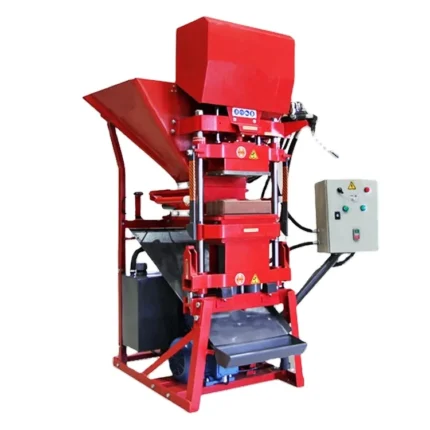
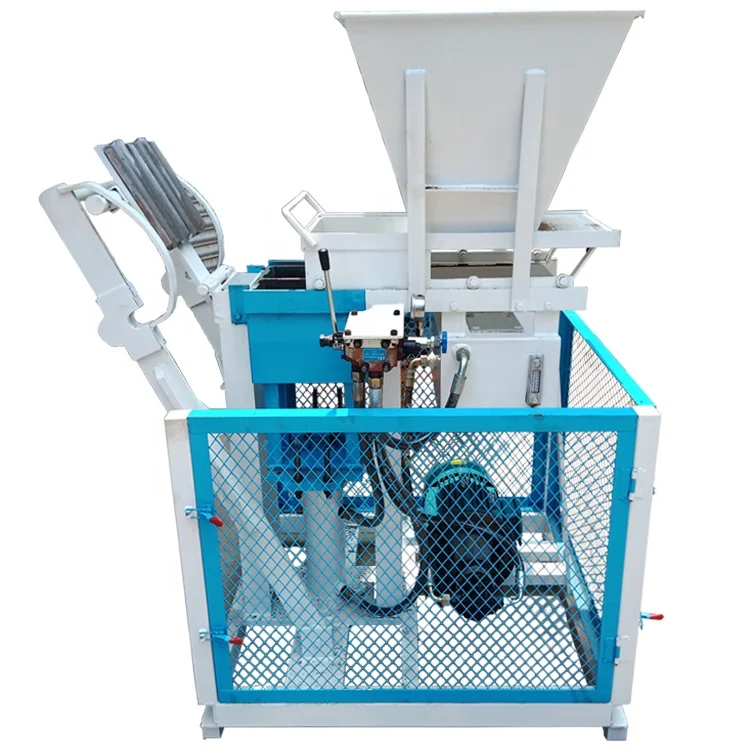
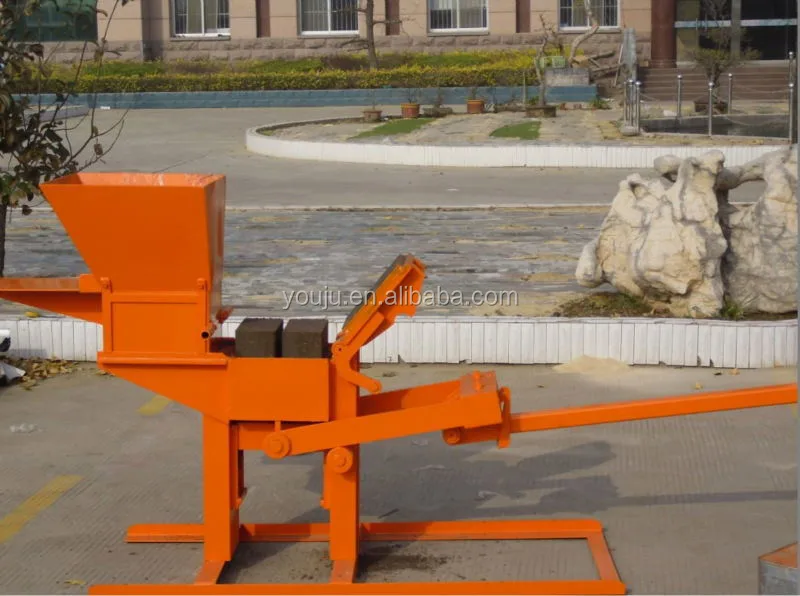
Manual Baseline Meets PLC Precision — the LY2-40 defines the starting cycle rhythm that an automatic interlocking brick machine PLC controlled system must consistently beat, removing operator variance from every press stroke.
Technical Specifications
| Parameter | Value |
|---|---|
| Model | LY2-40 |
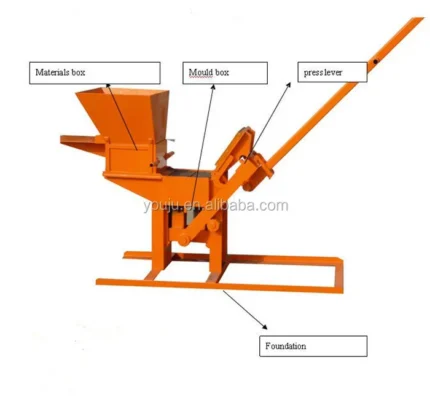
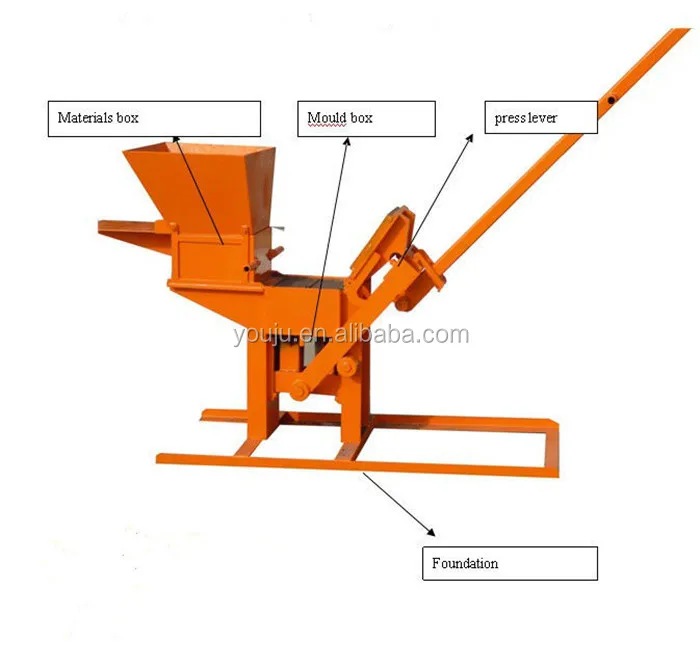
| Product Type | Manual Clay Interlocking Brick Making Machine |
| Rated Power | No Power, Completely Manual |
| Voltage & Frequency | Not applicable |
| Control System | Manual lever operation |
| Overall Dimensions (L×W×H) | 1600 × 700 × 1200 mm |
| Net Weight | 200–240 kg |
| Molding Cycle | 30–40 s |
| Lifting System | Manual |
| Mobility | Steel wheels for on-site repositioning |
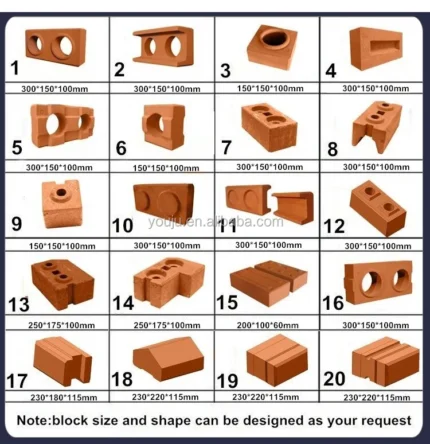
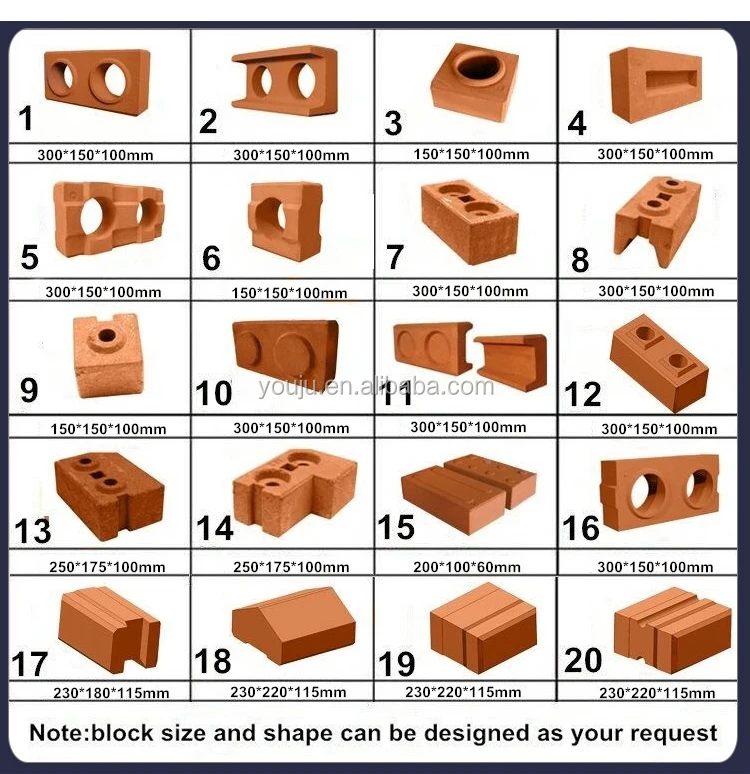
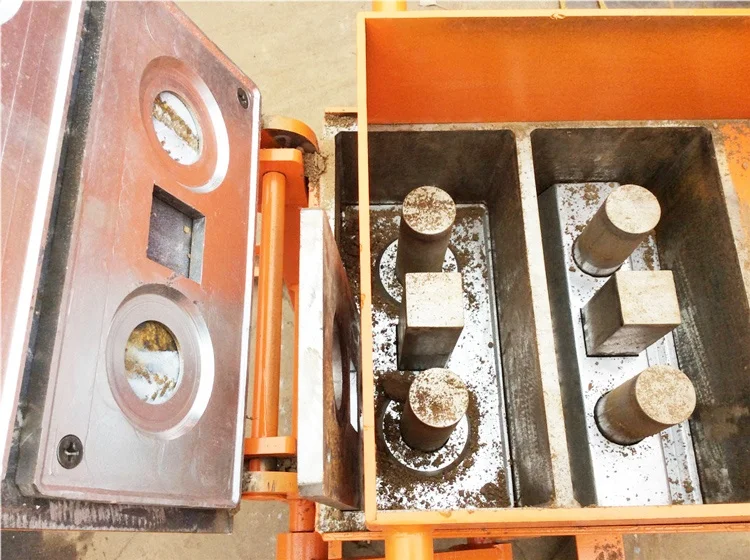
| Mould Change | Moulds changeable for various block formats |
| Basic Equipment Supplied | JFA-1 Mixer or JQ350 Mixer |
| Automation Level | Fully manual, no power required |
| Output Capacity | 400–1000 pcs/day (basis not stated in source) |
| Warranty | 1 Year |
Application Suitability
| Application | Material or Output |
|---|---|
| Off-grid construction sites | Interlocking clay and soil bricks without electrical supply |
| Small-scale community block plants | Soil-cement interlocking bricks for local housing |
| On-site housing project production | Clay interlocking bricks where grid power is unreliable |
| First-line proof of concept | Manual pressing before committing to PLC-controlled automation |
What "400 to 1000 Pieces per Day" Actually Means on the Shop Floor
Daily output on a manual press depends entirely on operator rhythm, mould release timing, and the soil-cement mix sticking cleanly to the cavity walls.
I once watched a crew run a manual soil-brick press for a full shift. The first two hours looked promising, then fatigue set in and cycle time drifted from thirty seconds past fifty. Block density dropped because the lever was not being pulled with the same force each stroke. When that crew evaluated an automatic interlocking brick machine PLC controlled system later, the real comparison was not machine price — it was the cost of inconsistent block strength across a thousand-unit run [NEED_CITE: field variability in manually operated soil brick presses].
Where the Manual Cycle Defines the Automation Target
The LY2-40 completes a molding cycle in thirty to forty seconds, but that figure assumes an experienced operator maintaining steady rhythm. Every second of variance compounds across a shift. When a buyer moves to an automatic interlocking brick machine PLC controlled configuration, the PLC locks the cycle time to a fixed value — the press does not tire, the vibration duration does not shorten on the eight-hundredth brick, and demolding delay stays within the window the mould was designed for.
The Stacking Bottleneck Manual Operators Never See
On a purely manual press, two workers typically handle pallet feeding and offloading while one operates the lever. Output stacks by hand beside the machine. The real ceiling is not pressing speed but how fast cured bricks can be moved to the drying area. Adding an automatic pallet feeder and stacker — even while keeping the press itself semi-automatic — removes that bottleneck and lets the press cycle govern throughput instead of human carrying speed [NEED_CITE: labour allocation in small-scale block production lines].
Reading the Specs That Decide Block Strength
The LY2-40 relies on manual lever force to compact the soil-cement mix. On an automated press, hydraulic pressure and vibration force must be matched to the buyer’s specific aggregate and cement ratio. A mix with high clay content needs longer vibration to release trapped air, while a sandy mix requires shorter, sharper pulses to avoid segregation. The mould cavity depth and the interlocking lug profile further dictate how much compaction energy reaches the brick’s core — change the mould format without adjusting the PLC recipe, and the lugs crack during demolding. Moulds on the LY2-40 are changeable for various block formats, and that flexibility must carry forward into any automated line where recipe storage in the PLC keeps each format’s parameters intact.
The Hidden Cost of Skipping the Voltage Conversation
Buyers often finalise machine selection before confirming site voltage and frequency. A press configured for 380V/50Hz arrives at a 440V/60Hz site and the motor runs hot within the first week. The PLC may boot but the HMI display language was never specified, so the operator navigates menus in a language they cannot read. Commissioning stalls while the control cabinet is rewired and the PLC program is reloaded — delays that could have been prevented with a single confirmation document before production started [NEED_CITE: voltage and frequency standards by export market].
Why Buyers Source the Automated Line Here
Block machinery remains the single focus across every configuration tier, so the press, mould, pallet, and handling equipment are specified as one matched system rather than assembled from separate suppliers. Configuration is set against the buyer’s actual mix design and local aggregate, not a catalogue default. Mould design covers the interlocking formats the buyer’s market actually sells, including custom drawings. Automation level is selectable — a buyer running the LY2-40 today can phase in a semi-automatic pallet feeder first, then add stacking and cubing later without replacing the press. Installation support includes on-site commissioning and operator training so the PLC recipes are verified against the buyer’s own soil samples before handover.
Documentation & Verification
- Machine specification sheet listing hydraulic pressure and vibration force per block format
- Line layout and capacity calculation stating the interlocking brick format assumed
- PLC program backup with recipe parameters for each mould in the buyer’s range
- Voltage, frequency, and HMI display language confirmation signed before production
- Factory test record on the buyer’s soil-cement mix before dispatch
- Mould drawing and format list with interlocking lug dimensions
Installation, Commissioning & Support
- Foundation pad sized to the 1600 × 700 mm footprint with anchor bolt template provided
- Dedicated circuit rated for the press motor plus mixer, confirmed against site supply
- Machine arrives assembled on steel wheels; positioning and levelling completed same day
- PLC parameters tuned on-site using the buyer’s local clay and cement ratio
- Operator training covers mould change procedure, recipe selection, and daily greasing points
- Wear parts list supplied with first-order spare mould liners and hydraulic seals
Before You Request a Quote
Send us your target interlocking brick dimensions, the soil-cement ratio you plan to use, and the daily output you need to meet project deadlines. Confirm your site voltage, frequency, and preferred PLC display language so the control cabinet is built right the first time. If you already run manual presses like the LY2-40, tell us which formats sell best in your market so the mould package and automation tier are sized to your actual product mix.
Frequently Asked Questions
Q: How is daily output verified per interlocking brick format, and what cycle time is assumed?
A: Capacity calculations must state the exact brick dimensions, mould cavity count, and material type behind the figure. A cycle time of thirty to forty seconds on the LY2-40 is a manual baseline; automated lines lock cycle time through the PLC, but output still varies with brick thickness and demolding characteristics of the local soil mix.
Q: What PLC brand, HMI language, and remote diagnostics options are available?
A: PLC and HMI are configured to the buyer’s preferred control brand and display language before production. Remote diagnostics allow cycle-time adjustments and fault tracing without a site visit. Language and communication protocol are confirmed in writing during the quotation stage to prevent commissioning delays.
Q: Which supporting stations can be phased in without replacing the press?
A: An automatic pallet feeder can be added first to eliminate manual pallet handling. A stacker follows once output volume justifies the investment. Batching accuracy improves with a PLC-controlled weigh batcher. Each station is specified to match the press cycle time so no station waits on another.
Q: How is block-to-block strength consistency measured once PLC batching is installed?
A: The PLC stores a recipe for each soil-cement ratio, controlling water addition, mixing time, and compaction pressure per cycle. Consistency is verified through periodic compressive strength tests on cured samples. Recipe parameters are adjusted during commissioning using the buyer’s actual raw materials.