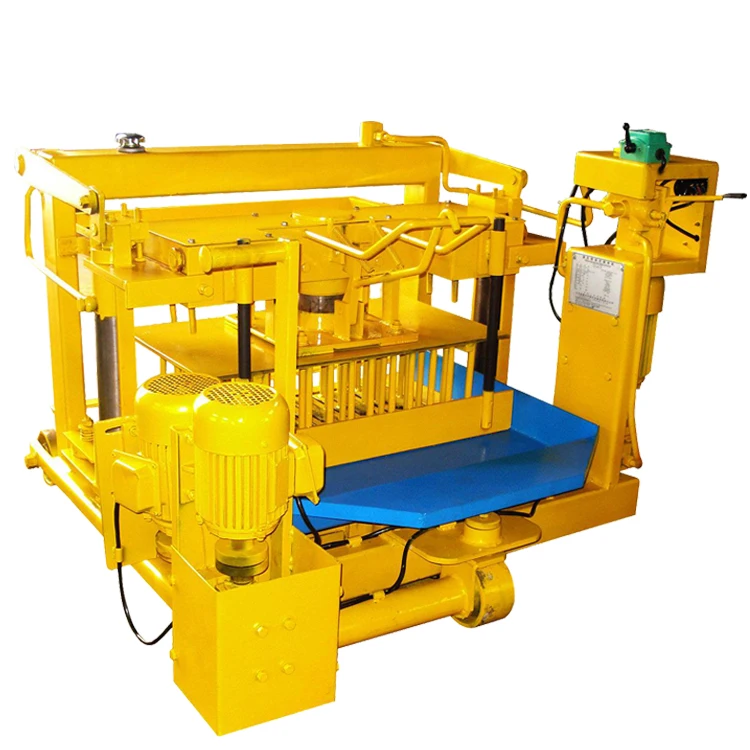
Description
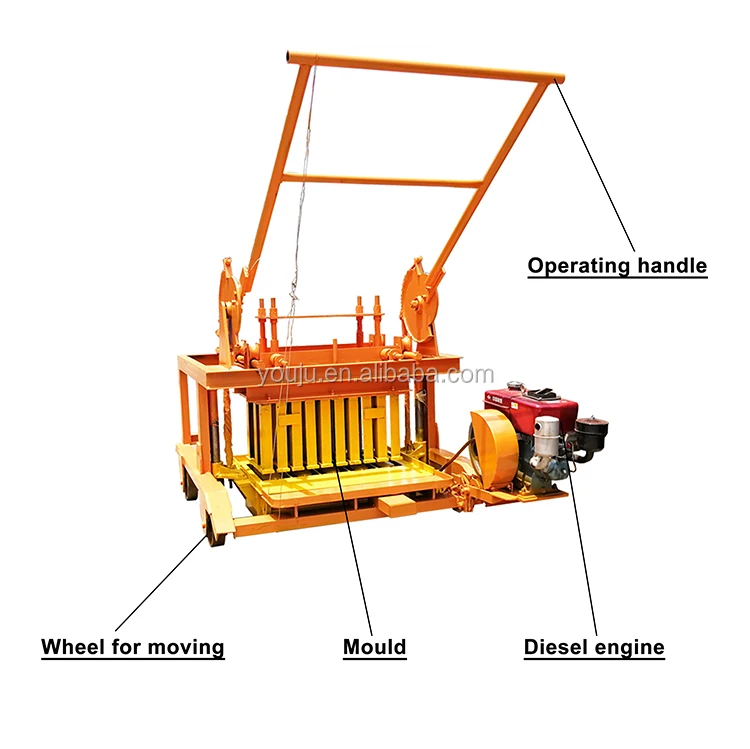
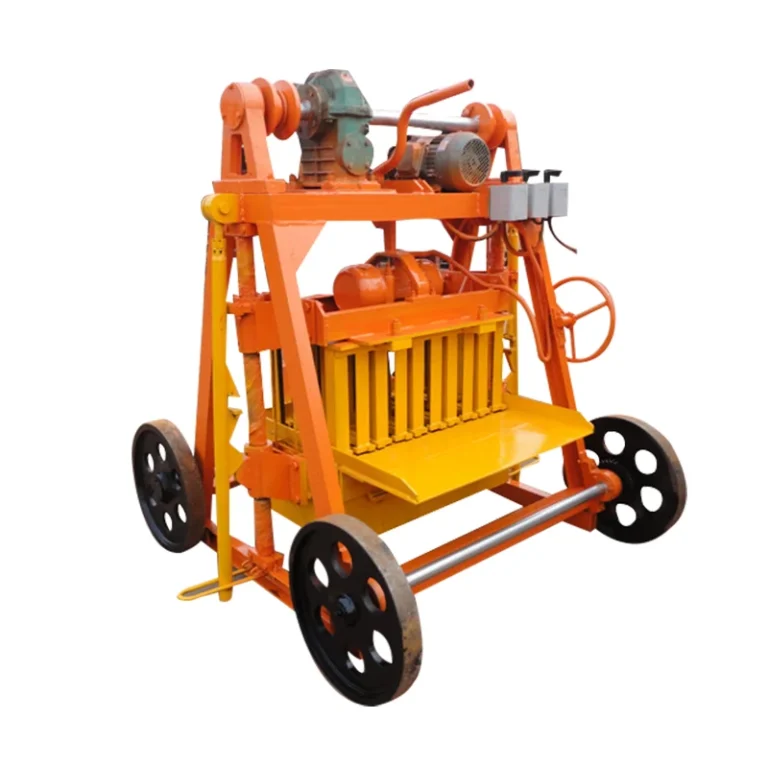
Hydraulic control calibration — the QMY4-30 mobile block machine uses a 6-8MPa adjustable pressure range paired with moulding vibration at 4500 r/min, allowing operators to match settings to their local aggregate rather than relying on catalogue defaults.
Technical Specifications
| Parameter | Value |
|---|---|
| Model | QMY4-30 |
| Product Type | Mobile Cement Block Making Machine |
| Dimension of Host Machine | 1300 × 1500 × 1000 mm |
| Rated Pressure | 6–8 MPa |
| Main Vibration Form | Moulding Vibration |
| Vibration Frequency | 4500 r/min |
| Vibration Force | 28.6 KN |
| Pallet Size | No pallet required |
| Molding Cycle | 15–25 s (basis to be confirmed for specific block format) |
| Overall Power | 5.95 kW |
| Demolding Method | Hydraulic |
| Mixer Model | JQ350 |
| Molding Area | 400 × 800 mm |
| General Water Consumption | 4 T/day |
| Total Mass | 950–1000 kg |
| Automation Level | Automatic |
| Key Features | PLC controlled mobile block machine, no-pallet operation, hydraulic demolding, CE and ISO 9001 compliant |
Application Suitability
| Application | Material or Output |
|---|---|
| Hollow block production on remote project sites | Crushed stone, sand, cement, fly ash |
| Solid block manufacturing for housing developments | Sand, cement, gravel, slag |
| Interlocking brick production for landscaping | Cement, dust, fine aggregate |
| Paver production for squares and gardens | Crushed stone, cement, sand |
| On-site contractor block making | Local aggregate with variable composition |
What the Molding Cycle Number Really Means
An automatic mobile block machine listing a 15–25 second cycle without stating which block format that figure assumes is incomplete information.
The cycle time is only meaningful when tied to a specific block format, mix design, and vibration setting. A hollow block with thin walls demolds faster than a dense solid paver, and the PLC controlled mobile block machine must be programmed accordingly. [NEED_CITE: concrete block cycle time and format relationship]
I have seen buyers order a machine based on sample capacity figures, only to find daily output far below expectation once the machine arrives and they run their local material. One mobile block machine shipped to a Middle East site with high-clay river sand had to be completely retuned on arrival — vibration force and molding cycle could not match the original factory test, and actual daily output dropped sharply from the sample claim. The lesson was clear: always confirm the block format and aggregate before trusting any cycle time.
How PLC Control Removes Operator Guesswork
On a no-pallet mobile machine, the operator handles raw material feeding and finished block placement manually, but the pressing cycle itself must remain consistent. The PLC on this PLC controlled mobile block machine stores cycle parameters for each block format — vibration duration, hydraulic pressure hold time, and demolding speed — so every press cycle runs identically regardless of shift changes or operator fatigue. This batch-to-batch consistency is what separates acceptable blocks from structural rejects.
Matching Automation Level to Site Conditions
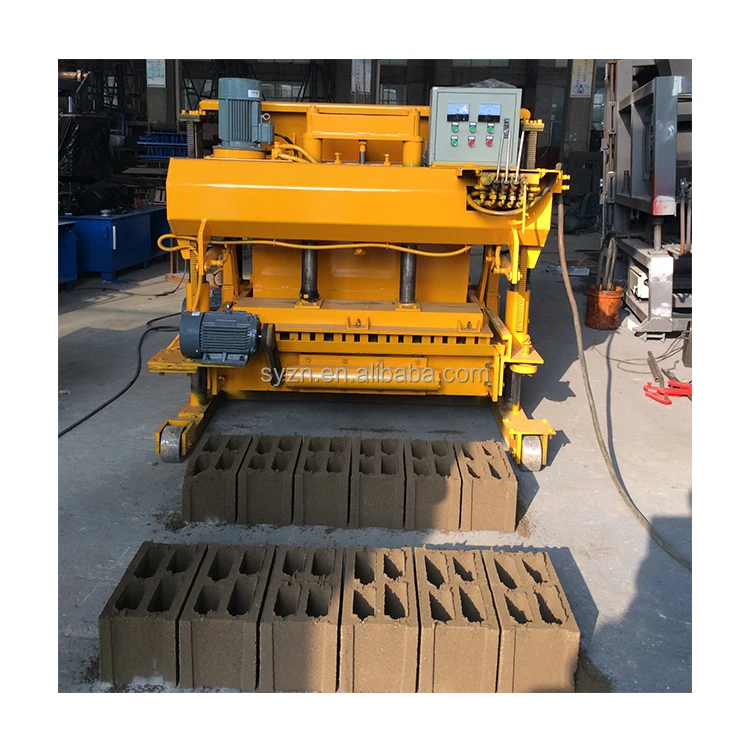
The QMY4-30 operates without pallets, meaning freshly pressed blocks are demolded directly onto the ground or a prepared surface. This design suits contractors moving between project sites who cannot invest in pallet inventory or curing rack systems. The automatic control handles the pressing sequence, while material handling remains a manual operation — a deliberate trade-off that keeps capital cost low for first-plant entrepreneurs. [NEED_CITE: mobile block machine site requirements and labor allocation]
Reading the Specifications for Real Production Impact
The 6–8 MPa hydraulic pressure range and 28.6 KN vibration force work together to compact the mix into a dense block. Pressure alone without adequate vibration leaves voids inside the block, while vibration without sufficient pressure fails to achieve structural density — the PLC must sequence both correctly for the chosen mix. The 4500 r/min moulding vibration frequency is tuned for fine-to-medium aggregate, and buyers running coarse gravel may need to adjust the mix gradation rather than expect the machine to compensate. The 5.95 kW overall power draw reflects the no-pallet design, which eliminates conveyor and pallet-return motors. For sites running on temporary power supply, this modest electrical load is manageable with a standard generator set. The 400 × 800 mm molding area determines the maximum block footprint per cycle, which directly governs how many blocks are produced per press — a critical calculation often left out of generic capacity claims.
What Happens When Voltage and Language Are Not Confirmed
A machine arriving with the wrong voltage rating or a PLC display in an unreadable language cannot be commissioned. [NEED_CITE: voltage and frequency standards by export market] The control system sits idle until the correct transformer or panel is sourced, and the project timeline slips while the block machine sits on site unpowered. Buyers who skip the voltage and language confirmation step before shipment absorb this delay and the cost of a local electrician reconfiguring the control cabinet.
Why This Machine Is Specified As a System
Block machinery is our single focus, so the QMY4-30 is delivered with its JQ350 mixer matched to the molding area throughput. The hydraulic demolding system is calibrated to the vibration force specification rather than assembled from separate suppliers. Configuration is set against the buyer’s actual mix design and target block format, not a catalogue default. Custom mould design is available when the buyer’s market requires a non-standard format. The no-pallet design is intentional — it eliminates the need for pallet investment, curing rack infrastructure, and forklift handling, keeping the mobile setup lean for on-site production.
Documentation & Verification
- Line layout drawing showing machine footprint and mixer placement on your project site
- Capacity calculation stating the specific block format and mix design assumed
- PLC program backup with control language confirmed before dispatch
- Hydraulic and electrical schematic for on-site troubleshooting
- Factory test record on your block format and aggregate sample
- Operation and maintenance manual with wear parts list
Installation, Commissioning & Support
- Level compacted ground required within the 500 m² factory area for stable operation
- Electrical supply matching the 5.95 kW total power at confirmed voltage and frequency
- Machine shipped assembled with mixer; hydraulic connections verified on arrival
- PLC parameters set for buyer’s confirmed block format during commissioning
- Operator training covering hydraulic demolding sequence and moulding vibration adjustment
- Wear parts list with replacement intervals for hydraulic seals and vibration components
Before You Request a Quote
Send us the block format your market actually sells, your daily output target, and the type of local aggregate available at your project site. Confirm the voltage, frequency, and preferred PLC display language for your country. If you have existing mixers or material handling equipment on site, let us know so we can advise whether the JQ350 mixer is necessary or if your current equipment can feed the machine.
Frequently Asked Questions
Q: How does the automation level on the QMY4-30 affect daily output consistency?
A: The PLC controls the vibration duration, hydraulic pressure hold, and demolding speed for each cycle, removing operator variation from the pressing sequence. Material feeding and finished block handling remain manual on this no-pallet design, so daily output depends on crew organization as well as machine cycle speed. Consistency improves where the press cycle is concerned, but overall throughput still requires disciplined site management.
Q: What is the process for confirming voltage, frequency, and PLC language before shipment?
A: We request the buyer’s local electrical standard and preferred display language during the inquiry stage. The PLC program is then compiled with the correct language and the electrical panel is wired to the specified voltage and frequency. A confirmation document is sent before production so the buyer can verify all settings match their site conditions before the machine leaves the factory.
Q: How do you verify capacity for a specific block format?
A: We run a factory test using the buyer’s block format and, where possible, a sample of their local aggregate. The molding cycle time recorded during this test is the figure used in the capacity calculation, not the generic catalogue value. This ensures the daily output figure reflects the actual block being produced rather than an assumed standard format.
Q: Can the QMY4-30 be upgraded from semi-automatic to fully automatic operation?
A: The QMY4-30 is configured as an automatic machine with PLC-controlled pressing cycles. The no-pallet design means block handling after demolding is a manual operation by design, since there is no pallet conveyor or stacking system to automate. Buyers needing fully automatic handling should consider stationary machines with pallet systems and automatic stackers.