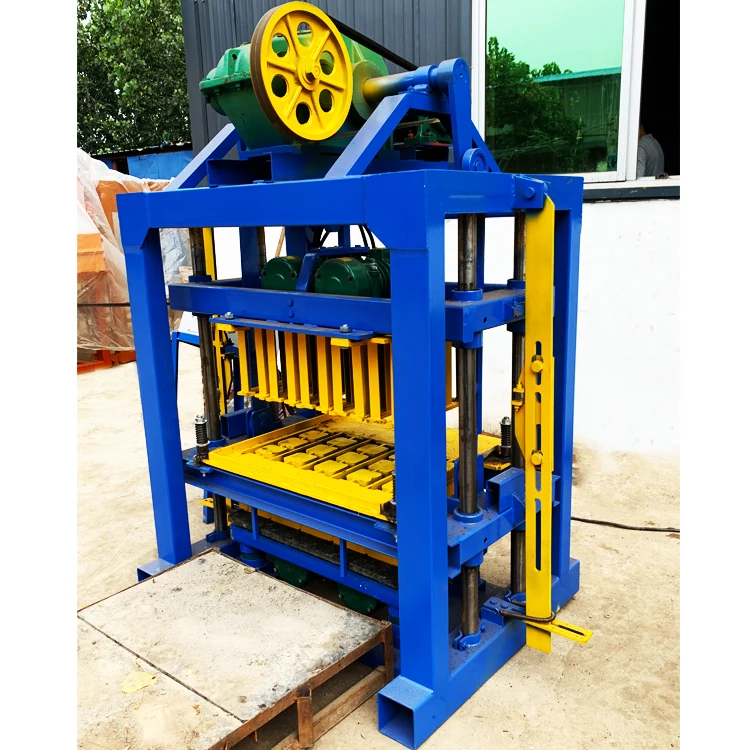
Description
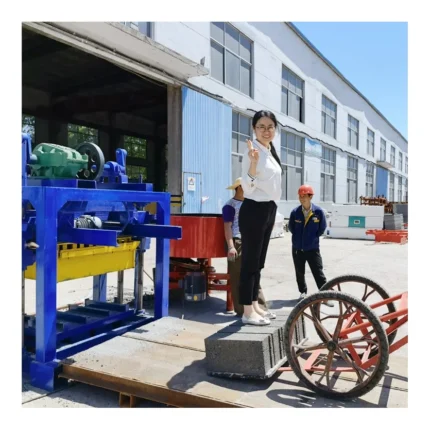
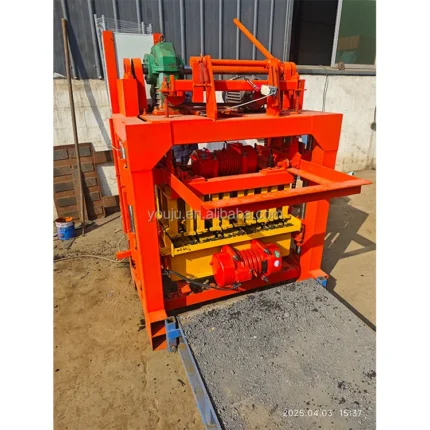
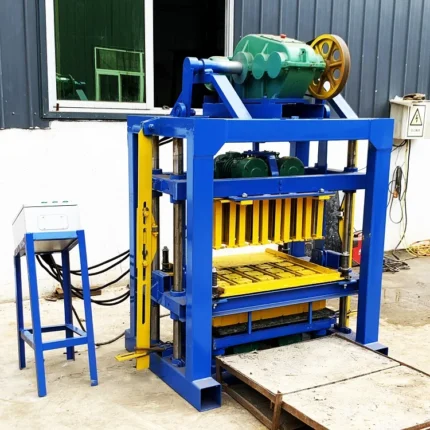
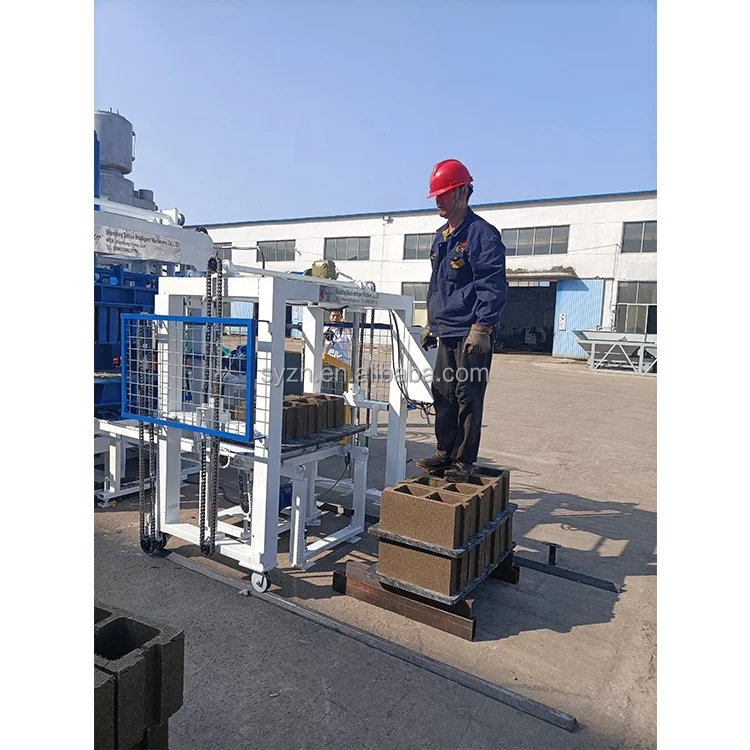
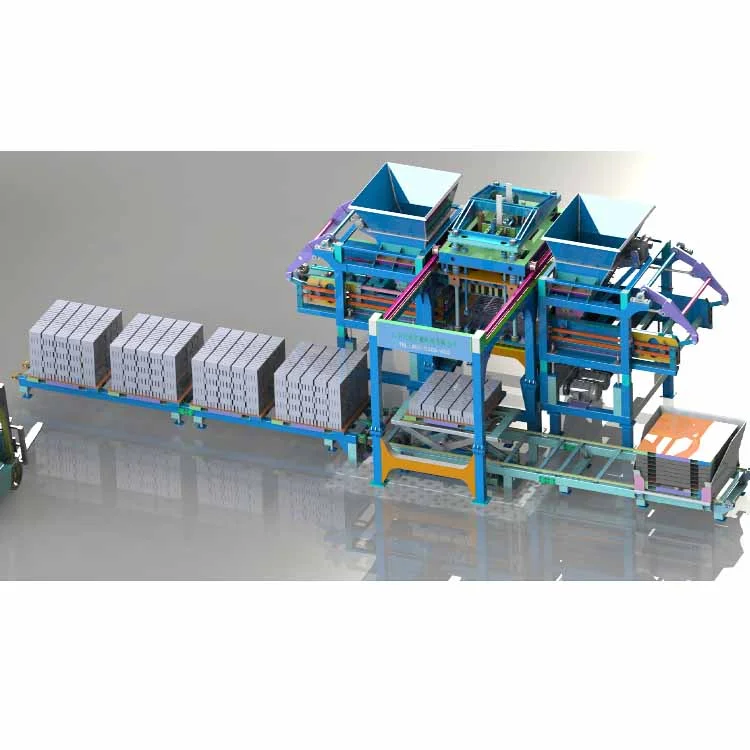
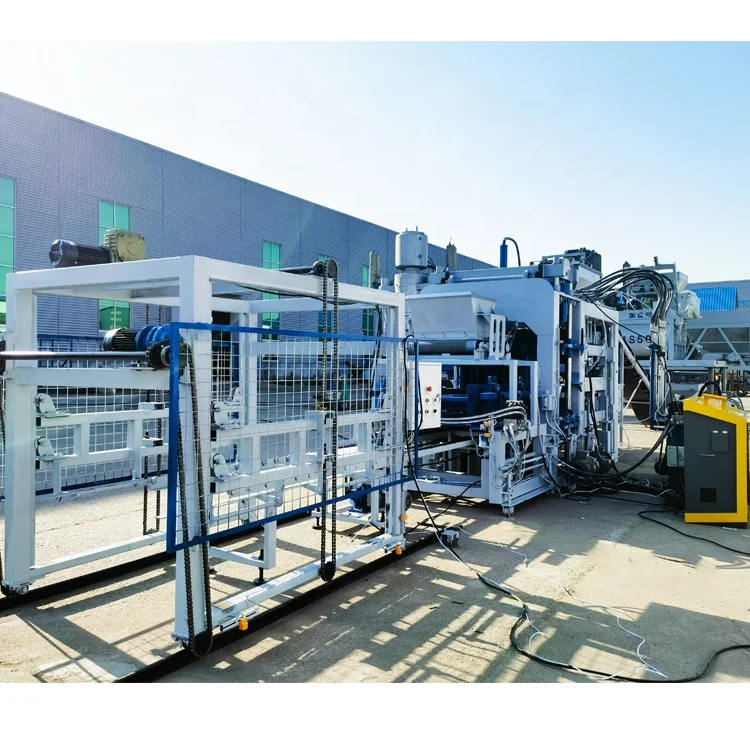
Upgradable automation — the QTJ4-40 semi-automatic block machine ships with PLC readiness, letting a first-time plant owner begin with manual pallet handling and add automatic stacking and cubing as volume demands grow, without replacing the core press.
Technical Specifications
| Parameter | Value |
|---|---|
| Model | QTJ4-40 |
| Product Type | Semi-Automatic Concrete Block Making Machine |
| Overall Dimensions (L×W×H) | 1350×1460×1800 mm |
| Net Weight | 1.2 T |
| Rated Power | 10.4 kW |
| Molding Cycle | 40 s |
| Vibration System | Bed mould vertical vibration + upper mould compression vibration |
| Pallet Size | 850×450×20 mm |
| Pallet Material Option | Fiberglass or locally sourced wooden pallet |
| Automation Level | Semi-automatic, selectable upgrade to PLC-controlled stacking and cubing |
| Voltage | Configurable to buyer’s local voltage and frequency (to be confirmed before production) |
| Mould Formats | Hollow, solid, paver — standard 8", 6", 5", 4"; other sizes on request |
| Assembly State | Host machine + block mould + pallets (mixer optional) |
| Raw Materials | Concrete, sand, cement, fly ash, lime, gypsum |
| Output (Hollow 400×200×200 mm) | 4 pcs/mould, 360 pcs/hour, 2880 pcs/day (basis: stated block format) |
| Output (Hollow 400×150×200 mm) | 5 pcs/mould, 450 pcs/hour, 3600 pcs/day (basis: stated block format) |
| Output (Paver 225×112.5×60 mm) | 9 pcs/mould, 800 pcs/hour, 6400 pcs/day (basis: stated block format) |
Application Suitability
| Application | Material or Output |
|---|---|
| Small block plant startup | Hollow and solid blocks from cement, sand, and fly ash mixes |
| On-site contractor production | Pavers and interlocking bricks using locally sourced aggregate |
| Format expansion for existing producers | Adding 4"–8" hollow block sizes to a semi-automatic line |
| First-time entrepreneur plant | Low-complexity start with room to add PLC controlled semi-automatic block machine automation later |
What the "40-Second Cycle" Actually Means for Your Shift
Cycle time only matters when paired with the block format you actually sell.
A 40-second molding cycle sounds straightforward, but that number shifts depending on whether you are pressing a 400×200×200 mm hollow block or a 225×112.5×60 mm interlocking paver. I have watched plant owners in West Africa quote a single daily output figure to their investors, only to discover on the first production week that their target format required a longer vibration hold and additional mould settling time. The automatic block machine upgrade path from semi-automatic operation exists precisely because buyers outgrow manual pallet handling long before they outgrow the press itself. [NEED_CITE: concrete block molding cycle variables by format and aggregate type]
Where Semi-Automatic Ends and Full Automation Begins
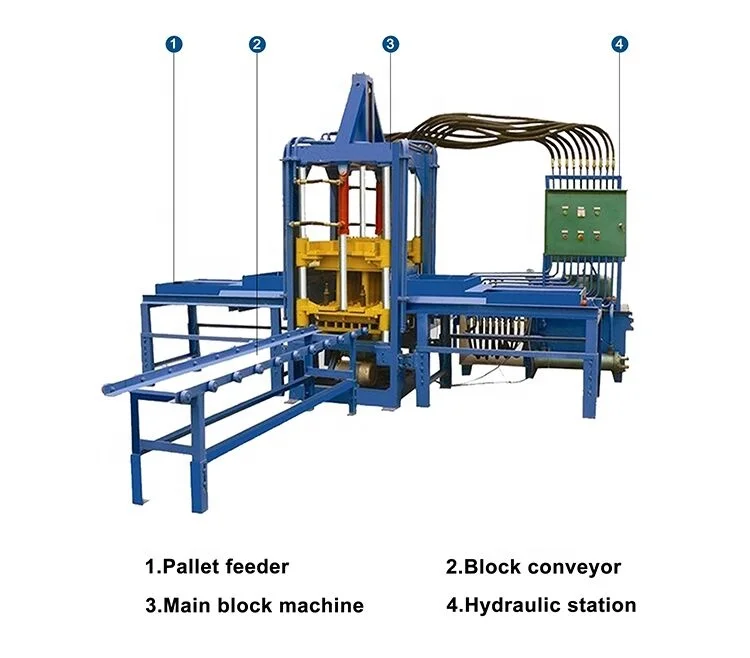
The QTJ4-40 starts as a semi-automatic station: the operator places pallets, triggers the cycle, and removes finished blocks manually. The PLC controlled semi-automatic block machine configuration adds automatic pallet feeding, which removes the heaviest repetitive task from the operator and lets cycle consistency depend on the controller rather than human rhythm. This is the first upgrade most plant owners choose, because pallet misalignment is the single most common cause of uneven block density on a manual line.
Reading the Vibration System Against Your Mix
Dual vibration — vertical from the bed mould and compression from the upper mould — is not a marketing addition. It solves a specific problem: when local aggregate has high clay content or irregular particle shape, single-axis vibration leaves density gradients inside the block wall. The upper compression phase forces particles into voids that vertical shaking alone cannot close. On sites where I have seen operators switch from river sand to laterite without adjusting vibration parameters, blocks cracked during curing because the internal density was never uniform to begin with. Getting this right means sending a sample of your actual aggregate before the machine ships. [NEED_CITE: vibration force and mix design matching in concrete block production]
Pallet Size, Curing Area, and the Forklift You Already Own
The 850×450×20 mm pallet dimension is not arbitrary — it defines how many blocks fit per cycle and how those blocks travel through your curing area. If your existing forklift tines are spaced for a different pallet width, every loaded pallet becomes a two-person job. Fiberglass pallets resist moisture warping across hundreds of cycles, but wooden pallets sourced locally can reduce initial investment if your curing environment stays dry. The decision must be made before the machine enters production, because pallet specification affects mould design, stacking geometry, and rack spacing all at once.
Mould Change Time and Format Flexibility on a Real Shift
A machine that produces hollow blocks, solid blocks, and pavers only delivers flexibility if the operator can swap moulds within a reasonable window. The QTJ4-40 mould mounting system is designed so that a trained operator can complete a changeover without dismantling the vibration assembly. Still, the actual time depends on whether bolts are pre-staged and whether the new mould has been pre-cleaned. On small plants running two formats per day, this changeover window directly determines whether the second format hits its daily target or bleeds into overtime.
The Hidden Cost of Skipping Voltage and Language Confirmation
Arriving at a site to find that the local supply is 220V/60Hz while the machine was built for 380V/50Hz means weeks of delay and transformer rental costs that consume the margin the buyer was counting on. PLC display language is a smaller detail with outsized impact: an operator who cannot read the fault codes on the screen will call for remote support on issues that a clear alarm message would have resolved in minutes. Locking in voltage, frequency, and control language before production starts is not paperwork — it is the difference between commissioning in days and commissioning in weeks. [NEED_CITE: industrial machinery voltage and frequency standards by export market]
Why Source This Machine Here
Block machinery is the single focus of this operation, which means the QTJ4-40 press, its moulds, pallets, and handling equipment are specified as one matched system rather than assembled from unrelated suppliers. Configuration is set against the buyer’s actual mix design and local aggregate, not pulled from a catalogue default. Mould design covers the formats your market actually sells, with custom drawings available when standard sizes do not match. The automation level is selectable, so you can commission the automatic block machine upgrade when volume justifies it rather than paying for capacity you cannot yet fill. Installation support includes operator training so that the crew running the line on day one understands the vibration parameters, not just the start button.
Documentation & Verification
- Line layout with capacity calculation stated per block format, not a single blanket figure
- Machine specification sheet with vibration force and hydraulic pressure matched to your mix
- Mould drawing and format list showing changeover procedure and compatible pallet sizes
- Voltage, frequency, and PLC display language confirmation signed off before production
- Factory test record run on your specified block format before dispatch
- Operation and maintenance manual with wear parts list and mould interchange schedule
Installation, Commissioning & Support
- Foundation pad sized to the 1350×1460 mm footprint with vibration isolation provisions
- Dedicated power circuit rated for the 10.4 kW load at your confirmed voltage and frequency
- Host machine, mould, and pallets shipped in assembly-ready condition for rapid site positioning
- First-run commissioning includes vibration tuning against your actual aggregate sample
- Operator training covers mould changeover, pallet alignment, and fault code interpretation
- Wear parts list and mould spares identified for your first replacement cycle
Before You Request a Quote
Tell us the block format your market buys most — not the one with the highest margin on paper, but the one your trucks ship every week. Share a sample or lab report of your local aggregate so the vibration system can be tuned before the press is built. Confirm your site voltage, frequency, and the language your operators read on a control screen, because these three data points determine whether commissioning takes days or weeks.
Frequently Asked Questions
Q: How do I verify realistic daily output for the block format I actually produce?
A: Ask for a capacity calculation that names the exact block dimensions, mould cavity count, and cycle time assumed. The QTJ4-40 output varies between formats — a 400×200×200 mm hollow block yields a different daily figure than a 225×112.5×60 mm paver. Any supplier quoting a single number without stating the format is asking you to guess.
Q: When should I upgrade from semi-automatic to full PLC control?
A: Most plant owners start upgrading when pallet handling becomes the bottleneck — typically when daily volume requires one operator dedicated to pallet movement. The QTJ4-40 PLC controlled semi-automatic block machine configuration lets you add automatic pallet feeding first, then stacking and cubing as volume grows, without replacing the press.
Q: What electrical details must be confirmed before the machine ships?
A: Voltage, frequency, and PLC display language. The QTJ4-40 is configurable to your local supply, but these values must be locked in before production begins. An automatic block machine upgrade ordered after arrival to fix a voltage mismatch adds transformer cost and weeks of delay to your commissioning schedule.
Q: How do I match pallet size to my existing curing area and forklift?
A: The standard 850×450×20 mm pallet must clear your curing rack spacing and sit correctly on your forklift tines. Fiberglass pallets resist warping over hundreds of wet-dry cycles, while locally sourced wooden pallets reduce initial cost if your curing area stays dry. Confirm both dimensions and material before the mould is finalized.