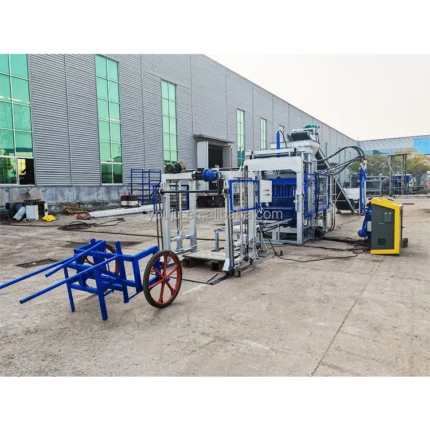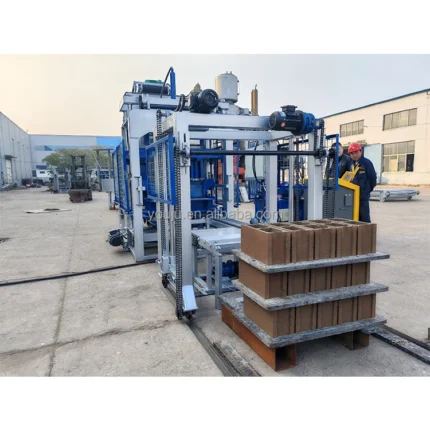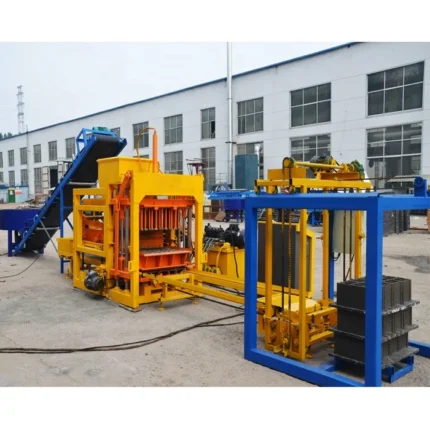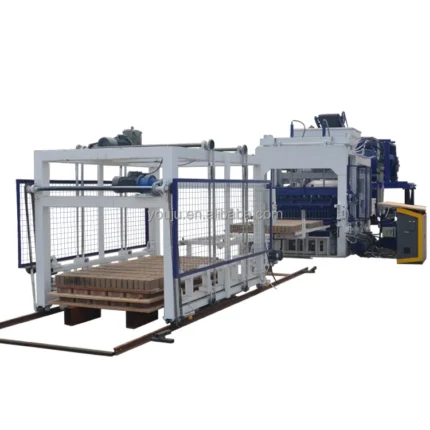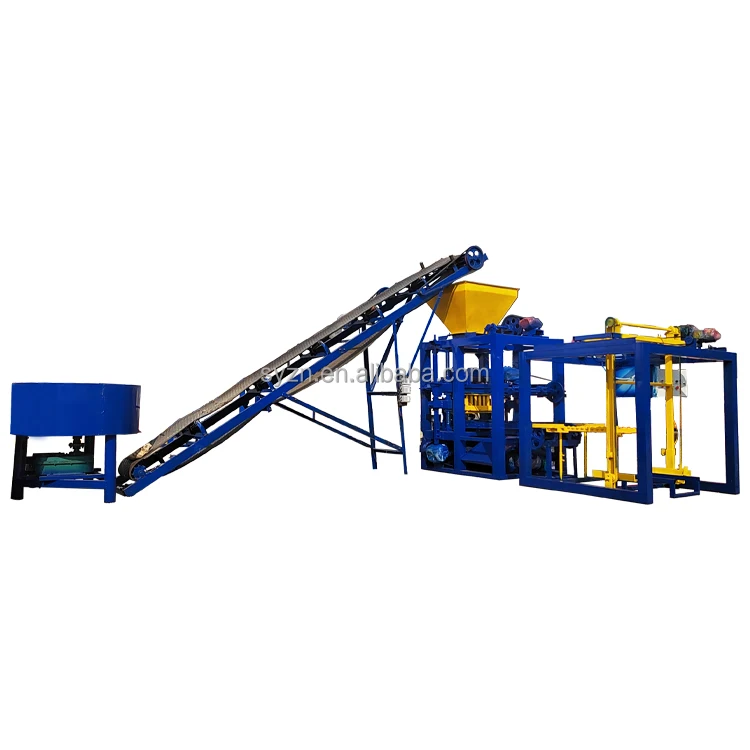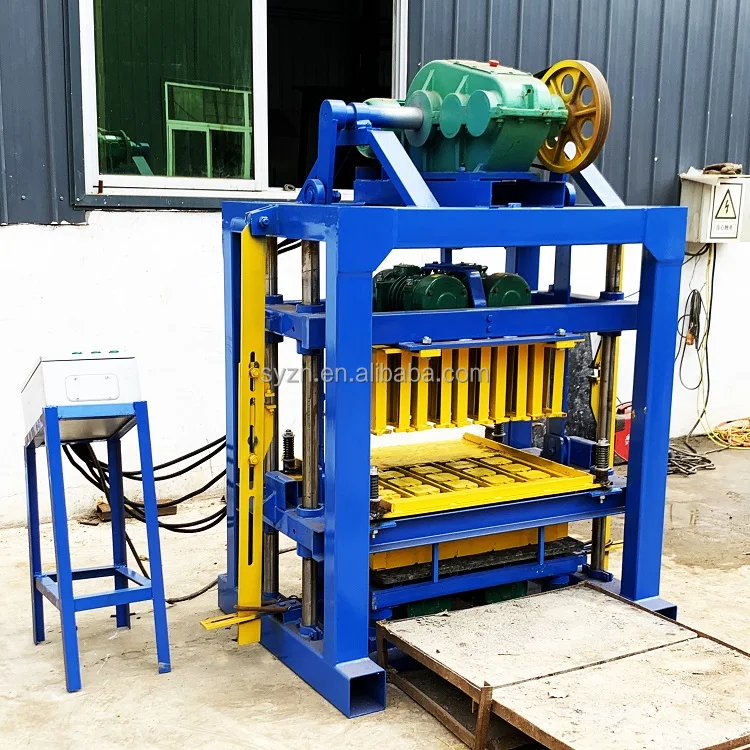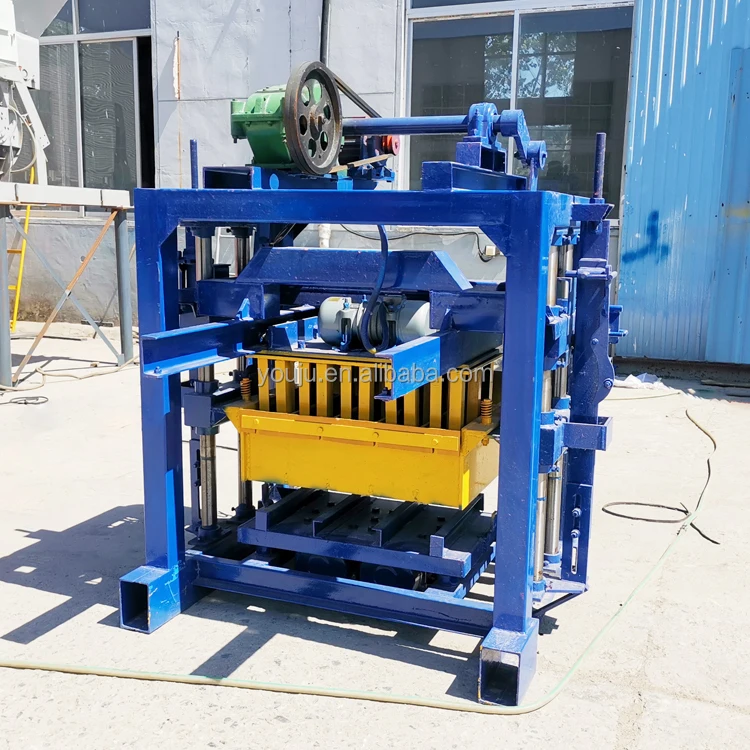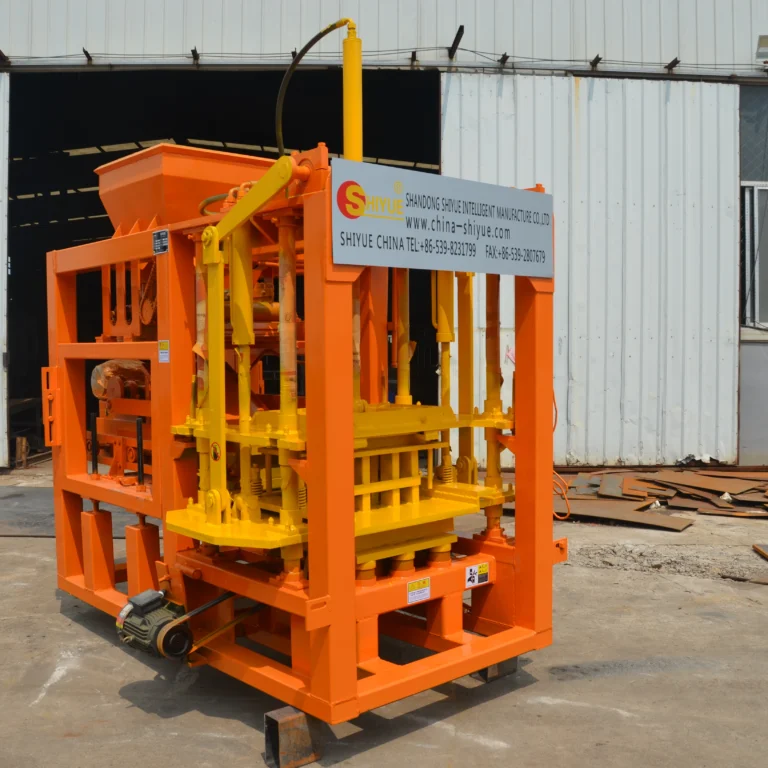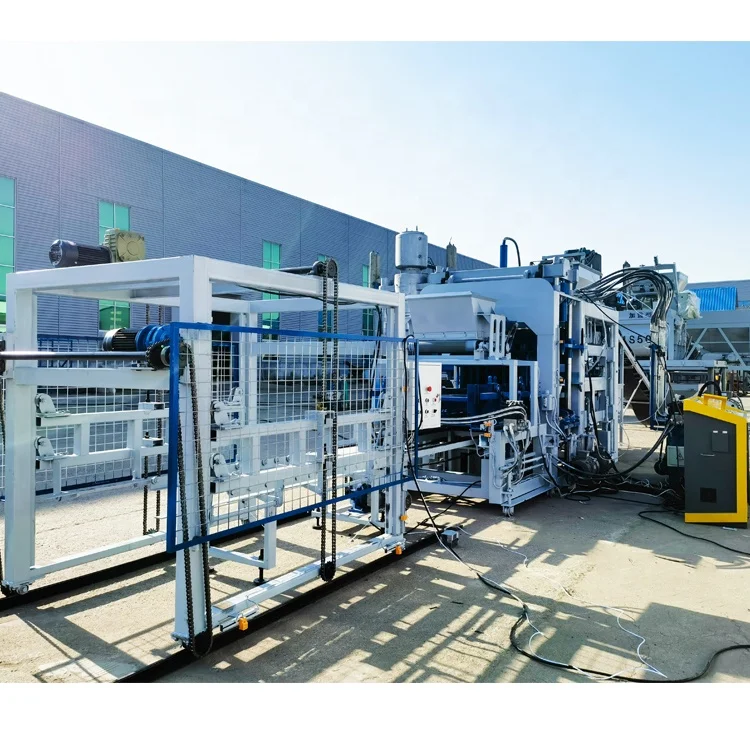
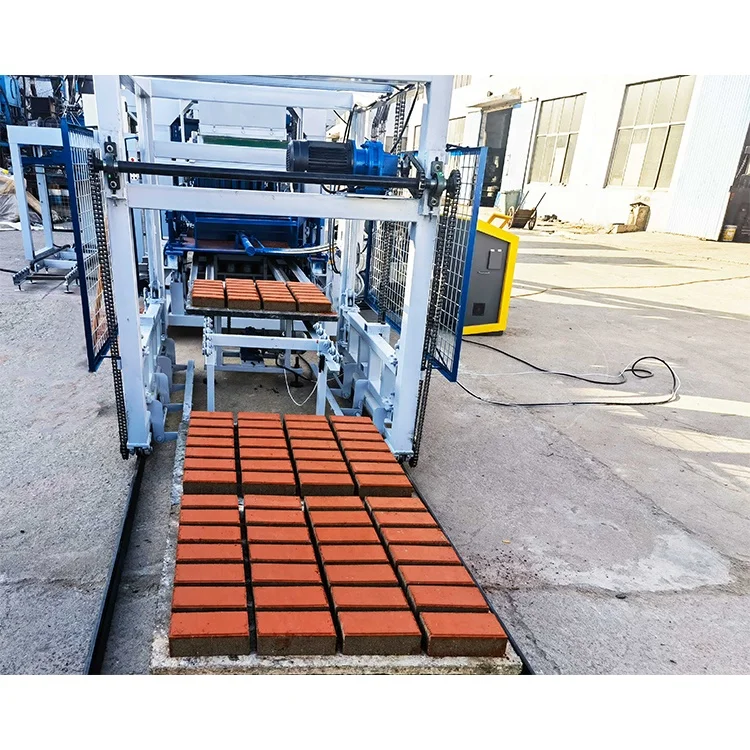


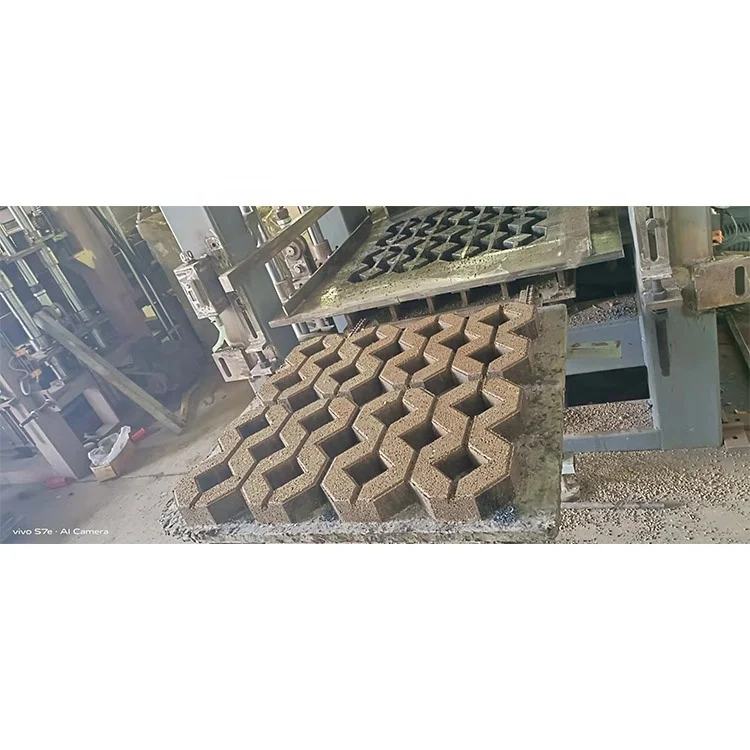
Description
PLC-Controlled Logic Integration — The QT8-15 block machine synchronizes vibration frequency, hydraulic pressure, and material feeding through programmable logic rather than relying on manual adjustments, reducing operator dependency and batch-to-batch density variation.
Technical Specifications
| Parameter | Value |
|---|---|
| Model | QT8-15 |
| Product Type | Automatic Hydraulic Concrete Block Making Machine |
| Overall Dimensions (L×W×H) | 8300 × 1860 × 3000 mm |
| Total Mass | 9 T |
| Rated Pressure | 21 MPa |
| Main Vibration Form | Platform Vibration |
| Vibration Frequency | 2800–4500 r/min |
| Vibration Force | 60 kN |
| Pallet Size | 950 × 900 mm |
| Molding Cycle | 15–25 s (basis not stated in source — confirm block format / material / thickness) |
| Overall Power | 55.5 kW |
| Demolding Method | Hydraulic |
| General Water Consumption | 12 T/Day |
| Recommended Factory Area | 600 m² |
| Control System | PLC with human-machine interface dialogue system |
| Automation Level | Fully automatic (automatic material feeding and block stacking stated) |
| Applied Products | Concrete blocks, hollow/solid blocks, pavers, interlocking blocks, curbstone, colored pavers |
| Raw Materials | Crushed stone, sand, cement, dust, fly ash, gravel, slag, and other raw materials |
Application Suitability
| Application | Material or Output |
|---|---|
| High-Capacity Hollow Block Production | Crushed stone, sand, cement, and fly ash mixes for structural walling |
| Solid Concrete Block Manufacturing | Dense aggregate blends for load-bearing foundation and partition blocks |
| Interlocking Paver Fabrication | Fine sand and cement mixtures with color oxide additives for landscaping and roadways |
| Curbstone and Kerb Production | Heavy-duty concrete mixes for municipal infrastructure and roadside delineation |
Why Voltage and Control Language Delay Commissioning More Than Shipping Times
An automatic concrete block making machine PLC controlled system only performs as intended when the electrical supply and operator interface match the plant environment.
Many buyers focus on lead times and shipping logistics, only to discover that a mismatch in voltage or a language barrier on the HMI stalls production for weeks after arrival. The QT8-15 operates at a total power of 55.5 kW, meaning the local grid must support this continuous draw plus startup surges from the hydraulic pump motor. If the frequency is 50 Hz in your facility but the motor was wound for 60 Hz, the vibration force drops noticeably, affecting block compaction. Similarly, a PLC display in a language the shift supervisor cannot read forces operators to memorize icon sequences rather than responding to fault codes. [NEED_CITE: voltage and frequency standards by export market]
Signal Analysis and Fault Response Logic
The human-machine interface dialogue system on this automatic concrete block making machine PLC controlled unit performs continuous signal analysis across sensors monitoring hydraulic pressure, vibration motor current, and material feed levels. When a sensor detects a value outside the programmed tolerance band, the PLC halts the cycle and displays the fault origin rather than allowing a defective block to pass through. This diagnostic layer removes guesswork from troubleshooting and shortens the time between a mechanical issue and corrective action.
Frequency Conversion and Dual Vibration Sources
Platform vibration on the QT8-15 uses frequency conversion ranging from 2800 to 4500 r/min, driven by synthetic dual vibration sources that distribute compaction force across the 950 × 900 mm pallet area. The PLC adjusts vibration duration and intensity based on the programmed block format, so a thin paver receives a different energy profile than a tall hollow block. This programmable vibration logic is what separates consistent block density from random variation. [NEED_CITE: vibration frequency impact on concrete compaction density]
Reading the Specs That Shape Daily Output
The 21 MPa rated pressure works in tandem with the 60 kN vibration force to compress the concrete mix within the mould cavity. Higher hydraulic pressure alone does not guarantee stronger blocks; the vibration must fluidize the mix so particles settle into a dense arrangement before the pressure locks them in place. The 15–25 second molding cycle range indicates the machine can handle both fast-curing paver formats and taller hollow blocks requiring extended vibration, but the actual cycle for your target format depends on mix workability and required block strength. The 55.5 kW overall power rating reflects the combined demand of the hydraulic pump, vibration motors, conveyor drives, and PLC cabinet — buyers must verify their transformer capacity supports this load plus a safety margin. The 950 × 900 mm pallet size determines how many blocks form per cycle and must align with the curing racks and forklifts already on site.
The Cost of Skipping Configuration Verification
When a block machine arrives configured for a mix design the buyer cannot source locally, the plant faces a choice between importing costly raw materials or running a suboptimal blend that produces weak, inconsistent output. A PLC-controlled system cannot compensate for a fundamentally wrong aggregate gradation or cement content. Similarly, if the automation level quoted covers only the press while pallet handling and stacking remain manual, the expected labour savings vanish and the plant still depends on workers moving heavy wet blocks by hand. [NEED_CITE: impact of aggregate gradation on concrete block compressive strength]
Why Sourcing This Platform Here Matters
Block machinery remains the single manufacturing focus, meaning the QT8-15 press, moulds, pallets, and handling stations are specified as one matched system rather than assembled from unrelated suppliers. The machine configuration is set against the buyer’s actual mix design, local aggregate characteristics, and target block format — not a catalogue default that assumes ideal conditions. Mould design covers the specific formats the buyer’s market demands, including custom drawings for non-standard dimensions. Automation level is selectable, allowing a plant to begin with semi-automatic pallet handling and upgrade to full stacking and cubing later without replacing the press. Installation support includes operator training so the PLC interface and fault response procedures are understood before the first production shift runs unsupervised.
Documentation & Verification
- Line layout and capacity calculation stating the block format assumed for the QT8-15 cycle time
- Machine specification sheet confirming hydraulic pressure, vibration force, and pallet dimensions
- Mould drawing and format list for every block type included in the order
- Voltage and control language confirmation document signed before production begins
- Hydraulic and electrical schematic for the PLC cabinet and power distribution panel
- Factory test record showing the machine running the buyer’s specified block format
Installation, Commissioning & Support
- Foundation must support 9 T total mass plus dynamic vibration loads across the 8300 × 1860 mm footprint
- Dedicated electrical circuit required for 55.5 kW total power draw, with voltage and frequency verified before energizing
- Machine ships dismantled for container loading; reassembly includes pallet feed, press, and stacking stations
- PLC parameters calibrated on-site to match local aggregate and target block density during first production run
- Operator training covers HMI navigation, fault code response, and mould change procedures on the 950 × 900 mm platform
- Wear parts list and hydraulic seal kit supplied for first scheduled maintenance interval
What to Confirm Before Requesting a Quotation
To size the QT8-15 correctly for your production line, share your target block formats with dimensions, the daily output you need for each format, and the local raw materials available including aggregate type and cement grade. Confirm your facility’s voltage, phase, and frequency, along with the preferred PLC display language for your operators. If you already have pallets, curing racks, or handling equipment on site, provide those dimensions so the line integrates without modification.
Frequently Asked Questions
Q: How is the QT8-15 daily output verified, and which block format does the cycle time assume?
A: The 15–25 second molding cycle is a range that shifts depending on block height, wall thickness, and mix design. We verify daily output by running the buyer’s specific block format with their local material during the factory test, then document the cycle time and projected daily volume for that exact configuration rather than quoting a generic figure.
Q: What automation level is included — does the line cover pallet feeding, stacking, and cubing?
A: The QT8-15 is specified as fully automatic with material feeding and block stacking included. The exact scope of pallet handling, automatic stacking height, and cubing arrangement is confirmed during the line layout phase so the automation matches the buyer’s curing area capacity and forklift workflow rather than stopping at the press output.
Q: Can the PLC control language and HMI interface be set to the operator’s language before shipment?
A: Yes. The PLC display language and human-machine interface dialogue text are confirmed during the order stage, before the control cabinet is wired. This ensures the fault codes, parameter labels, and operating prompts are readable by the shift supervisors who will run the machine daily, avoiding reliance on memorized icon sequences.
Q: How is the vibration force and hydraulic pressure matched to the buyer’s local aggregate and mix design?
A: The vibration frequency range and hydraulic pressure settings are programmed against the buyer’s submitted mix design and sample aggregate. During the factory test, we adjust the vibration duration and pressure hold time until block density and surface finish meet the target strength, then lock those parameters into the PLC recipe for that block format.
Q: What is the upgrade path from semi-automatic to full automation on this platform?
A: The QT8-15 platform allows a plant to start with semi-automatic pallet handling and manual stacking, then add automatic pallet feeding, stacking, and cubing modules later without replacing the press or PLC cabinet. The control system is designed with reserved I/O and program logic for these additions, so the upgrade involves mechanical installation and parameter activation rather than a full rewiring.