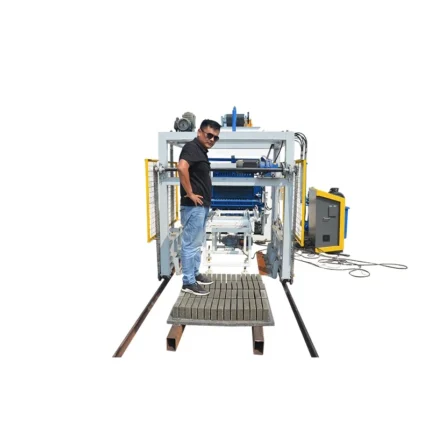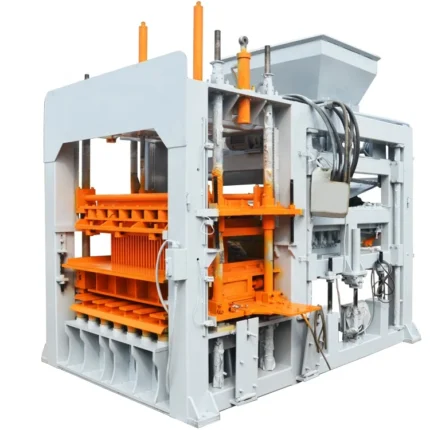


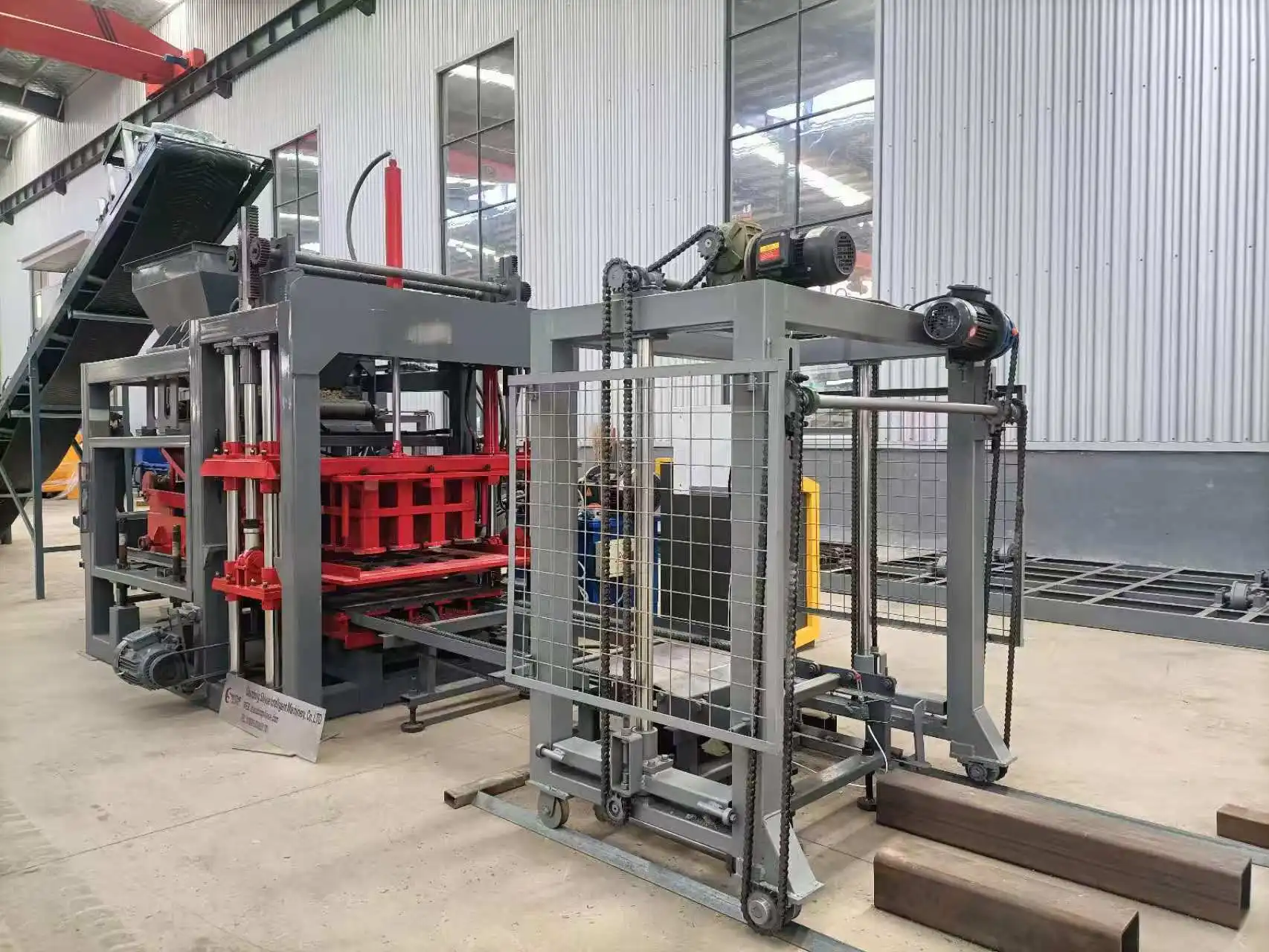

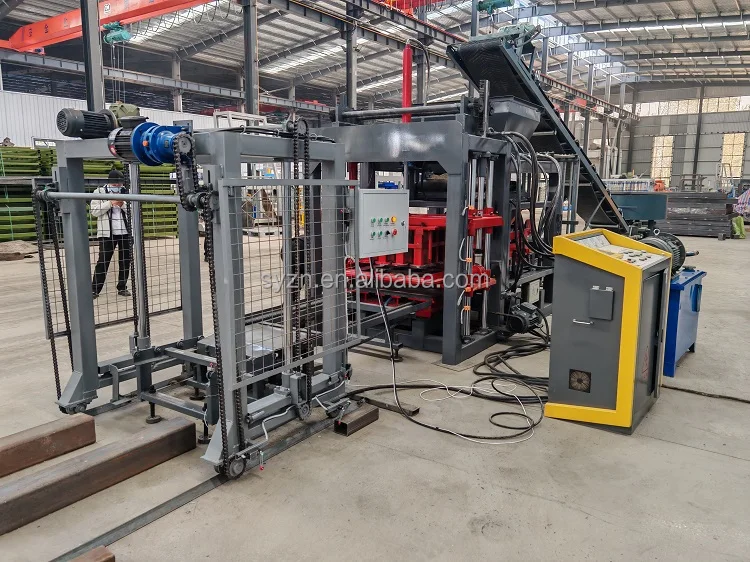

Description
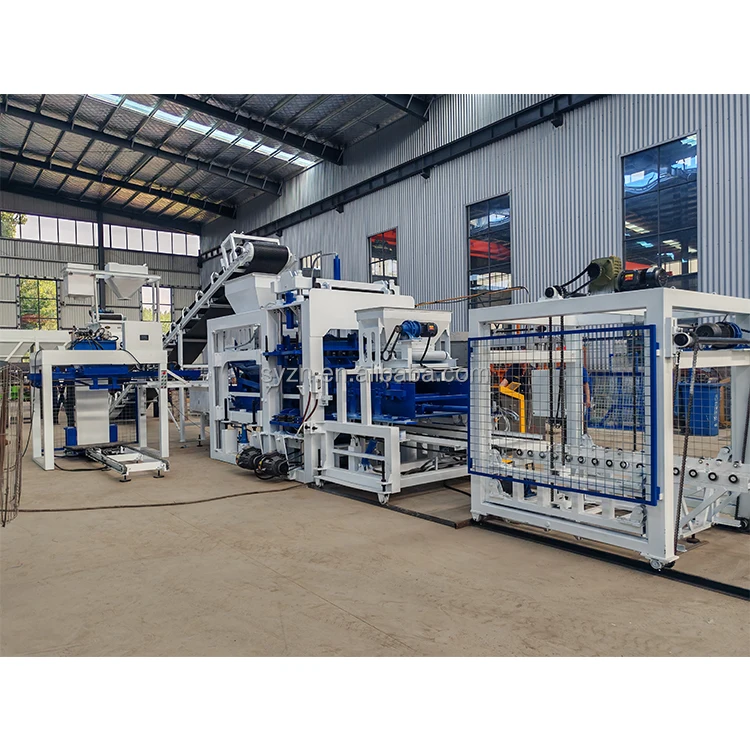
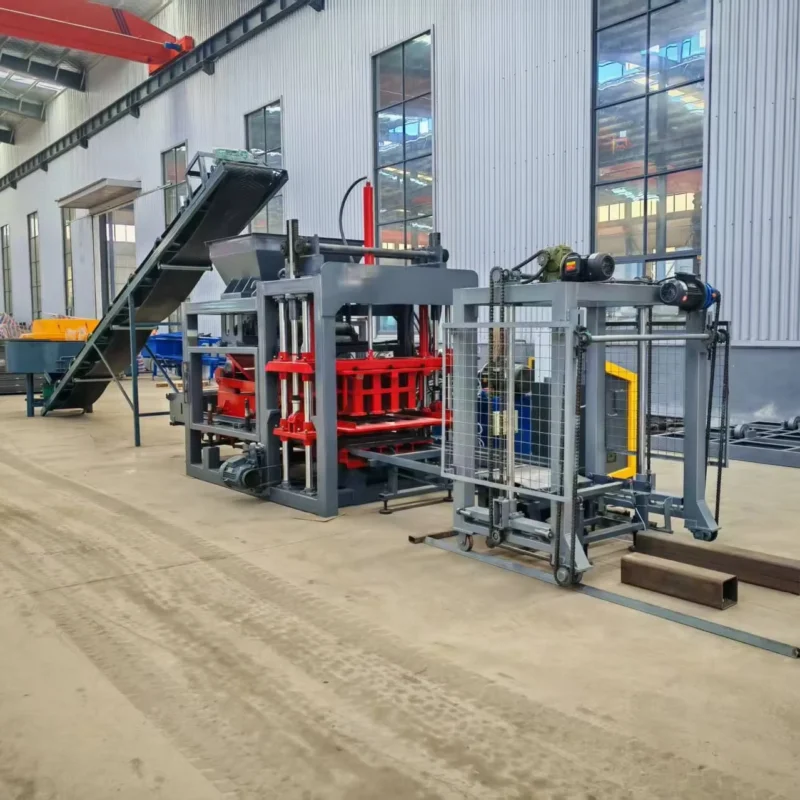
PLC-First Configuration — The automatic QT4-18 block making machine is specified around your site voltage, frequency, and operator language before production starts, removing the two most common commissioning blockers we see on export shipments.
Technical Specifications
| Parameter | Value |
|---|---|
| Model | QT4-18 |
| Product Type | Semi-Automatic Hydraulic Concrete Block Making Machine |
| Overall Dimensions (L×W×H) | 3900×1600×2300 mm |
| Total Weight | 3T |
| Rated Power | 24KW |
| Vibration Force | 40-50KN |
| Vibration Type | Bed mould vertical vibration and upper mould compression vibration |
| Hydraulic System | Hydraulic station with high pressure |
| Molding Cycle | 15-25s (basis not stated in source — confirm block format / material / thickness) |
| Pallet Size | 850×550×25mm |
| Mixer Model | JQ350 |
| Output Capacity (Hollow 400×200×200mm, 4 pcs/mould) | 1200-1680 pcs/hr |
| Output Capacity (Hollow 400×150×200mm) | 1800-2400 pcs/hr |
| Output Capacity (Solid 240×115×53mm) | 3240 pcs/hr |
| Daily Output (Hollow 400×200×200mm, 8hr) | 9600-13440 pcs |
| Daily Output (Hollow 400×150×200mm, 8hr) | 14400-19200 pcs |
| Daily Output (Solid 240×115×53mm, 8hr) | 16200-19440 pcs |
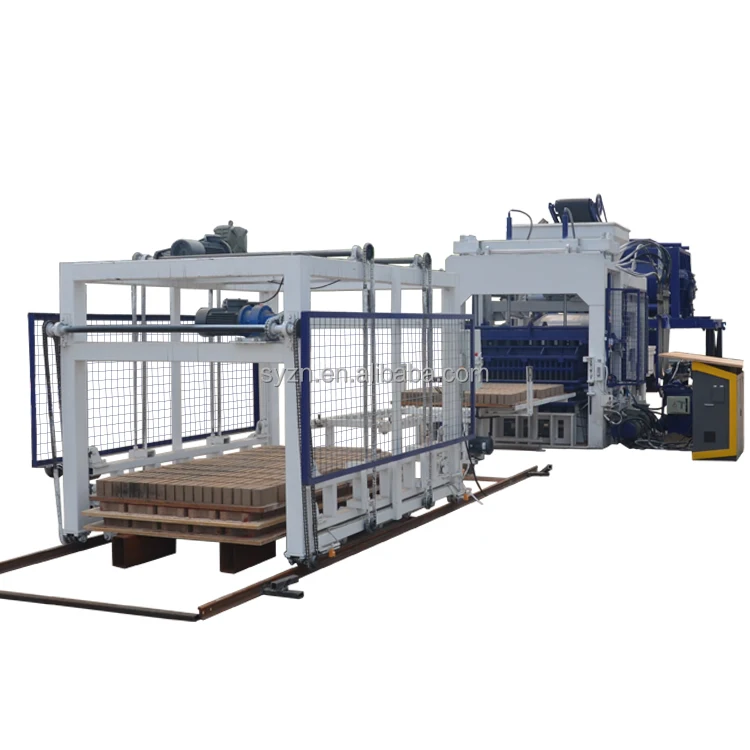
| Automation Level | Semi-automatic (upgrade path to automatic pallet feeding, stacking, cubing) |
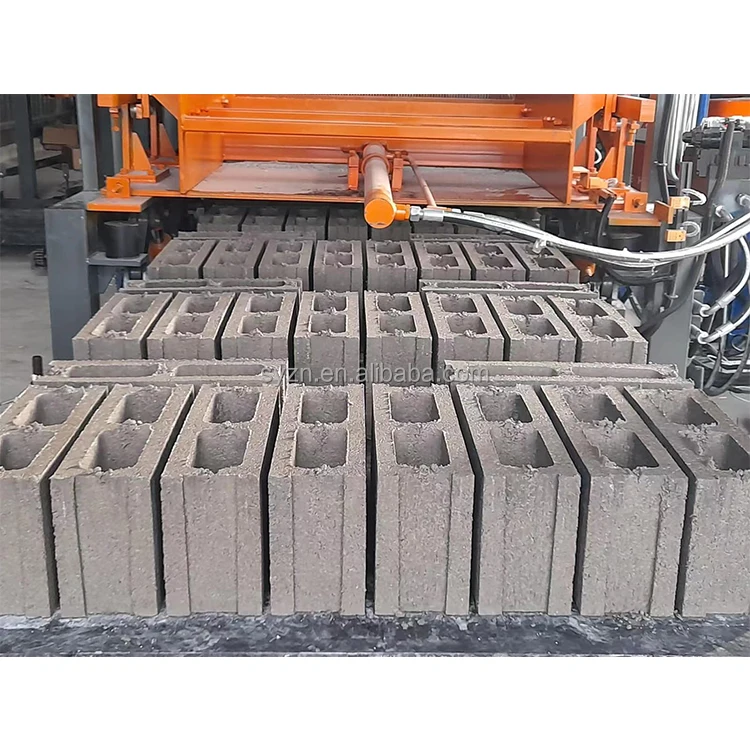
| Applied Products | Hollow block, solid brick, paver, curbstone |
| Raw Materials | Crushed stones, sand, cement, dust, fly ash |
| Key Features | PLC control, dual vibration system, high-pressure hydraulic station, CE declaration where applicable |
Application Suitability
| Application | Material or Output |
|---|---|
| Hollow block production for wall construction | Crushed stone, sand, cement, fly ash mixes — 400×200×200mm and 400×150×200mm formats |
| Solid brick manufacturing for load-bearing and partition walls | Cement and fine aggregate blends — 240×115×53mm standard format |
| Paver and interlocking block production for roads and yards | High-strength crushed stone and cement mixes with pigment options |
| Kerbstone and curb production for infrastructure | Dense aggregate mixes requiring high hydraulic pressure and vibration |
| On-site block production for housing and development projects | Locally sourced sand, dust, and cement with semi-automatic operation |
What "PLC Controlled" Actually Means on the Shop Floor
A PLC-controlled concrete block machine only removes guesswork if the interface speaks the operator’s language and the voltage matches the grid.
I spent years debugging block machines across the Pearl River Delta before moving into technical support. Last year, a fully automatic hydraulic press shipped to Kenya with the PLC display defaulting to Chinese. The local crew could not read a single menu, and commissioning stalled for two full days while we pushed a firmware update remotely. That is the kind of failure no specification sheet warns you about. The automatic QT4-18 block making machine addresses this by locking in voltage, frequency, and HMI language during the order stage — not after the container arrives [NEED_CITE: common PLC commissioning failures on export block machinery].
The cycle time and pressure curves inside the PLC are meaningless if the operator cannot navigate the diagnostics screen. We treat the control language and electrical standard as primary configuration parameters, equal in weight to pallet size or vibration force.
Control Logic That Matches Your Mix, Not a Catalogue Default
The PLC inside the automatic QT4-18 block making machine governs hydraulic pressure timing, vibration duration, and mould compression sequence. These parameters must be tuned to the specific aggregate gradation and cement ratio available at your site, because a vibration profile optimized for river sand will produce weak, crumbly blocks when fed with crushed granite dust. During configuration, the control logic is mapped against your actual raw material sample and target block strength before the machine leaves the factory.
Automation Tier and the Upgrade Path Forward
The QT4-18 ships as a semi-automatic unit with manual pallet handling. The PLC architecture, however, is designed to accept automatic pallet feeding, stacking, and cubing modules without replacing the core controller. This means a plant owner can start with lower capital outlay, validate the local market for block formats, and add automation stations later as demand scales. The electrical cabinet includes reserved I/O channels and communication ports for these future additions [NEED_CITE: PLC I/O reservation practices for staged automation in block plants].
Reading the Specification Sheet Honestly
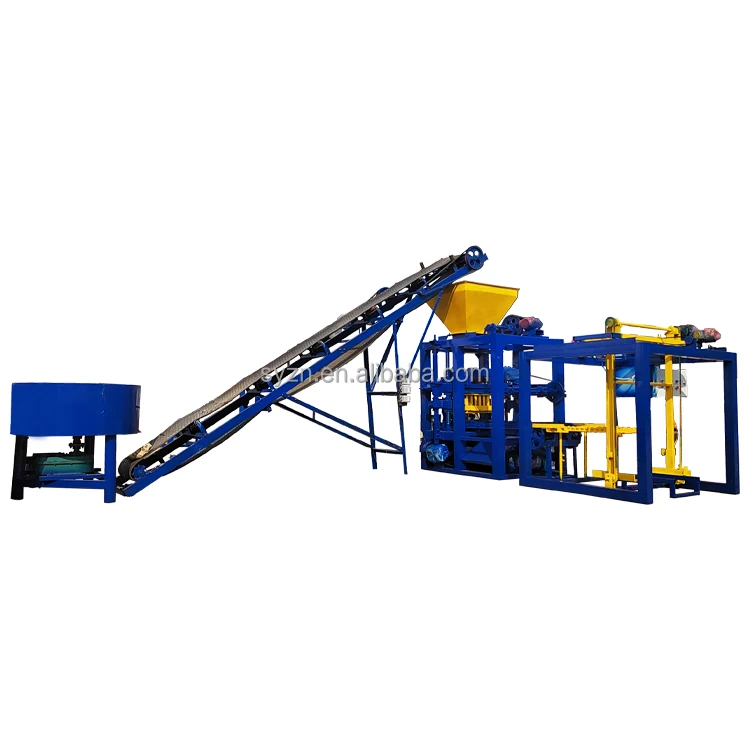
The 24KW rated power covers the hydraulic pump motor, vibration motors, and mixer drive simultaneously — not peak draw on a single component. The 40-50KN vibration force is delivered through two independent systems: vertical vibration under the bed mould and compression vibration from the upper mould head. This dual approach compacts the concrete from both directions, which is what produces uniform density across the block height rather than a hard top and a soft base. The 850×550×25mm pallet size must match your existing curing racks and forklift fork width; ordering a pallet dimension that does not fit your curing area creates a bottleneck no amount of press speed can fix. The JQ350 pan mixer feeds the press hopper and must be positioned so the discharge gate aligns with the feeder without manual shoveling.
The Hidden Cost of Ignoring Control and Electrical Details
When voltage and frequency are assumed rather than confirmed, the hydraulic pump motor can overheat or run at the wrong speed, producing inconsistent pressure on every stroke. A PLC display in the wrong language forces the operator to memorize icon positions instead of reading diagnostic codes, which means minor faults escalate into unplanned downtime. Mould changeovers that should take minutes stretch into hours because the operator cannot locate the release sequence on the HMI [NEED_CITE: operator error rates linked to HMI language mismatch in industrial machinery]. These are not warranty claims — they are configuration failures that the buyer absorbs.
Why Source This Machine Here
Block machinery is the single focus of this operation, so the press, mould, pallet, and handling equipment are specified as one matched system rather than assembled from unrelated suppliers. The QT4-18 configuration is set against your actual mix design and local aggregate, not a default catalogue profile that assumes materials you cannot source. Mould design covers the hollow, solid, paver, and kerbstone formats your market actually sells, with custom mould engineering available from buyer drawings. The automation level is selectable and upgradeable, so capital deployment matches your real sales volume. Installation support includes operator training on the specific PLC interface language confirmed at order stage.
Documentation & Verification
- Line layout and capacity calculation stating the block format assumed for each output figure
- Machine specification sheet with voltage, frequency, and PLC language confirmed per order
- Mould drawing and format list covering hollow, solid, paver, and kerbstone options
- Hydraulic and electrical schematic showing reserved I/O for automation upgrades
- Factory test record on your target block format and mix design before dispatch
- Operation and maintenance manual in the confirmed operator language
Installation, Commissioning & Support
- Foundation pad sized for 3900×1600mm footprint with anchor bolt layout provided before pour
- Dedicated 24KW circuit with voltage and frequency matched to confirmed site grid specification
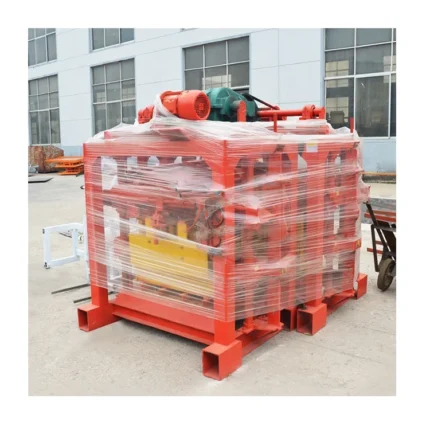
- Machine shipped in dismantled state with reassembly sequence documented per unit
- First-run commissioning includes PLC parameter tuning against your local aggregate sample
- Operator training covers HMI navigation, fault codes, and mould change procedure in confirmed language
- Wear parts list with hydraulic seal and vibration motor bearing replacement intervals
Preparing Your Inquiry
To size the automatic QT4-18 block making machine accurately, share the block formats your market sells and the daily volume you need to sustain. Tell us your local voltage and frequency standard, the operator language for the PLC display, and the aggregate materials you can source within a practical radius of the plant. If you already have curing racks or forklifts on site, send the pallet dimensions they accept so the 850×550mm pallet can be verified or adjusted before production begins.
Frequently Asked Questions
Q: How is output capacity verified and what block format does each figure assume?
A: Every output figure is tied to a specific block format and mould cavity count. For the QT4-18, hollow block capacity at 400×200×200mm assumes 4 pieces per mould, while solid brick figures at 240×115×53mm use a different mould plate. The capacity document you receive will state format, cycle time, and pieces per mould for each number — never a single unqualified throughput claim.
Q: What automation level does the QT4-18 ship with, and what is the upgrade path?
A: The base configuration is semi-automatic with manual pallet handling. The PLC cabinet includes reserved I/O for automatic pallet feeding, stacking, and cubing modules. Each automation stage is documented with the specific components added, the labour it replaces, and the consistency gain it delivers, so you can plan upgrades against real production volume rather than speculation.
Q: How is the PLC control system configured for my site’s voltage and operator language?
A: Voltage, frequency, and HMI display language are confirmed during the order stage and recorded on the specification sheet. The PLC firmware is loaded with the agreed language before factory testing. This prevents the commissioning delays we have seen on export shipments where control language was treated as an afterthought.
Q: How does the vibration and hydraulic system maintain batch-to-batch consistency?
A: The QT4-18 uses bed mould vertical vibration combined with upper mould compression vibration, driven by a high-pressure hydraulic station. This dual action compacts concrete uniformly from both directions. The vibration profile and pressure timing are tuned to your specific aggregate and mix design during configuration, not left at a generic factory preset.
Q: What mould change process is involved when switching between block formats?
A: The mould is bolted to the vibration table and upper head with a documented release and alignment sequence. Change time depends on the format jump — switching between hollow block sizes is faster than moving from hollow to paver moulds. The procedure is covered in operator training and the maintenance manual so that format flexibility does not cost you an entire shift.