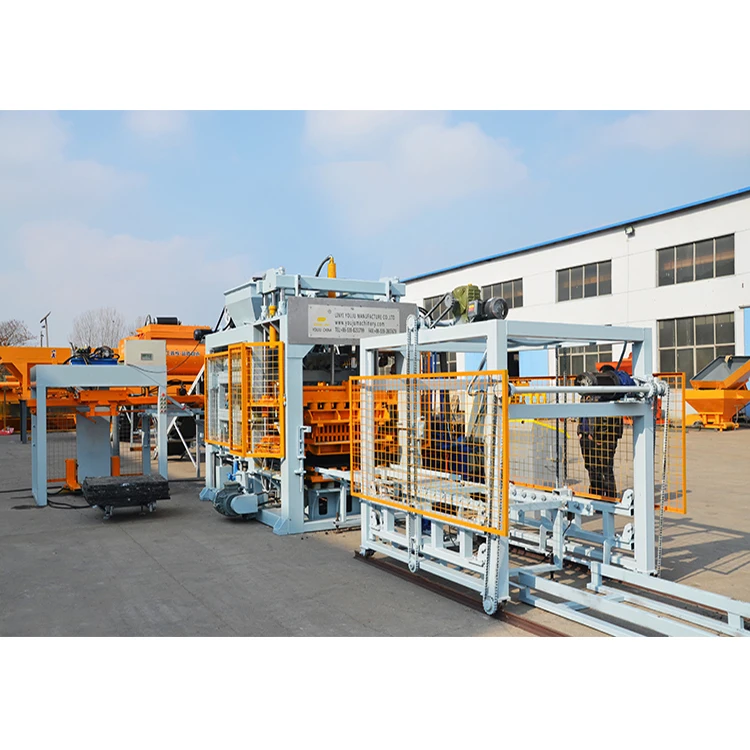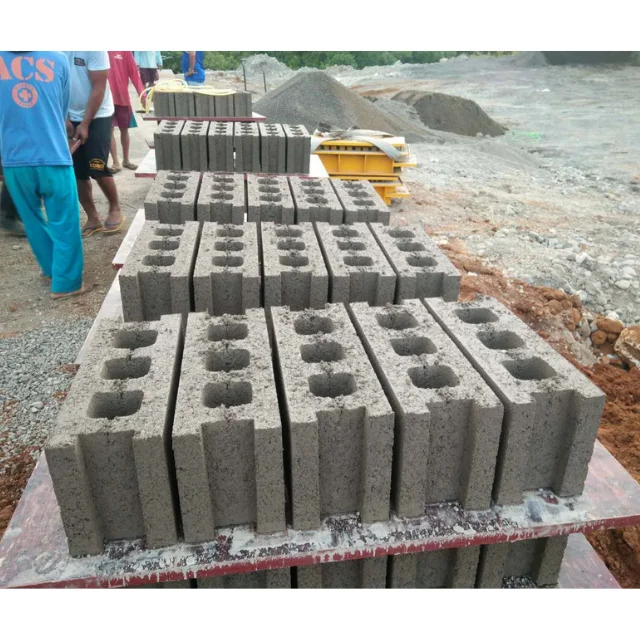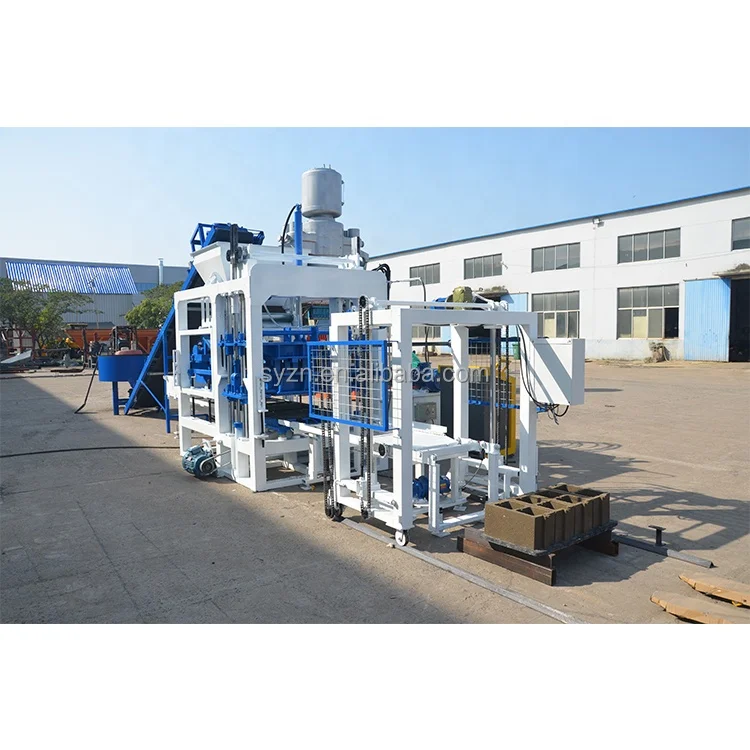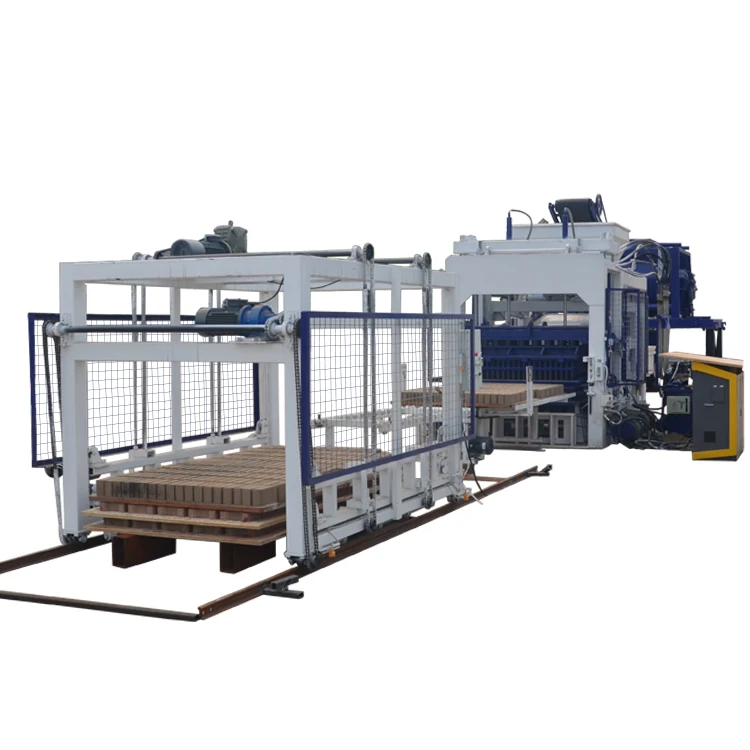


Description
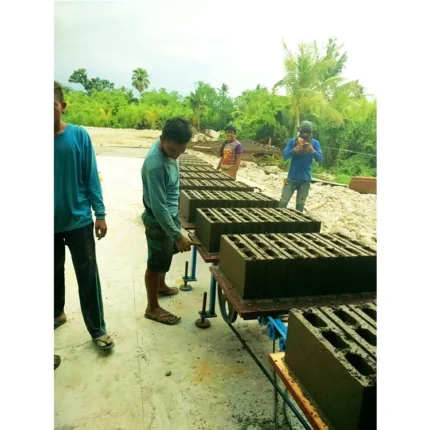
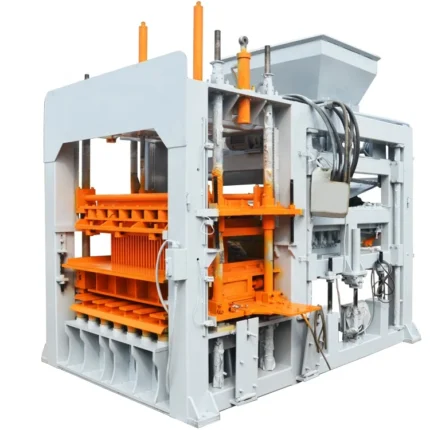
Configured to Your Mix Design — The QT10-15 block making machine is set up against the buyer’s actual local aggregate and target block format, not a generic catalogue default.
Technical Specifications
| Parameter | Value |
|---|---|
| Model | QT10-15 |
| Product Type | Hydraulic Block Making Machine |
| Vibration Technology | Dynamic and static table with frequency conversion |
| Vibration Acceleration | 20g |
| Vibration System | Four-axis vibration with forced synchronization gear shaft |
| Feeding System | Press-in arch breaker rotating 360° for material distribution |
| Wear Plate | Replaceable cloth platform wear-resistant plate |
| Vibration Damping | Flexible reduction on pressure head; adjustable air bag on mold box |
| Control System | PLC with selectable automation interface |
| Mould Versatility | Supports wall blocks, porous bricks, pavement bricks, slope protection bricks |
| Output Capacity | (basis to be confirmed based on block format and mix) |
| Hydraulic Pressure | (basis to be confirmed) |
| Pallet Size | (basis to be confirmed) |
| Rated Power | (basis to be confirmed) |
| Voltage & Frequency | (basis to be confirmed) |
Application Suitability
| Application | Material or Output |
|---|---|
| Hollow wall block production | Fly ash, crushed stone, and cement blends |
| Solid block manufacturing | Local aggregate with varying moisture content |
| Paving and paver brick runs | High-density concrete mixes for surface durability |
| Slope protection brick forming | Porous concrete structures for erosion control |
| Interlocking brick output | Dry-cast concrete with interlocking geometry |
Why "Cycles Per Hour" Is Not a Capacity Figure
The automatic QT10-15 block making machine must be rated by the specific block format it produces, not a single cycle number.
I have seen buyers sign for a machine quoted at a certain number of cycles per hour, only to find the actual daily output of 400×200×200mm hollow blocks falls far short because the cycle time assumes a smaller, simpler format. When the vibration force and hydraulic pressure are not matched to the buyer’s local aggregate — particularly where clay or silt content is high — the press may complete its cycle, but the blocks fail strength tests and the line stops for parameter adjustments [NEED_CITE: block strength verification against local aggregate composition]. The QT10-15 addresses this by configuring the four-axis vibration and pressure settings to the mix design the buyer can actually source.
PLC Control That Manages the Process Rather Than Performing It
The PLC controlled block making machinery removes the operator from direct control of each press stroke. Instead of manually timing the vibration duration or adjusting feed speed per cycle, the operator monitors the process and intervenes only when the system flags a deviation. This shift from manual execution to supervisory control is what delivers batch-to-batch consistency, particularly when the same machine runs multiple block formats across a single shift.
The Automation Upgrade Path From Semi-Automatic to Full Stacking
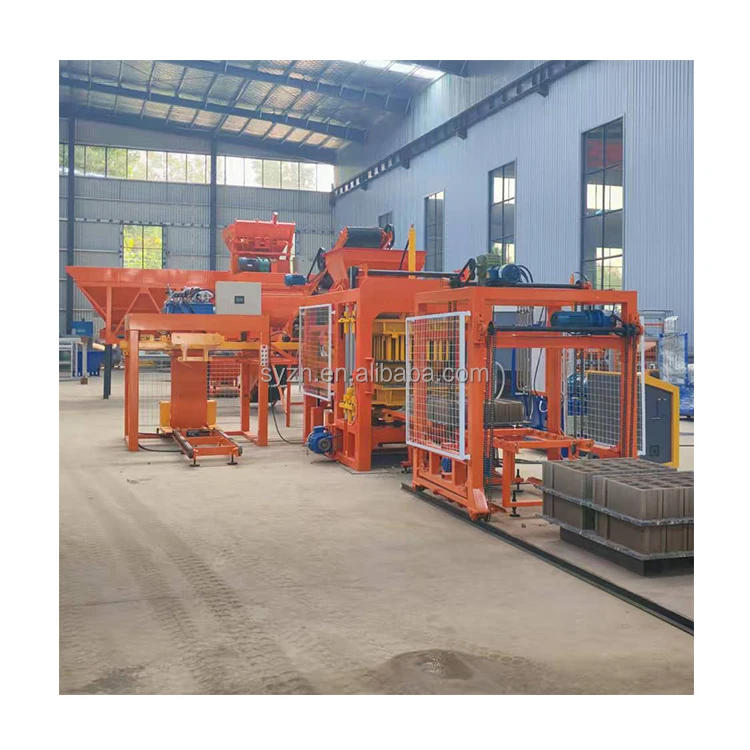
A buyer starting with semi-automatic pallet handling can specify the QT10-15 with manual pallet feeding today and add automatic stacking and cubing later. The PLC architecture supports this progression without requiring a full control system replacement. The upgrade path is documented at the quotation stage, so the buyer knows which stations are automatic from day one and which are provisioned for future integration [NEED_CITE: automation level scope and upgrade documentation].
How Vibration and Pressure Determine Block Density
The four-axis vibration system with forced synchronization gear shaft distributes excitation force evenly across the mould cavity, which directly controls product height consistency. The 20g acceleration, achieved through frequency conversion, allows the forming speed to be matched to different mould formats — a slower, high-amplitude cycle for large hollow blocks versus a faster cycle for smaller pavers. The adjustable pressure air bag on the mould box dampens working noise while allowing the operator to tune the system to different block densities, from lightweight porous bricks to high-strength pavement units. The 360° arch-breaker feeding system ensures that material reaches all corners of the mould before full vibration begins, preventing density variation caused by uneven fill [NEED_CITE: vibration force distribution and material fill uniformity].
The Cost of Skipping Voltage and Control Language Confirmation
When voltage, frequency, and PLC display language are not confirmed before production begins, the machine may arrive on site unable to connect to the local power supply or operate in a language the crew understands. Commissioning delays follow, sometimes stretching into weeks while transformers are sourced or control panels are reprogrammed. This is entirely avoidable with a pre-production checklist that locks these parameters against the buyer’s site conditions.
Why Procurement Here Differs From Catalogue Ordering
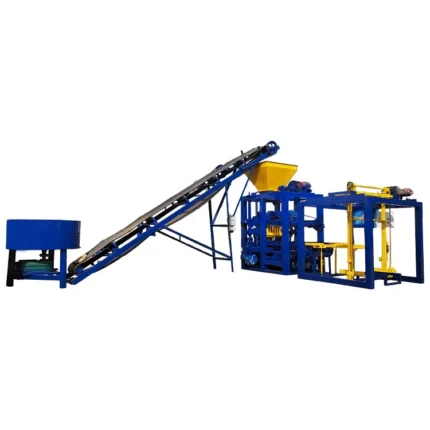
The machine, mould, pallet, and handling equipment are specified as one matched system rather than assembled from separate suppliers. Configuration is set against the buyer’s actual mix design and local aggregate, not a default setting. Mould design covers the formats the buyer’s market sells, including custom drawings. The automation level is selectable, allowing a buyer to start semi-automatic and upgrade. Installation support includes operator training on the specific control interface and mould change procedures.
Documentation & Verification
- Capacity calculation sheet stating the block format and mix design assumed for each output figure
- Machine specification sheet with confirmed voltage, frequency, and PLC display language
- Mould drawing and format list matching the buyer’s target product range
- Factory test record with the buyer’s specified mould installed, demonstrating cycle time and consistency
- Hydraulic and electrical schematic for on-site maintenance reference
Installation, Commissioning & Support
- Foundation plan based on the QT10-15 overall dimensions and dynamic vibration load
- Dedicated power circuit sized for the rated kW and confirmed voltage/frequency
- Machine dismantling for container loading and reassembly sequence on arrival
- PLC parameter setup against the buyer’s local aggregate and block format during commissioning
- Operator training on mould change procedure and HMI navigation in the confirmed language
- Wear parts list with hydraulic seal and vibration shaft replacement intervals
What to Provide With Your Inquiry
To size the automatic QT10-15 block making machine correctly, share your target block formats with dimensions, the daily output you need per format, and a sample of your local aggregate with its moisture and clay content. Confirm your site voltage and frequency, the control language your operators require, and whether you need pallet handling and stacking included in the line scope.
Frequently Asked Questions
Q: How is the output capacity verified, and what block format is it based on?
A: The capacity calculation is provided per block format, stating the mould size, cycle time, and mix design assumed. A single cycles-per-hour figure without a format basis is not used. The factory test record demonstrates actual output on the buyer’s specified mould before dispatch.
Q: What PLC system is installed, and can the display language be set locally?
A: The PLC brand and HMI language are confirmed before production. The buyer specifies the required display language during the quotation stage, and this is locked in the control configuration to avoid commissioning delays after the machine arrives on site.
Q: What automation level is included, and how does the upgrade path work?
A: The automation scope is documented station by station — pallet feeding, stacking, cubing — with each marked as automatic or manual. The PLC architecture supports adding automatic stations later without replacing the control system, and the upgrade path is defined at quotation.
Q: How does the vibration system adapt to different local aggregates?
A: The frequency conversion control adjusts vibration speed and amplitude to match the mix design. The adjustable pressure air bag on the mould box allows tuning to different block densities. Configuration is set against the buyer’s actual aggregate sample and target block strength requirement.
Q: What electrical parameters must be confirmed before production begins?
A: Voltage, frequency, and PLC display language are confirmed at the quotation stage and documented in the specification sheet. This prevents delays from incompatible power supply or unreadable control interfaces during commissioning [NEED_CITE: electrical specification confirmation before production].