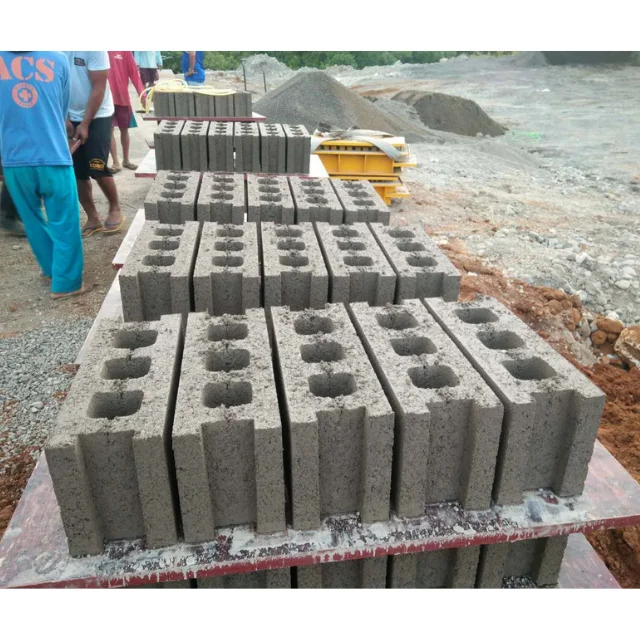


Description
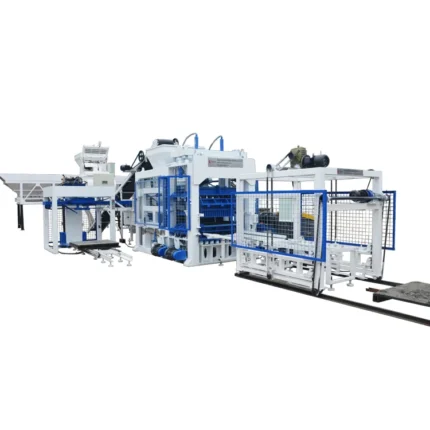
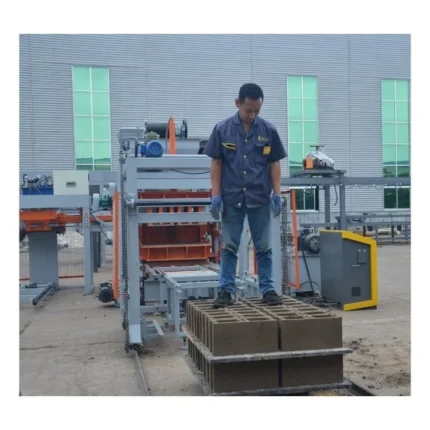
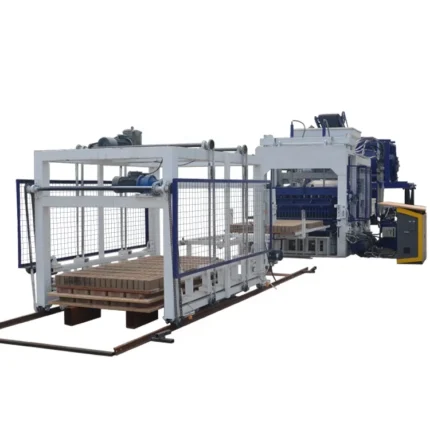
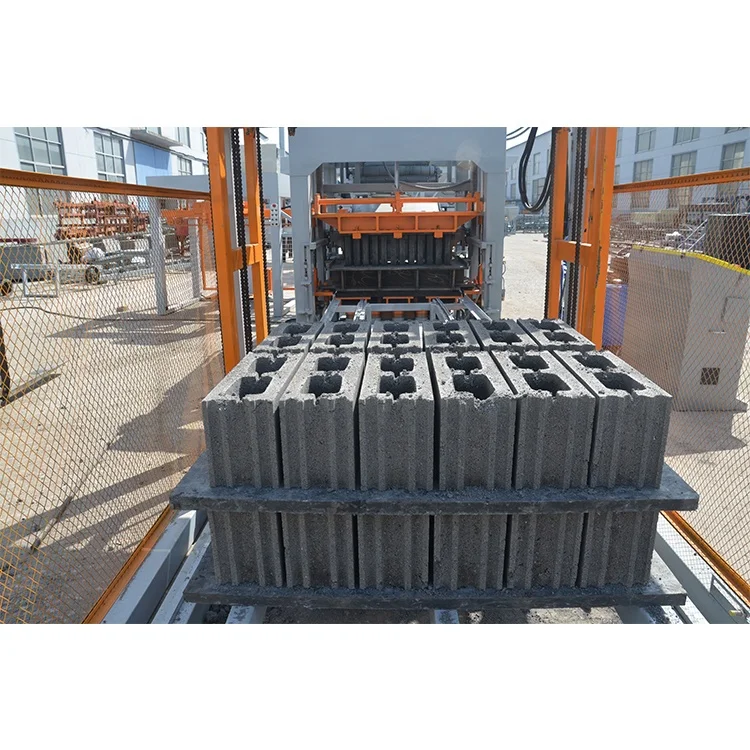
Integrated Automation Control — the QT5-15 sequences pallet feeding, material dosing, vibration, and hydraulic demoulding from a single PLC rather than relying on separate operators for each station.
Technical Specifications
| Parameter | Value |
|---|---|
| Model | QT5-15 |
| Product Type | Hollow Block Making Machine |
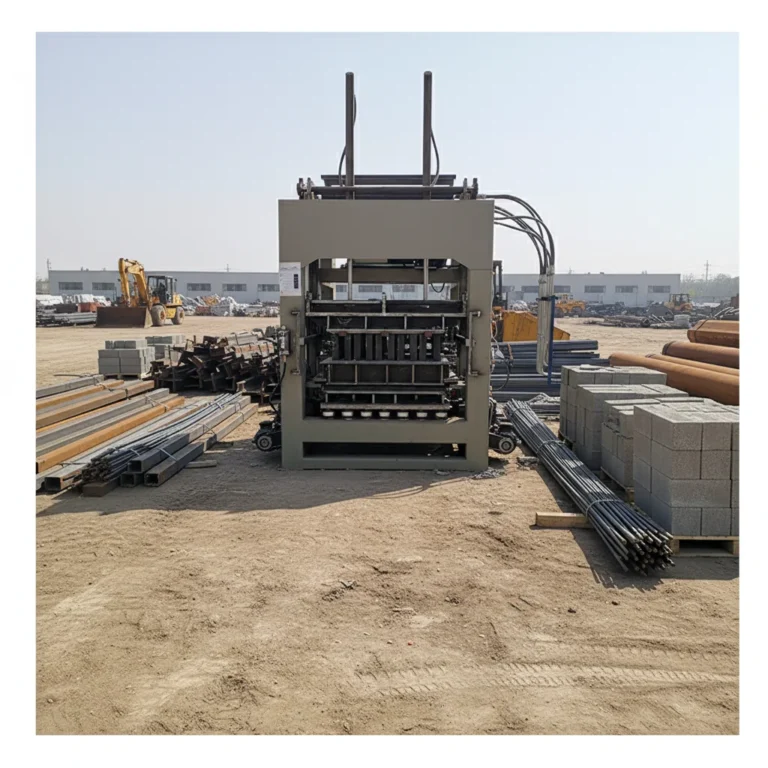
| Overall Dimensions (L×W×H) | 7400×1950×2800 mm |
| Total Mass | 5000 kg |
| Vibration Frequency | 0–60 Hz (adjustable) |
| Vibration Form | Platform Vibration |
| Vibration Force | 80 kN |
| Moulding Mode | Automatic load, vibration moulding |
| Pallet Size | 1100×550 mm |
| Molding Cycle | 15–20 s (basis not stated in source — confirm block format / material / thickness) |
| Overall Power | 32 kW |
| Demolding Method | Hydraulic |
| Recommended Factory Area | 1000 m² |
| Control System | PLC with touch screen interface |
| Hydraulic System | Independent integrated hydraulic station |
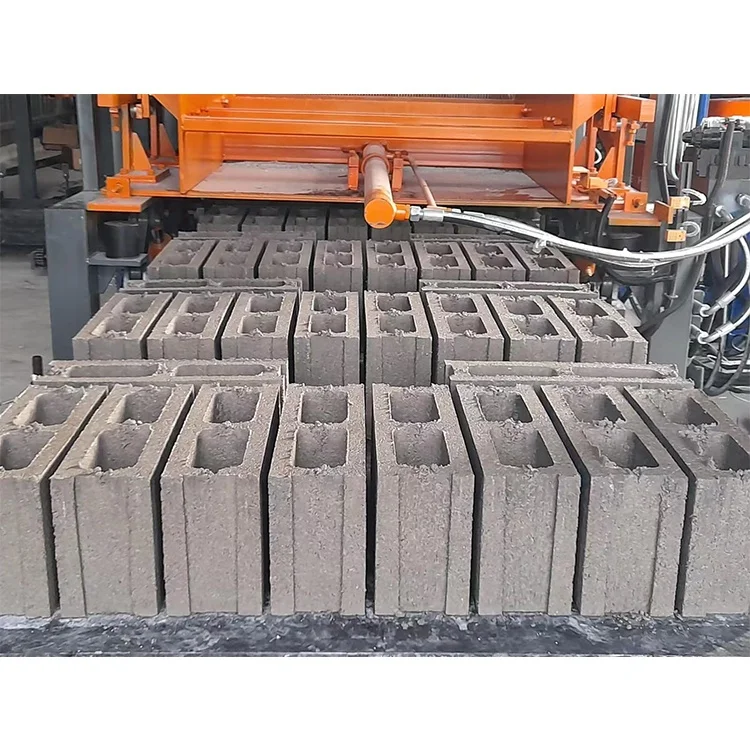
| Output Capacity (Hollow Block 400×200×200 mm) | 900–1200 pcs/h | 7200–9600 pcs per 8 hr shift |
| Output Capacity (Hollow Block 400×150×200 mm) | 1080–1440 pcs/h | 8640–11520 pcs per 8 hr shift |
| Output Capacity (Solid Brick 240×115×53 mm) | 5760–7680 pcs/h | 46080–61440 pcs per 8 hr shift |
| Output Capacity (Rectangular Paver 200×100×60 mm) | 3600–4500 pcs/h (cycle 20–25 s) | 28800–36000 pcs per 8 hr shift |
| Output Capacity (Zigzag Paver 225×112.5×60 mm) | 2304–2880 pcs/h (cycle 20–25 s) | 18432–23040 pcs per 8 hr shift |
| Mould Change System | Quick replacement for multi-format production |
| Block Compressive Strength | ≥ 15 MPa |
| Raw Material Compatibility | Fly ash (up to 70%), slag, gangue, sand, crushed stone, cement, water |
| Automation Level | Automatic (pallet feeding, material feeding, vibrating, demoulding) |
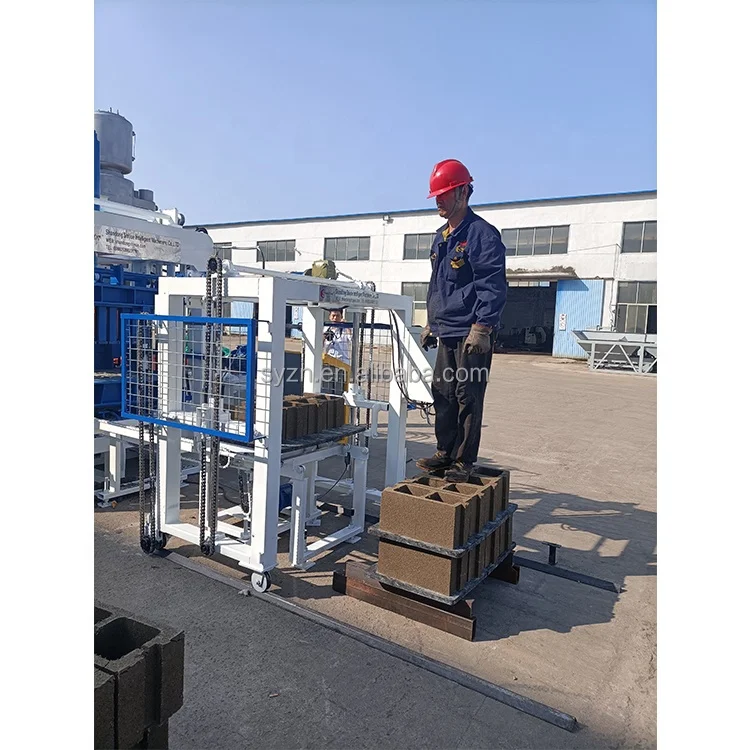
| Component List | Pallet feed machine, block making machine, storage hopper, conveyor, hydraulic unit, PLC control cabinet |
| Voltage & Frequency | (source value — verify against manufacturer catalog) |
| Warranty | 1 year for whole machine (excluding spare parts) |
Application Suitability
| Application | Material or Output |
|---|---|
| Hollow block production for wall construction | Crushed stone, sand, cement, fly ash blends |
| Solid brick manufacturing for load-bearing structures | Sand, slag, gangue, cement mixtures |
| Rectangular and zigzag paver production | High-density concrete with fine aggregate |
| On-site block production for housing developments | Locally sourced aggregate with up to 70% fly ash |
| Multi-format concrete product lines | Interchangeable moulds across hollow, solid, and paver formats |
What "Automatic" Actually Means on the Shop Floor
Buying an automatic PLC controlled QT5-15 hollow block machine because the label says automatic does not guarantee the operator can run it without intervention — the real test is whether every station from pallet feed to demoulding follows one sequenced program.
I have walked into plants where the press itself was PLC-controlled but the pallet feeder ran on a separate timer, creating a bottleneck that forced an operator to manually shuttle pallets between cycles. The result was a machine rated for a certain cycle time that never achieved it in continuous production. When the pallet feed, material dosing, vibration parameters, and hydraulic demoulding are all driven from one PLC with stored recipes, the operator selects a format and the machine runs the sequence end to end [NEED_CITE: PLC integration standards for concrete block presses]. Without that integration, you have an automated press with manual support stations.
Sequenced Automation Removes Operator Variability
In a semi-automatic setup, the operator decides when to feed material, how long to vibrate, and when to demould. That introduces cycle-to-cycle variation in block density and strength. The QT5-15 stores vibration frequency, pressure duration, and timing parameters per mould format in the PLC, so switching from a 400×200×200 mm hollow block to a 200×100×60 mm paver means loading a different recipe on the touch screen rather than recalibrating by hand. The automatic PLC controlled QT5-15 hollow block machine maintains consistent batch-to-batch output because the same parameters run every cycle regardless of shift changes or operator experience.
Hydraulic Station Isolation and Consistent Demoulding
The independent integrated hydraulic station sits apart from the main vibration platform, which matters more than buyers initially expect. On machines where the hydraulic valves share the same frame as the vibrator, repeated shock loads gradually loosen fittings and cause pressure drift. An isolated station on the QT5-15 maintains steady demoulding pressure across an eight-hour shift, reducing the cracked blocks and edge damage that occur when hydraulic pressure drops mid-run [NEED_CITE: hydraulic system isolation in vibration-intensive machinery]. The 32 kW overall power allocation supports both the vibration motors and the hydraulic pump without requiring a separate power circuit for the station.
Reading the Specs That Determine Daily Output
The vibration force of 80 kN at up to 60 Hz sets the compaction ceiling — paired with the hydraulic pressure during the moulding phase, these two figures together determine whether the finished block reaches the ≥ 15 MPa compressive strength rating. A machine with high vibration force but insufficient hydraulic hold will produce blocks that look dense on the surface but fracture under load testing. The pallet size of 1100×550 mm dictates how many blocks form per cycle, and this dimension must match the curing racks and forklift tines already in your yard. The 1000 m² recommended factory area accounts for the press footprint, pallet return path, and initial curing space but does not include extended curing yards or raw material storage — confirm your site layout against those numbers before finalizing the line plan.
When Configuration Choices Cost You After Arrival
A buyer who skips voltage and frequency confirmation before production often discovers on commissioning day that the PLC cabinet was wired for a power supply that does not match the local grid. The result is a machine sitting idle while transformers are sourced or control components are rewired — delays that consume the schedule buffer you had planned for mould trials and operator training [NEED_CITE: voltage mismatch delays in exported industrial machinery]. Similarly, choosing a pallet size without checking your existing curing rack dimensions means purchasing an entirely new rack system or manually re-stacking every pallet of green blocks before they enter the curing area. These are not machine defects; they are specification gaps that surface only after the container is unpacked.
Why Buyers Source This Machine Through Our Workshop
We configure the automatic PLC controlled QT5-15 hollow block machine as one matched system — press, mould, pallet, and handling stations are specified together rather than assembled from separate quotations. The capacity figures we provide state which block format each output number assumes, so you compare realistic daily shifts rather than headline cycle rates. Mould design and supply covers the formats your market actually sells, including custom drawings if your standard format falls outside the catalogue range. Voltage, frequency, and PLC display language are confirmed in writing before production begins, avoiding commissioning delays when the machine arrives on site. Our documentation package includes the hydraulic and electrical schematic your maintenance team needs to trace faults without waiting for remote support calls.
Documentation & Verification
- Line layout with capacity calculation stating the block format assumed for each output figure
- Machine specification sheet covering QT5-15 vibration, hydraulic, and PLC parameters
- Mould drawing and format list for every block type included in your order
- Voltage, frequency, and PLC touch-screen language confirmation record before production
- Factory test record on your specified block format and raw material blend
- Hydraulic and electrical schematic for on-site fault tracing by your maintenance team
Installation, Commissioning & Support
- Foundation plan sized to the 7400×1950 mm footprint and 5000 kg operating mass of the QT5-15
- Dedicated power circuit rated for the 32 kW overall load with confirmed voltage and frequency
- Machine arrives partially assembled; hydraulic station and PLC cabinet connect on site
- PLC recipe programming for each ordered mould format completed during commissioning
- Operator training covers recipe selection, mould changeover, and daily maintenance routines
- Wear parts list identifying hydraulic seals, vibration springs, and mould liner replacement intervals
Moving Forward With Your Specification
To size the QT5-15 correctly for your plant, share the block formats you currently sell along with target daily volumes per format, your local voltage and frequency standard, and the preferred PLC display language for your operators. If you are replacing an existing press, let us know your current pallet dimensions and curing rack configuration so the new line integrates without requiring a full yard overhaul. For buyers adding paver or interlocking formats to an existing hollow block range, specify which additional moulds you need so we include them in the initial recipe programming.
Frequently Asked Questions
Q: How is the output capacity verified per block format, and what cycle time does each format assume?
A: Each output figure in the specification sheet is listed alongside the block format it applies to — for example, 900–1200 pieces per hour for a 400×200×200 mm hollow block and 3600–4500 pieces per hour for a 200×100×60 mm rectangular paver at a 20–25 second cycle. We provide a written capacity calculation per format with your quotation rather than quoting a single headline number.
Q: What PLC language and touch-screen interface options are available before shipment?
A: The PLC touch screen can be configured in multiple display languages, and we confirm your preferred language in writing before production begins. This prevents a situation where the operator interface arrives in a language your team cannot read, delaying the training and commissioning process on site.
Q: How does the mould change system work, and what is the realistic changeover time?
A: The QT5-15 uses a quick-replacement mould system where each format has its stored recipe in the PLC. Changeover involves mechanically swapping the mould box and selecting the corresponding recipe on the touch screen, which recalls the vibration frequency, pressure timing, and cycle parameters for that format without manual recalibration.
Q: Can the QT5-15 be upgraded to include automatic stacking and cubing later?
A: The automation level on the QT5-15 is selectable, and the press is designed to integrate with downstream stations such as automatic stacking and cubing as a future addition. We document the upgrade path in the initial line layout so you know which connections and space allocations to plan for from the start.
Q: What voltage and frequency configurations are supported for different export markets?
A: The QT5-15 electrical system is configurable across voltage and frequency standards, and we confirm the exact configuration in writing before the control cabinet is wired. This ensures the PLC, vibration motors, and hydraulic pump all match your local power supply without requiring on-site transformers or rewiring.