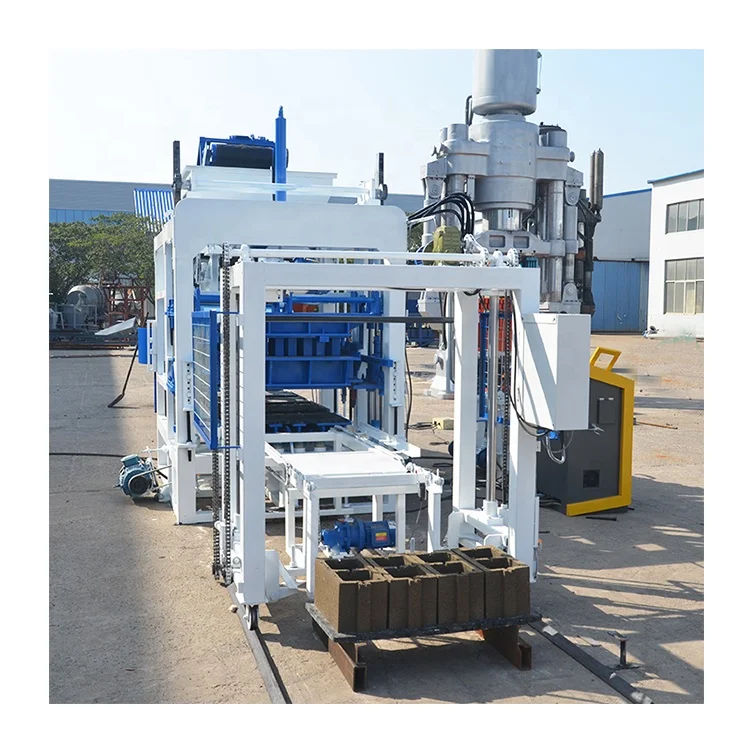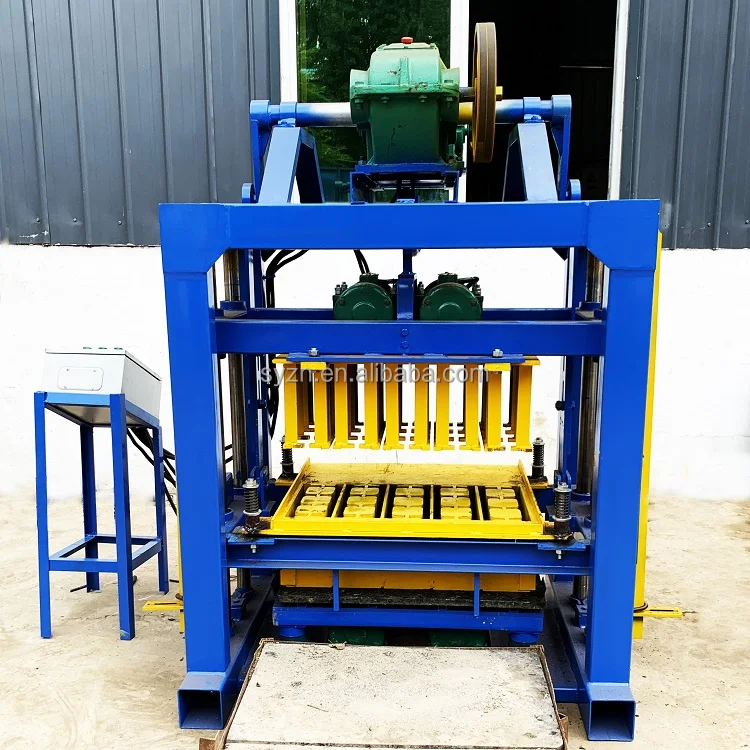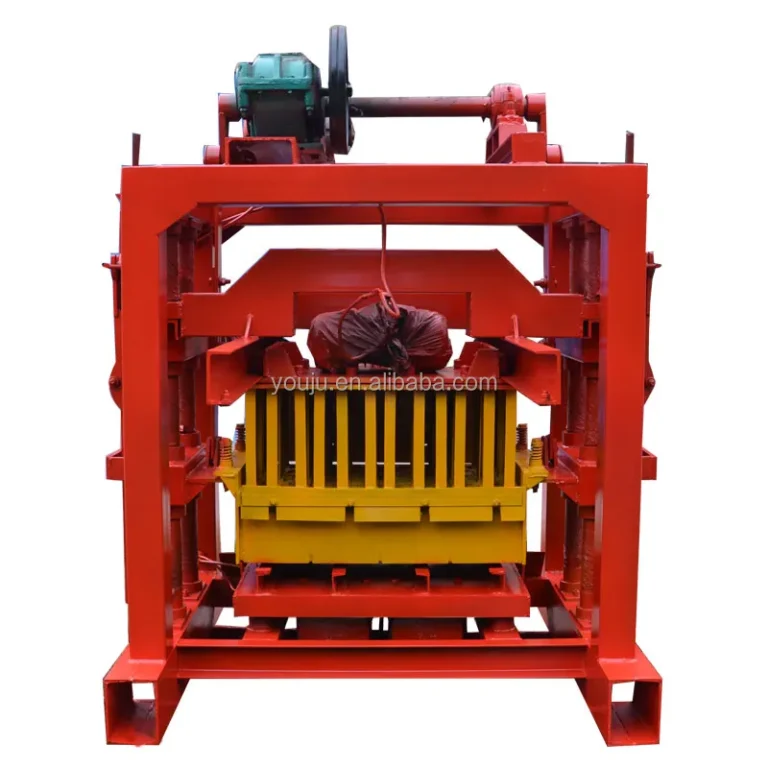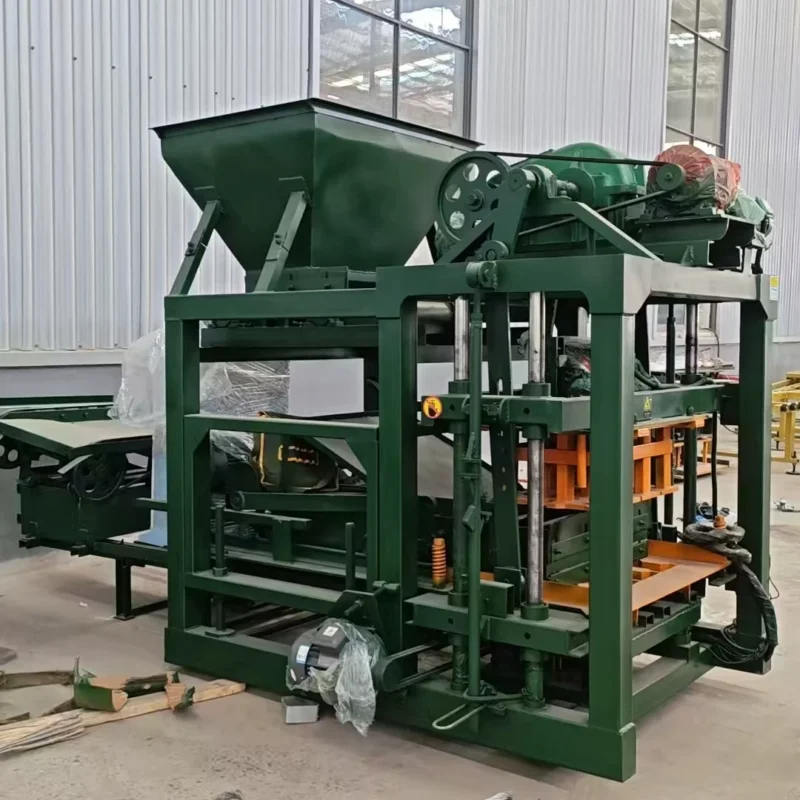
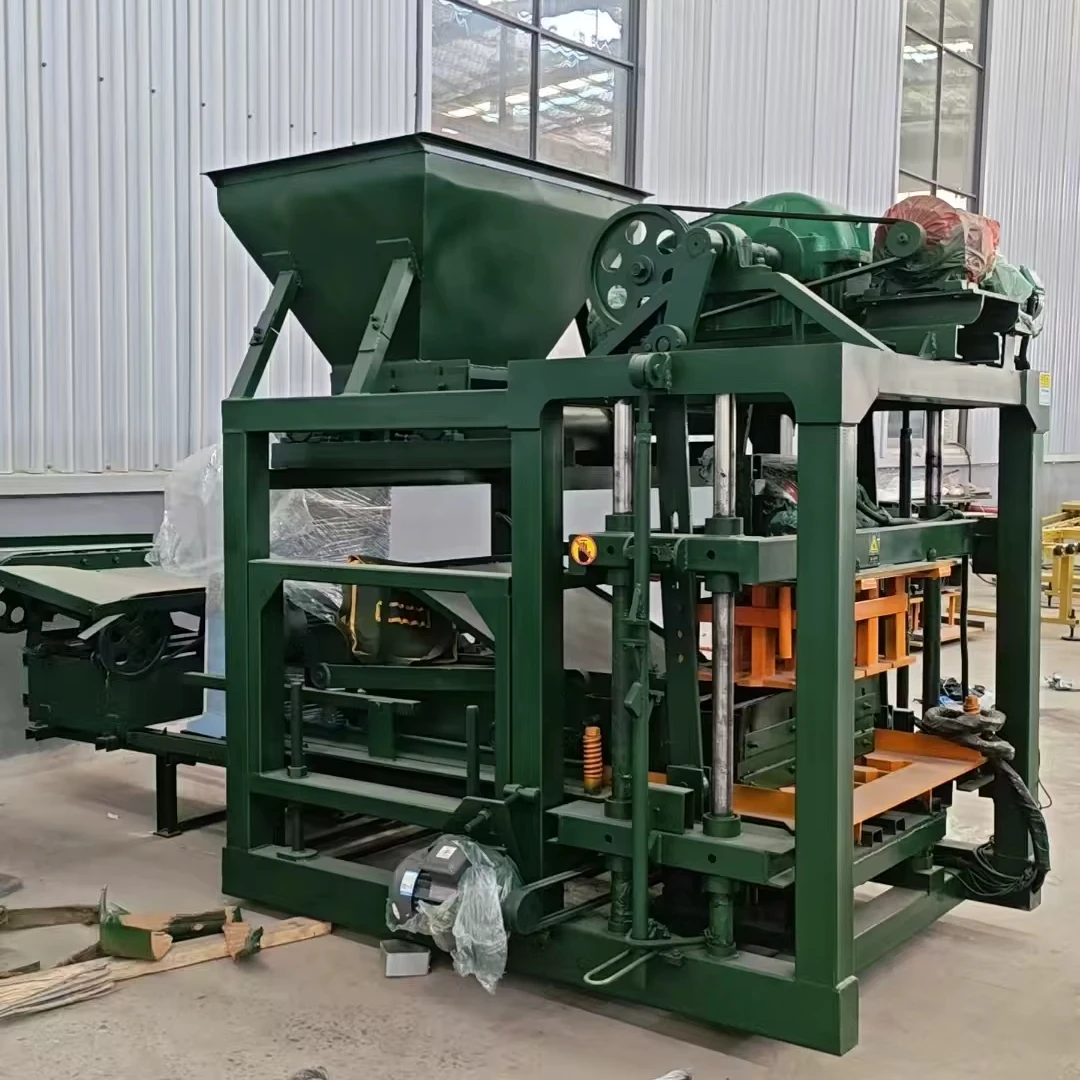
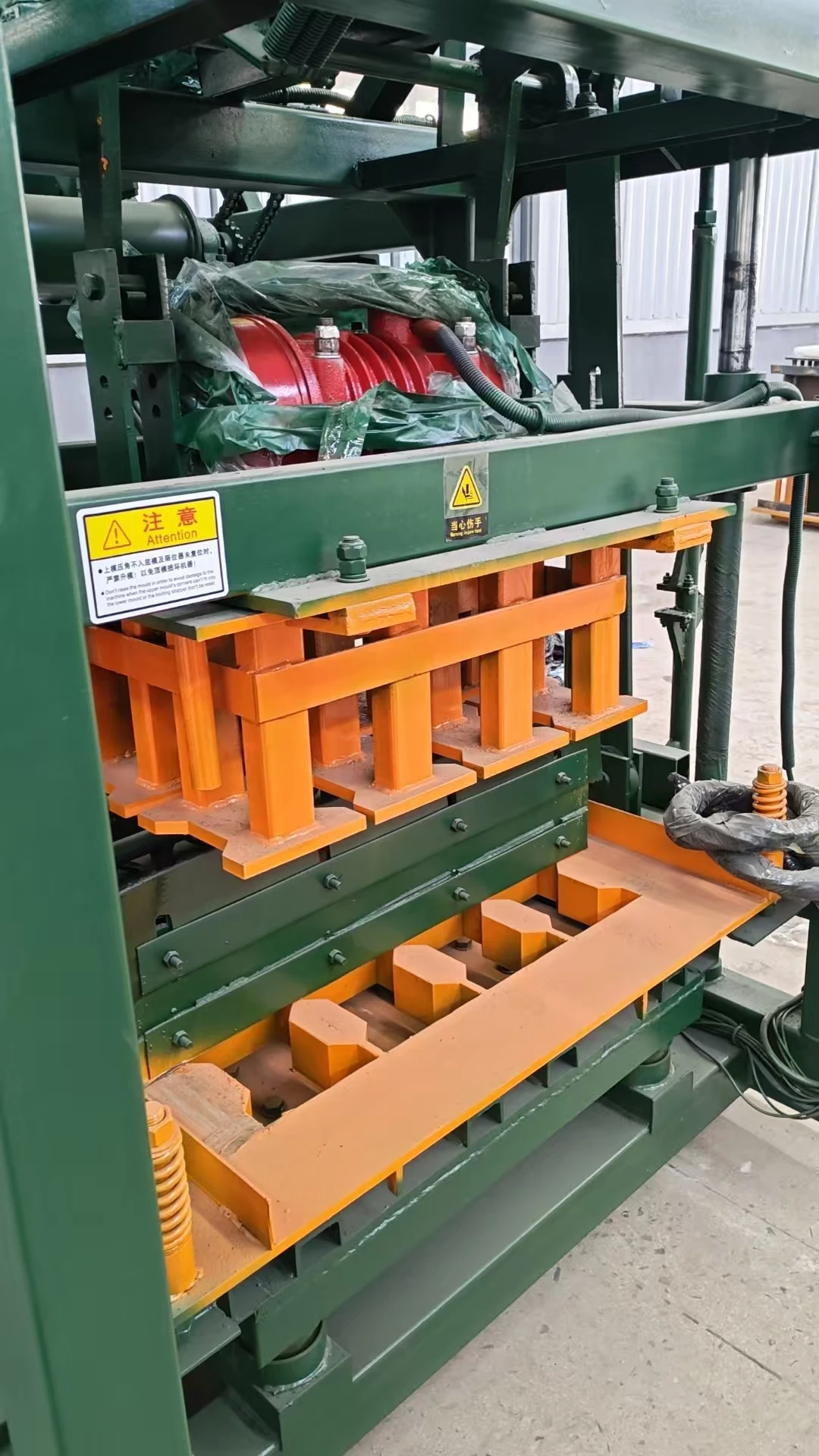
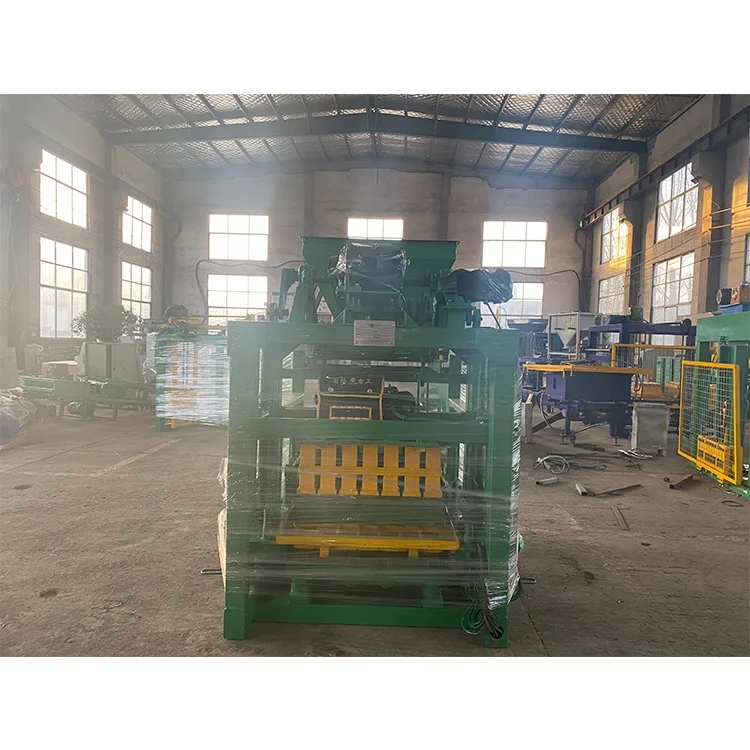
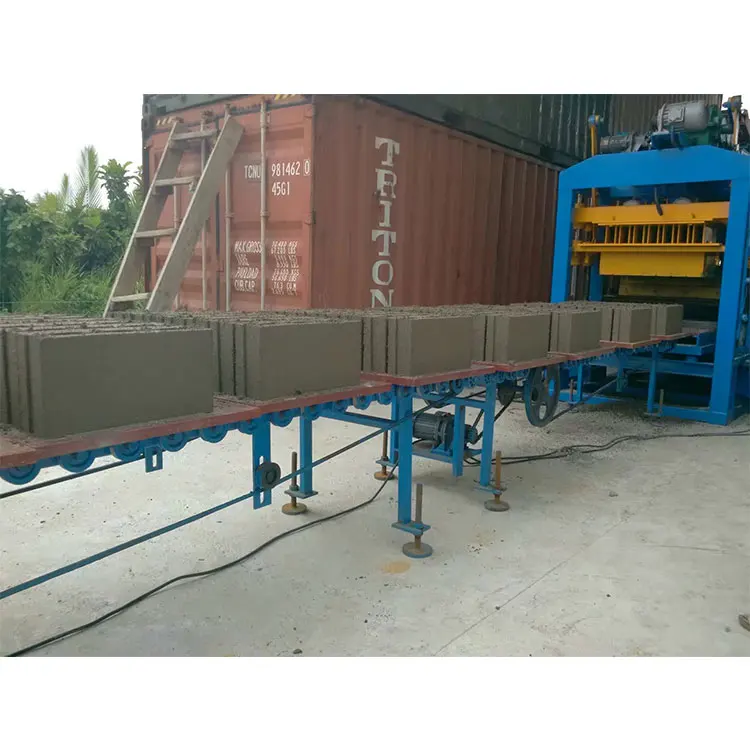
Description
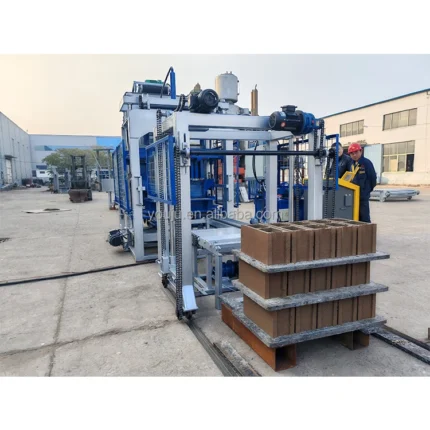
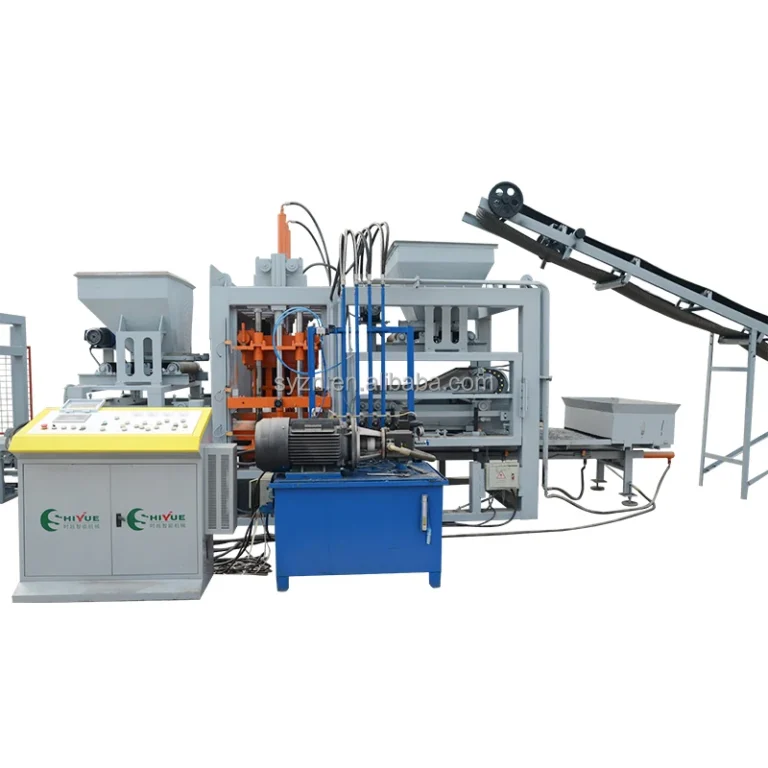
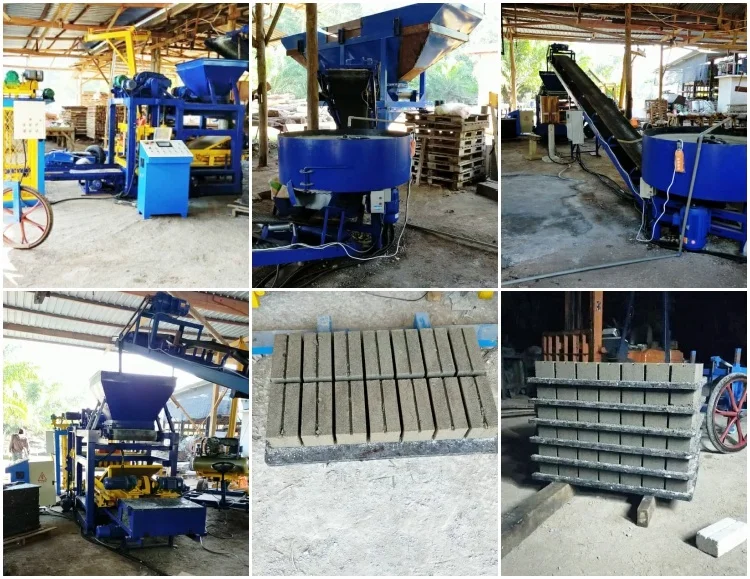
Matched System Engineering — every automation station from pallet feeding to cubing is specified against the press cycle so no station waits on another.
Technical Specifications
| Parameter | Value |
|---|---|
| Model | QTJ4-25 |
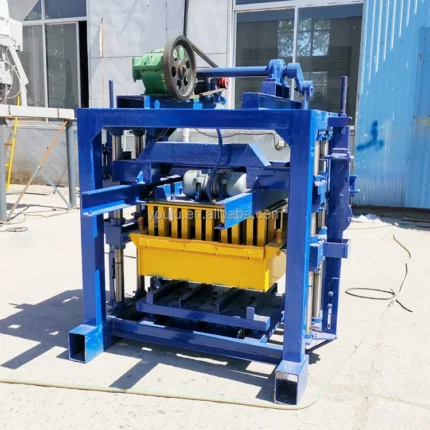
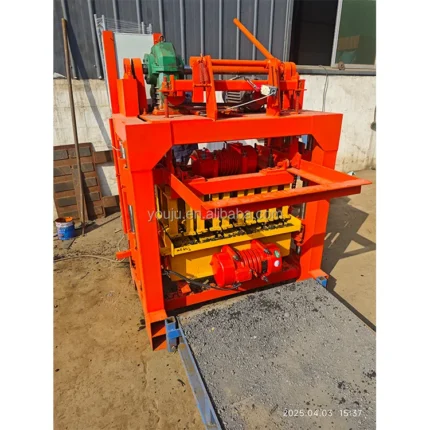
| Product Type | Semi-Automatic Concrete Block Making Machine |
| Rated Power | 17.9 kW |
| Overall Dimensions (L×W×H) | 6400 × 1500 × 2700 mm |
| Net Weight | 2500 kg |
| Vibration Frequency | 2800 r/min |
| Exciting Force | 60 kN |
| Molding Cycle | 25 s |
| Pallet Size | 850 × 550 × 20 mm |
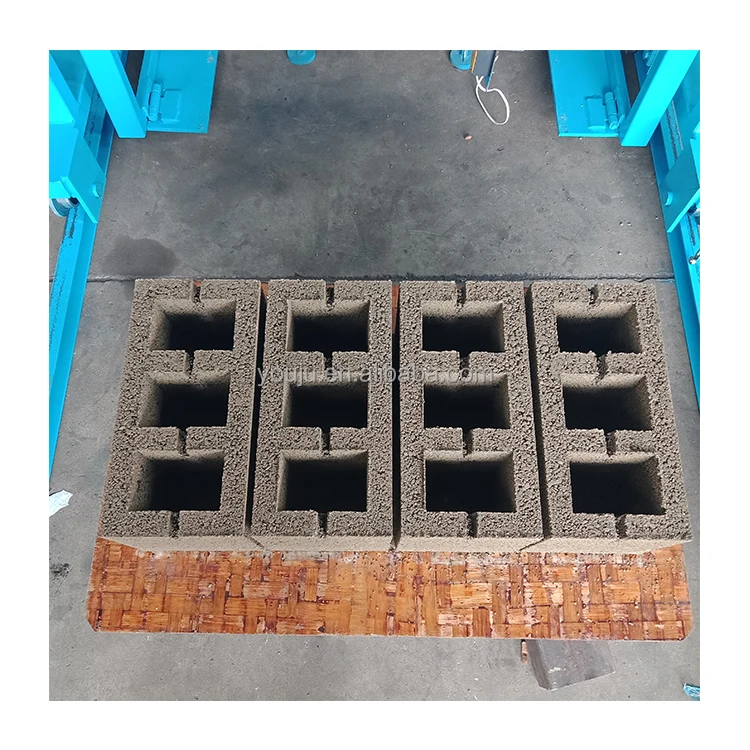
| Mould Capacity | 4 pcs/mould (400×200×200 mm hollow block) |
| Output Capacity | 960 pcs/h, 7680 pcs/day (based on 400×200×200 mm hollow block, 4 pcs/mould) |
| Control System | Motor-driven (PLC control available as option) |
| Automation Level | Semi-automatic (manual pallet handling and stacking) |
| Configuration Included | Host machine 1 set, block mould 1 set, JQ350 mixer |
| Voltage & Frequency | Configurable — confirm before order |
| Hydraulic Pressure | To be confirmed per buyer requirement |
| Mould Change Time | To be confirmed per mould format |
Application Suitability
| Application | Material or Output |
|---|---|
| Hollow block production | Crushed stone, cement, sand — 4-inch, 5-inch, 6-inch, 8-inch formats |
| Solid block production | Cement-aggregate mix for load-bearing and partition walls |
| Paving block production | High-density mix for walkways, driveways, and yard surfaces |
| Kerbstone production | Reinforced mix for road-edge and boundary applications |
| Small-to-medium block plants | Daily output targets matched to semi-automatic cycle pacing |
| On-site construction production | Blocks formed at the project location without a fixed curing yard |
| First-line entrepreneurs | Entry-level plant with room to add automatic stations later |
What "960 Blocks per Hour" Actually Means on the Shop Floor
The quoted cycle time only translates to real output when the pallet handling, curing rack, and stacking pace match the press rhythm.
The PLC controlled QTJ4-25 block machine presses a pallet every 25 seconds, which on paper reads as a strong daily figure for 400×200×200 mm hollow blocks. On the shop floor, that number holds only if a worker is ready with the next empty pallet the instant the press finishes, and if cured blocks are cleared from the drying area before space runs out. I have walked onto sites where the press sat idle for minutes between cycles because nobody had accounted for the manual pallet loop. The cycle timer is honest; the missing link is everything around the press. [NEED_CITE: typical manual pallet handling delays in semi-automatic block lines]
Defining the Automation Boundary Before You Sign
Semi-automatic means the press cycle and vibration sequence run on their own, but pallets still travel by hand between the press, the drying yard, and the stacking point. Buyers sometimes assume the word "automatic" covers pallet feeding and block cubing. On the QTJ4-25, those stations are selectable additions, not defaults. Confirming exactly which stations are motorised and which remain manual prevents headcount surprises on day one. The PLC controlled QTJ4-25 block machine lets you draw that line clearly before the machine ships.
Where the Upgrade Path Leads
Starting semi-automatic does not lock you into manual pallet handling forever. As daily volume grows, pallet feeders, stackers, and cubing stations can be bolted on while the original press and mould remain in service. The frame, vibration motor, and mould mounting points are designed to accept these additions without a structural overhaul. This means your initial capital outlay covers a machine that can evolve with your production targets rather than requiring a full replacement when you need higher throughput. [NEED_CITE: block plant automation upgrade sequences from semi-automatic to full line]
Reading the Numbers That Matter
The 2800 r/min vibration frequency and 60 kN exciting force work together to compact the mix inside the mould cavity. Frequency sets how fast the aggregate particles settle; force determines how tightly they pack. Too little force and the block crumbles at the edges; too much and the mix segregates, leaving weak spots. The 25-second cycle allows enough vibration time for a standard hollow block, but denser paver formats may need a longer dwell. Pallet size at 850 × 550 × 20 mm must match the forklift tine width and the curing rack slot spacing you already have — a mismatch means buying new racks or cutting pallets down. The 17.9 kW rated power draws from a dedicated circuit; shared wiring with other heavy motors can cause voltage dips that disrupt the control logic.
The Hidden Cost of Skipping the Configuration Conversation
When voltage and frequency are left unspecified, the machine may arrive with a motor wound for a grid that does not match the local supply, leaving you with a stationary asset and weeks of downtime while a replacement motor ships. [NEED_CITE: voltage mismatch incidents in exported concrete machinery] Control panel language is another quiet trap — I once shipped a unit to South America with an English-default PLC screen, and the local operator could not navigate the parameter menu, freezing the entire line on the first morning. These are not engineering failures; they are communication gaps that a ten-minute pre-order checklist would have prevented.
Why Buyers Place Repeat Orders Here
Every station from raw material feeding through stacking is specified as one matched system, not assembled from unrelated vendors. The mould design is built around the block formats your market actually buys, including custom drawings when standard sizes do not fit. Capacity calculations state the assumed block format, so you can verify the daily figure against your product mix before committing. Voltage, frequency, and PLC display language are confirmed in writing before production begins. The automation scope — what is motor-driven versus what stays manual — is defined in the quotation, not left ambiguous until arrival.
Documentation & Verification
- Line layout showing press, mixer, and pallet flow with capacity per block format
- Voltage and PLC language confirmation sheet signed before factory build
- Hydraulic and electrical schematic for local electrician site preparation review
- Factory test record on your specified block format before container loading
- Mould drawing and format list covering every block type in the initial order
- Operation and maintenance manual with wear parts replacement intervals
Installation, Commissioning & Support
- 6400 × 1500 × 2700 mm footprint requires a level concrete pad with anchor bolt provisions
- 17.9 kW rated power needs a dedicated breaker and stable supply matching confirmed voltage
- Machine ships dismantled for container loading; reassembly on site with bolted frame sections
- First-cycle commissioning includes vibration timing and mould alignment checks on your mix
- Operator training covers cycle start, pallet loading rhythm, and mould change procedure
- Wear parts list identifies high-friction components and recommended reorder quantities
What We Need From You to Build the Right Quote
Tell us which block formats you sell today and which ones you plan to add within the next year. Share your local aggregate type and moisture range so the vibration force can be matched to your mix. Confirm your site voltage and frequency, and let us know the display language your operators prefer so the control panel is ready the day it powers up.
Frequently Asked Questions
Q: How do I verify the real daily output the QTJ4-25 can deliver?
A: The quoted output of 960 pieces per hour and 7680 per day assumes 400×200×200 mm hollow blocks at 4 per mould with a 25-second cycle. Your actual figure depends on pallet handling speed, curing area capacity, and shift length. Request the capacity calculation document that states the assumed format and compare it against your production schedule.
Q: Which PLC languages and voltage options are available before shipment?
A: Voltage and frequency are configured to match your local grid, and the PLC display language is set to your operator’s preference. Both must be confirmed in writing before production begins. This avoids the situation where the machine arrives with an unreadable interface or an incompatible motor winding.
Q: What automation stations are included versus optional on this machine?
A: The base configuration covers the press cycle, vibration, and upper mould compression. Pallet feeding, automatic stacking, and cubing are optional additions. The quotation clearly states which stations are motorised and which remain manual so you can plan labour allocation from the first shift.
Q: Can I upgrade from semi-automatic to fully automatic later?
A: The press frame and mould mounting points accept pallet feeders, stackers, and cubing stations as bolt-on additions. You do not need to replace the press itself. Plan the upgrade sequence around your daily output targets and available curing space.