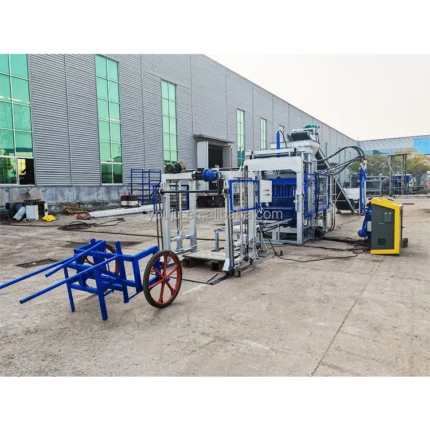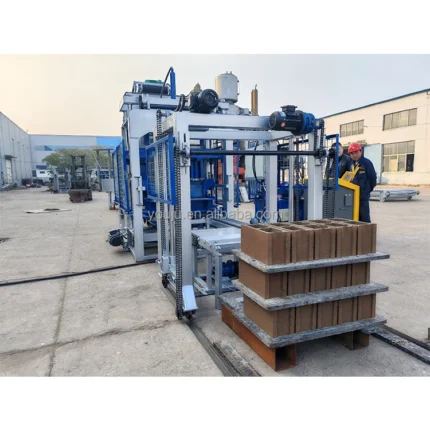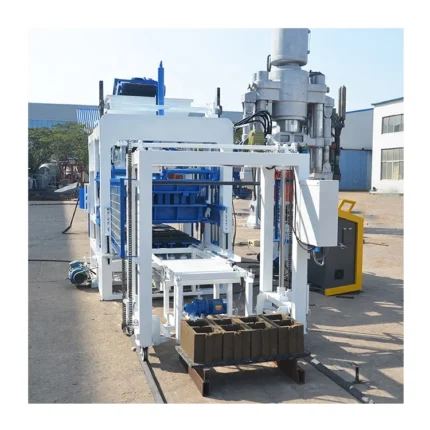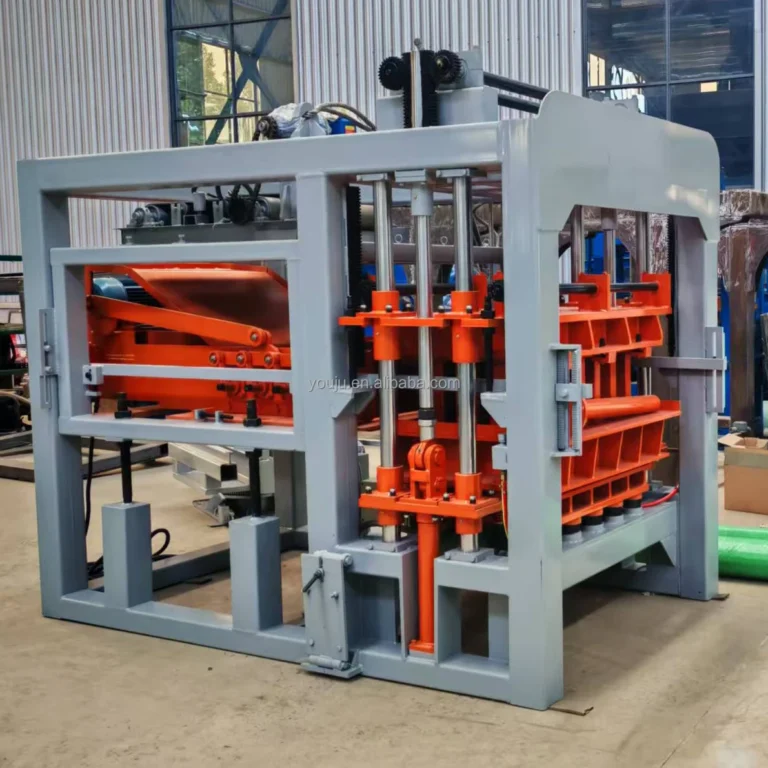
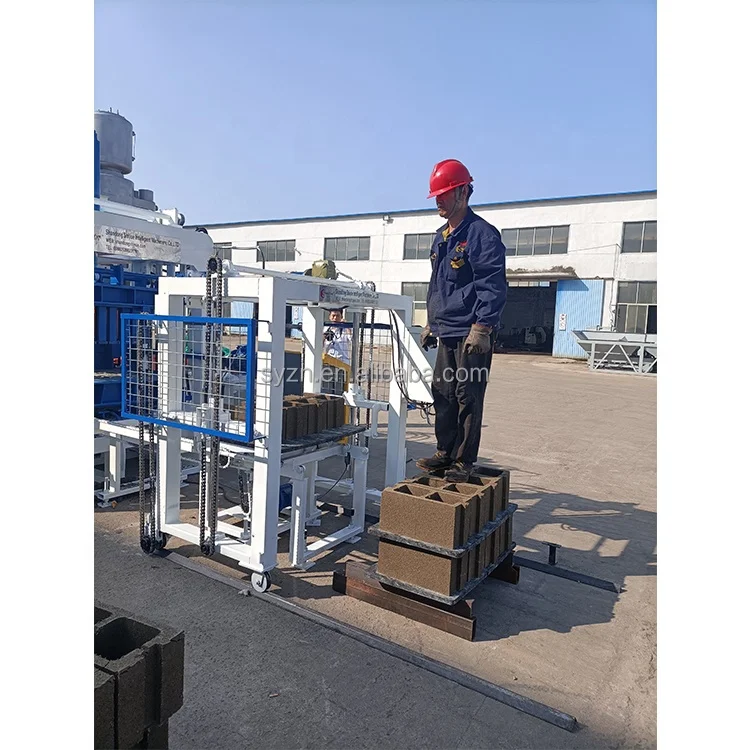
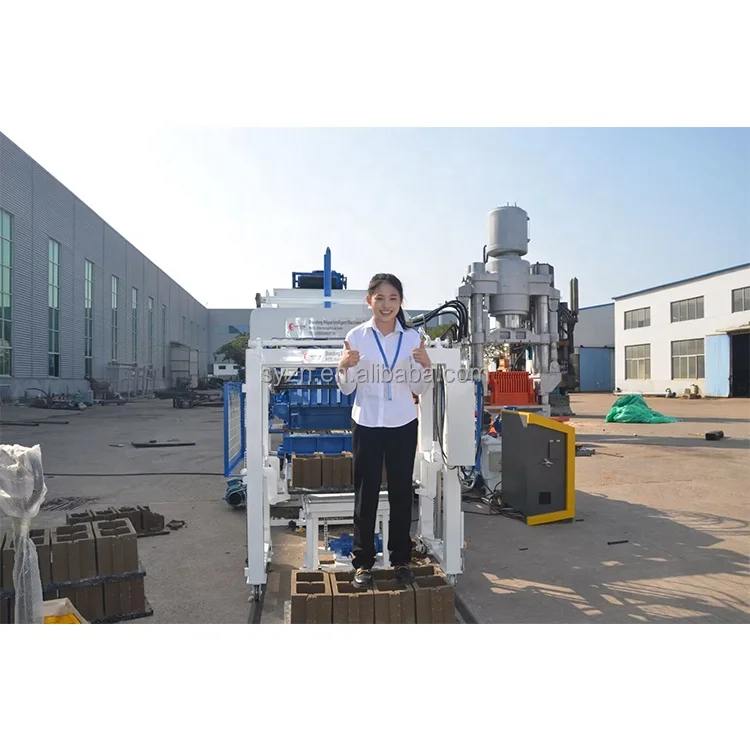
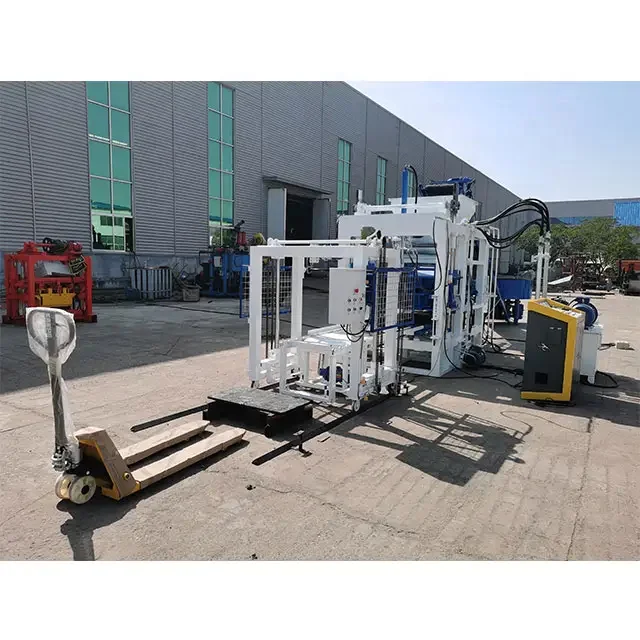
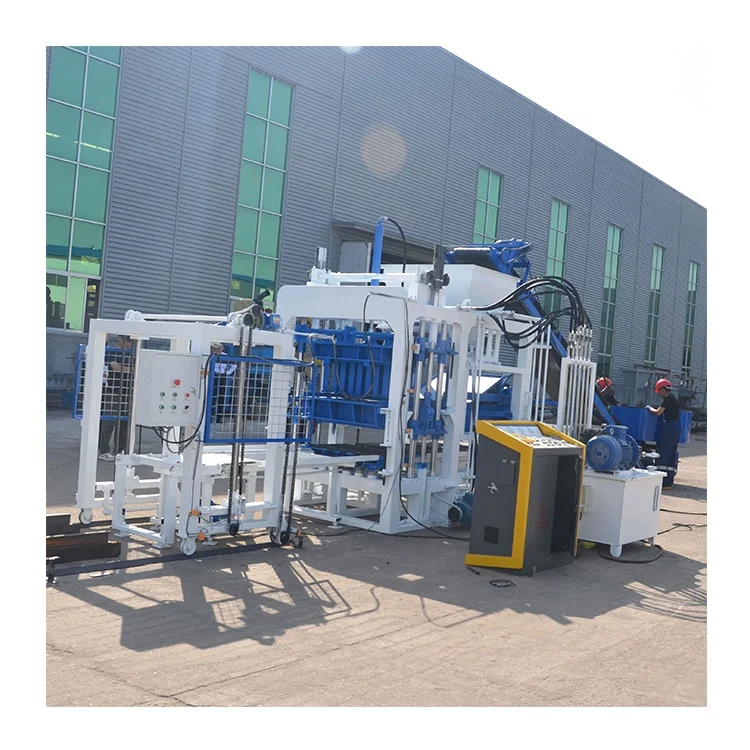
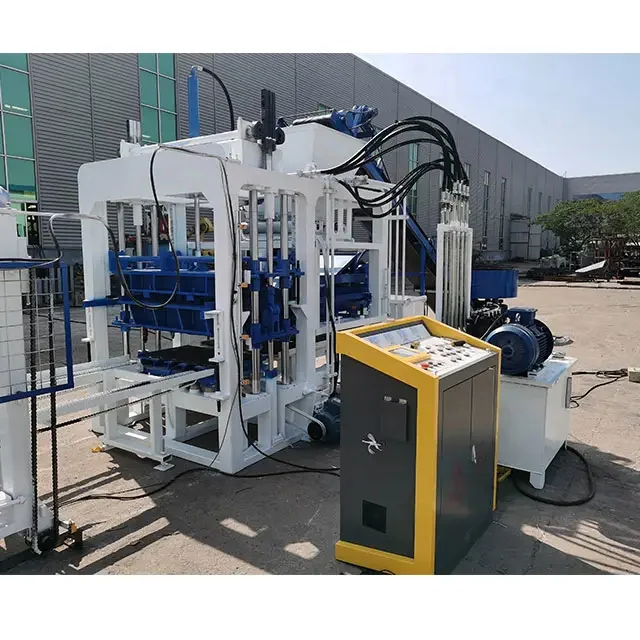
Description
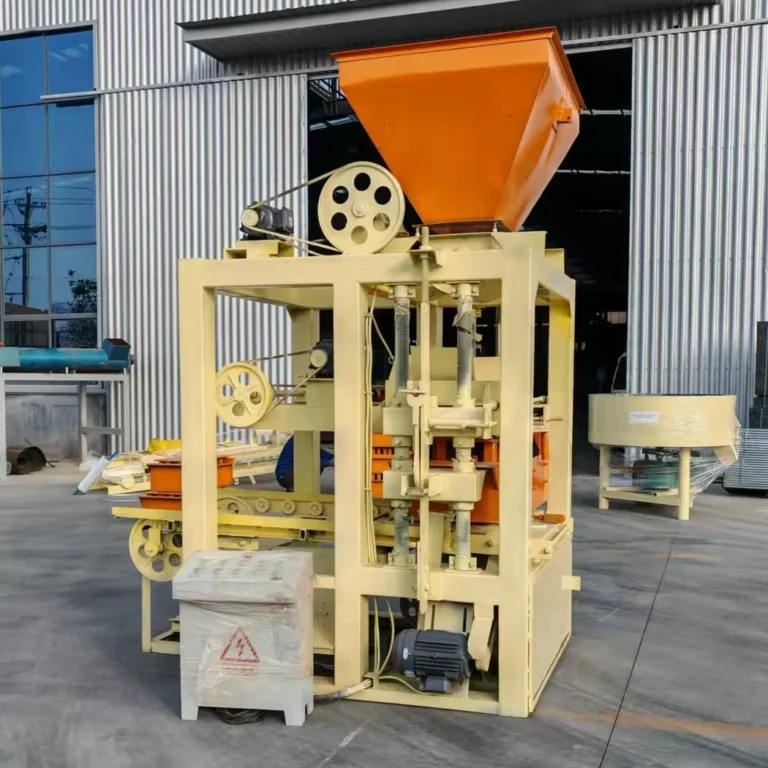
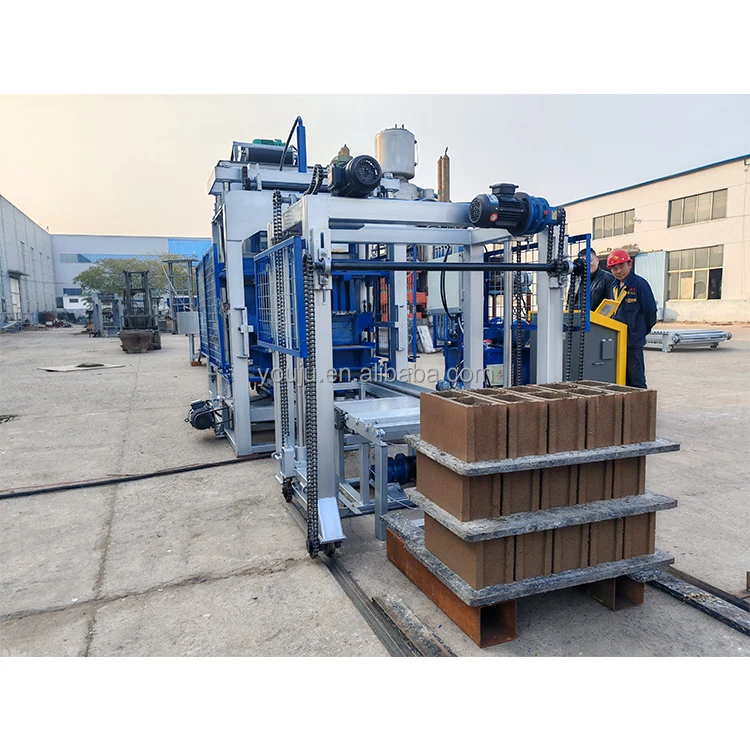
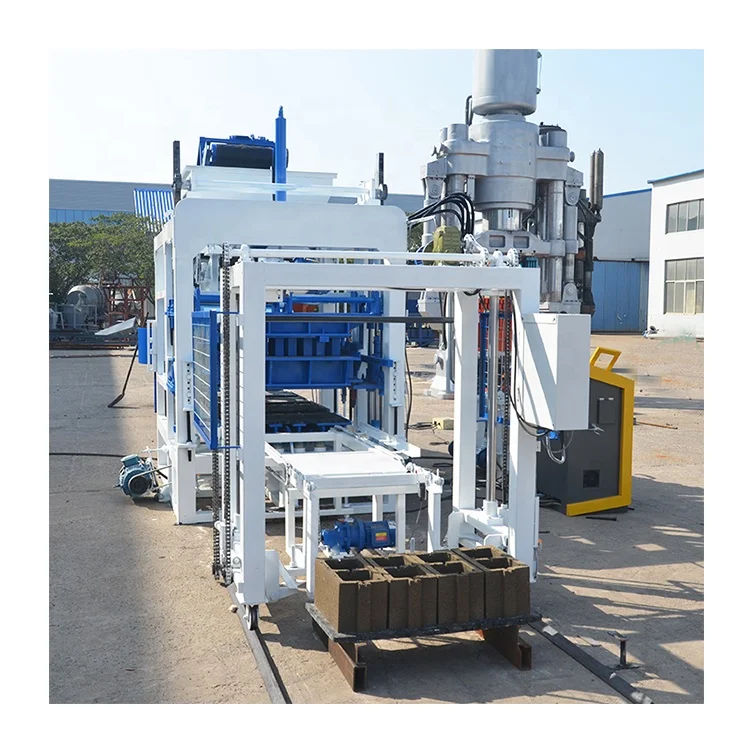
Integrated System Matching — the QT4-15A is specified against your actual mix design, target block format and existing pallet inventory, not a catalogue default.
Technical Specifications
| Parameter | Value |
|---|---|
| Model | QT4-15A |
| Product Type | Fully Automatic Hydraulic Concrete Block Making Machine |
| Overall Dimensions (L×W×H) | 4100×1600×2600 mm |
| Rated Pressure | 16–21 MPa |
| Main Vibration Form | Platform Vibration |
| Vibration Frequency | 4200 r/min |
| Vibration Force | 55 kN |
| Pallet Size | 880×550 mm |
| Molding Cycle | 25–30 s (basis not stated in source — confirm block format and material) |
| Overall Power | 18.45 kW |
| Total Mass | 4 T |
| Demolding Method | Hydraulic |
| Factory Area Required | 300 m² |
| Control System | PLC (to be verified with buyer before production) |
| Automation Level | Fully automatic |
| Mould Compatibility | Custom moulds per customer drawings |
| Loading | 1×40HQ container (basic equipment) |
Application Suitability
| Application | Material or Output |
|---|---|
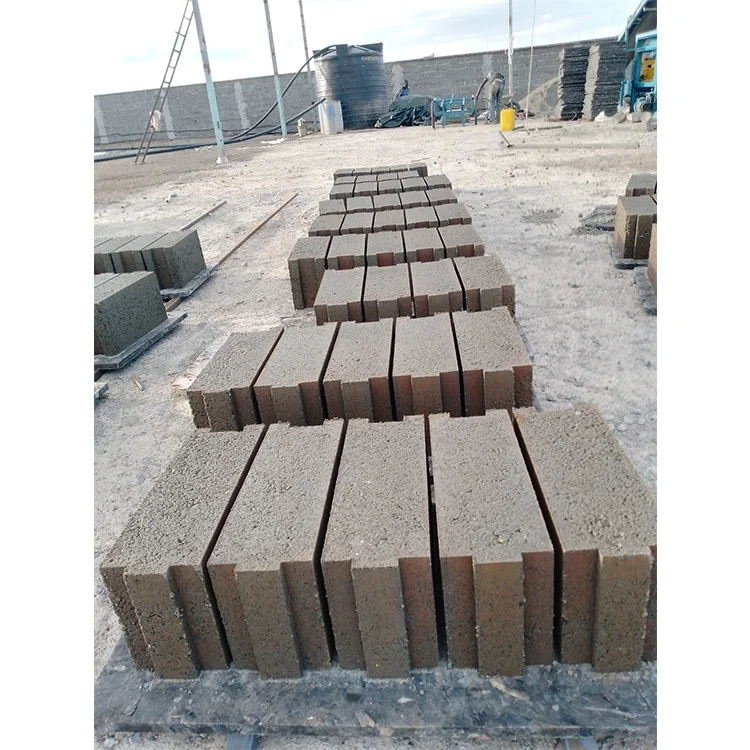
| Hollow block production | Crushed stone, sand, cement, fly ash |
| Solid block manufacturing | Gravel, cement, slag blends |
| Paving block and colored paver runs | Fine aggregate, cement, pigment additives |
| Interlocking brick production | Sand, cement, quarry dust |
| Kerbstone forming | Coarse aggregate, cement, fly ash |
Why the PLC Language Question Should Come Before the Price
A control panel the operator cannot read is a control panel that does not control.
I spent years commissioning automatic QT4-15A block machines across Latin America, and the most expensive delays were never mechanical. They were linguistic. The PLC arrived displaying Mandarin or default English, the local operator could not navigate the menus, and the first production day dissolved into guesswork. Voltage mismatches followed close behind — a 380V/50Hz machine dropped into a 440V/60Hz plant without transformer planning burns out drives within weeks [NEED_CITE: voltage and frequency standards by export market]. These are not edge cases. They are the predictable result of skipping configuration confirmation before production starts.
What the PLC Actually Takes Over From the Operator
The QT4-15A places the entire molding sequence — pallet feed, material dosing, vibration timing, hydraulic demolding, and pallet discharge — under PLC control. This means cycle parameters are stored as recipes, not held in an operator’s memory. When the morning shift changes, the machine does not drift. The automatic QT4-15A block machine PLC controlled configuration ensures that the 16–21 MPa pressure and 4200 r/min vibration frequency execute identically across every cycle, removing the human inconsistency that semi-automatic lines accept as normal.
How Automation Reduces the Labour Equation
A fully automatic stationary block machine replaces manual pallet handling, raw material batching guesswork, and stacking coordination with sequenced station control. The operator’s role shifts from executing each step to monitoring system status and responding to alarms. For plant owners transitioning from semi-automatic operation, this means the same floor crew can manage higher throughput without proportional headcount growth — provided the upstream batching and downstream stacking stations are matched to the press cycle [NEED_CITE: CE machinery directive requirements for industrial equipment]. The upgrade path from semi-automatic to full automation should be planned as a line-wide transition, not a press-only swap.
Reading the Specs That Actually Matter
The rated pressure of 16–21 MPa and the vibration force of 55 kN do not operate independently. Hydraulic pressure compacts the mix while platform vibration rearranges aggregate particles into a denser packing structure. If the vibration force is insufficient for a stiff, low-slump mix, the pressure alone creates laminations rather than uniform density. The 880×550 mm pallet size determines how many block cavities fit per cycle, which directly governs daily output once the 25–30 s molding cycle is confirmed against a specific block format and thickness. A hollow block at 400×200×200 mm will yield a different pieces-per-cycle figure than a 200×100×60 mm paver — the cycle time alone tells you nothing without the format.
The Hidden Cost of Skipping Configuration
A machine configured for a mix design the buyer cannot source locally becomes a permanent material problem, not a one-time adjustment. I have seen plants forced to import specific sand grades because the block machine was tuned to a supplier’s default recipe rather than the quarry down the road [NEED_CITE: aggregate compatibility in concrete block production]. Pallet handling and stacking equipment omitted from the quotation means output piles up at the discharge end waiting for manual collection — the press runs at full cycle, but the line does not. And when mould change takes most of a shift because the quick-change system was not specified, the format flexibility the buyer paid for cancels itself out.
Why Buyers Source the QT4-15A Through This Channel
Block machinery as a single focus means the press, mould, pallet, and handling equipment are specified as one matched system rather than assembled from separate suppliers. The configuration is set against your actual mix design and local aggregate, not a catalogue default. Mould design covers the formats your market actually sells, with custom drawings accepted for non-standard profiles. Automation level is selectable, so a buyer can start with the QT4-15A in semi-automatic mode and integrate stacking and cubing later. Installation support includes on-site commissioning and operator training delivered in a language the crew understands.
Documentation & Verification
- Line layout and capacity calculation stating the specific block format assumed for output figures
- Machine specification sheet with hydraulic and electrical schematic including PLC I/O list
- Mould drawing and format list confirming cavity count per pallet for each block type
- Voltage, frequency, and PLC display language confirmation signed off before production begins
- Factory test record demonstrating cycle time and block strength against your submitted mix design
Installation, Commissioning & Support
- Foundation must support the 4 T total mass across the 4100×1600 mm footprint with level tolerance for platform vibration alignment
- Dedicated power circuit rated for 18.45 kW at the confirmed local voltage and frequency before the machine arrives
- Equipment ships in one 40HQ container and requires reassembly of the hydraulic frame and vibration platform on site
- First-run commissioning includes PLC parameter tuning against your specific mould and raw material feed configuration
- Operator training covers recipe storage, alarm response, and mould change procedure on the installed system
- Wear parts and hydraulic seal list provided with the machine for first replacement planning
What to Include in Your Inquiry
Send your target block format with dimensions, desired daily output, and the raw materials you source locally — including aggregate type and cement grade. Confirm your plant voltage, frequency, and the language you need on the PLC display. If you are replacing an existing press, note your current pallet size and any upstream batching or downstream stacking equipment that must integrate with the new line.
Frequently Asked Questions
Q: How is daily output calculated — what block format does the 25–30 s cycle assume?
A: The 25–30 s molding cycle is measured without a stated block format in the source data. Actual daily output depends on the specific block dimensions, mould cavity count per 880×550 mm pallet, and mix characteristics. Request a capacity projection based on your target format before comparing machines.
Q: Can the PLC display language and voltage be configured for my country before shipment?
A: Yes. Voltage, frequency, and PLC interface language must be confirmed during the order stage so the correct electrical components and control software are installed at the factory. Leaving this until arrival causes commissioning delays.
Q: What automation level does the QT4-15A include — is pallet stacking and cubing part of the system?
A: The QT4-15A is configured as a fully automatic press with PLC-controlled molding, hydraulic demolding, and platform vibration. Pallet stacking and cubing are line-level additions that must be specified separately and matched to the press cycle time.
Q: How do I upgrade from my current semi-automatic line without replacing the entire press?
A: If your existing press is compatible, automation additions such as automatic pallet feeding and stacking can be integrated around it. Confirm your current press model and pallet size so the upgrade path is evaluated against your actual equipment.
Q: Which mould formats are compatible, and how long does a mould change take?
A: The QT4-15A accepts custom moulds built to customer drawings for hollow blocks, solid blocks, pavers, interlocking bricks, and kerbstones. Mould change time depends on whether a quick-change system is specified — confirm this during configuration to avoid losing a full shift per format swap.