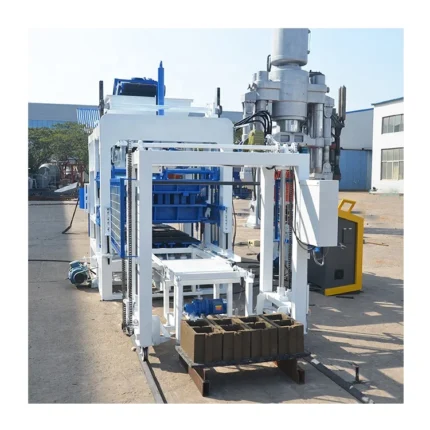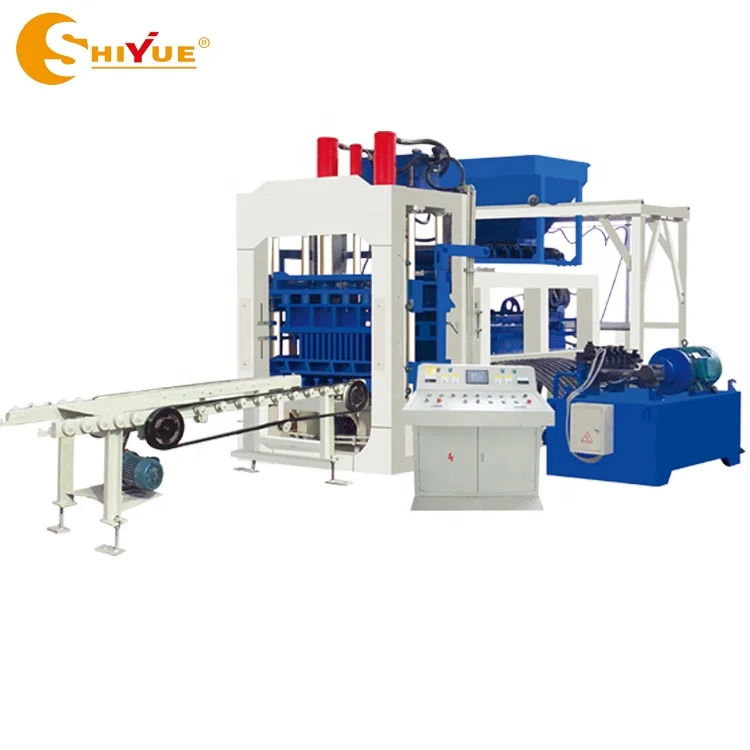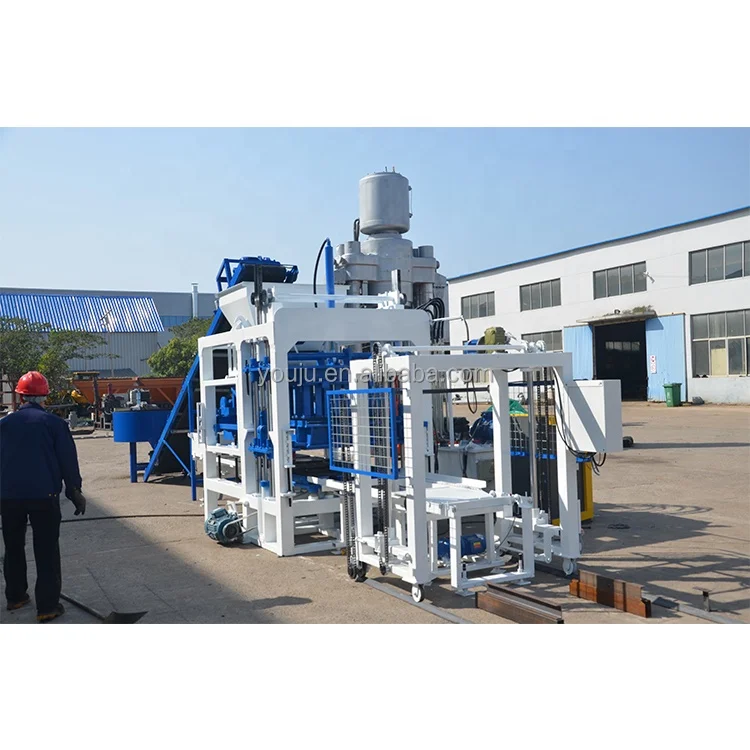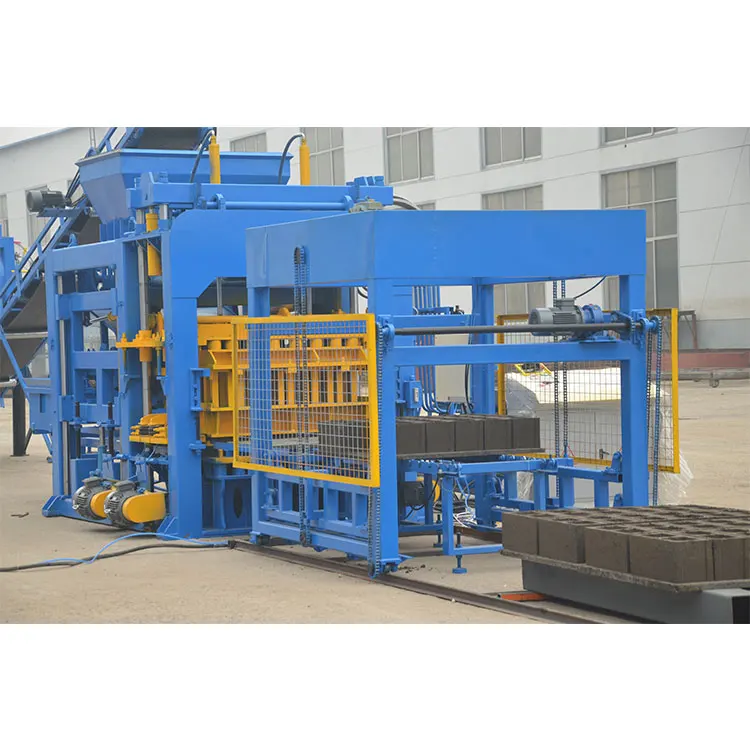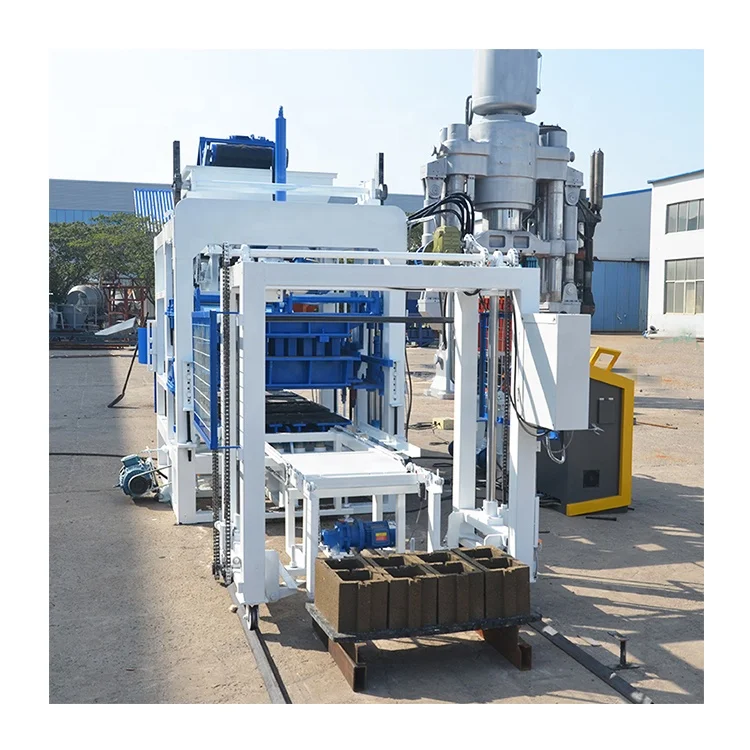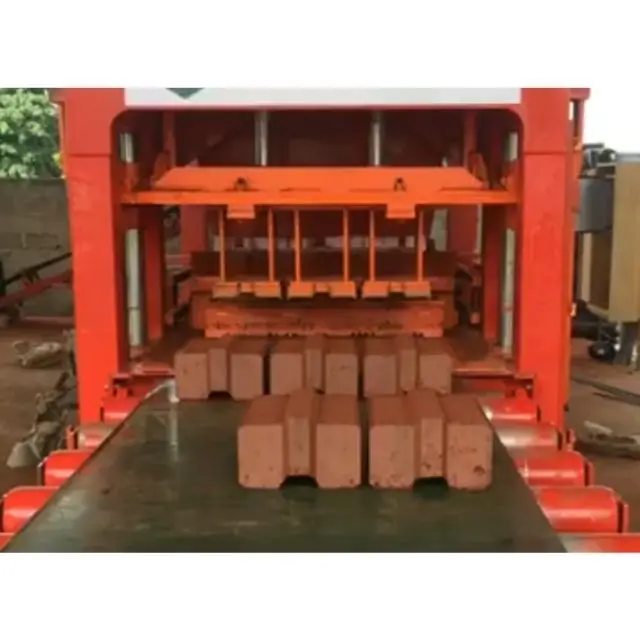


Description
Single-Operator Automation — the PLC-controlled moulding cycle runs start-to-finish without manual pacing, so your interlocking brick output stays consistent from the first press to the last.
Technical Specifications
| Parameter | Value |
|---|---|
| Model | LY4-10 |
| Product Type | Full Automatic Soil Clay Interlocking Brick Making Machine |
| Overall Dimensions (L×W×H) | 1600 × 1400 × 2100 mm |
| Net Weight | 1600 kg |
| Rated Power | 11 kW |
| Control System | PLC controlled |
| Molding Cycle | 10 s (basis not stated in source — confirm block format / material / thickness) |
| Output Capacity | 11,520 pcs/day (basis not stated in source — confirm block format / material / thickness) |
| Raw Material | Clay, soil, cement, construction dregs |
| Basic Equipment Included | JQ350 Concrete Mixer, 6 m Conveyor Belt |
| Brick Height Adjustment | Screw mechanism |
| Hydraulic System | Hydraulic compaction for brick density and strength |
| Mould Configuration | Custom moulds to buyer format requirements |
| Automation Level | Full automatic, operable by one person |
| Assembly State | Requires on-site assembly (main circuit, crusher, screen, mixer, conveyor) |
| Voltage & Frequency | To be confirmed before order |
| PLC Display Language | To be confirmed before order |
Application Suitability
| Application | Material or Output |
|---|---|
| Interlocking brick production | Clay, soil mixed with cement |
| On-site construction brick supply | Local soil and construction dregs |
| Small-scale brick plant startup | Clay-based interlocking formats |
| Rural and remote project brick manufacturing | Soil-cement interlocking bricks |
Why the Electrical Conversation Must Happen Before Production
The automatic PLC controlled clay interlocking brick making machine will not run on arrival if voltage, frequency, and control language are left undecided.
I once shipped a unit to West Africa without locking down the local three-phase supply standard. The site ran 415 V / 50 Hz, but the motor and PLC panel had been wired for a different configuration. That machine sat idle for three weeks while a variable-frequency drive was sourced and retrofitted locally. The interlocking brick press itself was fine — the gap was a missing line on a confirmation sheet. Since that job, every export order I handle goes through a pre-production checklist covering supply voltage, frequency, plug type, and PLC display language before the first steel plate is cut. [NEED_CITE: voltage and frequency standards by export market]
What the PLC Takes Over From the Operator
In a manual clay press, the moulding cycle depends on the operator’s timing — fill, compress, release, eject. Drift in any step changes brick density. The LY4-10 PLC sequences every action in the moulding cycle, holding fill volume, hydraulic dwell, and release timing to the same interval each pass. One person monitors the hopper feed and finished-brick off-take while the controller runs the press. This is what separates the automatic PLC controlled clay interlocking brick making machine from semi-automatic units where the operator still triggers each stroke.
How Consistency Translates Through the Production Day
Fatigue does not affect a PLC. At hour eight of a shift, hydraulic dwell remains identical to hour one, so interlocking brick density holds steady across the full run. The screw-adjustable brick height mechanism means format changes within a mould family do not require pulling the mould plate — operators adjust thickness without resetting the entire press. Combined with hydraulic compaction that guarantees brick density, the system removes two of the largest variables in clay brick production: operator timing and inconsistent compression force. [NEED_CITE: factors affecting interlocking brick compressive strength]
Reading the Specs That Matter for Clay Brick Pressing
The 11 kW rated power drives both the hydraulic pump and the conveyor-mixer circuit. For a clay-soil mix, this is adequate when the raw material is pre-screened and fed at a controlled rate — overloading the hopper with unprocessed clay will stall the cycle regardless of motor capacity. The hydraulic system delivers compaction pressure that, paired with the PLC-timed dwell, sets the interlocking brick density; clay mixes with higher moisture content require longer dwell to expel air before the mould releases. Brick height adjustment via screw mechanism lets you shift between thin paver-style units and taller structural interlocking formats without a full mould swap, but the change still requires stopping the press and recalibrating the PLC fill-depth parameter. The JQ350 mixer and 6 m conveyor included in the base package feed the press continuously at a rate that matches the 10-second cycle for standard interlocking formats — though actual cycle time will shift with thicker bricks or wetter clay. The 1600 × 1400 × 2100 mm footprint and 1600 kg weight mean this is a compact unit, suited to sites where a full production hall is not available.
What an Unmatched Electrical Spec Costs You On-Site
When the PLC panel language does not match the operator’s working language, fault codes become guesswork. A minor sensor misalignment turns into hours of trial-and-error instead of a quick diagnostic read. Similarly, a control cabinet wired for 380 V / 60 Hz shipped into a 415 V / 50 Hz territory will either trip breakers on startup or — worse — run the hydraulic pump at the wrong speed, producing inconsistent compaction pressure that degrades brick quality before anyone notices. These are not machine defects; they are specification gaps that compound into weeks of lost production. [NEED_CITE: common causes of commissioning delays in exported industrial machinery]
Why Source This Machine From Shandong Shiyue
Block machinery is our single focus, so the LY4-10 press, its mould, and the mixer-conveyor feed system are specified as one matched set rather than bolted together from unrelated suppliers. We confirm voltage, frequency, and PLC display language before production starts — not after the crate arrives. The configuration is set against your local clay characteristics and target interlocking format, not pulled from a catalogue default. Mould design follows your market’s actual brick profiles, and custom drawings are available when standard formats do not fit. We provide installation and commissioning support with operator training so your team can run the PLC sequence confidently from day one.
Documentation & Verification
- Machine specification sheet with hydraulic and electrical schematic for the LY4-10
- Voltage, frequency, and PLC display language confirmation record before production
- Factory test record showing PLC cycle sequence and hydraulic pressure verified against your brick format
- Operation and maintenance manual covering PLC troubleshooting and hydraulic service intervals
- Mould drawing and interlocking brick format list matched to your market requirements
Installation, Commissioning & Support
- On-site assembly required: crusher, screen, JQ350 mixer, and 6 m conveyor connected to main unit
- Electrical supply must match confirmed voltage and frequency with a dedicated 11 kW circuit
- PLC display language set and verified during commissioning before operator handover
- Hydraulic oil specification and first-fill quantity confirmed prior to initial startup
- Mould installation and brick height screw calibration performed with your target format in place
- Wear parts list and hydraulic seal kit supplied with the first shipment
What We Need To Configure Your Machine
Before quoting, we need your target interlocking brick dimensions, the local clay or soil type you plan to use, and the daily output you are planning for. Share your site’s electrical supply voltage, frequency, and the language your operators read on a control screen. If you already have a mixer, conveyor, or curing area in place, let us know so the LY4-10 feed rate and PLC timing align with your existing line.
Frequently Asked Questions
Q: How is the PLC display language confirmed for my operators before shipment?
A: We document your preferred control language during the order confirmation stage and program the PLC panel before factory testing. Your operators see the actual screen in a video test run, so any terminology adjustments happen before the machine ships — not after it arrives on your site.
Q: What voltage and frequency options are available for the LY4-10?
A: The electrical system is built to match your site’s supply — confirmed in writing before production begins. This covers motor winding, PLC power supply, and control panel components, so the machine connects directly to your local three-phase supply without aftermarket transformers.
Q: How does the 10-second cycle translate to realistic daily output?
A: The stated cycle applies to a specific interlocking brick format and clay mix that must be confirmed for your project. Thicker bricks or wetter soil mixes extend the cycle, so we calculate realistic daily output against your actual target brick during the proposal stage rather than quoting a single number.
Q: Can the automation level be expanded later with pallet feeding or stacking?
A: The LY4-10 is designed as a standalone PLC-controlled press. Adding automatic pallet feeding or stacking requires line-level integration that is better planned from the start. If future expansion is likely, discuss upgrade pathways during initial configuration so the PLC capacity is reserved.
Q: What hydraulic maintenance does the system require on an ongoing basis?
A: The hydraulic system needs oil specification checks and filter replacements at defined service intervals, detailed in the operation manual supplied with the machine. We include a wear parts and seal list with the first order so replacement components are on hand before the first service window arrives.