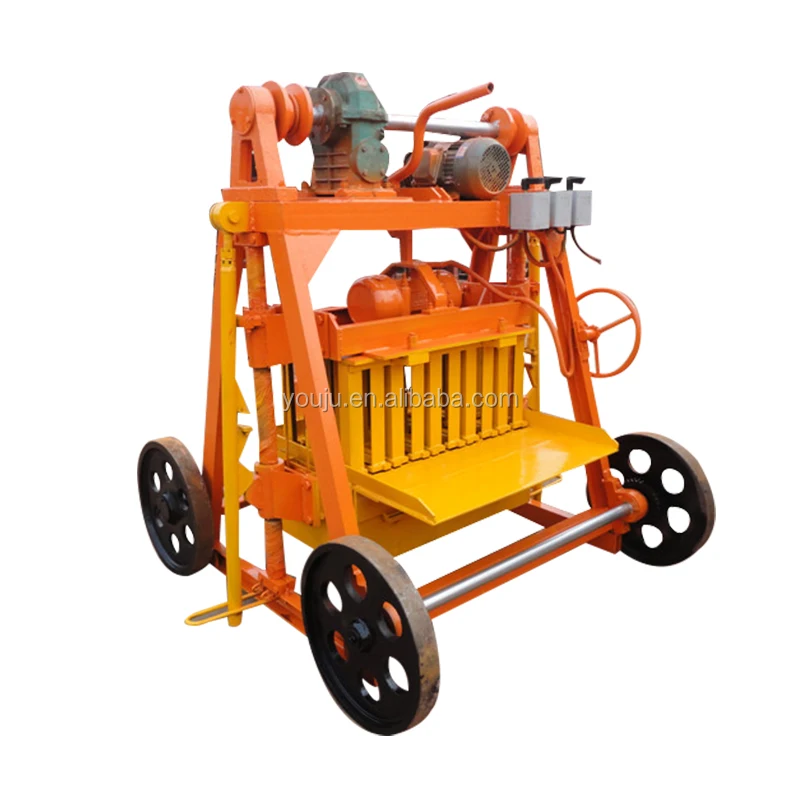
Description
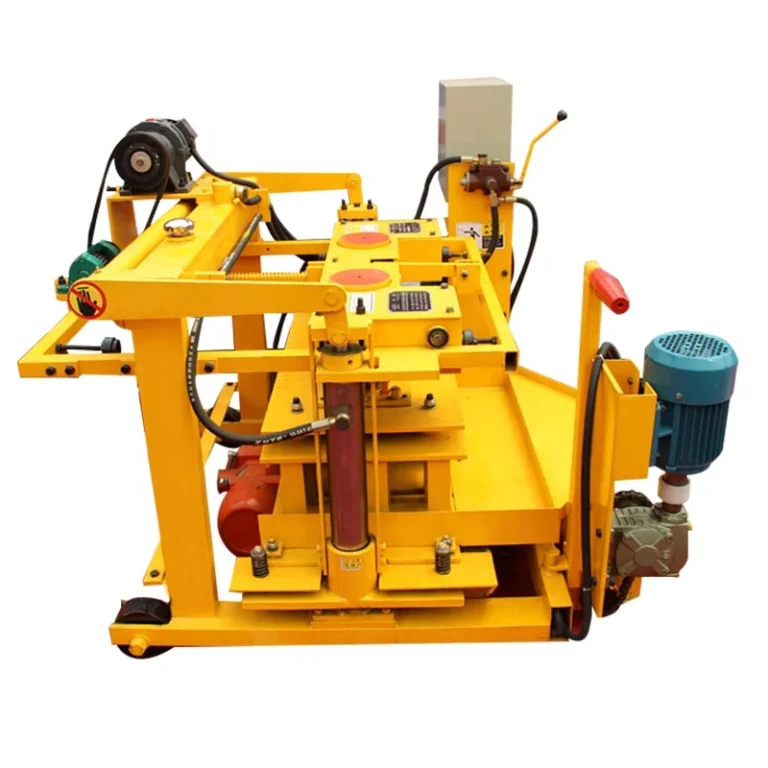
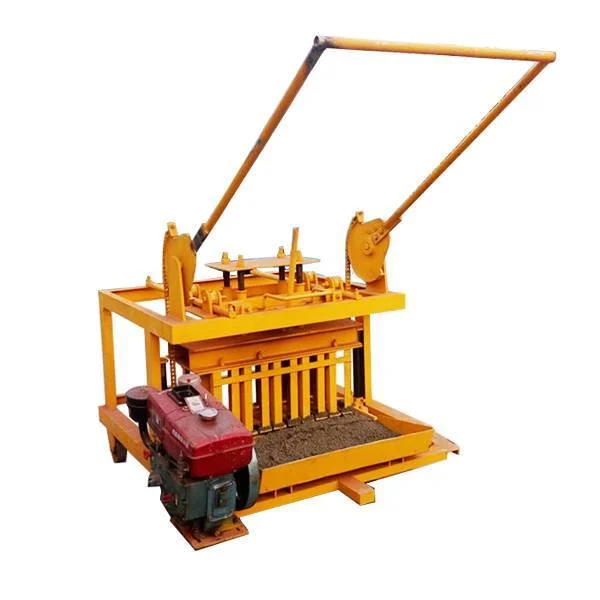
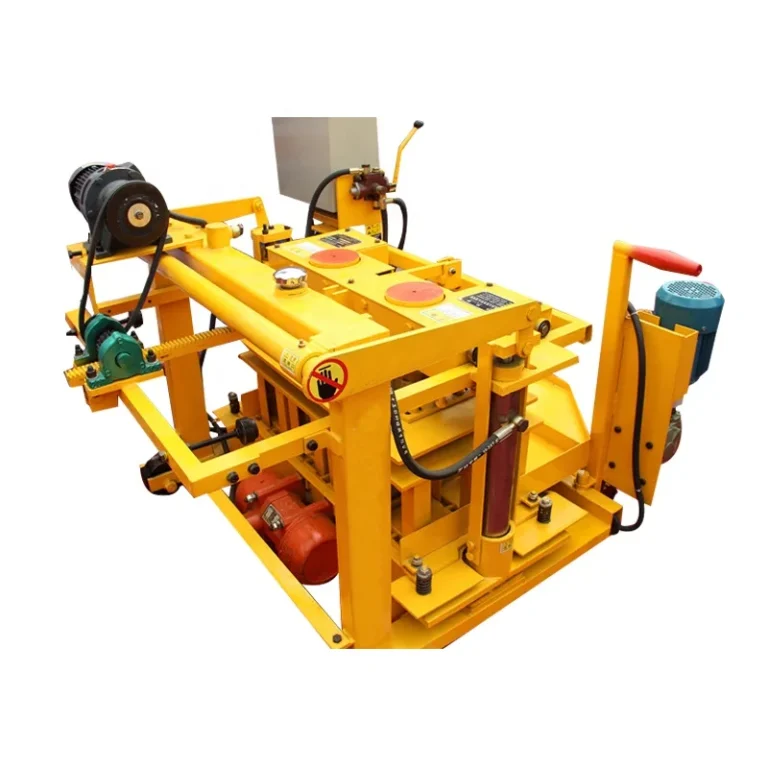
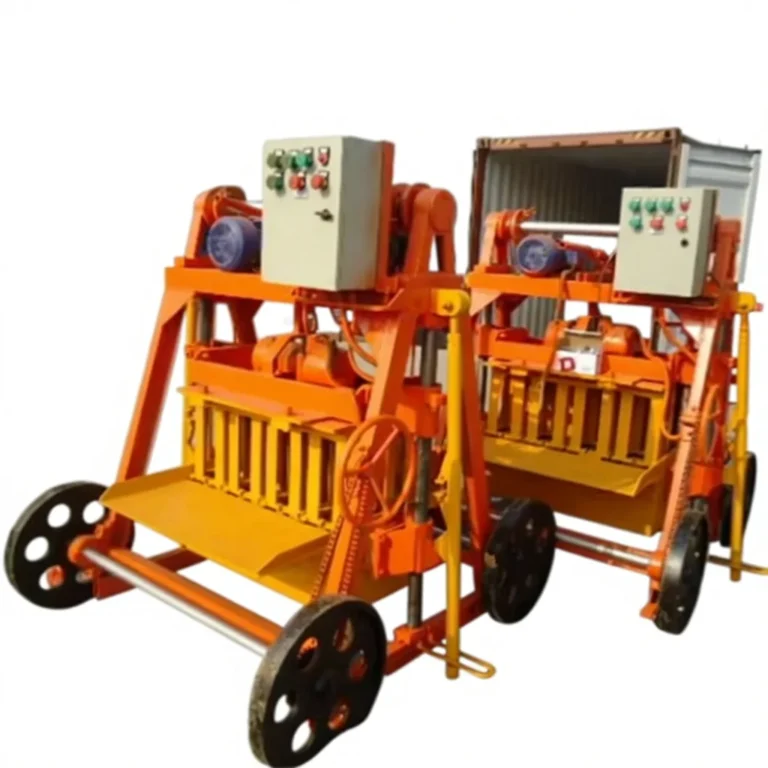
Upgrade-Ready Mobility — The QMJ4-45 mobile egg-laying platform arrives as a manual unit but accepts PLC batching and automatic stacking modules when your volume outgrows hand operation.
Technical Specifications
| Parameter | Value |
|---|---|
| Model | QMJ4-45 |
| Product Type | Mobile Egg-Laying Concrete Block Making Machine |
| Vibration System | Twice-vibration molding core (dual-vibration design) |
| Mobility | Self-propelled on-site movement |
| Mould Change | Interchangeable moulds; custom moulds to buyer drawings |
| Control System | Manual operation (PLC upgrade path available) |
| Assembly State | Fully assembled mobile unit |
| Hydraulic Pressure | Not applicable (mechanical/vibration forming) |
| Pallet Requirement | Not applicable (blocks cured directly on ground) |
| Block Formats | Hollow, solid, paving, interlocking (format-dependent on mould) |
| Voltage & Frequency | Configurable to target market (to be confirmed before production) |
| Certification | CE (model-specific applicability to be verified) |
Application Suitability
| Application | Material or Output |
|---|---|
| On-site block production for building contractors | Hollow and solid blocks from local crushed stone and cement |
| Entry-level block plant for entrepreneurs | Paving and interlocking blocks from available aggregate |
| Remote-site overflow production | Format-specific blocks matching existing semi-automatic plant output |
| Low-investment block manufacturing | Various concrete block formats via mould interchange |
What "Automatic" Means on a Mobile Block Maker
An automatic mobile block machine earns that label through the controls and feeding system you add over time, not from a single feature on day one.
I once watched a QMJ4-45 arrive in West Africa with a PLC panel locked to a language the operators could not read. The machine was technically capable, but commissioning stalled for days. That unit shipped before anyone confirmed the control display language or the site voltage. For an egg-laying mobile machine, the intelligent side is not just about what the machine does today — it is about whether the control architecture supports the batching accuracy, remote diagnostics, and operator interface your crew will need when you scale from manual to PLC-controlled production [NEED_CITE: voltage and frequency standards by export market].
Dual-Vibration Core and Block Density Consistency
The QMJ4-45 uses a twice-vibration molding core rather than the single-vibration arrangement found on older egg-laying designs. The first vibration settles the concrete mix into the mould cavity while the second compacts it under sustained force, producing more uniform density across every block in a batch. When you operate an automatic mobile block machine of this type, batch-to-batch consistency depends heavily on vibration timing and amplitude matching your local aggregate gradation. The dual-vibration system gives you a wider tuning range to match mixes that vary between supplier deliveries.
The Automation Upgrade Path
Starting with manual operation keeps initial investment low and lets you learn your market’s block demand before committing capital. When volume grows, the QMJ4-45 platform accepts a PLC-controlled batching system that replaces manual material proportioning with weight-based dosing, automatic feeding that removes shovel labor from the mix station, and stacking modules for cured blocks. This upgrade path means the PLC controlled mobile egg-laying block machine you eventually run shares the same frame and vibration core you started with — no machine swap, no sunk cost write-off [NEED_CITE: PLC retrofit compatibility on mobile block platforms].
Mould Interchange and Format Flexibility
One QMJ4-45 platform accepts multiple mould formats, from standard hollow blocks to interlocking pavers. Mould changes are mechanical, requiring basic hand tools and a level curing surface to resume production. Custom moulds can be built to buyer drawings, so if your local market demands a specific kerbstone profile or a non-standard hollow block dimension, the mould is engineered to your specification rather than forcing you to sell a format your customers do not buy. The intelligent side of mould management is knowing exactly which formats you need before the machine ships, so every mould arrives tested and dimensionally verified.
Specifying Controls Before the Machine Ships
The PLC, voltage, and control language must be confirmed before production starts, not after the container arrives. A machine wired for 380V/50Hz that lands on a 440V/60Hz site will not commission without a transformer or rewiring. The control display language must match what your operators read natively — English-only panels have stalled first-day production more than once. For an automatic mobile block machine, the control specification is not a catalogue line to fill in later; it is the foundation that every future automation module connects to [NEED_CITE: CE machinery directive requirements for industrial equipment].
Why Buyers Choose This Configuration
Block machinery is our single focus, so the QMJ4-45 arrives with its mould, vibration settings, and control panel specified as one matched system. Configuration is set against your actual mix design and local aggregate, not a catalogue default. Every mould included in the quotation is backed by a dimensioned drawing so you verify block dimensions before metal is cut. The automation level is selectable — you start manual and add PLC batching when production justifies it. Installation support covers voltage verification, control language confirmation, and operator training on the exact panel your crew will use daily.
Documentation & Verification
- Line layout showing QMJ4-45 footprint and curing yard space requirement
- Machine specification sheet with voltage and frequency confirmed per destination
- Mould drawing and format list with dimensions for every included mould
- PLC control language and display configuration confirmation before dispatch
- Factory test record on your specified block format and mix proportion
- Operation and maintenance manual in operator language with wear parts list
Installation, Commissioning & Support
- Level, compacted ground preparation required for egg-laying block placement and consistent curing
- Power supply matching confirmed voltage and frequency, with dedicated circuit for vibration motor
- Machine arrives fully assembled; commissioning covers vibration timing adjustment to your mix
- Control panel language verified on-site; PLC modules configured for future batching integration
- Operator training on mould change procedure, vibration settings, and daily maintenance checks
- Wear parts list with mould and vibration component replacement intervals documented
Before You Send an Inquiry
To size the QMJ4-45 correctly, share your target block formats with exact dimensions, the daily output you need per format, and your local raw material source with aggregate type. Confirm your site voltage, frequency, and the language your operators need on the control display. If you plan to add automatic batching or stacking within the first two years, tell us so the control architecture is specified to accept those modules from day one.
Frequently Asked Questions
Q: How is daily output calculated for the QMJ4-45, and which block format is assumed?
A: Output depends entirely on block size, mix workability, and ground conditions. A generic pieces-per-hour figure without a stated block format is misleading. We calculate capacity per specific format — for example, 400×200×200 mm hollow blocks — and provide that number alongside cycle time so you can plan curing yard space and crew size accurately.
Q: What automation upgrades are available for this mobile block machine?
A: The QMJ4-45 accepts PLC-controlled batching, automatic material feeding, and stacking modules as your production volume grows. The control architecture is specified during initial purchase to support these additions, so retrofitting does not require replacing the main frame or vibration system. We document the upgrade path in writing before shipment.
Q: What voltage configurations are supported, and is the control display available in my language?
A: Voltage and frequency are configured to your site specification before production. The PLC display language is confirmed during the order process and verified again before dispatch. We have learned that skipping this confirmation causes commissioning delays, so it is now a mandatory checkpoint on every shipment.
Q: What ground preparation is needed for egg-laying block production?
A: The curing area must be level, compacted, and free of debris so blocks settle evenly as the machine moves across the surface. Inconsistent ground causes uneven block height and density. We provide ground preparation guidance matched to your soil type and climate conditions during the pre-shipment documentation stage.
Q: How long does a mould change take on the QMJ4-45?
A: Mould change is mechanical and requires basic hand tools. The exact time depends on mould weight and operator familiarity. We include the change procedure in the operation manual and cover it during on-site training so your crew can switch formats without losing a full shift to the process.