

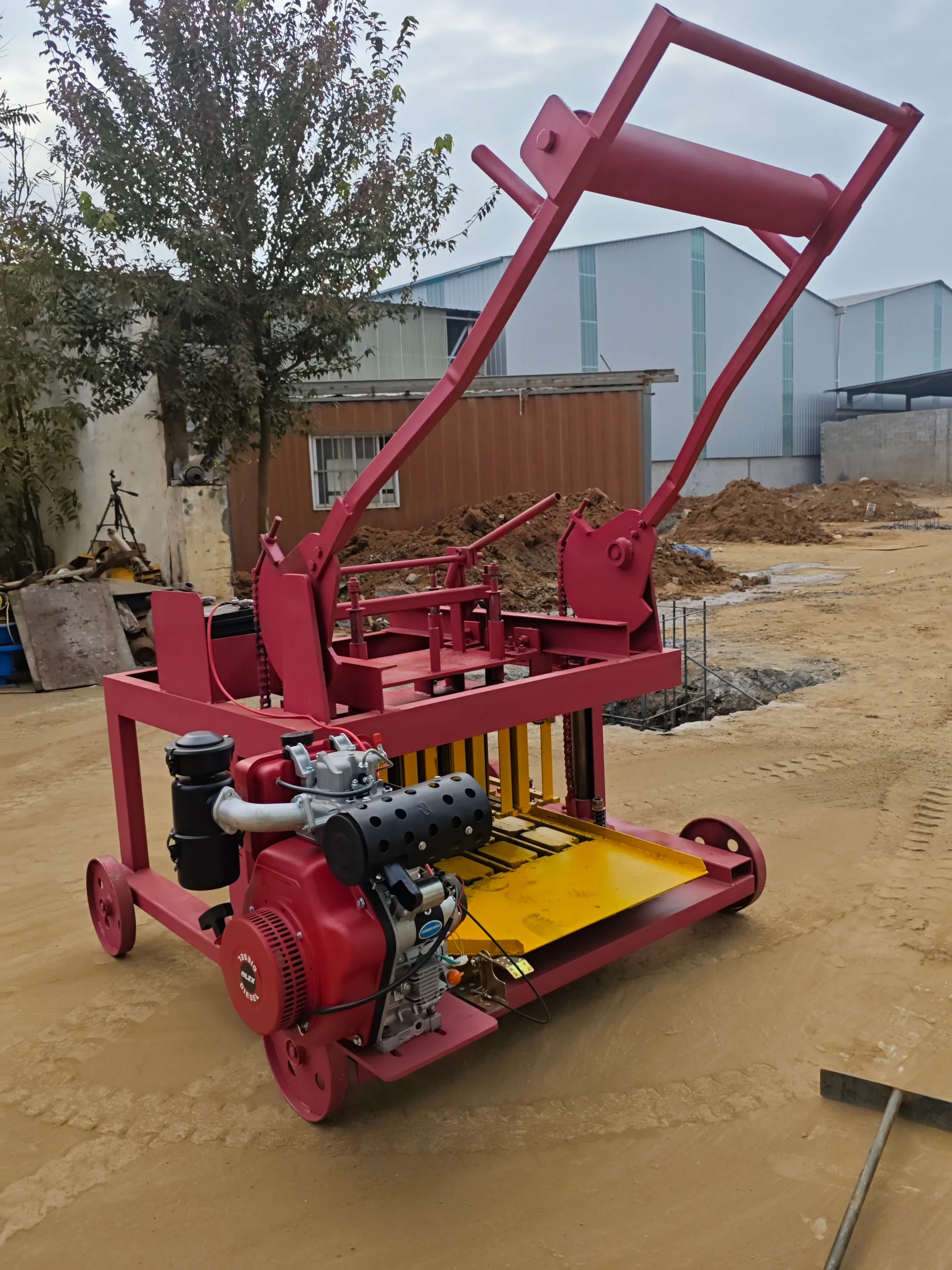
Description
Control Language First — every QMR4-45 leaves the factory with the PLC display, wiring diagram and manual already set to the buyer’s site language, because commissioning should never stall on a screen the operator cannot read.
Technical Specifications
| Parameter | Value |
|---|---|
| Model | QMR4-45 |
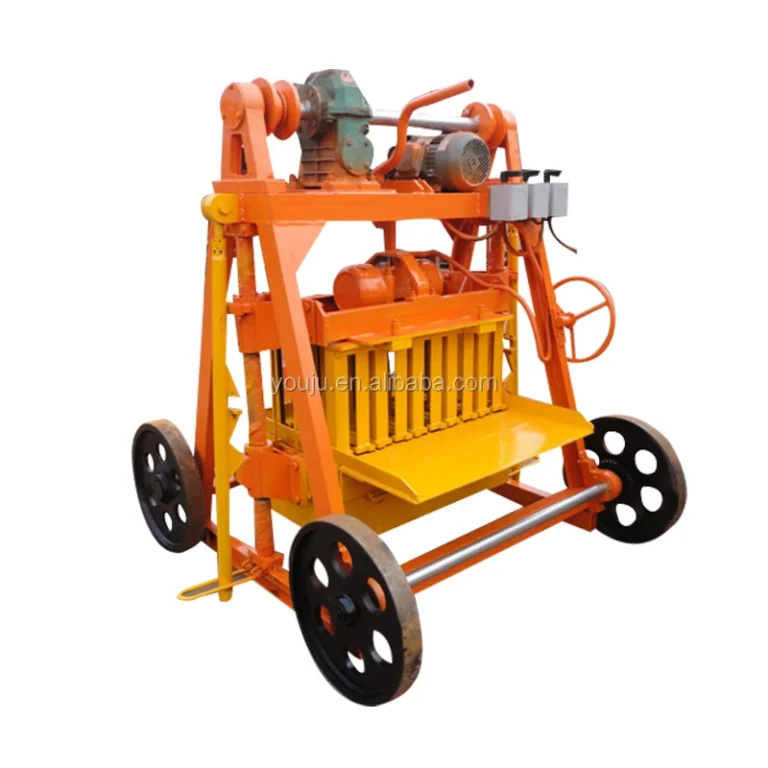
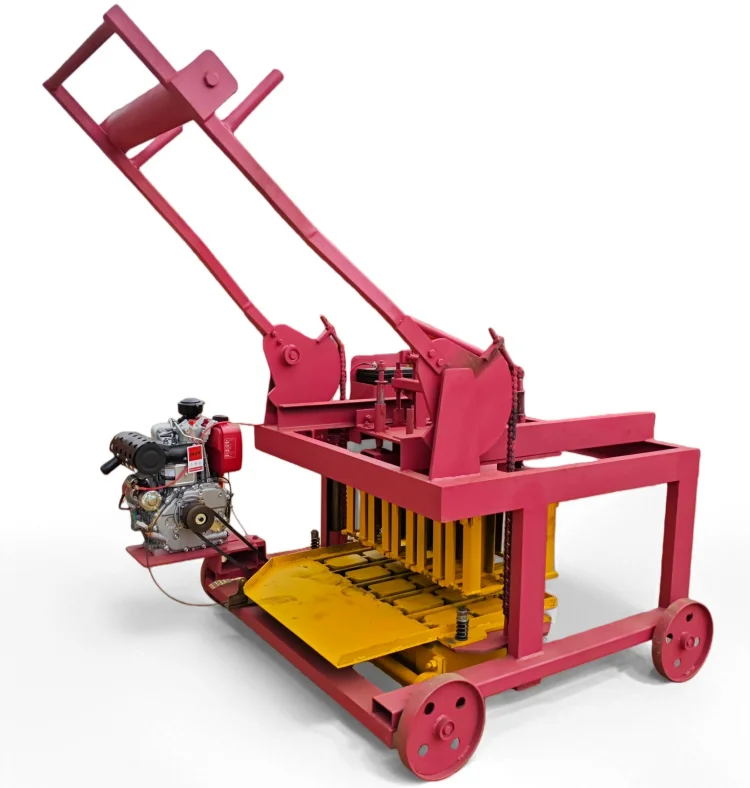
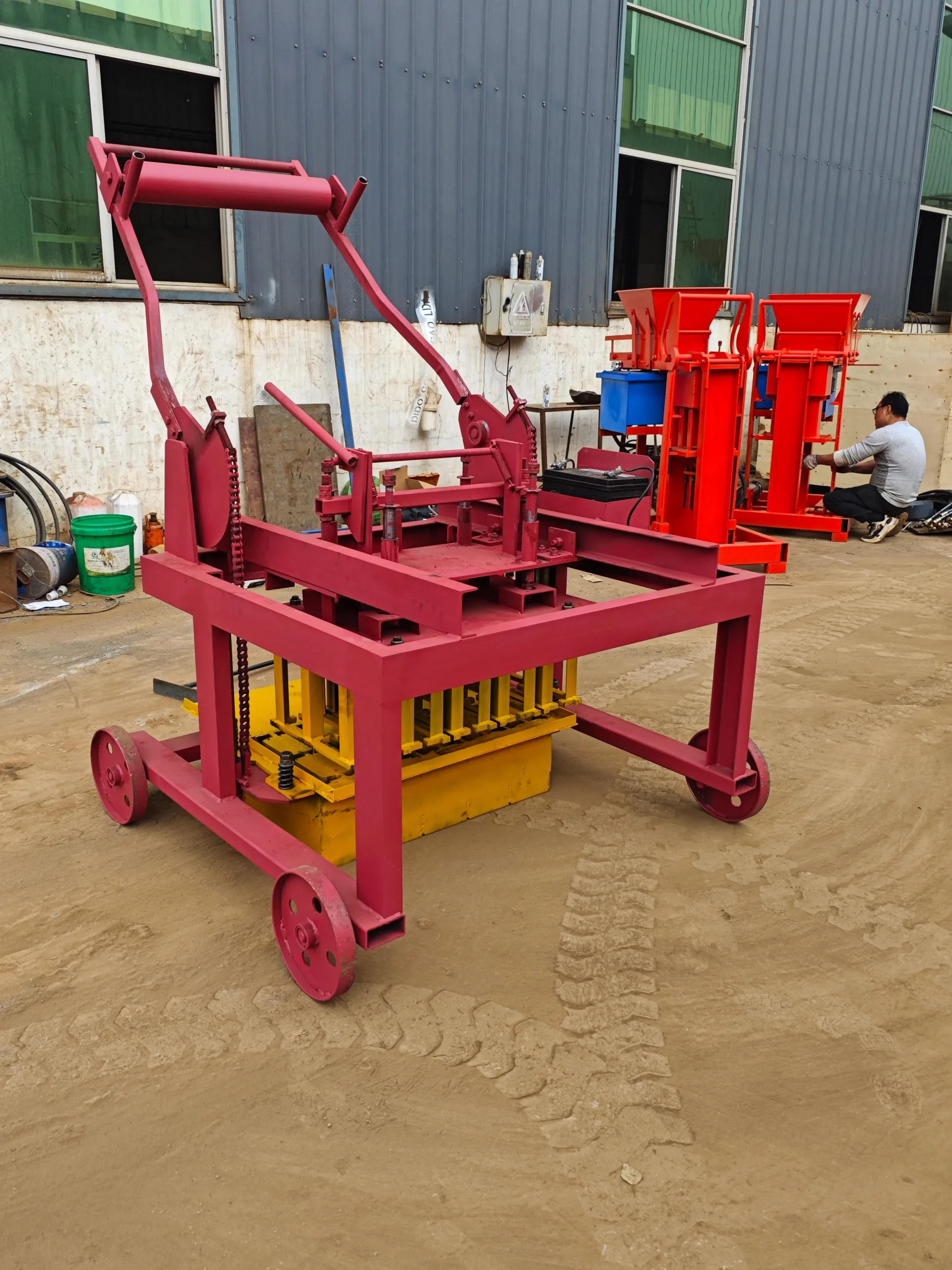
| Product Type | Mobile Egg-Laying Concrete Block Making Machine |
| Overall Dimensions (L×W×H) | 2420×1320×1650mm |
| Moulding Cycle | 40–45 seconds |
| Pallet Requirement | No pallet required |
| Machine Weight | 810 kg |
| Rated Power | 6 kW |
| Prime Mover Options | Electric motor or 6–8 HP diesel engine |
| Voltage Options | 220V / 380V / configurable to site supply |
| Hollow Block Output (400×200×200mm, 4 pcs/mould) | 3000 pcs per 8-hour shift |
| Hollow Block Output (400×150×200mm, 5 pcs/mould) | 3500 pcs per 8-hour shift |
| Hollow Block Output (400×120×200mm, 6 pcs/mould) | 4500 pcs per 8-hour shift |
Application Suitability
| Application | Material or Output |
|---|---|
| Remote housing project block supply | Hollow blocks laid directly on prepared ground using local crushed stone and cement |
| On-site contractor production | Solid and hollow blocks from river sand, gravel and Portland cement without fixed plant infrastructure |
| First-plant entrepreneur startup | Multiple hollow block formats from a single machine with minimal auxiliary equipment |
| Areas with unreliable grid power | Continuous block laying using the diesel engine option where three-phase electricity is unavailable |
What "3000 Blocks a Day" Actually Means on a Job Site
Daily output only holds when the format, mix and cycle time align — otherwise the number on the brochure stays on the brochure.
Most mobile block machine quotations quote a headline capacity without naming the block format behind it. I have watched contractors plan a wall schedule around a figure that assumed the smallest hollow block, only to discover on day one that the 200mm-wide unit they actually sell cuts throughput noticeably. The QMR4-45 states output per format — 400×200×200mm yields 3000 pieces, 400×150×200mm yields 3500 pieces, 400×120×200mm yields 4500 pieces — all across an eight-hour shift at a 40–45 second cycle. This matters because the block your market buys determines the real daily count, not a catalogue average. [NEED_CITE: block format and cycle time assumptions in capacity claims]
Removing the Pallet From the Production Loop
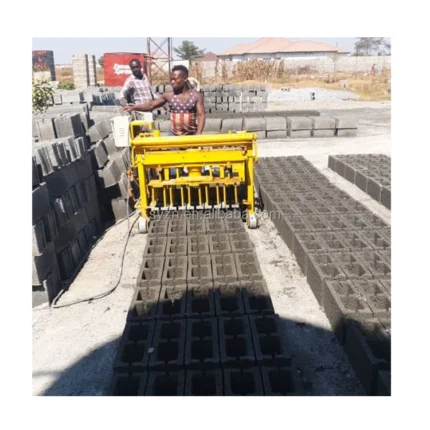
The egg-laying design is the single most consequential decision on this machine. Because the QMR4-45 lays blocks directly onto the ground, the entire pallet circuit — pallet feeder, return conveyor, curing rack handling — disappears from the site layout. For a contractor producing blocks beside the wall being built, that means fewer pieces of auxiliary equipment to transport, maintain and eventually replace. The automatic mobile block machine PLC controlled workflow here is deliberately narrow: it automates the pressing cycle while leaving block carrying to the operator, which keeps the capital outlay aligned with what a mobile site actually needs.
Diesel or Electric — Matching the Prime Mover to the Site Reality
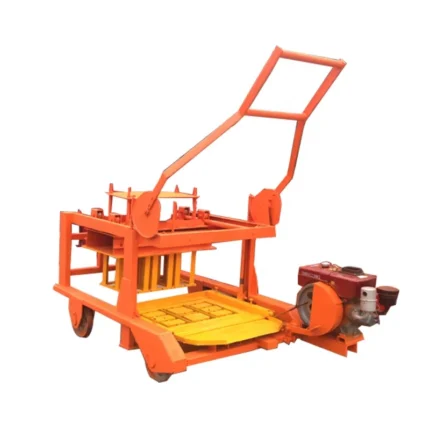
Grid reliability is not a brochure topic; it is the reason a block line sits idle for half a shift. The QMR4-45 is available with a 6 kW electric motor for sites with stable three-phase power, or a 6–8 HP diesel engine for locations where electricity is intermittent or absent entirely. Switching between prime movers is a configuration choice made before production, not a field retrofit. This flexibility matters most for development contractors moving between rural project sites where the local grid has not yet caught up with the building plan. [NEED_CITE: diesel versus electric drive considerations for mobile block production]
Reading the Specs That Decide Block Quality
The 40–45 second moulding cycle governs how densely the vibration and hydraulic pressure consolidate the mix before the machine walks forward. A shorter cycle on a mobile egg-layer risks under-compacted blocks that chip during handling; a longer cycle erodes the shift output that justified the purchase. The 810 kg machine weight provides the downward mass that, combined with vibration, determines the block density achievable without a fixed press foundation. Voltage configuration — 220V or 380V — must be confirmed before dispatch because a motor rewound on arrival delays commissioning by days, and the PLC display language must match the operator reading it.
The Hidden Cost of Skipping the Configuration Conversation
I used to take midnight calls from sites where a QMR4-45 had arrived with a Chinese-language PLC screen and the local electrician staring at a wiring diagram he could not follow. The machine was fine; the configuration conversation had simply never happened. Voltage mismatch can burn out a motor within the first hour. A control panel in the wrong language turns a ten-minute fault diagnosis into a multi-day translation exercise. And if the mould format does not match the block the local market actually buys, the machine becomes an expensive prop while the buyer sources a replacement mould at project cost. [NEED_CITE: commissioning delays caused by unconfirmed voltage and control language]
Why Procurement Lands Here
Block machinery as a single focus means the QMR4-45 arrives as one matched system — machine, mould, and walk-behind workflow specified together rather than assembled from separate suppliers. Mould design covers the hollow block formats the buyer’s market actually sells, and custom mould drawings are available when the standard range does not match local building codes. The configuration is set against the buyer’s actual mix design and local aggregate, not a catalogue default that assumes materials the site cannot source. Automation level is selectable so a contractor can start with the base mobile unit and add handling equipment as volume justifies it. Installation support includes operator training on the specific PLC language and voltage confirmed at order.
Documentation & Verification
- Machine specification sheet stating output per block format and assumed cycle time
- Mould drawing and format list matching the buyer’s confirmed product range
- Voltage, frequency and PLC display language confirmation recorded before production
- Factory test record on the buyer’s specified mould before dispatch
- Operation and maintenance manual in the confirmed site language
Installation, Commissioning & Support
- 2420×1320mm footprint requires only a level, compacted ground surface — no fixed foundation
- Voltage and frequency verified at order to prevent motor mismatch on the 6 kW electric drive
- Diesel engine option eliminates the need for a dedicated electrical circuit at remote sites
- Mould change procedure and tool kit included for on-site format switching
- PLC screen language set before shipment so the operator can navigate menus on day one
- Wear parts list provided covering the vibration and hydraulic components specific to this model
What to Prepare Before Requesting a Quotation
Share the exact hollow block dimensions your market requires, including wall thickness, so the correct mould enters the proposal from the start. Confirm the local voltage and frequency — and whether a diesel engine is needed — so the prime mover is configured before production begins. Specify the PLC display language your operators read, because this is a detail that cannot be changed quickly once the machine is built.
Frequently Asked Questions
Q: How is daily output calculated and which block format does it assume?
A: The QMR4-45 output figures are stated per block format across an eight-hour shift: 3000 pieces for 400×200×200mm, 3500 pieces for 400×150×200mm, and 4500 pieces for 400×120×200mm hollow blocks, all at a 40–45 second moulding cycle. No single headline number applies across formats.
Q: What automation level does this machine provide and what remains manual?
A: The automatic mobile block machine PLC controlled system manages the moulding cycle — vibration, pressing and release — while the operator walks the machine forward and guides block placement. Pallet feeding and stacking are not required because blocks are laid directly on the ground.
Q: How does diesel engine operation affect cycle time and block density?
A: The 6–8 HP diesel engine delivers comparable vibration force to the electric motor option, so moulding cycle and block density remain consistent. The main difference is operational independence from grid supply, which is critical at remote construction sites.
Q: What mould formats are available and how long does mould change take?
A: The QMR4-45 supports multiple hollow block formats including 400×200×200mm, 400×150×200mm and 400×120×200mm. Custom mould drawings are available. Mould change is a manual procedure designed to be completed within a shift without specialised tooling.
Q: What voltage and control language options are supported?
A: The machine is configurable for 220V or 380V, or matched to the buyer’s local supply when confirmed at order. The PLC display language is set before production to ensure the operator can read all menus and fault codes from the first day of operation.