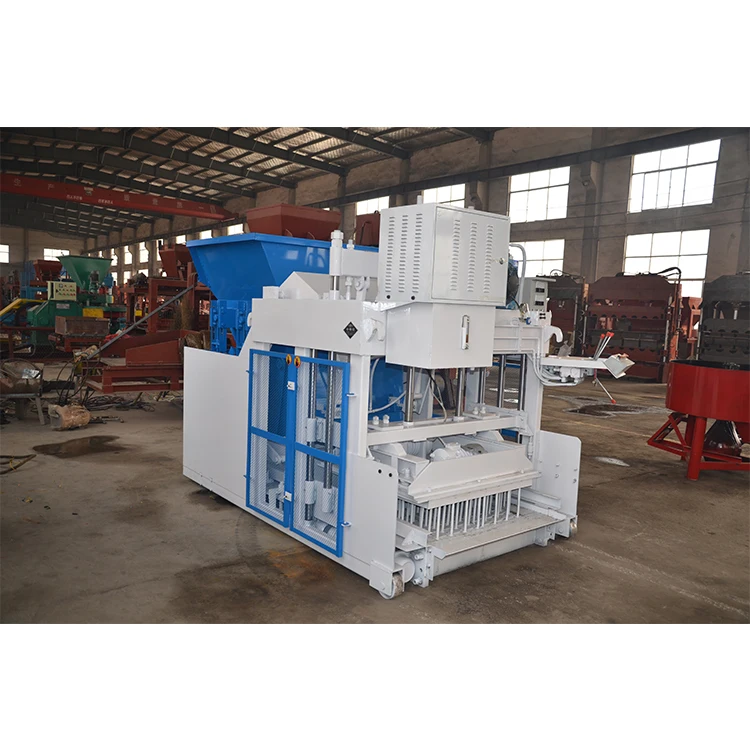
Description
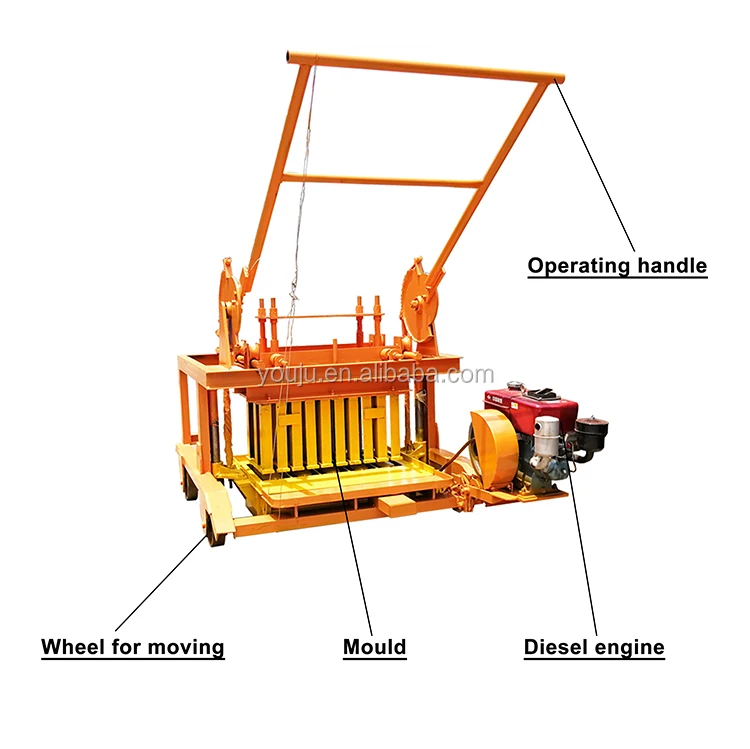
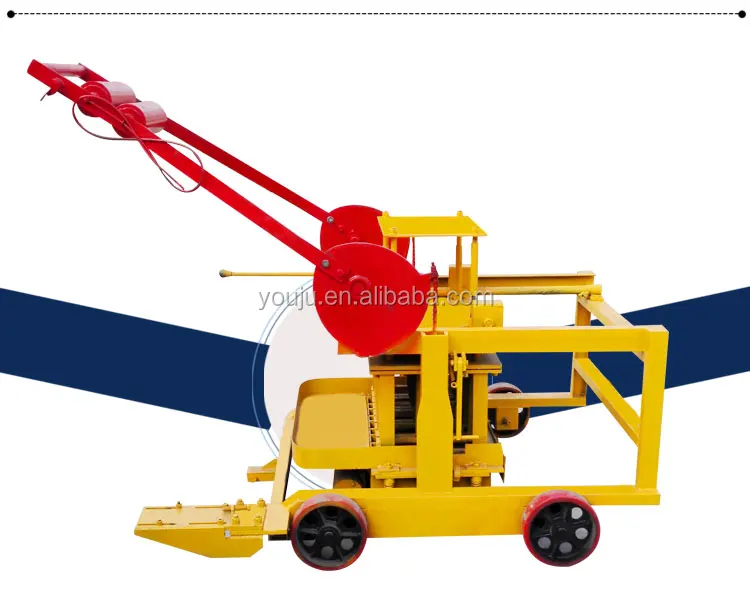
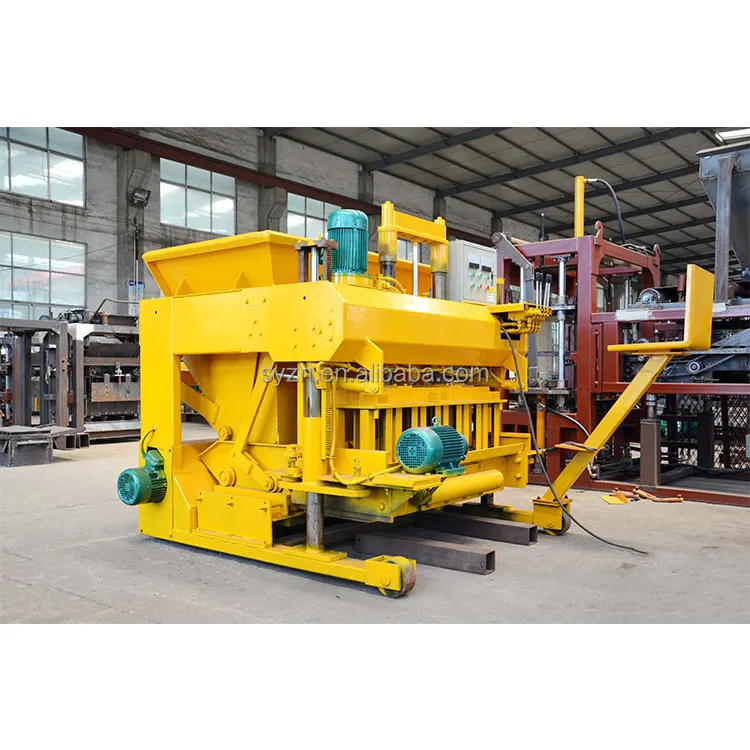
Matched System Configuration — The QMY12-15 mobile block machine ships as a single integrated unit where hydraulic pressure, vibration, and motor are sized together rather than assembled from separate suppliers, ensuring the automation logic matches the mechanical cycle from day one.
Technical Specifications
| Parameter | Value |
|---|---|
| Model | QMY12-15 |
| Product Type | Egg Laying Concrete Block Making Machine |
| Overall Dimensions (L×W×H) | 3250 × 2100 × 2300 mm |
| Rated Power | 16 kW |
| Net Weight | 4500–4600 kg |
| Pressure Type | Hydraulic |
| Motor Brand | Siemens |
| Automation Level | Semi-automatic (egg-laying, mobile) |
| Pallet Requirement | No pallet required |
| Cycle Time | 10–15 s (basis not stated in source — confirm block format, material, and thickness) |
| Output Capacity (400×200×200 mm hollow block) | 23,040 pcs/day based on 12 pcs/mould over an 8-hour shift |
| Output Capacity (400×150×200 mm block) | 2,680 pcs/day based on 14 pcs/mould over an 8-hour shift (basis not stated in source — verify) |
| Output Capacity (400×100×200 mm block) | 42,240 pcs/day based on 122 pcs/mould over an 8-hour shift (basis not stated in source — verify) |
| Workers Required | 2–3 |
| Mould Formats Listed | 400×200×200 mm / 400×150×200 mm / 400×100×200 mm |
| Assembly State | Fully assembled, mobile unit |
| Standards | ISO 9001:2008, SGS, CE |
Application Suitability
| Application | Material or Output |
|---|---|
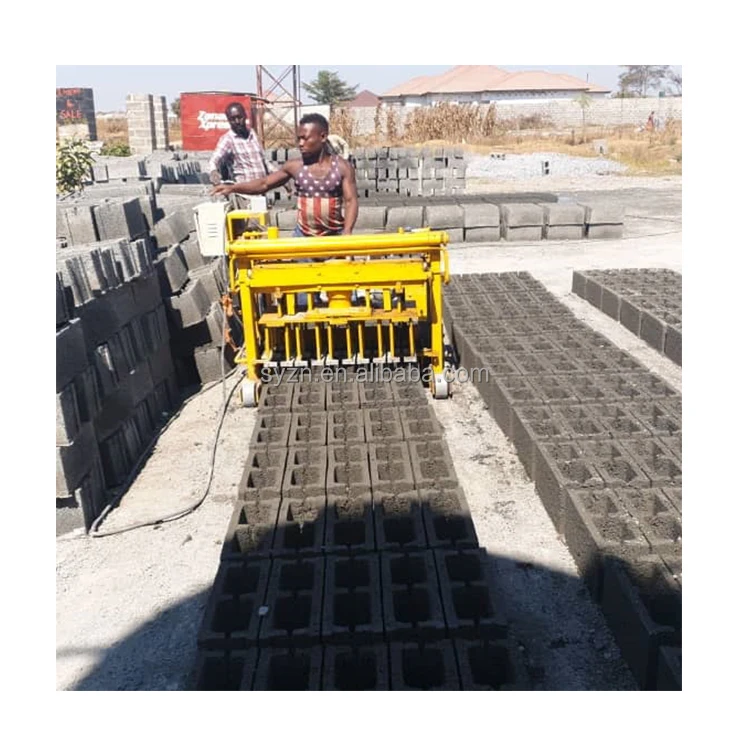
| On-site hollow block production at housing projects | Crushed stone, sand, and cement mix laid directly on compacted ground |
| Temporary mobile block yard for remote construction | Standard cement brick formats produced without fixed plant infrastructure |
| Entrepreneur-led first block plant with minimal setup | Solid blocks and kerbstones cured in open-air yards adjacent to the pour point |
What "12,000 Pieces per Day" Actually Means on Site
A single headline output figure hides the block format, shift length, and mould count that produced it.
I have watched buyers arrive at a job site expecting five thousand hollow blocks after eight hours, only to find the quoted number was based on a thin solid paver the project never ordered. The QMY12-15 is a PLC controlled egg laying block machine, and the realistic daily throughput shifts dramatically depending on whether the operator runs 400×200×200 mm hollows or switches to 400×100×200 mm solids. Every capacity number we quote is tied to one specific block size and an eight-hour shift, because quoting anything else sets the wrong expectation before the container even arrives [NEED_CITE: block output calculation methods in mobile concrete equipment].
Where the Control System Takes Over from the Operator
The semi-automatic base on this PLC controlled egg laying block machine handles the press cycle, vibration sequence, and hydraulic dwell timing without requiring the operator to judge when to release pressure. That consistency matters most when the crew is working a second shift under floodlights and fatigue starts affecting manual timing. The control logic keeps each mould cycle within the same window, so block density does not drift from the first hour to the eighth.
Building the Upgrade Path Around a Mobile Chassis
Starting with a semi-automatic egg-laying unit does not lock a buyer into manual pallet handling forever. The automation architecture on this PLC controlled egg laying block machine supports incremental additions — an automatic feeder, a remote batching interface, or a cubing station — that can be bolted on once the yard layout and curing logistics are proven. This is the angle most mobile machine buyers overlook: the control platform either has expansion headroom or it does not, and discovering which one you bought after the first season is expensive [NEED_CITE: automation upgrade compatibility in mobile block production].
Reading the Specs That Determine Block Density
The 16 kW rated power across the QMY12-15 feeds both the hydraulic circuit and the vibration motor simultaneously, which means neither system starves the other during the press stroke. Hydraulic pressure compacts the mix vertically while the twice-vibration molding core settles fines into the voids — if either force is undersized relative to the local aggregate gradation, the resulting block will pass a visual inspection but fail a compressive test three weeks later. The 4500–4600 kg net weight provides the static mass needed to keep the chassis stable during high-frequency vibration without external anchoring, which is essential when the machine is laying blocks on uneven ground at a remote project. Mould formats covering 400×200×200 mm through 400×100×200 mm share a common mounting interface, so switching between hollow and solid formats is a matter of lifting one mould out and seating the next, not reconfiguring the press table.
The Commissioning Delay Nobody Plans For
Arriving at a site with a machine wired for a voltage and frequency that the local grid does not supply is a problem that surfaces only after the container is opened and the electrician shakes his head. I have seen entire project timelines slip because the PLC display language was never confirmed before shipment, leaving a crew staring at fault codes they could not read. When a PLC controlled egg laying block machine sits idle for days waiting on a transformer or a firmware swap, the delay cost eclipses whatever was saved on the purchase price [NEED_CITE: voltage and frequency mismatch incidents in exported machinery].
Why the Configuration Conversation Happens Before the Quote
Block machinery is our single focus, which means the QMY12-15 is specified as a matched system — machine, mould, and curing logistics — rather than a press sold in isolation with the buyer left to source pallets and handling separately. We set the hydraulic pressure and vibration force against the buyer’s actual mix design and local aggregate, not against a catalogue default that may have been developed for a completely different raw material. Mould design covers the formats the buyer’s market actually sells, including custom drawings when the standard range does not match local building codes. The automation level is selectable, so a buyer can commission the QMY12-15 in semi-automatic mode and add automated stations once production volume justifies the investment. Installation support includes operator training so the crew understands not just how to run the machine but how to read what the control system is telling them.
Documentation & Verification
- Line layout showing the QMY12-15 footprint and curing yard clearance requirements
- Capacity calculation stating the block format and shift assumption behind each output figure
- Hydraulic and electrical schematic with voltage and frequency confirmation for the destination site
- Factory test record run on the buyer’s specified mould format before dispatch
- Operation and maintenance manual with the PLC display language set to the buyer’s preference
- Wear parts and mould list with reorder codes for the first replacement cycle
Installation, Commissioning & Support
- Ground preparation guidance for the 3250 × 2100 mm footprint on compacted earth or temporary slab
- Power supply requirements for the 16 kW rated load including dedicated circuit and isolation switch
- Machine arrives fully assembled; on-site setup covers levelling, hydraulic fluid, and motor rotation check
- First-run commissioning includes cycle timing verification against the selected 400×200×200 mm mould
- Operator training covers mould change procedure and PLC fault code interpretation
- Spare parts kit sized for the initial production run with reorder lead times documented
What to Prepare Before Requesting a Quotation
Send the target block format and daily volume so the capacity calculation reflects what the project actually requires rather than a generic headline figure. Include the local aggregate type and mix proportions so hydraulic pressure and vibration force can be set to match. Confirm the site voltage, frequency, and preferred PLC display language to prevent commissioning delays once the QMY12-15 arrives.
Frequently Asked Questions
Q: How is daily output verified per block format and what are the assumptions behind each figure?
A: Each output figure on this PLC controlled egg laying block machine is calculated from a specific mould cavity count, cycle time, and an eight-hour shift. The 23,040-piece figure assumes the 400×200×200 mm hollow block at 12 cavities per cycle. We provide the same breakdown for every format the buyer intends to run so the daily target matches the actual product mix.
Q: What voltage and frequency is this machine built for, and can the control language be changed?
A: The electrical system is configured to the buyer’s site supply before production begins — voltage and frequency are confirmed during the order stage, not at the dock. The PLC display language is set to match the operator team. Confirming these details upfront avoids a machine that sits idle while a transformer or firmware update is arranged on site.
Q: Is the hydraulic pressure and vibration force matched to my local aggregate and mix design?
A: Yes. The hydraulic circuit and vibration motor on the QMY12-15 are adjusted against the buyer’s sample mix and aggregate gradation before factory testing. Running a machine tuned for one aggregate type on a completely different material is a common cause of inconsistent block strength, so we verify the match before the machine ships.
Q: What automation or control upgrades are available from this semi-automatic base?
A: The control platform supports adding automated batching feeds, pallet circulation, and stacking modules once production volume justifies the investment. The PLC controlled egg laying block machine is wired to accept these additions without replacing the core controller, so the upgrade path is an expansion rather than a replacement of the original system.
Q: How long does mould change take and is a quick-change mechanism included?
A: Mould change time depends on the format being swapped and whether the quick-change mounting hardware was specified at order. We confirm the expected changeover duration for the buyer’s specific mould set during the configuration stage, so the time cost of switching between hollow and solid formats is known before production planning begins.