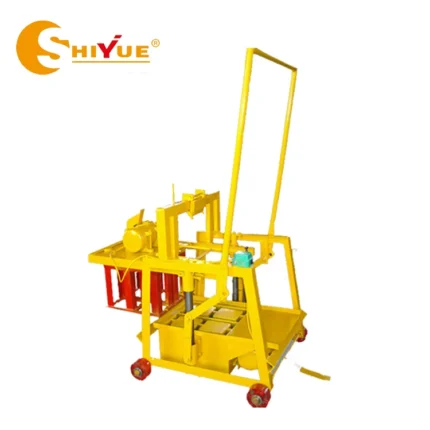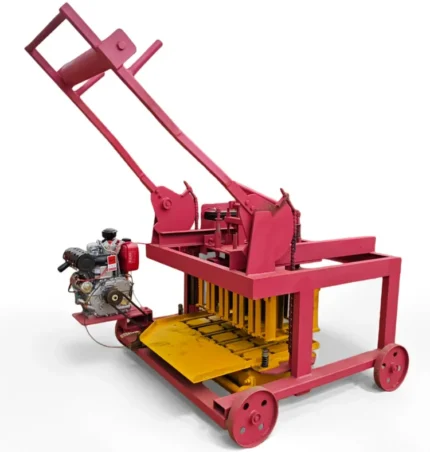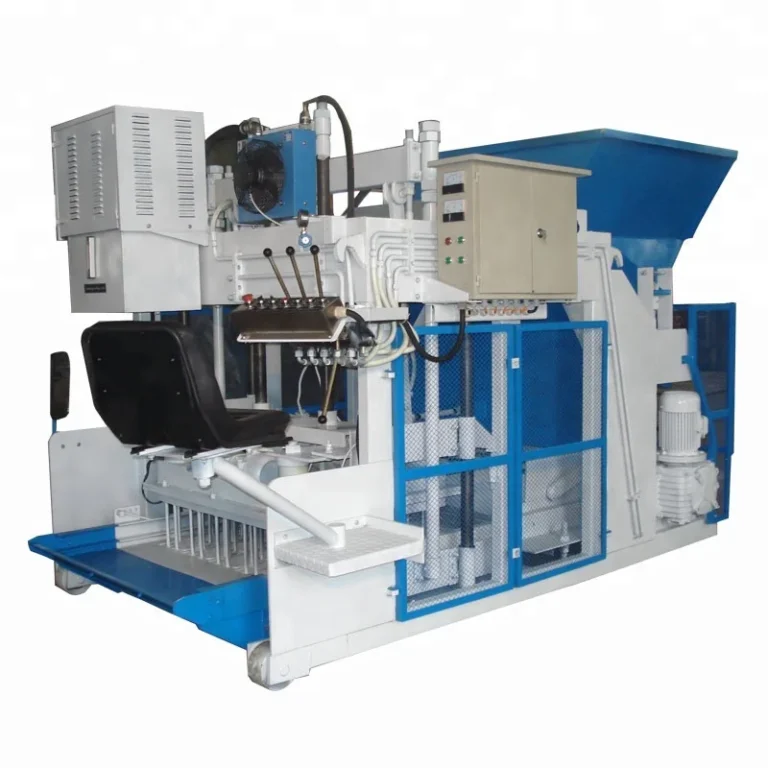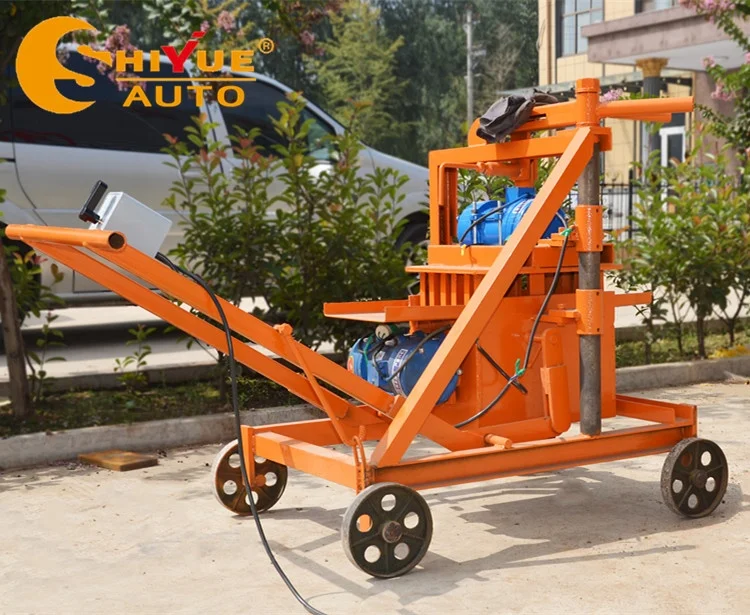
Description
Upgrade-Ready Hydraulics — the QMR4-45 mobile egg-laying block machine ships with diesel-driven pressure today and accepts PLC-controlled batching and stacking modules as your site output scales.
Technical Specifications
| Parameter | Value |
|---|---|
| Model | QMR4-45 |
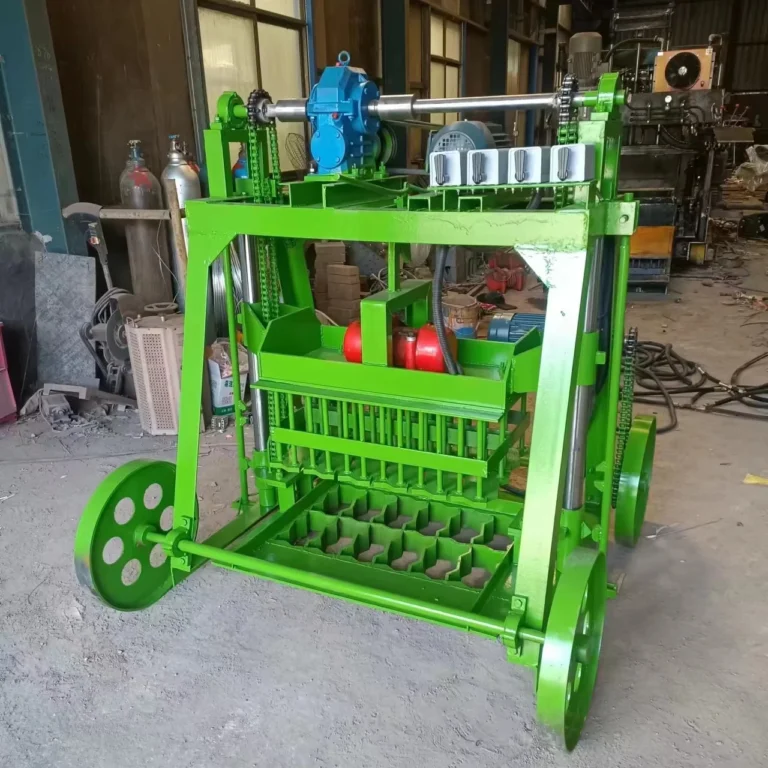
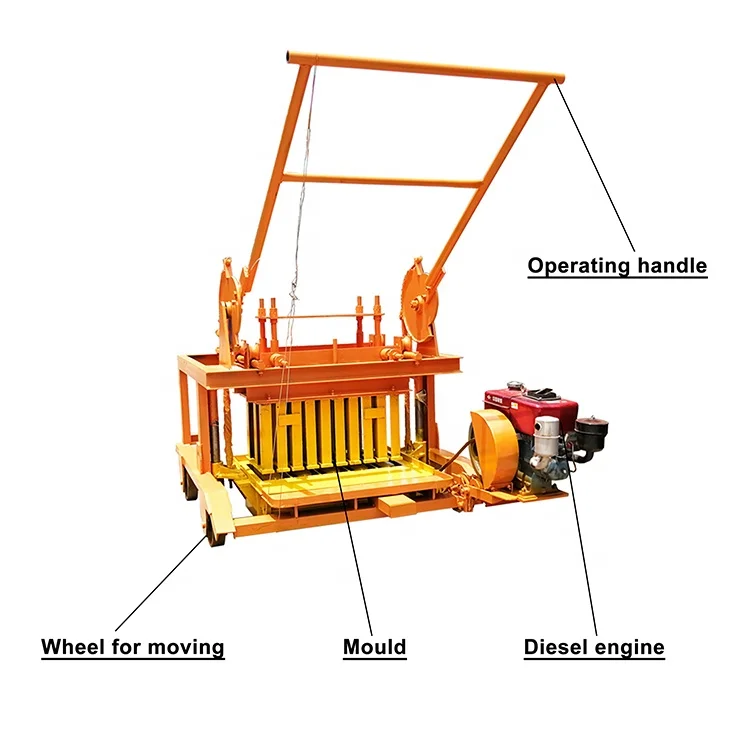
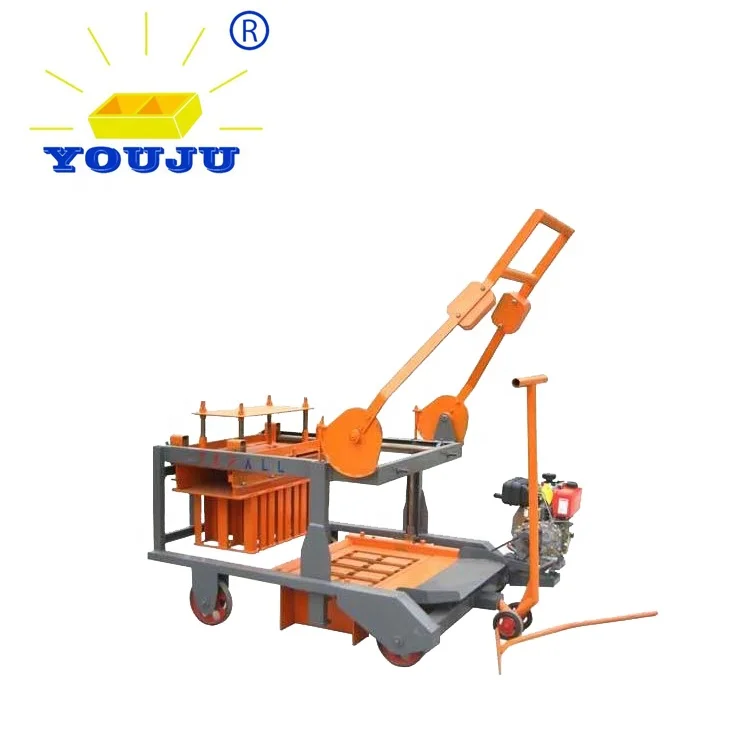
| Product Type | Mobile Egg-Laying Block Making Machine |
| Overall Dimensions (L×W×H) | 2420×1320×1650 mm |
| Net Weight | 810 kg |
| Rated Power | 6 kW |
| Diesel Engine Option | 6 kW or 6-8 HP |
| Voltage & Frequency | 220V or 380V, frequency to be confirmed per site |
| Control System | Diesel-hydraulic pressure (manual or PLC option available on upgrade path) |
| Moulding Cycle | 40-45 s |
| Pallet Requirement | None (egg-laying type) |
| Mould Formats Included | 400×200×200 mm (4 pcs/mould), 400×150×200 mm (5 pcs/mould), 400×120×200 mm (6 pcs/mould) |
| Output Capacity | 3000 pcs/day based on 400×200×200 mm hollow block over 8-hour shift |
| Automation Level | Manual operation with diesel-driven hydraulic pressure; upgradable to PLC |
| Stacking Method | Egg-laying directly on ground |
| Assembly State | Fully assembled mobile unit |
| Warranty | One year for the complete machine |
Application Suitability
| Application | Material or Output |
|---|---|
| Remote construction sites without grid electricity | Hollow blocks from local aggregate, sand and cement using diesel power |
| On-site housing and development projects | 400×200×200 mm and 400×150×200 mm hollow blocks laid directly on ground |
| First block plant with minimal investment | Manual egg-laying operation with a defined path to PLC-controlled batching |
| Contractors producing for own-site consumption | Multiple hollow block formats with 40-45 s moulding cycle per format |
What "3000 Blocks a Day" Actually Means on a Remote Site
The quoted capacity assumes a specific block format, an eight-hour shift, and uninterrupted material feed — none of which are guaranteed on a diesel-powered site.
I have watched a QMR4-45 arrive in West Africa and sit idle because the client assumed the PLC upgrade could be done locally, with no voltage confirmation and no control language set. The operator manual was in a language the crew could not read. Output dropped well below the rated figure, not because the automatic mobile block machine failed, but because the configuration conversation never happened before the container was sealed [NEED_CITE: voltage and control language confirmation before export shipment]. That is the gap between a catalogue number and a running production line.
Removing the Operator Variable with Diesel-Hydraulic Consistency
The QMR4-45 uses diesel-driven hydraulic pressure to form each block. This means block density on a remote site depends on hydraulic pressure consistency cycle after cycle, not on grid stability. When a site transitions to electric operation and PLC control, the PLC regulated egg-laying block machine holds pressure and vibration parameters constant, removing the variation that a manual operator introduces over a long shift.
From Manual Laying to Automated Stacking — the Upgrade Sequence
The base QMR4-45 eliminates pallets from day one. Blocks are laid directly on the ground, which removes pallet cost and pallet handling labour immediately. As production scales, the upgrade path introduces PLC-controlled automatic batching for mix consistency, then mechanised stacking and cubing to replace the manual labour bottleneck that typically limits output once block volume exceeds what a crew can move by hand [NEED_CITE: typical automation upgrade sequence for mobile egg-laying block machines].
Reading the Specs That Actually Matter
The moulding cycle of 40-45 seconds is measured per mould, and each of the three standard hollow block formats produces a different piece count per cycle. This means daily output shifts depending on which format your market actually buys — running 400×120×200 mm blocks yields more pieces per shift than 400×200×200 mm blocks, but the block volume and cement content per piece differ. The rated power of 6 kW applies to the electric motor option; on diesel, the 6-8 HP engine drives the hydraulic pump directly, so fuel consumption and engine maintenance become the operating cost variables instead of electricity tariff. Net weight of 810 kg keeps the machine within the towing capacity of most site vehicles, which matters when you are moving between project locations rather than running a fixed plant.
The Cost of Skipping the Automation Conversation
I have seen sites buy the QMR4-45 as a purely manual diesel unit, then discover six months later that adding PLC control requires electrical rewiring and a new hydraulic valve block that was not specified in the original order. The downtime for that retrofit is measured in weeks of lost production, not hours. When the automation level is not selected upfront with the upgrade path mapped, the PLC controlled egg-laying block machine conversion becomes a second project instead of a scheduled phase [NEED_CITE: automation upgrade lead time and component compatibility for mobile block machines].
Why Buyers Source This Machine Here
Block machinery is the single focus of the supplier, which means the QMR4-45 is specified as a matched system — machine, mould, and hydraulic circuit — rather than assembled from unrelated component vendors. Configuration is set against your actual mix design and local aggregate, not a catalogue default. Mould design covers the hollow block formats your market sells, with custom drawing capability for non-standard sizes. The automation level is selectable at order, so a buyer can start with manual diesel operation and add PLC batching and automatic stacking in a planned sequence. Installation support includes operator training for both the manual and PLC-controlled modes.
Documentation & Verification
- Machine specification sheet stating output per block format with the 40-45 s cycle defined
- Voltage and frequency confirmation document signed before production begins
- Automation level selection guide showing base configuration versus each upgrade tier
- Mould drawing and format list for all three hollow block sizes included
- Operation and maintenance manual covering both manual and PLC-controlled modes
Installation, Commissioning & Support
- Fully assembled 2420×1320×1650 mm unit arrives ready for diesel or electric connection
- 6 kW rated power requires confirmed voltage and frequency match before energising
- Diesel engine option removes grid dependency during initial site commissioning
- Mould change procedure trained on-site across all three hollow block formats
- Spare parts list including hydraulic seals and mould springs provided at delivery
- Operator training covers manual cycle control and PLC transition when upgraded
What to Prepare Before Requesting a Quotation
Confirm the hollow block formats your market requires and the daily volume you need to hit per format. Provide your site voltage and frequency, or confirm that you will run diesel-only initially with a planned electric transition date. Specify whether you want manual operation at delivery with PLC control added later, or full PLC from day one. State the language required for the control display and the operator manual so that commissioning is not delayed by a documentation mismatch.
Frequently Asked Questions
Q: What automation upgrades are available for the QMR4-45, and can PLC control be added later?
A: The QMR4-45 can be specified at order with a defined upgrade path from manual diesel-hydraulic operation to PLC-controlled automatic batching and mechanised stacking. The PLC module, electrical wiring specification, and hydraulic valve compatibility should be confirmed upfront so that adding control later does not require unplanned component replacement or extended production downtime.
Q: How does diesel-hydraulic pressure compare to electric-hydraulic for block density consistency?
A: Diesel-driven hydraulic pressure delivers consistent forming force independent of grid fluctuations, which matters on remote sites. When the site transitions to electric operation with PLC control, the system regulates pressure and vibration parameters cycle by cycle, reducing the batch-to-batch density variation that manual operation typically introduces over a full shift.
Q: What voltage and control language options apply when upgrading from diesel to PLC operation?
A: The QMR4-45 supports 220V or 380V configurations, with frequency to be confirmed against your site supply before production. PLC display language and operator manual language must be specified at order to avoid commissioning delays. Both should be documented in the voltage and control confirmation sheet signed before the machine leaves the factory.
Q: How do I verify real daily output per block format and the cycle time after a mould change?
A: Output capacity is stated per format — 3000 pieces per day based on 400×200×200 mm hollow blocks over an eight-hour shift. Each format has a 40-45 second moulding cycle. The capacity calculation document provided with the quotation states the assumed format, shift length, and mould change time so that your production plan is built on confirmed numbers rather than a single headline figure.