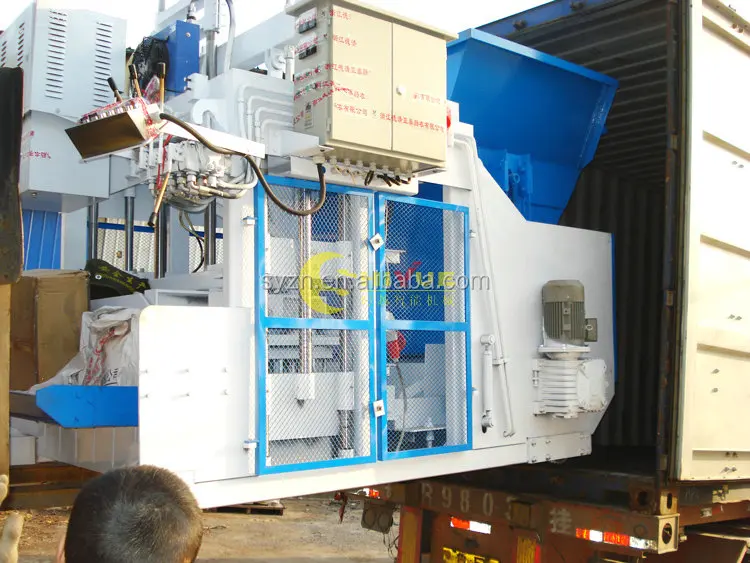
Description
Matched System Control — PLC governing cycle time, steering and vibration as one loop rather than separate manual inputs, tuned to the buyer’s actual aggregate before dispatch.
Technical Specifications
| Parameter | Value |
|---|---|
| Model | QMY12-15 |
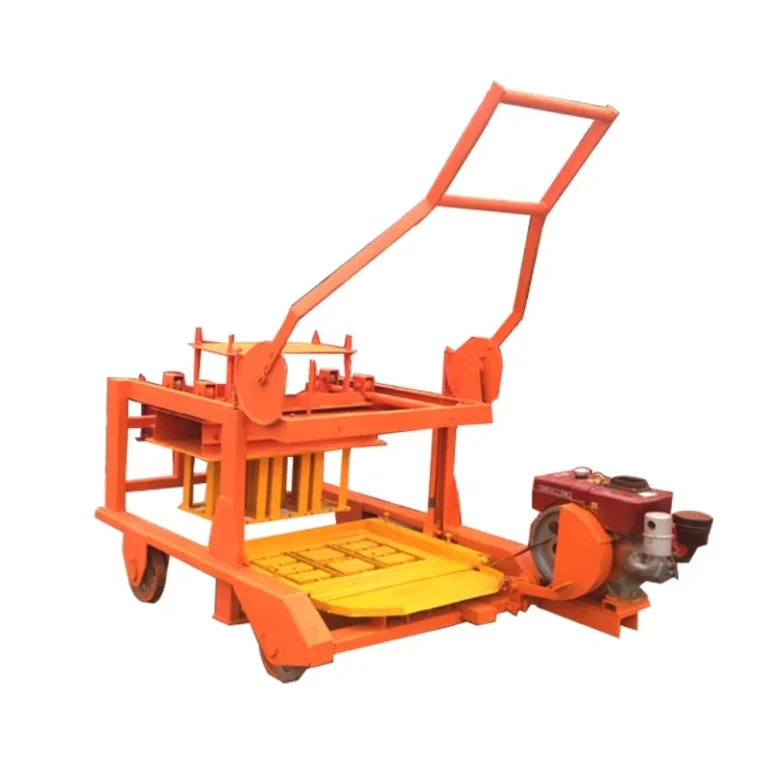
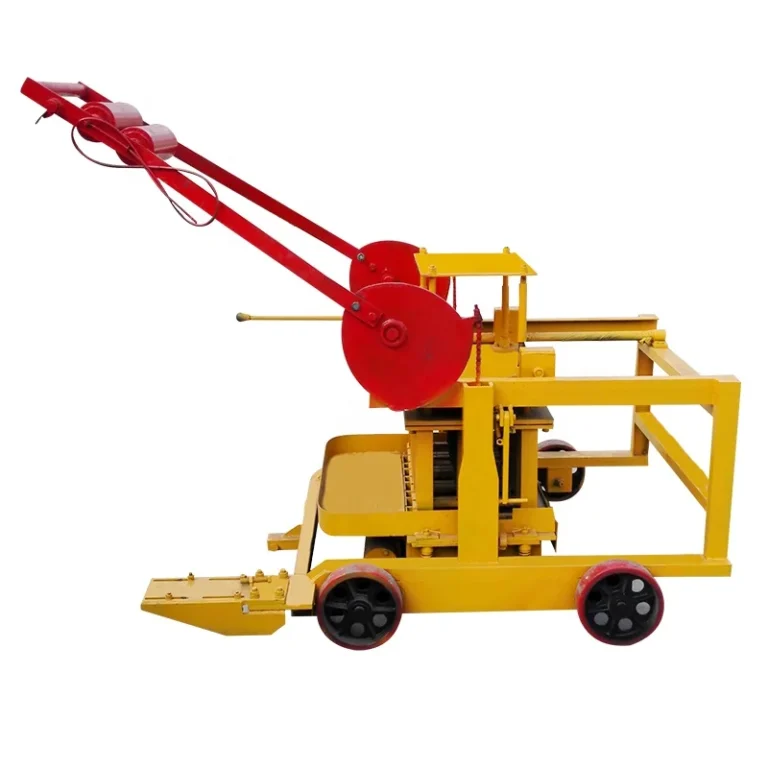
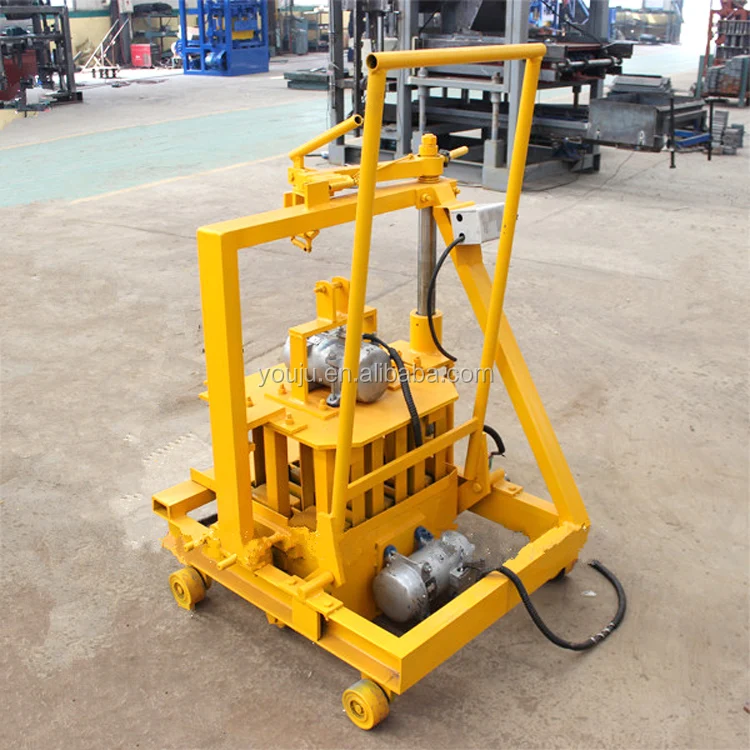
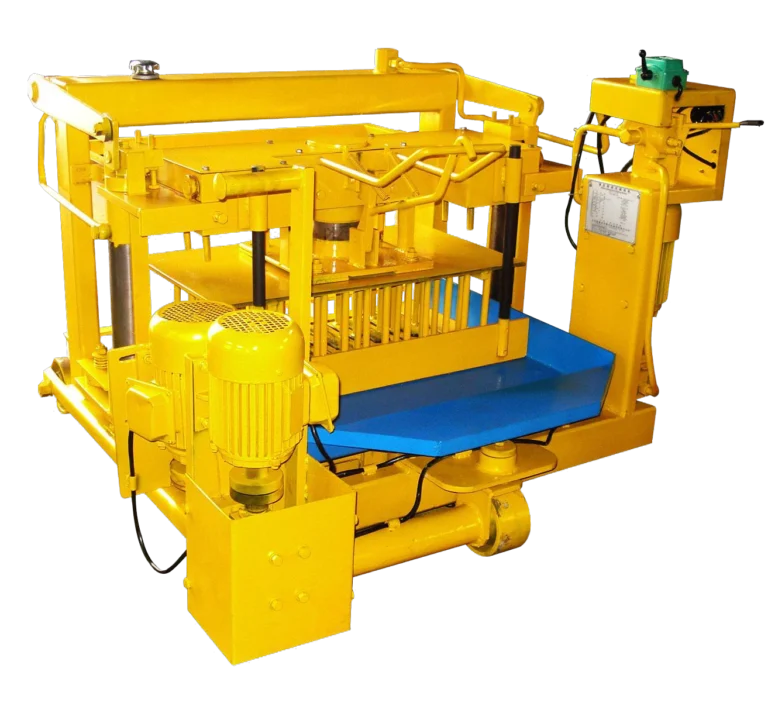
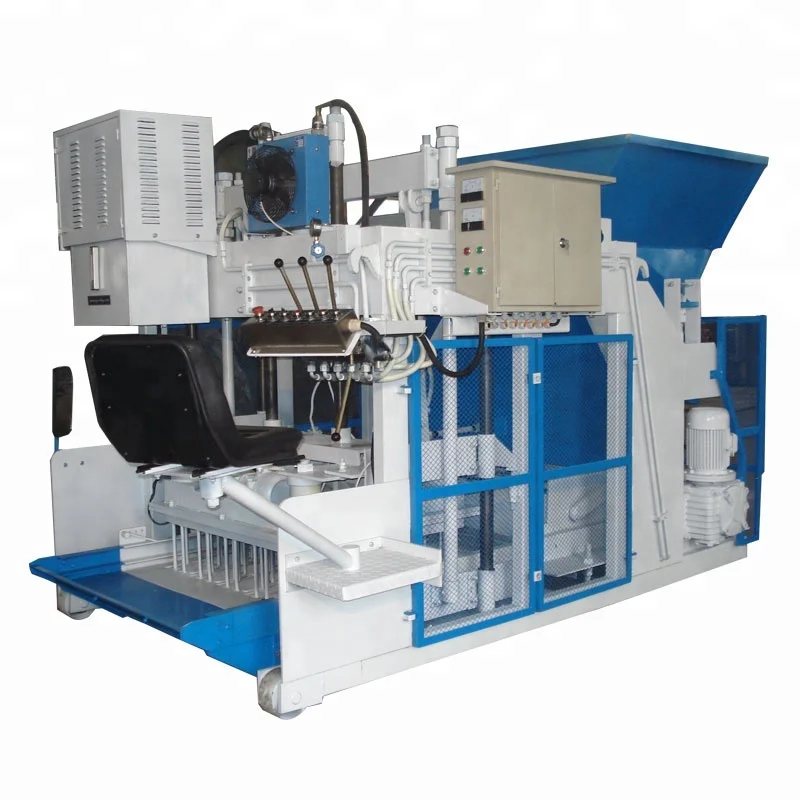
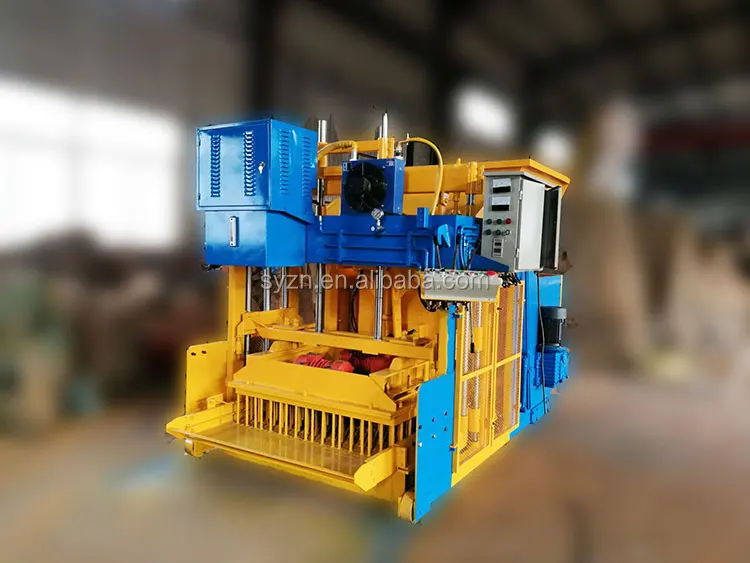
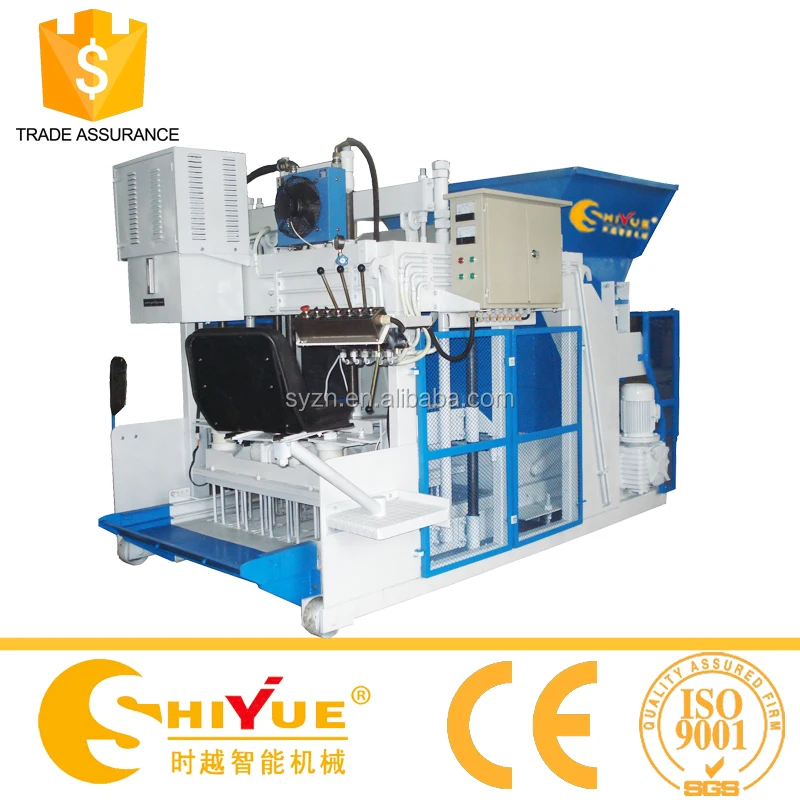
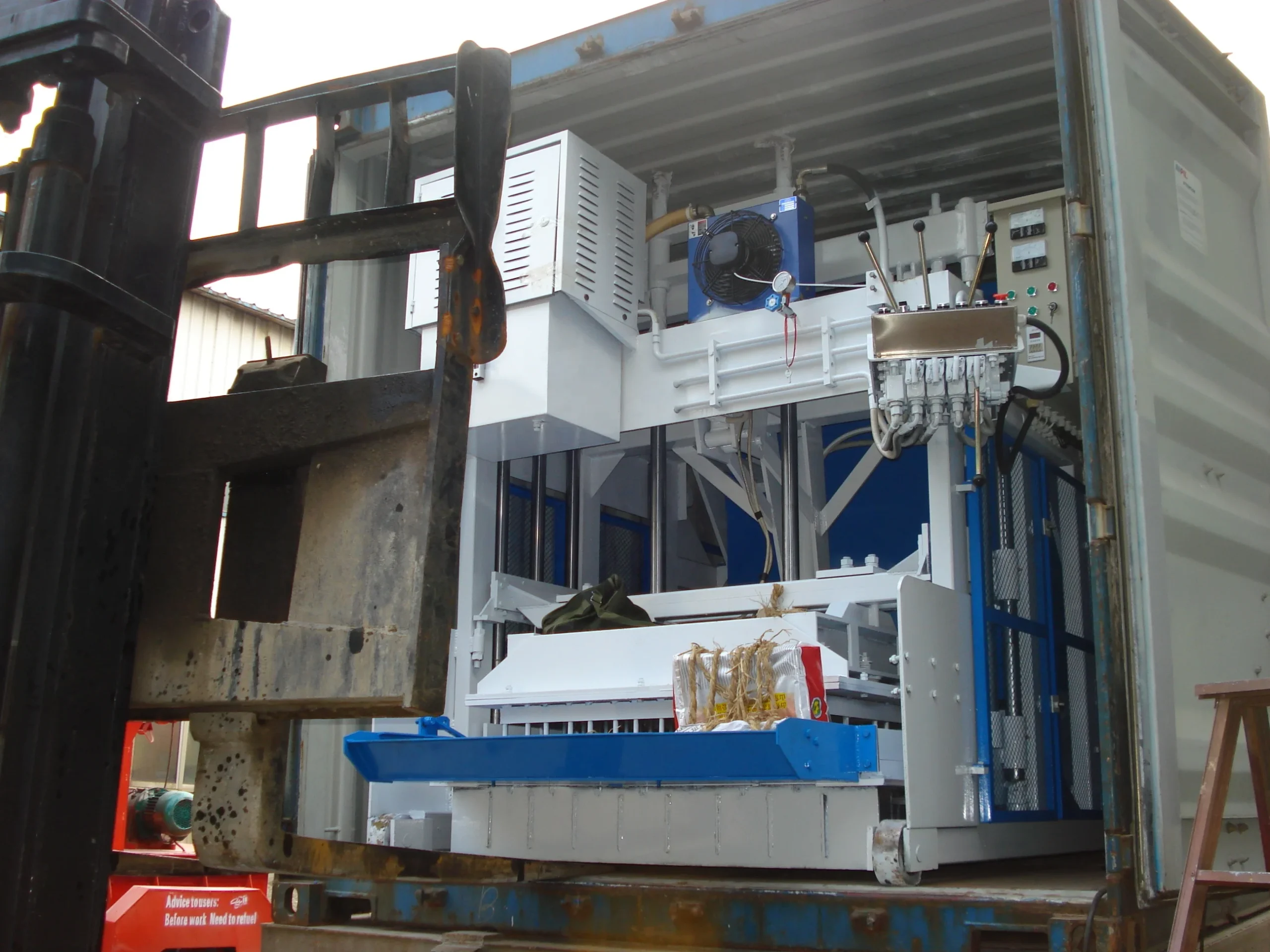
| Product Type | Mobile Egg Laying Block Making Machine |
| Overall Dimensions (L×W×H) | 3250×2100×2300 mm |
| Total Mass | 4200 kg |
| Total Power | 16 kW |
| Hydraulic System Pressure | 16–20 MPa |
| Excitation Frequency | 3200 Hz |
| Vibration Mode | Three-dimensional mold vibration |
| Molding Cycle | 10–15 s |
| Demold Method | Hydraulic |
| Turning Method | Hydraulic |
| Moving Method | Automatic movement with hydraulic steering |
| Output Capacity | 2880 pcs/h (basis: 400×200×200 mm hollow block, 15–20 s cycle, 12 pcs/mould) |
| Output Capacity | 3360 pcs/h (basis: 400×150×200 mm hollow block, 15–20 s cycle, 14 pcs/mould) |
| Output Capacity | 5280 pcs/h (basis: 400×100×200 mm hollow block, 15–20 s cycle, 22 pcs/mould) |
| Output per 8 hr Shift | 23000 pcs (basis: 400×200×200 mm hollow block) |
| Output per 8 hr Shift | 36880 pcs (basis: 400×150×200 mm hollow block) |
| Output per 8 hr Shift | 42240 pcs (basis: 400×100×200 mm hollow block) |
| Compressive Strength of Blocks | ≥15 MPa |
| Control System | Computer automatic control (PLC brand and display language to be confirmed) |
| Voltage & Frequency | To be confirmed with buyer’s site requirement |
| Automation Level | Semi-automatic mobile egg-laying (no fixed pallet return) |
| Raw Materials | Fly ash, cinder, coal gangue, river sand, gravel, cement, industrial waste residue |
| Block Types | Hollow block, porous brick, road kerb, road brick, grassing brick (by changing moulds) |
| Color Options | Custom paint color available |
| Standards | CE (certificate number to be confirmed) |
| Warranty | 1 year (excluding spare parts) |
Application Suitability
| Application | Material or Output |
|---|---|
| On-site hollow block production at housing project sites | River sand, gravel, cement mixes laid directly on prepared ground |
| Road kerb and paver production for infrastructure contractors | Crushed stone and cement with kerb-specific mould sets |
| Porous brick and grassing brick for landscaping projects | Fly ash, cinder, coal gangue blended with cement |
| First block plant for entrepreneurs with limited capital | Semi-automatic mobile operation without fixed curing racks |
| Remote or multi-site production for concrete product manufacturers | Machine relocated between project sites on flat prepared surfaces |
What "Automatic" Really Means on a Mobile Egg Laying Block Machine
PLC-controlled cycle timing and hydraulic steering remove the two variables that cause the most batch-to-batch density spread on mobile machines: operator pace and directional drift.
I watched a QMY-class egg layer in the Middle East produce hollow blocks that tested anywhere from 8 MPa to 17 MPa within the same pallet run. The operator was manually steering and calling cycle end by eye. Once we locked the molding cycle to a fixed PLC window and let the hydraulic steering handle positioning, the spread narrowed to a band the site engineer could actually sign off on. [NEED_CITE: compressive strength consistency requirements for load-bearing masonry units]
When buyers search for an automatic mobile block machine, they often discover the automation stops at vibration. Steering, movement between lay-down points, and cycle timing still fall to the operator. The QMY12-15 closes that gap by putting movement, steering and mold vibration under one control logic so the machine repeats the same sequence whether it is the first block of the shift or the three-thousandth.
Control Logic That Covers the Full Cycle
The PLC on the QMY12-15 governs the 10–15 second molding cycle, the hydraulic demold stroke, and the automatic movement to the next lay-down position. This matters because on a mobile egg laying block machine the operator is walking alongside the unit, and any step left to human timing introduces variability. The control loop handles vibration duration, pressure application and release, then commands the hydraulic steering to position the machine for the next block row.
Where Hydraulic Pressure Meets Vibration Frequency
Three-dimensional mold vibration at 3200 Hz works together with the 16–20 MPa hydraulic system pressure to compact the mix from multiple axes. Vibration alone settles fines; pressure alone pushes coarse aggregate into place. Both acting during the same PLC-timed window produce a block with uniform density through its full cross-section. This is the combination that lets the QMY12-15 reach the rated ≥15 MPa compressive strength when the mix design matches the local aggregate available on site. [NEED_CITE: relationship between vibration frequency and hydraulic pressure in block compaction]
Reading the Capacity Figures Against Block Format
The output figures shift significantly depending on which block size the mould is set up for. At 12 pcs per mould for a 400×200×200 mm hollow block the machine rates at 2880 pcs/h, while a 400×100×200 mm hollow block at 22 pcs per mould rates at 5280 pcs/h under the same 15–20 s cycle assumption. The 8-hour shift outputs follow the same ratio: 23000 pcs versus 42240 pcs. Any capacity discussion must state which block format the number assumes, because quoting a single headline figure misleads the buyer planning production around a specific product mix.
Mismatched Parameters and the Blocks They Ruin
When the hydraulic pressure is set too low for a sandy mix with high fines content, the vibration shakes the cement paste to the bottom and leaves a weak crown on every block. I have seen entire curing racks of hollow blocks crumble at the top edge during forklift transport because the pressure was never adjusted after the aggregate source changed. The 16–20 MPa range on the QMY12-15 is adjustable, but only if the buyer communicates the local material profile before the machine ships. [NEED_CITE: aggregate gradation effects on block compressive strength]
Voltage and frequency confirmation belongs in the same pre-shipment conversation. A machine wired for 380V/50Hz arriving at a 440V/60Hz site will run the vibration motor at the wrong speed, shifting the excitation frequency away from 3200 Hz and producing blocks that do not meet the rated strength. Commissioning delays from electrical mismatch are among the most common and most avoidable problems in cross-border machinery delivery.
Why Sourcing Here Changes the Conversation
Block machinery is the only product line, so the QMY12-15 arrives with mould, pallet guidance and handling considered as a matched set rather than assembled from separate purchase orders. The machine configuration is set against the buyer’s actual mix design and target block format, not pulled from a catalogue default. Custom mould design from buyer drawings means the formats the local market actually sells are covered from the first production run. The automation level is selectable, so a buyer can begin with this semi-automatic mobile unit and plan an upgrade path to a fixed line with stacking later. Installation support and operator training are included so the PLC parameters and hydraulic settings carry over correctly to the new site.
Documentation & Verification
- Line layout showing the QMY12-15 travel path and lay-down spacing on your site plan
- Capacity calculation per block format with cycle time assumptions stated
- Hydraulic and electrical schematic for local technician servicing
- Factory test record using your actual raw material sample before dispatch
- Mould drawing and format list for every block size in your quoted set
- Voltage, frequency and PLC display language confirmation sheet
Installation, Commissioning & Support
- Flat prepared ground surface required across the full travel path of the 3250×2100 mm machine footprint
- Dedicated power circuit matching confirmed voltage and frequency for the 16 kW total load
- Hydraulic steering and demold circuits tested and pressure-set to your mix during on-site commissioning
- PLC display language and molding cycle parameters verified with your operators during training
- Mould change procedure demonstrated for each format in your block type set
- Wear parts list covering hydraulic seals and vibration components with reorder references
What to Include in Your Inquiry
Send the block formats you plan to produce, the target daily output per format, and a sample or description of your local aggregate and cement source. Include your site voltage, frequency, and the language your operators will need on the PLC display. If you already have curing space and handling equipment, note the dimensions so pallet and block spacing recommendations align with what is already on the ground.
Frequently Asked Questions
Q: How is real daily output verified per block format, and what cycle time does each capacity figure assume?
A: Every capacity figure on the QMY12-15 is stated with the block format, pieces per mould, and the 15–20 second cycle time it assumes. Before shipment we run a factory test using your material sample and record actual cycle times for each mould in your set. The test report travels with the machine so your production planning starts from measured data, not catalogue estimates.
Q: What PLC brand is installed, and can the display language be set before shipment?
A: The PLC brand and display language are confirmed during the voltage and control confirmation step, before the QMY12-15 enters production. We document the agreed brand, the operator language, and the electrical parameters on a confirmation sheet you sign off. This avoids commissioning delays caused by an unreadable interface or mismatched voltage at arrival.
Q: How does the hydraulic pressure range get matched to my local aggregate for target block strength?
A: The 16–20 MPa range on the QMY12-15 is adjusted based on your aggregate gradation and mix design. We request a material description or sample, run trial pressings at different pressure settings, and lock the value that delivers your target compressive strength. The factory test record documents which pressure produced which strength result so you can reproduce it on site.
Q: What is the upgrade path from this semi-automatic mobile machine to a fully automatic line?
A: The QMY12-15 operates as a standalone mobile unit without fixed pallet return or stacking. When production volume justifies a fixed plant, the same block formats and mould designs carry over to a stationary line with automatic pallet feeding, stacking and cubing. The mould compatibility means your market product range does not reset when you transition.
Q: Which moulds and hydraulic wear parts are included, and how are replacements sourced?
A: The quoted mould set covers every block format listed in your confirmation, and the delivery includes a wear parts list identifying hydraulic seals and vibration components by part number. Replacement parts are available for reorder directly, with drawings on file so your local maintenance team can also source equivalent components independently if needed.