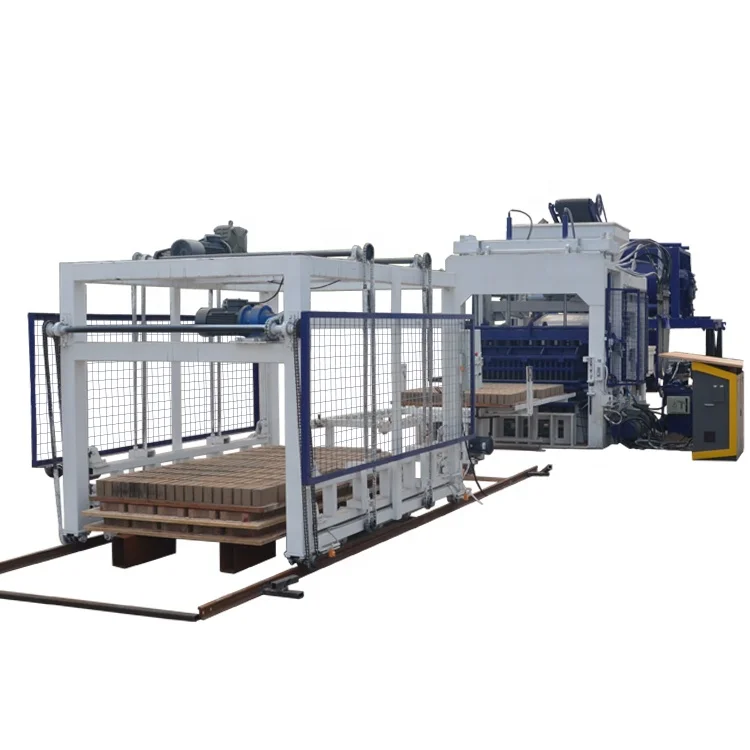


Description
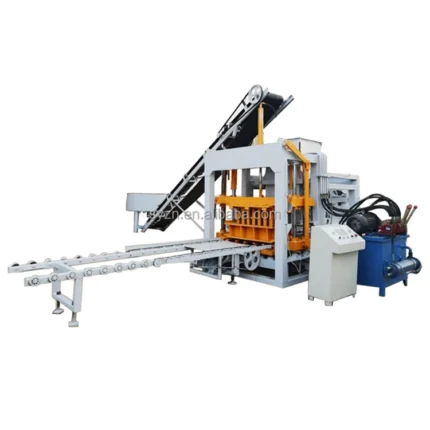
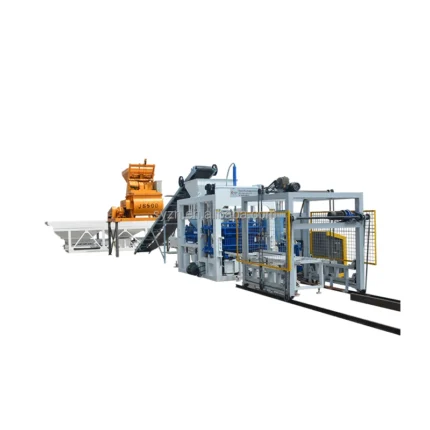
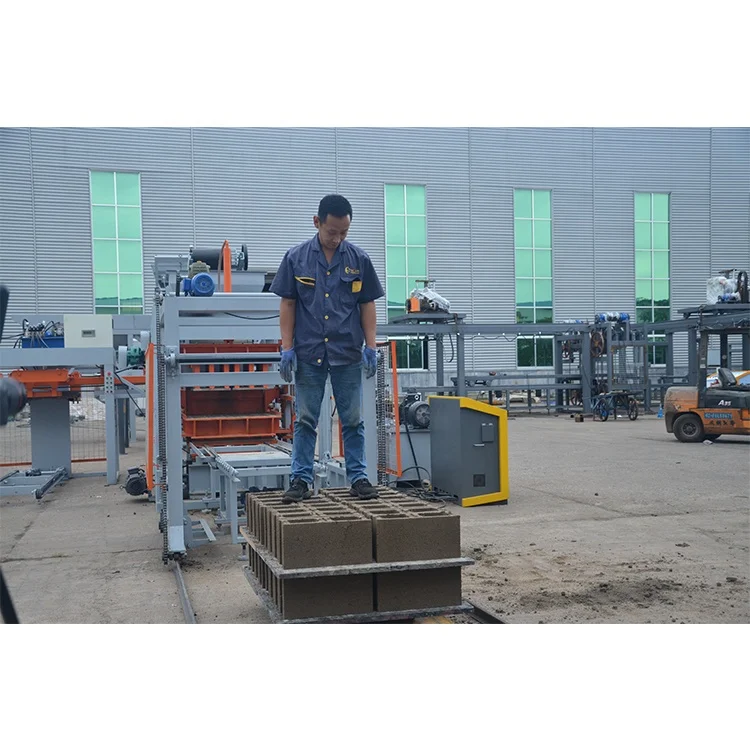
Automation Integration — the QT12-15 block machine is specified as a complete intelligent system where PLC logic, pallet handling, and stacking stations are matched to the press cycle so no station waits on another.
Technical Specifications
| Parameter | Value |
|---|---|
| Model | QT12-15 |
| Product Type | Fully Automatic Concrete Block Making Machine |
| Total Installed Power | 62 kW |
| Pallet Dimensions | 1300 × 900 mm |
| Moulding Cycle Range | 15–30 seconds (basis to be confirmed per block format and mix) |
| Vibration Configuration | Table vibration, four-axis arrangement |
| Vibration Force | 120 kN (subject to catalog verification) |
| Vibration Acceleration | Up to 20g (subject to catalog verification) |
| Drive System | Frequency conversion motor, dynamic and static table |
| Control System | PLC with configurable HMI language |
| Voltage | Customized to local industrial supply |
| Material Feeding | 360° press-in arch breaker with replaceable wear-resistant cloth platform plate |
| Mould Compatibility | Customized per buyer block format |
| Certification | CE (subject to catalog verification) |
Application Suitability
| Application | Material and Format |
|---|---|
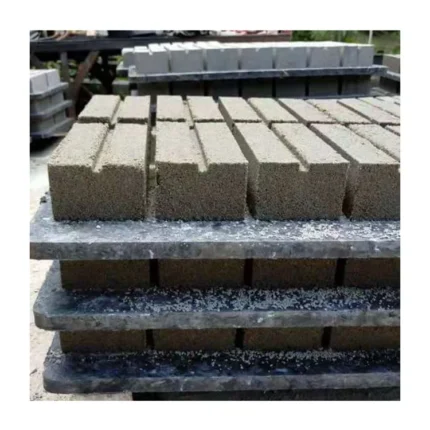
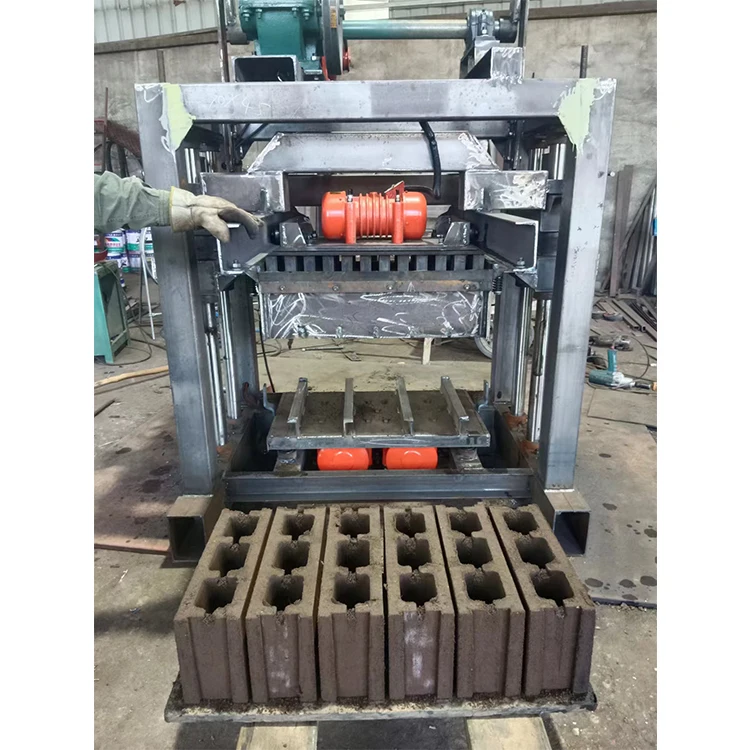
| Hollow block production | Crushed stone, sand, cement — standard 400×200×200 mm and regional variants |
| Solid block and flyash brick manufacturing | Flyash, sand, lime, cement blends for load-bearing and infill formats |
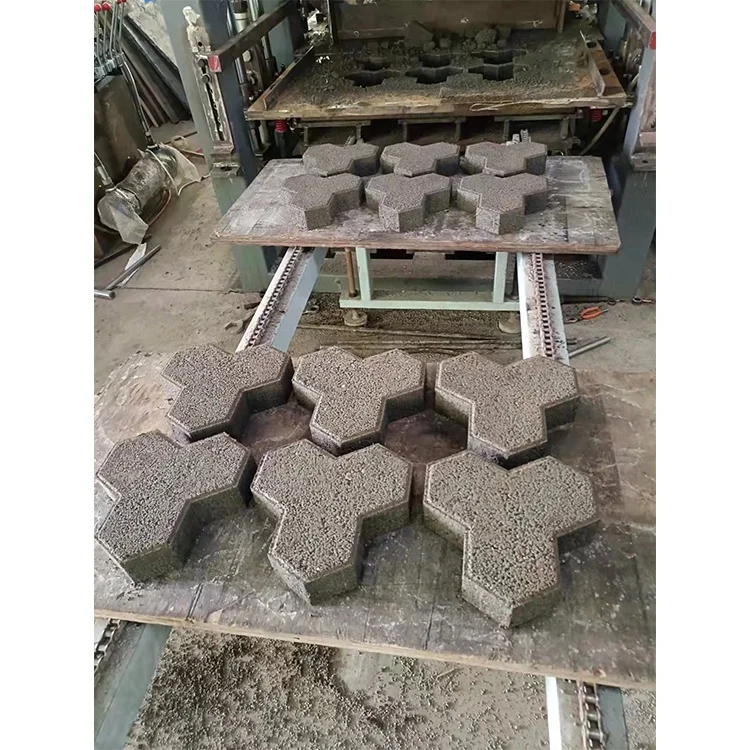
| Paving block and interlocking brick runs | Fine aggregate and cement mixes with pigmented face layers |
| Kerbstone and slope protection block forming | Heavy-duty concrete mixes requiring high compaction density |
| Porous brick production | Lightweight aggregate and aerated mix designs for thermal insulation applications |
Why the Control Language Must Be Settled Before the Machine Ships
An automatic block making machine PLC controlled in the wrong language is a production line standing still on day one.
I spent years on Middle East project sites managing equipment commissioning, and the most avoidable delays never came from mechanical faults. They came from operators staring at an English-language HMI when they only read Arabic, or a Turkish foreman trying to adjust vibration parameters through a Mandarin interface. On one QT12-15 installation in Riyadh, three technicians circled the control panel on the first morning unable to acknowledge a simple feed hopper alarm. The line sat idle while we arranged a remote firmware flash to switch the display language. That delay cascaded into a week of lost curing time before the blocks reached testing strength. [NEED_CITE: industrial equipment HMI language requirements by export market]
What PLC Logic Actually Removes from the Operator
The QT12-15 operates as a fully automatic block making machine PLC controlled through the entire production sequence from raw material batching through pallet return. The operator’s role shifts from executing each step to monitoring the system and intervening only when the PLC flags an anomaly. Batch-to-batch consistency depends on this logic holding the vibration duration, hydraulic pressure dwell, and feeding cycle within set tolerances regardless of shift changes or operator fatigue. When the control system is correctly configured, the ten-thousandth block of a run matches the tenth.
Where Automation Creates Real Leverage in the Line
The value of the automatic block making machine PLC controlled architecture becomes visible at the transitions between stations. The press completes a cycle in the 15–30 second range depending on block format and material, but that number only matters if the pallet feeder delivers an empty pallet and the stacker clears the finished one within the same window. If either station lags, the press idles and the quoted cycle time becomes theoretical. The PLC coordinates these handshakes so throughput is limited by the slowest station in the line, not by communication gaps between them. [NEED_CITE: synchronized station timing in automated block production lines]
Reading the Specification Sheet Beyond the Headline Numbers
The 62 kW total power rating covers all motors across feeding, vibration, hydraulics, and handling — understanding how that load distributes tells you where the energy actually goes. The four-axis table vibration system producing up to 20g acceleration is the mechanism that determines block density uniformity across the 1300 × 900 mm pallet; uneven excitation means blocks at the pallet edges cure to a different strength than those in the center. The frequency conversion motor allows vibration force adjustment between dynamic and static modes, which is how you match the machine to a flyash-rich mix versus a coarse aggregate mix without changing hardware. The replaceable wear-resistant cloth platform plate and 360° arch breaker address material flow consistency — if the feed box cannot distribute evenly into the mould cavity in one pass, block weight varies and the PLC cannot compensate for a mechanical feeding deficit.
The Cost of Getting the Automation Boundary Wrong
Some buyers specify a fully automatic press and then discover that pallet stacking and curing rack transfer were treated as separate line items outside the quotation. The press runs at full speed while finished blocks pile up at the discharge end waiting for manual handling, which defeats the purpose of the automation investment. Other buyers confirm pallet size after the machine is built and find the 1300 × 900 mm pallets do not match their existing curing racks or forklift fork spacing, forcing a capital expenditure on new handling infrastructure. Voltage and frequency confirmed after production rather than before shipment means the control cabinet arrives wired for a supply standard that the local grid does not provide. [NEED_CITE: consequences of incomplete automation scope in block plant procurement]
Why This Configuration Approach Holds Up on Site
Block machinery is the sole product focus here, which means the QT12-15 press, mould, pallet, and handling equipment are specified as a matched system rather than sourced from separate vendors and bolted together. The machine configuration is set against your actual mix design and local aggregate, not pulled from a default catalog page. Mould design covers the specific formats your market sells, with custom drawings reviewed before tooling begins. The automation level is selectable — a buyer can commission the QT12-15 as a fully automatic line now or start at a semi-automatic station arrangement and add stacking and cubing modules later as volume grows. Installation support includes commissioning on your slab with operator training conducted in the language your team actually works in.
Documentation & Verification
- Line layout drawing with capacity calculation stating the assumed block format and cycle basis
- Machine specification sheet confirming voltage, frequency, and PLC display language before build
- Mould drawing and format list covering every block profile in your product range
- Hydraulic and electrical schematic for local maintenance troubleshooting from day one
- Factory test record on your specified pallet size and material before container loading
- Wear parts and mould catalog with part numbers matching your shipped configuration
Installation, Commissioning & Support
- Foundation plan showing load points and slab thickness required for the 62 kW vibration and hydraulic load
- Dedicated power circuit specification matching your confirmed local voltage and frequency before cabinet wiring
- Machine shipped in dismantled modules with labeled reassembly sequence matching the site layout drawing
- On-site commissioning including PLC parameter tuning against your confirmed mix design and block format
- Operator training on the HMI in the language confirmed during the pre-production review stage
- Wear parts kit covering the cloth platform plate and arch breaker components for initial production months
What to Include with Your Inquiry
Provide the block formats you currently sell or plan to add, along with the daily volume your market absorbs per format. Confirm your local industrial voltage and frequency, the language your operators read, and whether your existing curing area and forklifts are sized around a specific pallet dimension. If you are replacing a semi-automatic line, describe which stations you want to automate first and which can remain manual during the transition.
Frequently Asked Questions
Q: How is the daily output capacity calculated, and which block format is the quoted cycle time based on?
A: Cycle time ranges between 15 and 30 seconds, but the exact figure depends on block height, mix composition, and target density. We provide a capacity calculation that names the specific block format and mix assumed, so the daily output number corresponds to what you will actually produce rather than a best-case scenario based on a thin paver.
Q: What PLC language options are available, and can the HMI be set to the operator’s local language?
A: The HMI language is confirmed during the pre-production review and flashed to the control panel before the machine leaves the factory. We verify the language against your operator team’s requirements so commissioning starts with a readable interface instead of a language barrier on the first morning.
Q: How does the automation level handle pallet feeding, stacking, and curing rack transfer?
A: The QT12-15 is supplied as a fully automatic line when specified, meaning pallet feeding and block stacking are PLC-synchronized to the press cycle. Curing rack transfer and cubing are configurable stations — we confirm which are included in your quotation scope so no handling gap exists between press discharge and the curing area.
Q: Can the vibration force and hydraulic pressure be adjusted to match my local aggregate and mix design?
A: The frequency conversion motor allows vibration adjustment between dynamic and static modes, and the hydraulic pressure is tuned during commissioning to your confirmed mix. We configure these parameters against sample batches of your local material before finalizing the production settings on site.
Q: What is the upgrade path if I start semi-automatic and want to add full stacking later?
A: The machine architecture supports adding automatic pallet stacking and cubing modules after initial commissioning. The PLC control system is provisioned with the I/O capacity for these stations, so the upgrade involves mechanical installation and parameter activation rather than a full control cabinet replacement.