

Description
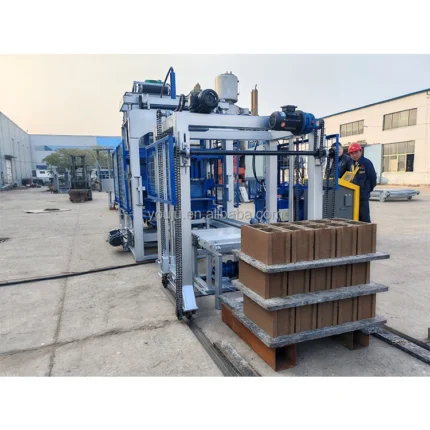
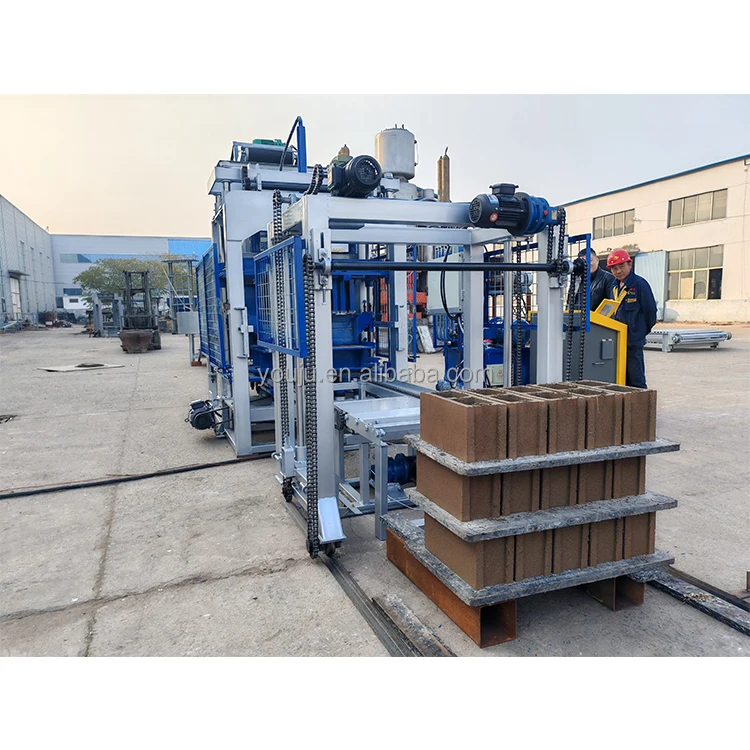
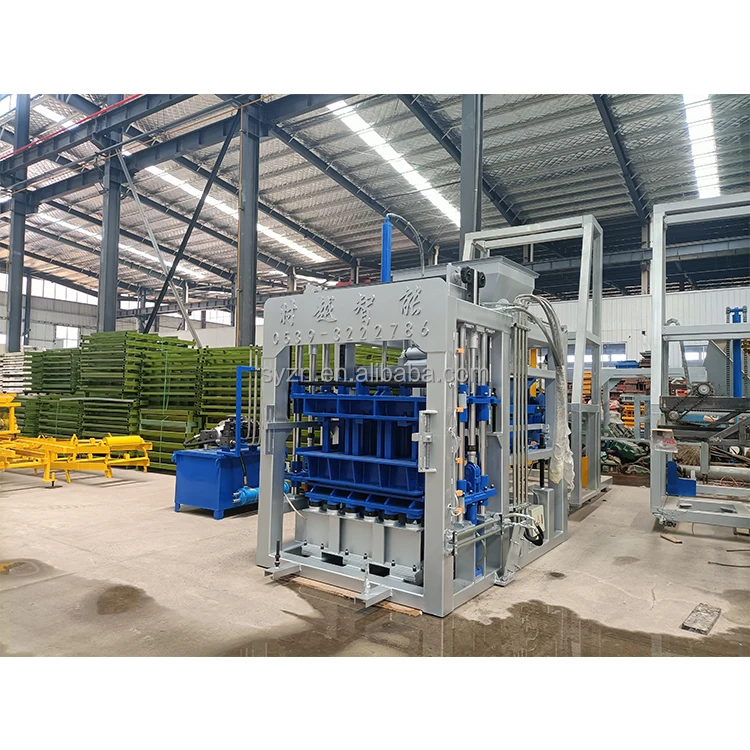
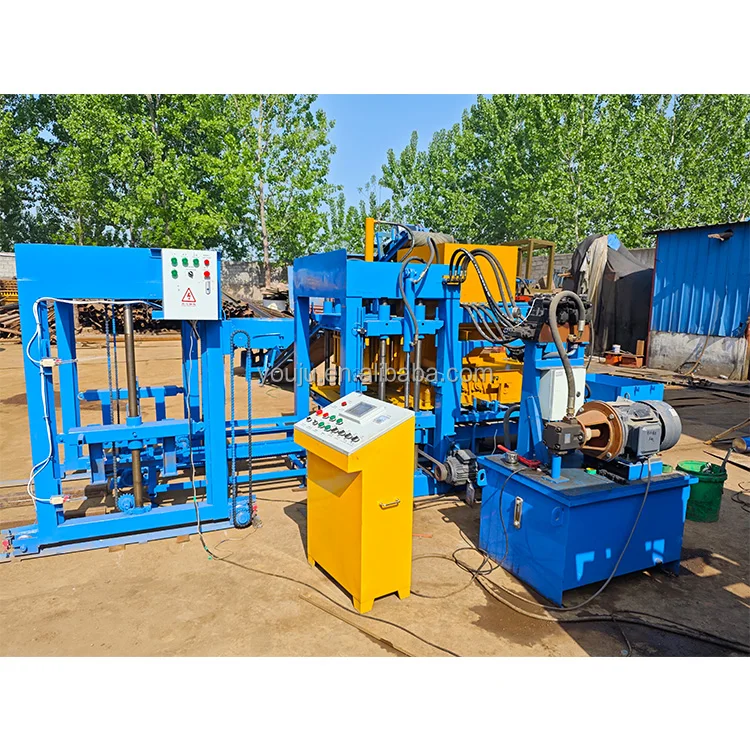
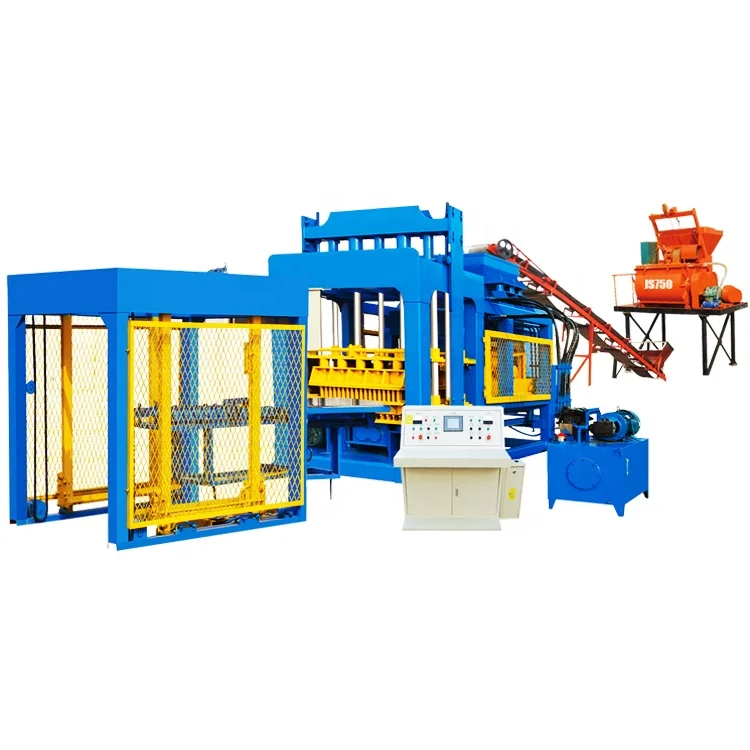
Automated fault detection — the QT12-15’s PLC continuously monitors hydraulic pressure and vibration frequency to alert operators before a fault halts production, keeping cycle times stable across long shifts.
Technical Specifications
| Parameter | Value |
|---|---|
| Model | QT12-15 |
| Product Type | Fully Automatic Stationary Block Making Machine |
| Rated Power | 44.58 kW |
| Voltage & Frequency | Customized to local supply (basis to be confirmed) |
| Control System | PLC with fault diagnosis (display language to be confirmed) |
| Overall Dimensions (L×W×H) | 9350 × 2520 × 2950 mm |
| Net Weight | 11,000 kg |
| Hydraulic Pressure | 16–21 MPa |
| Vibration Form | Platform vibration with synchronization |
| Moulding Cycle | 15–20 seconds (general) |
| Pallet Size | 1300 × 900 mm |
| Automation Level | Fully automatic |
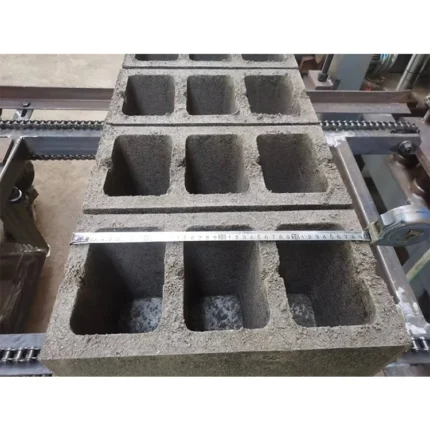
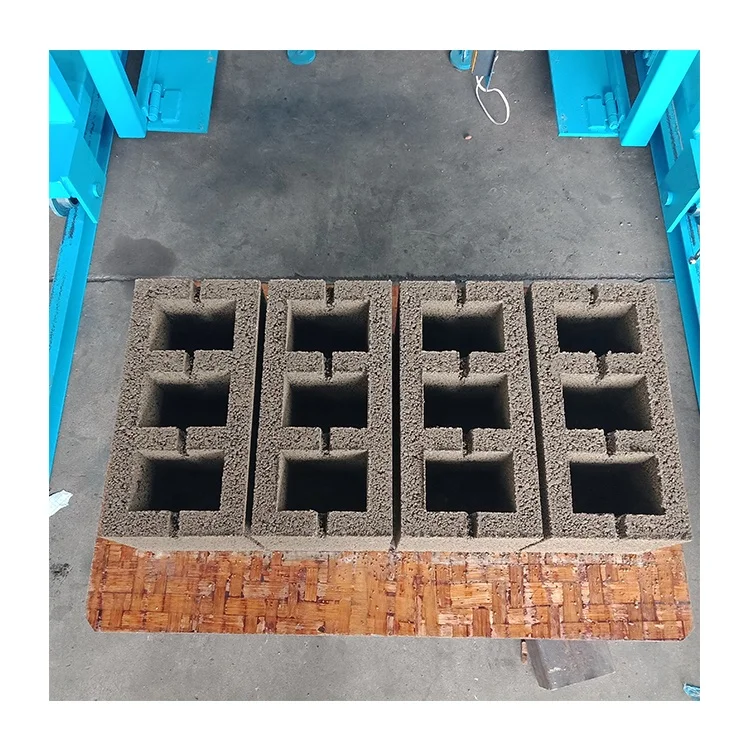
| Output — Hollow Block 400×200×200 mm | 12 pcs/mould, 20–25 s cycle, 21,600 pcs/day |
| Output — Porous Block 240×115×90 mm | 30 pcs/mould, 15–20 s cycle, 72,000 pcs/day |
| Output — Standard Block 240×115×53 mm | 60 pcs/mould, 15–17 s cycle, 144,000 pcs/day |
| Standards | CE, ISO |
| Warranty | 1 year (excluding wearing parts) |
Application Suitability
| Application | Material or Output |
|---|---|
| Hollow block production | Crushed stone, sand, cement, fly ash |
| Solid and standard block production | Sand, gravel, cement, slag |
| Paving and colored paver production | Crushed stone, cement, pigment |
| Interlocking brick and kerbstone | Gravel, sand, cement |
| Porous brick production | Fly ash, dust, cement |
Why PLC Fault Diagnosis Should Be the First Specification You Check
A block machine that detects its own faults before they stop the line is worth more than one that simply runs faster on paper.
Plant owners who focus on cycle time alone often discover that unplanned downtime wipes out the throughput advantage within the first month. When the vibration motor drifts out of sync or hydraulic pressure drops below the set threshold, the QT12-15 PLC triggers a warning signal so the operator can respond before a full stoppage occurs. Without this layer of protection, minor faults compound into extended outages that shift workers cannot diagnose without external support [NEED_CITE: PLC fault diagnosis standards in block machinery].
From Manual Guesswork to Repeatable Cycle Logic
Running a high-output block plant manually means every shift relies on one experienced operator to judge feed volume, vibration duration, and press timing. The automatic QT12-15 block making machine PLC controlled system replaces that judgement with programmable parameters locked into each recipe. Once the cycle for a 400×200×200 mm hollow block is stored, any operator can recall it with a single input, keeping density and dimensional tolerance consistent from the first pallet to the last of the day.
Removing Bottlenecks Between the Press and Downstream Handling
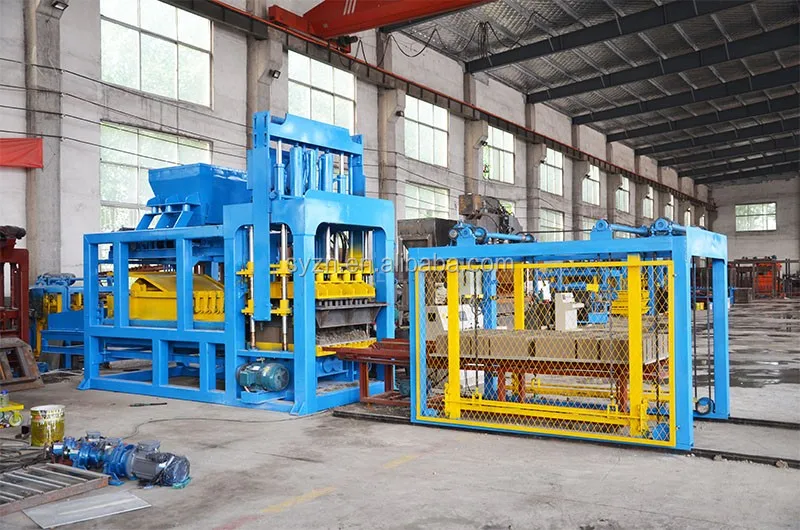
A fast press that outpaces its pallet return or stacking station simply accumulates work-in-process on the floor. This machine’s PLC coordinates pallet feeding, vibration sequence, and demoulding so each station hands off to the next without dead time. The emphasis is on line-level balance — the press is specified so its cycle matches the upstream mixer discharge and the downstream curing rack capacity, not just quoted in isolation [NEED_CITE: block production line synchronization principles].
Reading the Numbers Behind the QT12-15 Stationary Press
The 16–21 MPa hydraulic pressure range paired with platform vibration means the machine can shift from low-frequency feeding to high-frequency compaction within the same cycle. Low frequency allows the mix to fill deep mould cavities evenly, while high frequency consolidates the material against the pallet for uniform density. The 1300 × 900 mm pallet size determines how many blocks are produced per cycle and must align with the curing area dimensions and forklift capacity already on site. At 44.58 kW rated power, the electrical supply must provide a dedicated circuit to avoid voltage drop during peak vibration draw.
The Cost of Skipping the Automation Audit
Buyers who install a fully automatic press into a line that still relies on manual pallet handling quickly find the bottleneck has simply moved downstream. Blocks stack unevenly, curing racks fill at irregular intervals, and the PLC’s coordinated output cannot reach its intended rhythm [NEED_CITE: automation mismatch in block production lines]. Similarly, ordering a machine without confirming the PLC display language means the operator team faces an unfamiliar interface on day one, delaying the very consistency the automation was meant to deliver.
Why Buyers Source This Machine Here
Every configuration starts from the buyer’s actual mix design and local aggregate, not a catalogue default. The machine, mould, pallet, and handling equipment are specified as one matched system so cycle times align across stations. Automation level is selectable — a plant can begin with the QT12-15 in its current fully automatic setup and still leave room for downstream expansion. Installation includes operator training on the PLC interface, and mould design supports custom formats from buyer drawings. Wear parts and hydraulic schematics are documented before shipment so local maintenance can begin from the first week of production.
Documentation & Verification
- Line layout and capacity calculation stating each block format and assumed cycle time
- PLC parameter sheet with fault diagnosis codes in confirmed display language
- Hydraulic and electrical schematics matching installed components
- Factory test record run on buyer-specified mix design before dispatch
- Pallet specification cross-referenced with curing area dimensions
- Mould drawing and format list for every block type in the order
Installation, Commissioning & Support
- Foundation must accommodate 9350 × 2520 mm footprint with level tolerance for the platform vibration system
- Dedicated power circuit sized for 44.58 kW peak draw at confirmed voltage and frequency
- Machine arrives dismantled for container loading; reassembly supervised on site
- PLC parameters loaded and tested against buyer’s mix during commissioning
- Operator training covers fault diagnosis alerts and mould change procedures
- Wear parts list and hydraulic seal kit provided at handover
What to Prepare Before Requesting a Quotation
Share the target block formats with dimensions and required daily output for each, along with a recent aggregate analysis from your local source. Confirm the voltage and frequency at the installation site and the preferred PLC display language for your operator team. If existing curing racks, pallets, or forklifts are in place, include their dimensions so the line layout can be matched from the start.
Frequently Asked Questions
Q: How do I verify realistic daily output for each block format I plan to produce?
A: Request a capacity calculation document that lists each block format, its mould cavity count, and the cycle time used in the calculation. For the QT12-15, hollow block output of 21,600 pieces per day assumes 12 cavities at a 20–25 second cycle. Different formats and local mix characteristics will change the figure, so the document must reflect your actual product range.
Q: Can the PLC display language be configured before the machine ships?
A: Yes, the display language is confirmed during the order stage and loaded before factory testing. This ensures operators see familiar prompts and fault codes from the first day of commissioning, rather than navigating an unfamiliar interface while production pressure is highest.
Q: How does fully automatic control compare to upgrading a semi-automatic line later?
A: The QT12-15 is delivered fully automatic, coordinating pallet feed, vibration, and demoulding through the PLC. A semi-automatic line leaves pallet handling to manual labour, which caps output regardless of press speed. The decision depends on current labour availability and whether the downstream curing area can accept automated stacking.
Q: What pallet handling and curing equipment keeps the press running at full rhythm?
A: The 1300 × 900 mm pallets must cycle back from the curing area at a rate matching the press output. Automatic stacking and rack handling equipment eliminate the manual bottleneck. Confirm pallet material and dimensions against your existing forklift capacity and curing rack spacing before finalizing the line layout.
Q: How should I confirm electrical compatibility before placing the order?
A: Provide the site voltage and frequency — typically 380 V / 50 Hz or 440 V / 60 Hz depending on the market — along with the available transformer capacity. The motor and PLC are configured to match during production so no rewiring is needed on arrival [NEED_CITE: voltage and frequency standards by export market].