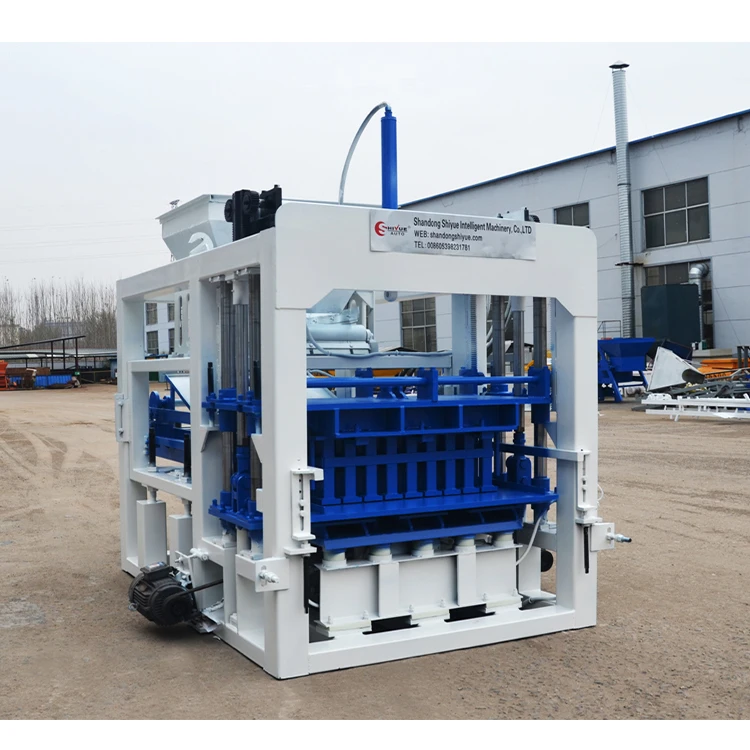

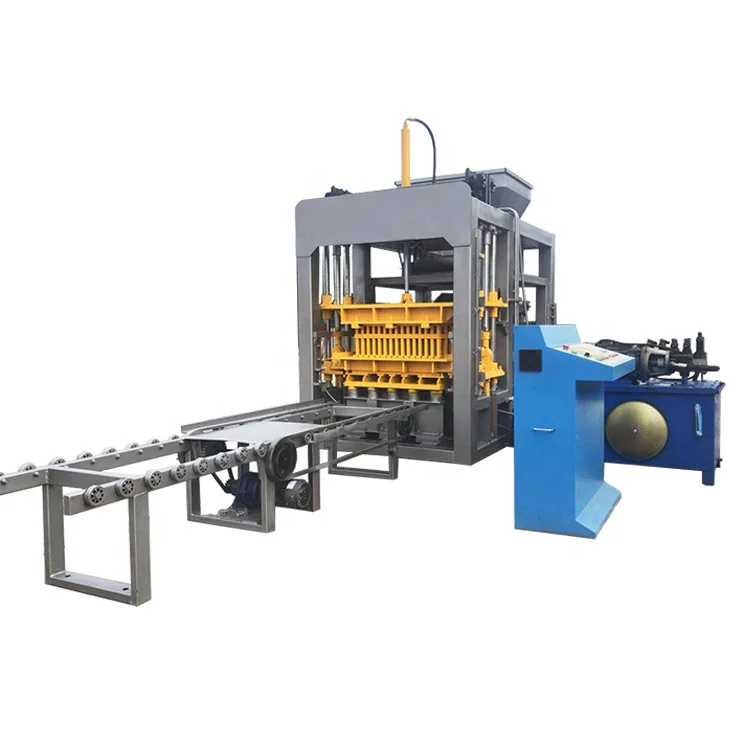


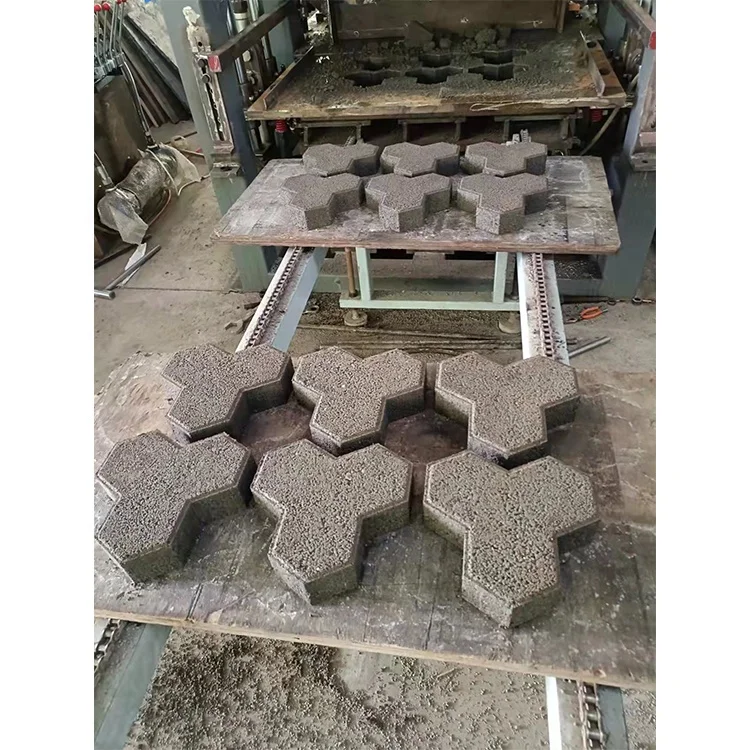
Description
Configurable automation level — the QT5-15 control logic is mapped to the buyer’s target block format and cycle sequence before shipment, so the operator starts running consistent product from day one.
Technical Specifications
| Parameter | Value |
|---|---|
| Model | QT5-15 |
| Product Type | Interlocking Brick Making Machine |
| Overall Dimension | 7400 × 1950 × 2800 mm |
| Total Mass | 5000 kg |
| Overall Power | 32 kW |
| Vibration Form | Platform Vibration |
| Vibration Frequency | 0–60 Hz (adjustable) |
| Vibration Force | 80 kN |
| Moulding Mode | Automatic loading, vibration moulding |
| Demolding Method | Hydraulic |
| Pallet Size | 1100 × 550 mm |
| Molding Cycle | 15–20 s |
| Control System | PLC with touch screen interface |
| Block Compressive Strength | > 15 MPa |
| Raw Material Compatibility | Flyash (up to 70%), slag, gangue, sand, water, crushed stone, cement |
| Factory Area | 1000 m² |
| Standards | CE |
| Capacity (basis stated) | Value |
|---|---|
| Hollow block 400×200×200 mm (5 pcs/mould, 15–20 s cycle) | 900–1,200 pcs/hour |
| Hollow block 400×150×200 mm (6 pcs/mould, 15–20 s cycle) | 1,080–1,440 pcs/hour |
| Solid brick 240×115×53 mm (32 pcs/mould, 15–20 s cycle) | 5,760–7,680 pcs/hour |
| Rectangular brick 200×100×60 mm (25 pcs/mould, 20–25 s cycle) | 3,600–4,500 pcs/hour |
| Zigzag brick 225×112.5×60 mm (16 pcs/mould, 20–25 s cycle) | 2,304–2,880 pcs/hour |
Application Suitability
| Application | Material or Output |
|---|---|
| Interlocking brick production | Sand, crushed stone, cement, flyash blends |
| Hollow block manufacturing | Slag, gangue, sand and cement mixes |
| Solid brick production | High-density aggregate with cement binder |
| Paving brick production | Crushed stone and sand with cement |
| Environmental protection building materials | Flyash content up to 70% with slag and gangue |
What the PLC Screen Does Not Show You Until It Is Too Late
A buyer once specified the right vibration force, the right hydraulic pressure and the right pallet size — and still could not commission the line because the PLC display language was wrong.
The control language must be confirmed before the machine ships, not after it arrives.
When a plant owner moves from manual pallet handling to a fully automated cycle, every sensor, valve and timer depends on the operator reading the screen. If that screen displays fault codes in a language the team cannot read, the first breakdown becomes a multi-day event instead of a five-minute reset [NEED_CITE: HMI language mismatch during commissioning]. That lost week of production is never factored into the capacity calculation the buyer used to justify the investment.
Intelligent Control Logic That Matches the Block You Actually Sell
The PLC on the QT5-15 is not a generic overlay bolted onto a press. The control sequence — material feed timing, vibration ramp-up, hydraulic demolding stroke and pallet advance — is programmed against the specific cycle time of the block format the buyer orders. When the target product is a 400×200×200 mm hollow block at 15–20 s per cycle, the automatic interlocking brick making machine PLC controlled logic holds each station to that window so the press is never left idle waiting for material or a pallet.
How Remote Diagnostics Shorten Downtime Without a Service Visit
The touch screen interface logs cycle counts, vibration frequency history and hydraulic pressure readings per shift. When a fault occurs, the operator sees the error code alongside the parameter that triggered it. For buyers in remote project sites where a factory technician is a flight away, this diagnostic layer means many issues are resolved over a phone call with the PLC screen data read aloud [NEED_CITE: remote PLC diagnostics adoption in block plants]. The system also supports remote monitoring capability, so the supplier can review fault logs and advise corrective steps without waiting for physical access.
Why Vibration Frequency Range Matters More Than Peak Force Alone
Platform vibration on the QT5-15 is adjustable across 0–60 Hz. That range exists because different mix designs respond to different frequencies — a wet flyash-heavy mix needs lower frequency with longer dwell to consolidate, while a dry crushed-sand mix requires higher frequency to achieve inter-particle packing. The 80 kN vibration force provides the amplitude; the frequency dial provides the tuning. Pairing the two correctly against the buyer’s local aggregate is what delivers block compressive strength above 15 MPa consistently. The hydraulic demolding system then lifts the mould vertically at controlled speed so the green block retains its edges. Pallet size at 1100×550 mm must match the curing rack spacing and the forklift tine width the plant already uses — specifying a pallet that does not fit existing racks creates a bottleneck the press itself cannot solve.
The Hidden Cost of Skipping the Voltage Confirmation Step
Voltage and frequency at the destination country must match the motor winding and PLC power supply on the QT5-15 exactly. A 32 kW machine running on an undersized transformer will brownout during the vibration peak, corrupting PLC memory and resetting batch counters mid-shift [NEED_CITE: voltage mismatch damage to industrial PLC systems]. Repeated brownouts degrade the hydraulic pump motor insulation over time, leading to premature winding failure. The cost is not the replacement motor — it is the week of halted production while the part ships.
Why Buyers Source This Machine Here
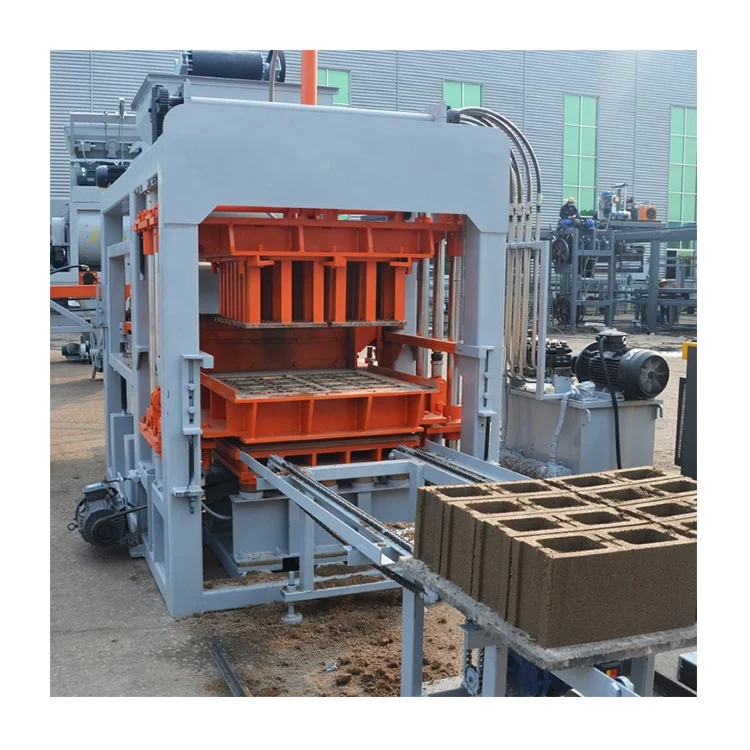
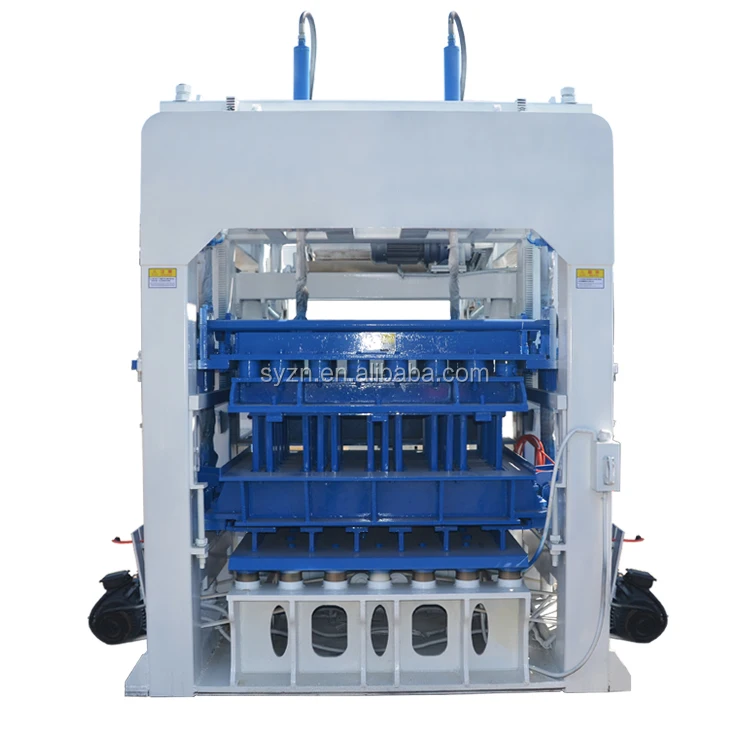
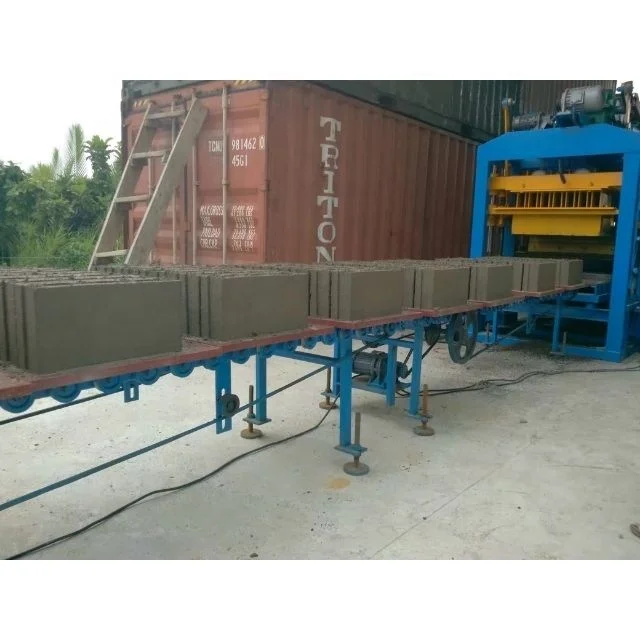
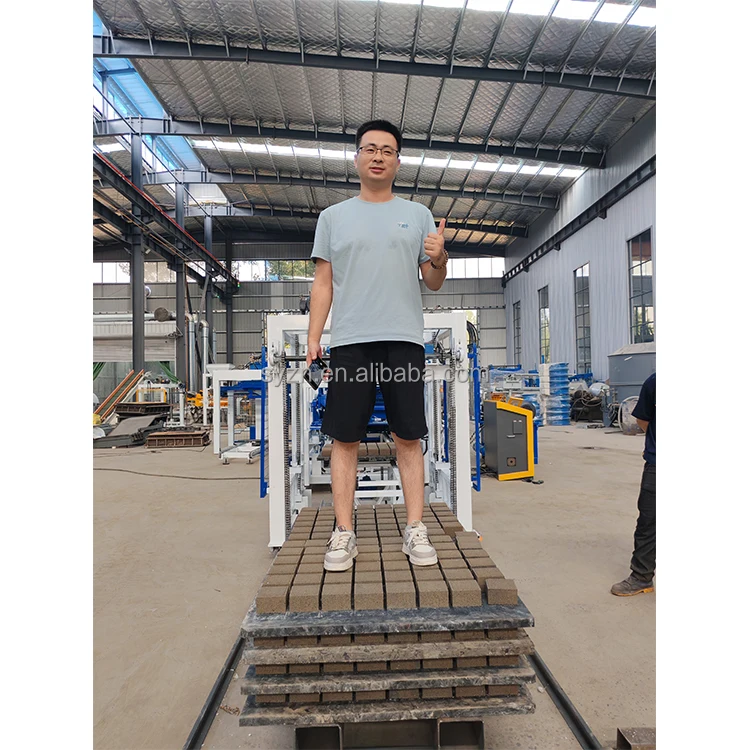
Block machinery is a single focus for Shandong Shiyue Intelligent Machinery, so the QT5-15 arrives as a matched system — press, mould, pallet and handling specified together rather than assembled from separate vendors. The control configuration is set against the buyer’s actual block format and local aggregate, not a catalogue default. Mould design covers the formats the buyer’s market sells, including custom drawings for interlocking profiles. The automation level is selectable, allowing a buyer to start with automatic pallet feeding and add stacking or cubing later. Installation support includes operator training on the touch screen interface so the team is self-sufficient after commissioning.
Documentation & Verification
- Line layout with capacity calculation stated per block format for the QT5-15
- PLC program and HMI language confirmation signed before dispatch
- Factory test record showing cycle time and strength on buyer’s target format
- Hydraulic and electrical schematic for the 32 kW system with fault code list
- Mould drawing and format list matching ordered interlocking profiles
- CE declaration and packing photographs for customs clearance
Installation, Commissioning & Support
- 7400 × 1950 mm footprint requires a level slab within the 1000 m² factory area
- 32 kW total power demands a dedicated circuit with confirmed voltage and frequency
- Machine ships dismantled; reassembly sequence provided in the operation manual
- First-run commissioning covers PLC parameter tuning for the buyer’s mix design
- Operator training addresses touch screen navigation, fault reset and mould change
- Wear parts and mould list supplied for planning first replacement orders
What We Need to Size the Line Correctly
Send us your target block format with dimensions, the daily output you need per format, and the raw materials available locally including aggregate grading. Confirm the site voltage, frequency, and the language your operators read on screen. If you have existing curing racks, pallets or forklifts, share their dimensions so the pallet size and handling equipment match from day one.
Frequently Asked Questions
Q: How does the PLC control system ensure consistent block quality across different formats?
A: The PLC stores a separate recipe for each mould installed on the QT5-15. Each recipe locks vibration frequency, dwell time, hydraulic pressure and feed volume to values validated during factory testing for that specific format. The operator selects the mould profile on the touch screen, and the system enforces those parameters automatically, removing manual adjustments that cause batch-to-batch variation.
Q: What automation features reduce labor requirements compared to semi-automatic machines?
A: The QT5-15 automates material loading, vibration moulding and hydraulic demolding. Pallet feeding is also automated so operators do not manually place boards before each cycle. This removes the heaviest and most repetitive tasks from the floor, allowing a smaller crew to manage the press while maintaining cycle consistency.
Q: Can the control system be upgraded with additional sensors or remote diagnostics?
A: The PLC architecture on the QT5-15 supports additional sensor inputs for moisture monitoring or temperature tracking at the mixer. Remote diagnostics capability is available so fault logs can be reviewed off-site. Upgrades are typically planned during the configuration stage to ensure wiring and programming are complete before shipment.
Q: How does mould change time affect production flexibility with this automation level?
A: With the PLC storing recipes per mould, the control side of a changeover is instant — the operator selects the new profile and the machine adjusts parameters. The physical mould swap time depends on the format and crew familiarity. For plants running multiple formats daily, we specify a mould change system suited to the changeover frequency during configuration.
Q: What training is provided for operators to use the touch screen interface effectively?
A: On-site training covers screen navigation, recipe selection, fault code interpretation and manual override procedures. Operators practice start-up, shutdown and emergency stop sequences on the QT5-15 during commissioning. A printed operation manual with screen screenshots in the confirmed language is handed over at the end of training.