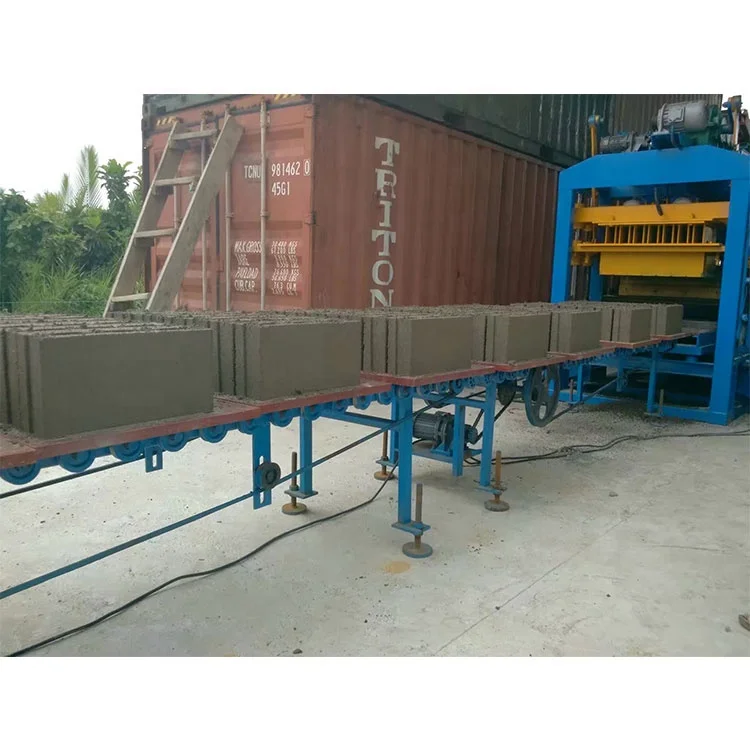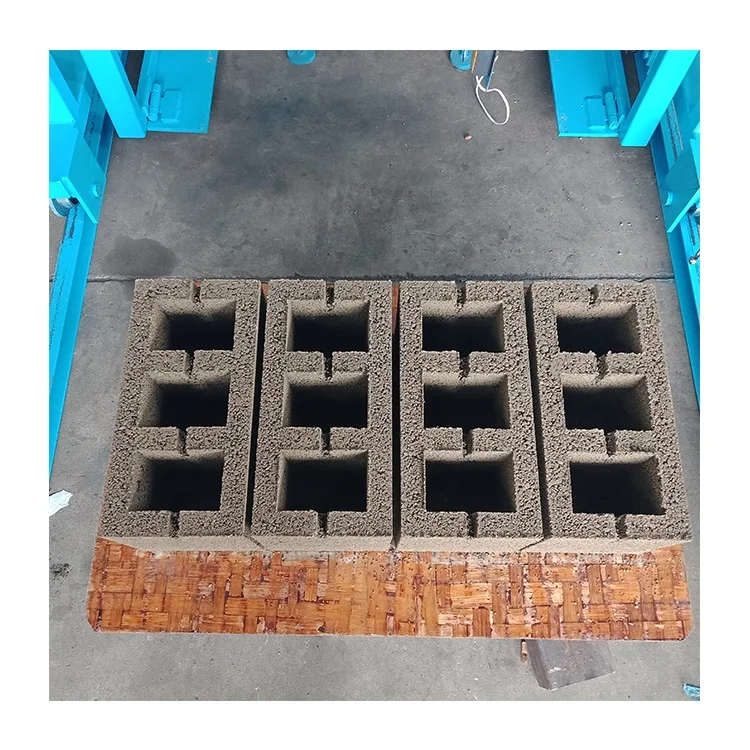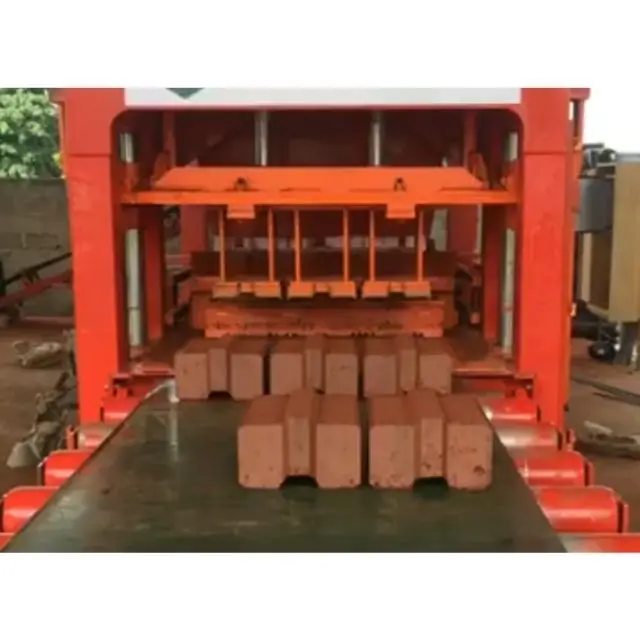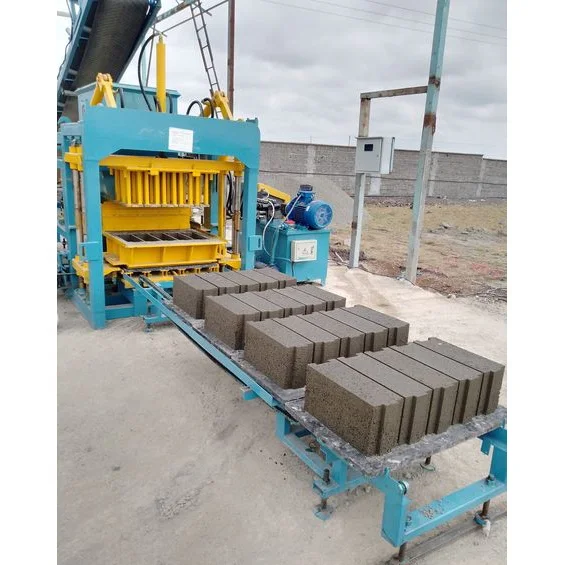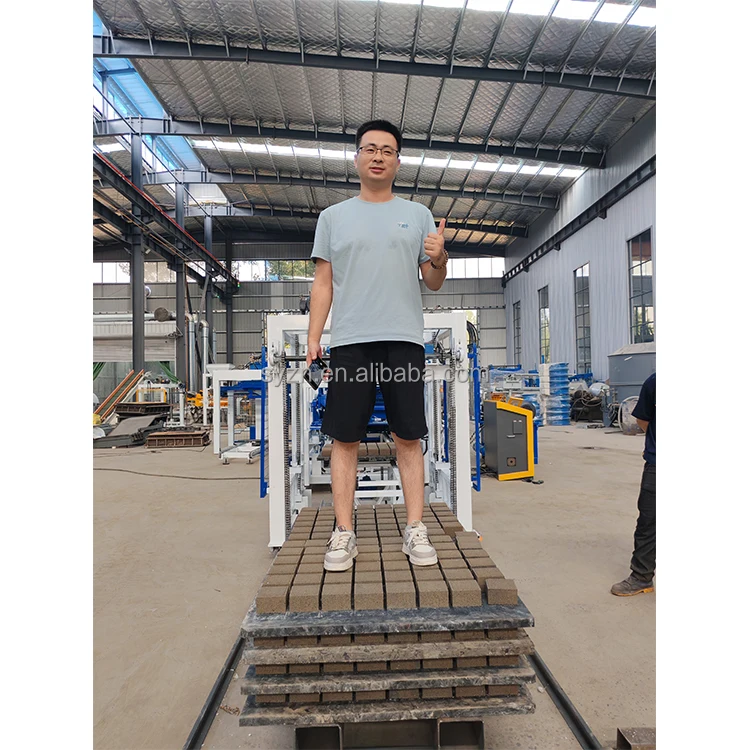
Description
Automation Level Selectable — The QT8-15 ships with PLC and touch screen HMI as standard, letting a plant start in semi-automatic mode and transition to full automation without replacing the press.
Technical Specifications
| Parameter | Value |
|---|---|
| Model | QT8-15 |
| Product Type | Automatic Concrete Block Making Machine |
| Overall Dimensions (L×W×H) | 8300 × 1860 × 3000 mm |
| Rated Pressure | 32 MPa (table 1) / 21 MPa (table 2 — verify against manufacturer catalog) |
| Vibration Form | Platform Vibration |
| Vibration Frequency | 2800–4500 RPM |
| Pallet Size | 950 × 900 mm |
| Molding Cycle | 15–25 s (basis not stated in source — confirm block format / material / thickness) |
| Overall Power | 47 kW (table 1) / 46 kW (table 2 — verify against manufacturer catalog) |
| Control System | PLC with touch screen HMI |
| Automation Level | Automatic (manual/automatic mode selectable) |
| Block Comprehensive Strength | up to 15 MPa (source value — verify against manufacturer catalog) |
| Main Components | Pallet feeder, host machine, block conveyor, hydraulic station, PLC controller |
| Hydraulic System | Independent integrated hydraulic station (isolated from dust and main vibration) |
| Stacking Method | Automatic stacker (two pallets per cycle, 3–6 layers depending on block height) |
| Supporting Equipment Options | JS750 mixer, 8 m belt conveyor, extra moulds |
Application Suitability
| Application | Material or Output |
|---|---|
| Hollow block production | Crushed stone, sand, cement, fly ash |
| Solid block manufacturing | Quarry dust, gravel, cement blends |
| Paving block production | Fine aggregate, pigment, cement for interlocking formats |
| On-site contractor production | Local aggregate and cement for project-specific block formats |
What "15–25 Seconds per Cycle" Actually Means for Your Output
A cycle time is only meaningful when tied to a specific block format, mix design, and curing condition — without that context, the number is a marketing placeholder.
I have seen buyers sign off on an automatic block making machine PLC controlled system because the quoted cycle time looked fast, only to discover on commissioning day that the 15-second figure applied to a thin paver, not the 200 mm hollow block they planned to run all day. The real cycle stretched well beyond what the capacity table suggested, and daily output fell far short of the business plan. The QT8-15 PLC stores process parameters per mould, so once your mix and format are dialed in, the feeding time, vibration duration, and pressing sequence stay locked — but the starting point must be honest. [NEED_CITE: how block format and thickness affect cycle time in hydraulic press operations]
From Manual Pallet Handling to Fully Automated Stacking
The automation path on this press is incremental. A buyer can begin with manual pallet feeding and semi-automatic pressing, then add the automatic stacker and pallet return conveyor as volume grows. The PLC touch screen manages the transition: manual mode lets the operator trigger each step individually during commissioning, while automatic mode sequences the feeder, press, conveyor, and stacker into one continuous loop. This selectable approach means the automatic block making machine PLC controlled system grows with the plant rather than forcing a fully automated layout on day one.
How the PLC Locks in Consistency Across Shifts
Batch-to-batch uniformity depends on parameters that operators routinely change when left to manual judgement — vibration duration, feeding time, and hydraulic dwell. The touch screen HMI on the QT8-15 stores a recipe for each mould installed, so when the operator selects the hollow block profile, the machine recalls the exact settings that produced the verified test batch. This removes shift-to-shift variation and protects block comprehensive strength from drifting when a new operator takes over. The independent hydraulic station sits away from the main vibration zone, which keeps pressure delivery stable across long production runs. [NEED_CITE: PLC recipe management in concrete block production consistency]
Reading the Specs That Matter Beyond the Brochure
Platform vibration at 2800–4500 RPM works together with the rated hydraulic pressure to compact the mix into the mould cavity. Higher frequency improves surface finish on pavers, while sustained hydraulic pressure determines internal density and ultimately block strength. The 950 × 900 mm pallet size sets the maximum mould footprint — any curing rack or forklift already on site must accommodate that dimension, or the buyer faces unexpected handling equipment changes. Overall power at roughly 47 kW means the electrical supply must include a dedicated circuit with sufficient headroom for the mixer and conveyor running simultaneously. The independent hydraulic station is physically separated from the press frame, which reduces seal wear caused by constant vibration exposure and extends service intervals.
The Hidden Cost of Skipping the Voltage and Language Check
Commissioning delays are the most common avoidable loss on an imported block line. I once shipped a fully automatic press to a West African site and forgot to confirm the PLC display language with the buyer — the machine arrived with an English-only interface, the local operator could not read the alarm messages, and we lost a full week before production started. Voltage and frequency mismatches cause similar standoffs: a 50 Hz motor running on a 60 Hz supply overheats within days, and a control transformer sized for 380 V fails on a 415 V grid. Every QT8-15 dispatch now includes a written confirmation of supply voltage, frequency, and HMI language before the control cabinet is wired. [NEED_CITE: industrial motor voltage and frequency compatibility standards by region]
Why This Supplier Configuration Approach Works
Block machinery is a single focus here, which means the press, mould, pallet, and handling equipment are specified as one matched system rather than assembled from unrelated sources. Configuration is set against the buyer’s actual mix design and local aggregate, not a catalogue default, so the vibration and pressure parameters start from a realistic baseline. Mould design covers the formats the buyer’s market actually sells, with custom drawings available for non-standard profiles. Automation level is selectable — a plant can start semi-automatic and add stacking and cubing later without changing the host machine. Installation support includes on-site commissioning and operator training, so the crew knows how to read the HMI alarms before the service engineer leaves.
Documentation & Verification
- Line layout and capacity calculation stating the exact block format assumed for the QT8-15 cycle time
- PLC parameter list per mould, including feeding time, vibration duration, and pressure dwell
- Hydraulic and electrical schematic matching the confirmed voltage and frequency
- Factory test record on buyer’s specified mould set before container loading
- Pallet specification sheet confirming 950 × 900 mm dimensions and material grade
- Operation and maintenance manual in the confirmed PLC display language
Installation, Commissioning & Support
- Foundation pad sized for 8300 × 1860 mm footprint with level tolerance for the host machine
- Dedicated electrical circuit rated for 47 kW total load plus mixer and conveyor startup current
- Independent hydraulic station pre-filled and isolated from press vibration during transport
- PLC language and alarm text verified against confirmed HMI language before dispatch
- Operator training on manual-to-automatic mode transition and recipe recall via touch screen
- Wear parts and hydraulic seal list included with first shipment for planned maintenance intervals
What We Need to Size Your Line Correctly
To move past the brochure figures and give you a capacity number you can build a business plan on, we need your target block format with exact dimensions, the local aggregate type and cement ratio you plan to use, and the daily output your market requires. Share your site voltage and frequency, the language your operators read, and whether your curing area already has racking sized for 950 × 900 mm pallets. If you are upgrading from a semi-automatic press, tell us which stations you want to automate first so the line layout matches your phased investment plan.
Frequently Asked Questions
Q: How is the 15–25 s molding cycle measured, and which block format does it apply to?
A: That range comes from source tables without a stated basis. In practice, cycle time depends on block height, mix moisture, and vibration setting. Before quotation, we run a test on your exact mould and aggregate to establish a verified cycle, and that figure — not the brochure range — goes into the capacity calculation.
Q: Can the PLC interface display in my local language?
A: The touch screen HMI supports multiple language options, but the selection must be confirmed before the control cabinet is wired. We ask for your preferred language during the voltage confirmation step so the alarm text, recipe names, and parameter labels all appear correctly on arrival.
Q: Is there an upgrade path from semi-automatic to full automation?
A: Yes. The QT8-15 ships with manual and automatic modes selectable on the HMI. A buyer can start with manual pallet handling, then add the automatic stacker and pallet return conveyor later. The PLC already contains the sequencing logic, so the upgrade is mainly mechanical integration.
Q: How does the independent hydraulic station improve reliability in a dusty block plant?
A: The hydraulic station is physically separated from the main press frame, which keeps concrete dust and press vibration away from the valve block and pump. This reduces seal degradation and maintains consistent pressure delivery across long shifts, extending the interval between hydraulic service events.
Q: How do you match vibration force and pressure to my local aggregate?
A: We ask for a sample of your aggregate and your planned cement ratio before finalizing the machine settings. During the factory test, we adjust vibration frequency and hydraulic dwell on your specific mould, record the parameters that produce the target block strength, and lock those values into the PLC recipe.