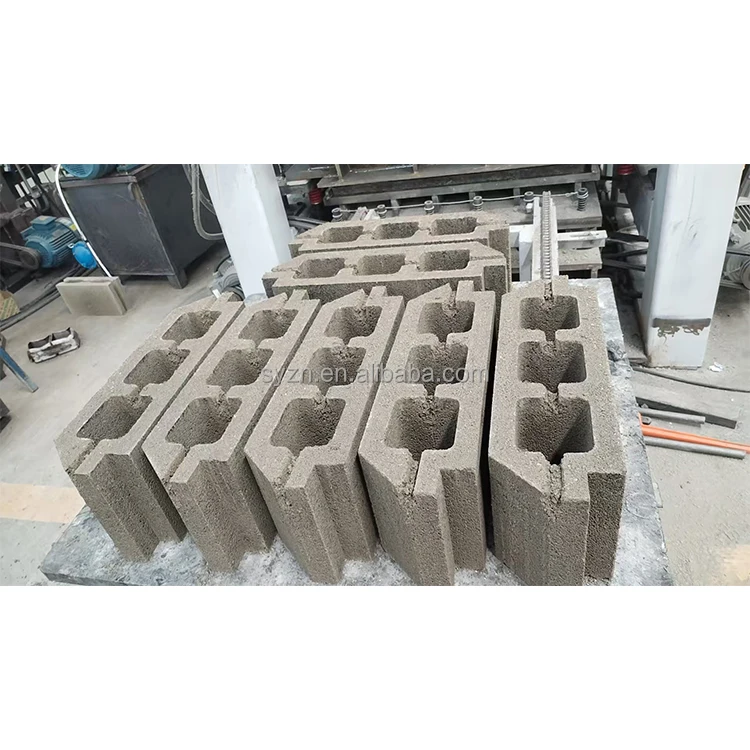
Description
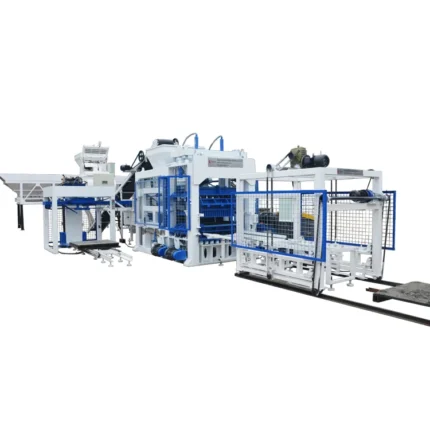
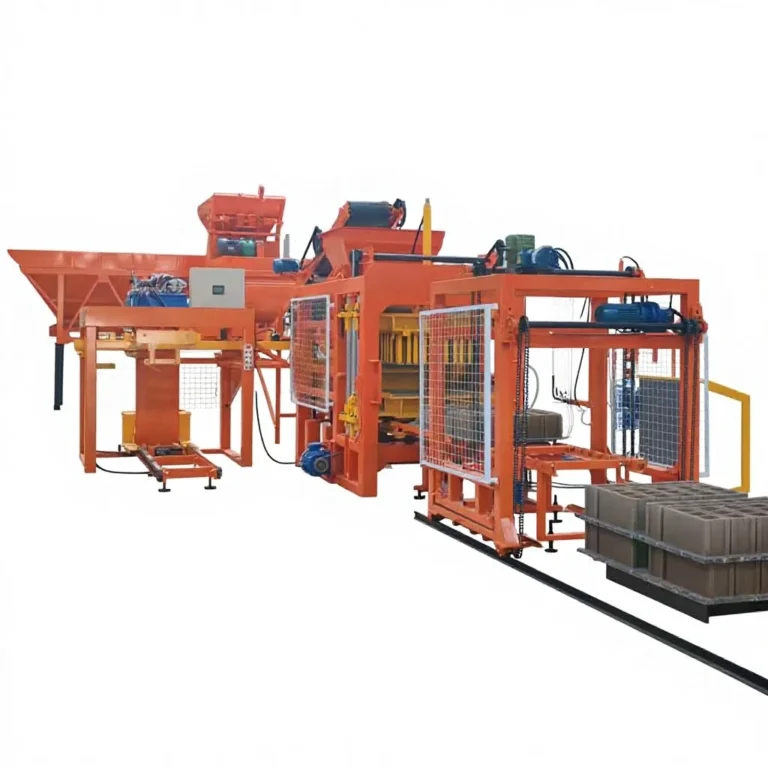
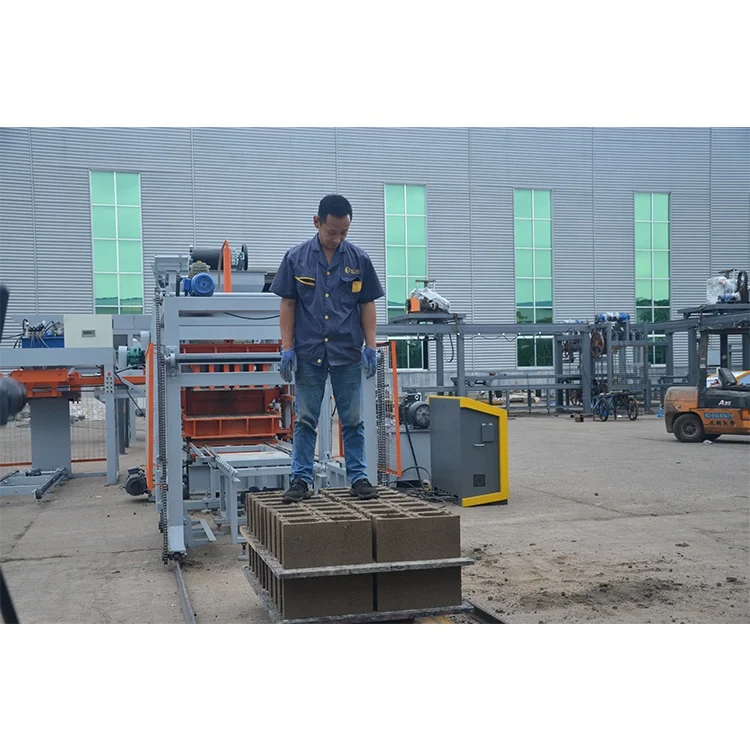
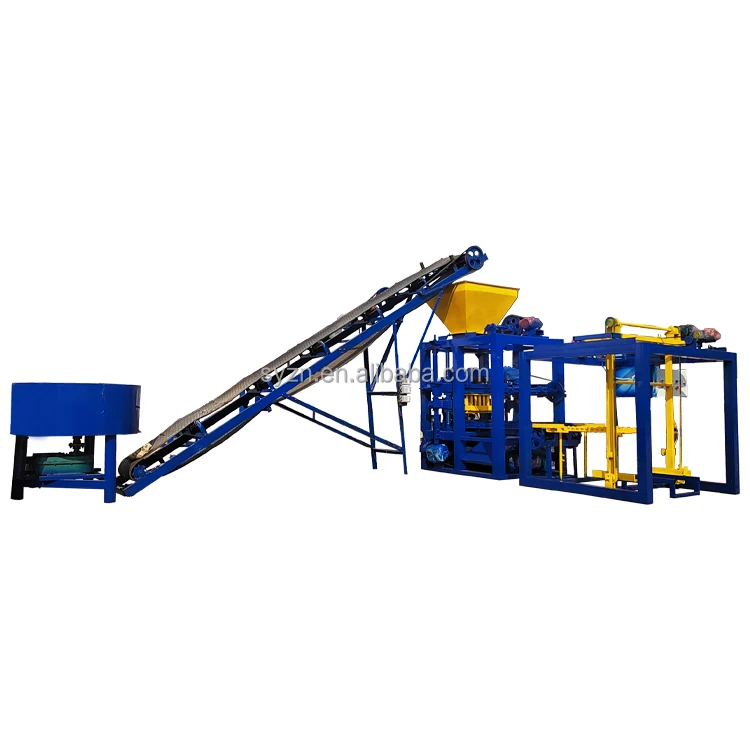
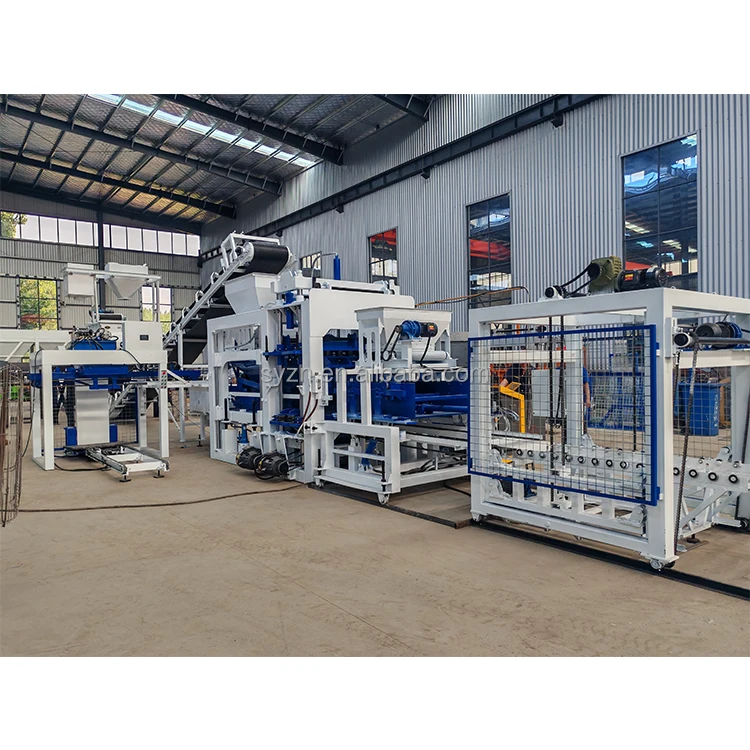
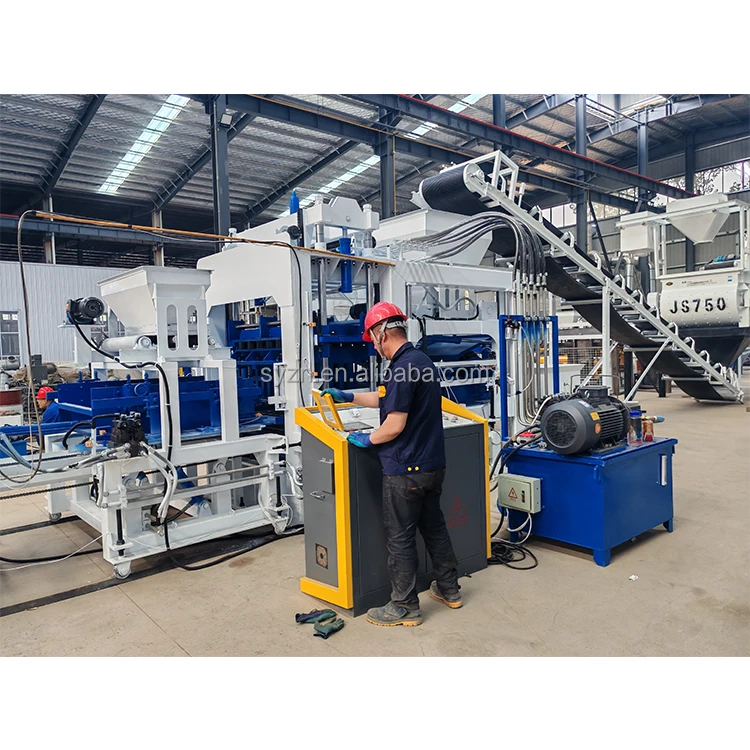
Matched Automation — the QT8-15 coordinates press, pallet feeder and stacker under one PLC logic so the operator removes hands from the cycle instead of managing each station separately.
Technical Specifications
| Parameter | Value |
|---|---|
| Model | QT8-15 |
| Product Type | Hydraulic Concrete Block Making Machine |
| Overall Dimensions (L×W×H) | 8300×1860×3000 mm |
| Rated Pressure | 21 MPa |
| Main Vibration Form | Platform Vibration |
| Vibration Frequency | 2800-4500 r/min |
| Vibration Force | 45 kN |
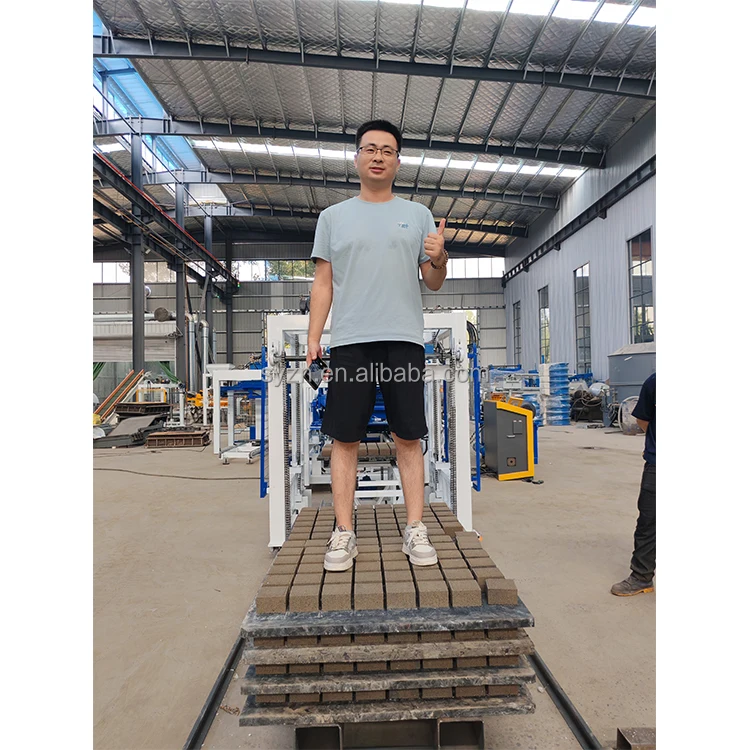
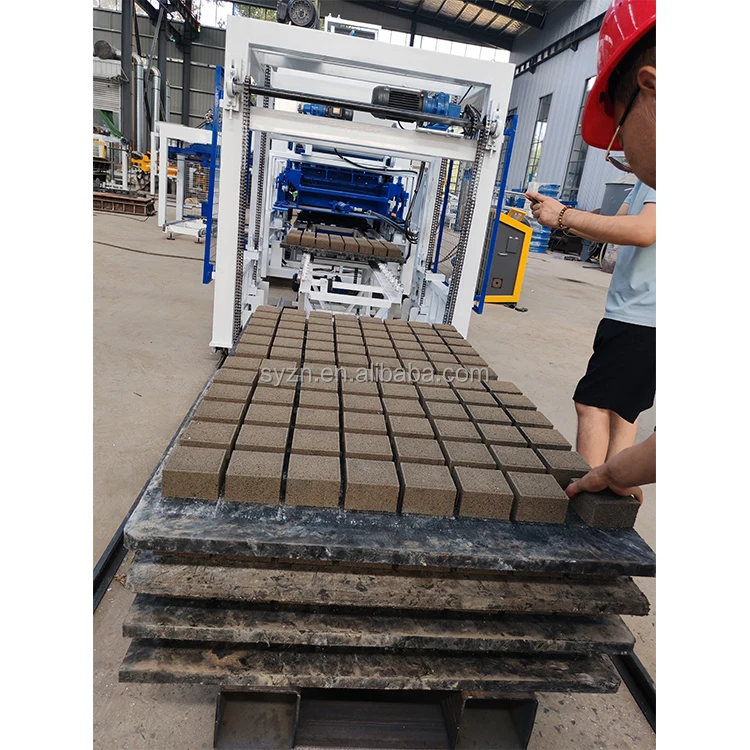
| Pallet Size | 950×900 mm |
| Molding Cycle | 15-20 s |
| Overall Power | 55.5 kW |
| Total Mass | 8 T |
| Demolding Method | Hydraulic |
| Factory Area | 300 m² |
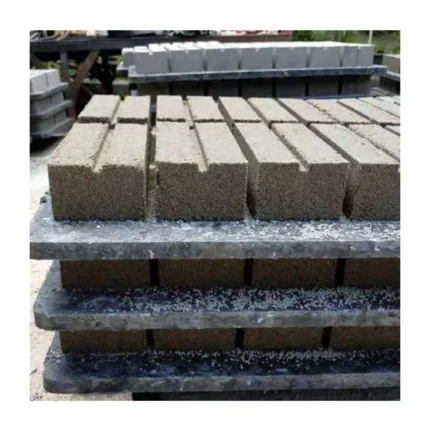
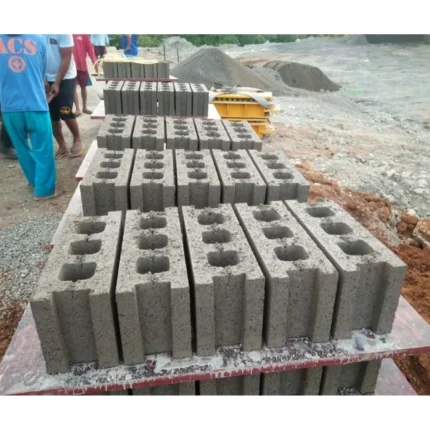
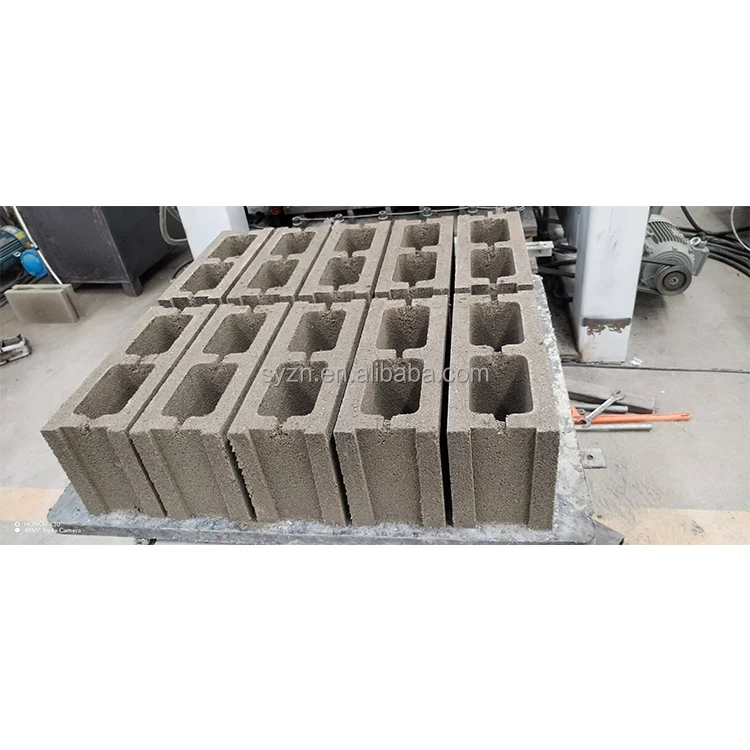
| Applied Products | Concrete blocks, hollow/solid blocks, pavers, interlocking blocks, curbstone, colored pavers |
| Raw Material | Crushed stone, sand, cement, dust, fly ash, gravel, slag |
| Output Capacity | basis to be confirmed |
| Voltage & Frequency | confirm before order |
| Control System | confirm PLC brand and language |
| Automation Level | confirm |
| Mould Change Time | confirm |
| Stacking Method | confirm |
Application Suitability
| Application | Material or Output |
|---|---|
| Hollow block production for commercial and residential walls | Crushed stone, sand, cement and fly ash blends |
| Solid block manufacturing for load-bearing structures | Gravel, sand and cement with controlled moisture |
| Paving block and colored paver runs for municipal projects | Fine aggregate with pigment dosing |
| Interlocking block and curbstone forming | Slag, dust and cement mixes with hydraulic compaction |
| On-site contractor production for housing developments | Locally sourced sand and stone with portable batching |
What "15-20 Seconds per Cycle" Actually Means for Your Daily Run
A cycle time only tells half the story until you know which block format, pallet return speed and stacking delay sit behind it.
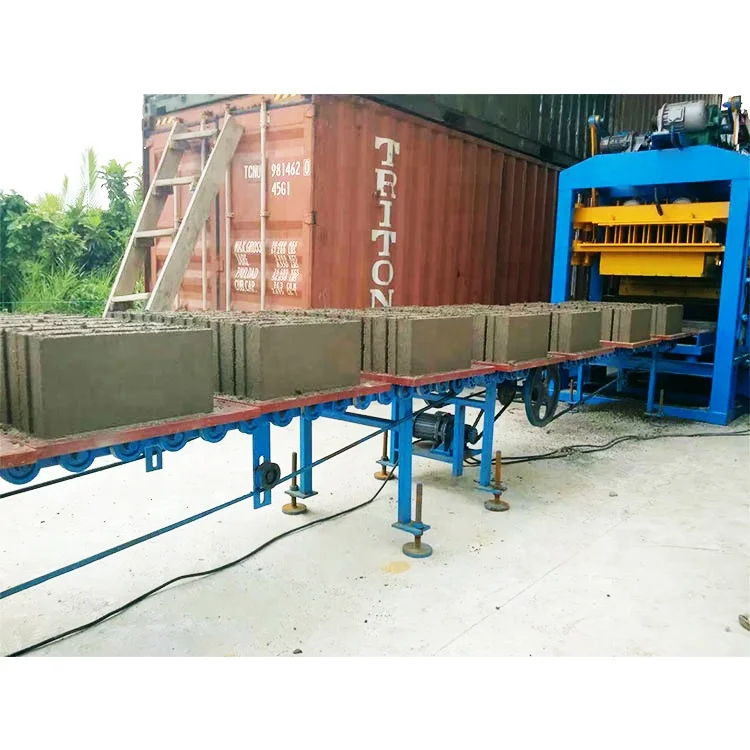
I once watched a plant in West Africa quote a cycle figure from the brochure and plan their entire contract deadline around it. When the automatic QT8-15 block making machine arrived, the operator discovered that pallet return from the curing rack and the stacking station added seconds the catalogue never mentioned. The PLC controlled concrete block machine ran the press perfectly, but the line around it was not matched, and daily output fell well short of the projection [NEED_CITE: mismatch between press cycle and line throughput in block plants]. Buyers who size a machine on press cycle alone almost always face that gap.
How PLC Coordination Removes the Operator from the Cycle
The PLC on this automatic QT8-15 block making machine sequences the mould fill, vibration, hydraulic press and demolding as one timed routine rather than separate manual steps. When the pallet feeder and stacker are included in the scope, the controller also manages pallet return and block stacking, so the operator monitors the HMI instead of shoveling output by hand.
Where Automation Decides Batch-to-Batch Consistency
On a semi-automatic line, block strength drifts the moment the operator shortens a vibration burst or rushes a demold. The PLC controlled concrete block machine locks vibration frequency, pressure hold time and feed volume into the recipe, repeating them identically across every pallet. That repeatability is what lets a plant pass third-party compressive strength audits without sorting blocks into pass and reject piles after each shift [NEED_CITE: role of PLC recipe control in concrete product consistency].
Reading the Specs That Decide Your Line Layout
The 21 MPa rated pressure and 45 kN vibration force together set the compaction density your mix can achieve; if local aggregate is rounded river gravel rather than crushed stone, vibration must carry more of the work, and the adjustable 2800-4500 r/min range gives the tuning room to compensate. The 950×900 mm pallet size must match the curing rack slots and forklift tine width already on site, otherwise pallets sit on the floor waiting for a rack that does not fit. The 55.5 kW overall power draw determines whether the existing transformer and switchgear can handle startup inrush alongside the mixer and conveyor, or whether a dedicated feeder is needed before the automatic QT8-15 block making machine is energized.
The Cost of Skipping the Automation Scope Question
Buyers who assume stacking and cubing are included in the quotation often discover on arrival that the press ends at the conveyor and pallets pile up at the line exit. Hand-stacking an 8-tonne machine’s output ties two or three workers to the end of the line every shift, erasing the labour saving the PLC was supposed to deliver. I have seen plants in South Asia run the press at half speed simply because the curing area could not absorb full output without an automatic stacker [NEED_CITE: labour bottleneck at block line exit when stacking is manual].
Why Buyers Place the Automation Order Here
Block machinery is the single focus, so the press, pallet feeder, stacker and PLC are specified as one system rather than sourced from separate vendors and wired together on site. Configuration is set against the buyer’s actual mix design and local aggregate, not a default recipe. Mould design covers the formats the buyer’s market actually sells, with custom drawings when a standard mould does not fit. Automation level is selectable, letting a buyer start with PLC-controlled pressing and add stacking later. Installation includes on-site commissioning with operator training so the crew can run the automatic QT8-15 block making machine independently before the technician leaves.
Documentation & Verification
- Line layout and capacity calculation stating the exact block format assumed
- Machine specification sheet with confirmed voltage, frequency and PLC language
- Mould drawing and format list matched to buyer’s product range
- Pallet specification confirming size, material and curing rack compatibility
- Factory test record run on buyer’s target mix before dispatch
Installation, Commissioning & Support
- Foundation plan sized to the 8300×1860 mm footprint and 8 T operating mass
- Dedicated power circuit verified for 55.5 kW draw plus mixer and conveyor load
- PLC display language and HMI labels set to operator’s language before commissioning
- First-run parameter tuning with buyer’s local aggregate and mix proportions
- Mould change procedure trained on site so format switches stay within one shift
- Wear parts and hydraulic seal list supplied with first reorder quantities
What to Include in Your First Inquiry
Send the block format you sell most, the daily volume your market expects, and the aggregate available within hauling distance of the plant. Confirm the voltage and frequency at the site panel and the language your operators read, so the PLC controlled concrete block machine arrives ready to run rather than waiting for an electrician and a translator.
Frequently Asked Questions
Q: How is daily output calculated and which block format does the QT8-15 capacity assume?
A: Daily output depends on the block format, mould cavity count and whether pallet return and stacking are automatic or manual. We state the assumed format and line configuration alongside the cycle figure so the buyer can compare the projection against their actual product mix rather than a single best-case number.
Q: What PLC brand is installed and can the HMI display language be set to the operator’s language?
A: The PLC brand and HMI language are confirmed during the quotation stage to match the buyer’s preference and the operator’s reading language. Remote diagnostics capability, if required, is also specified at that point so the control hardware supports it from day one.
Q: Which automation stations are included and which are optional upgrades?
A: The quotation lists pallet feeding, stacking and cubing as separate line items so the buyer sees exactly what is included. A plant can start with PLC-controlled pressing and manual pallet handling, then add stacking and cubing modules later without replacing the press.
Q: How does the vibration and pressure setting adapt to different mix designs and local aggregates?
A: The vibration frequency range and hydraulic pressure are adjustable through the PLC recipe screen. When the buyer provides a sample of local aggregate and target block strength, we run a test matrix and save the winning parameters as the baseline recipe for that mix.
Q: What is the upgrade path if we start semi-automatic and add stacking later?
A: The press is built with connection points and PLC I/O reserved for pallet feeder, stacker and cubing modules. Adding them later requires the mechanical modules, wiring to the existing panel and a PLC program update, not a press replacement.