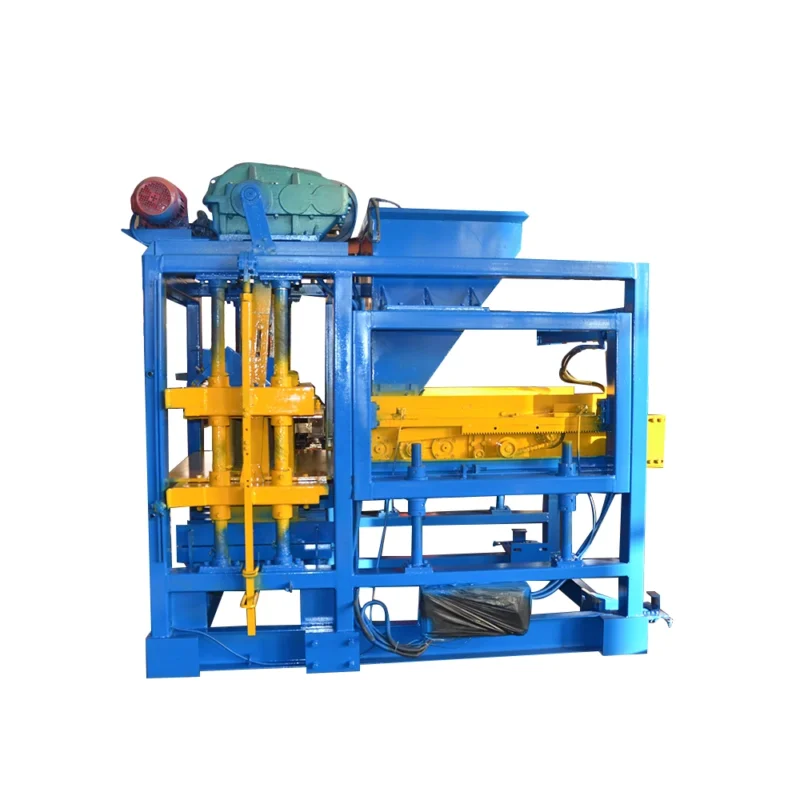

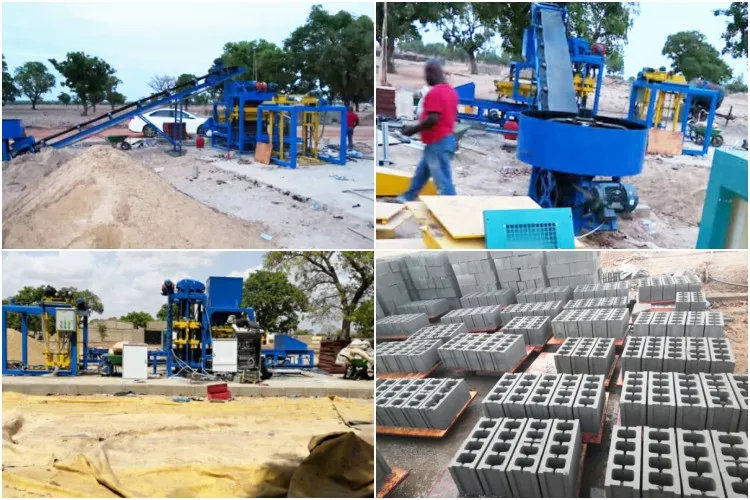


Description
PLC Language Locked Before Shipment — I confirm the control interface language and electrical standard with every buyer before the QTJ4-25 leaves our Linyi workshop, so operators read the screen on day one.
Technical Specifications
| Parameter | Value |
|---|---|
| Model | QTJ4-25 |
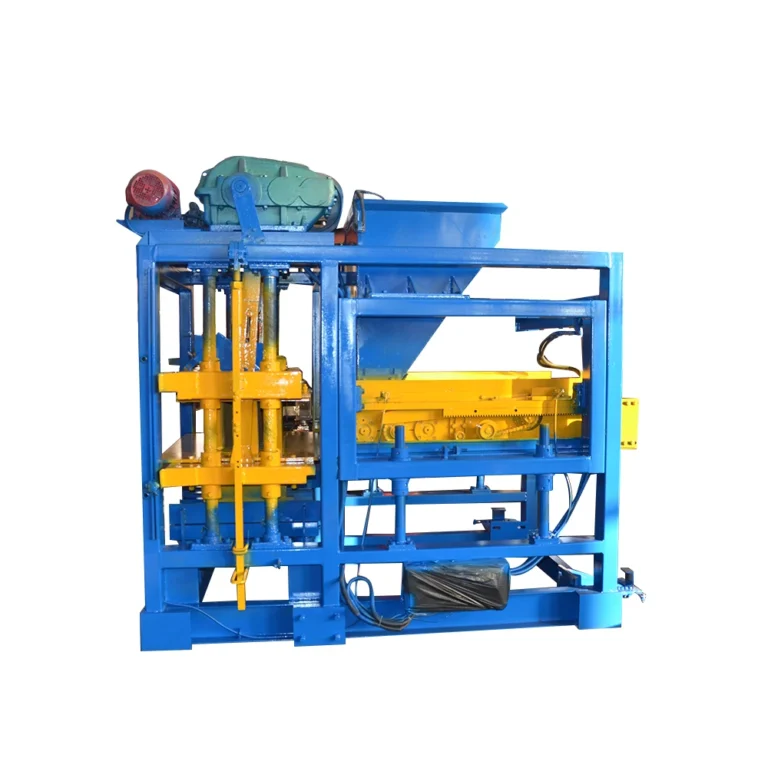
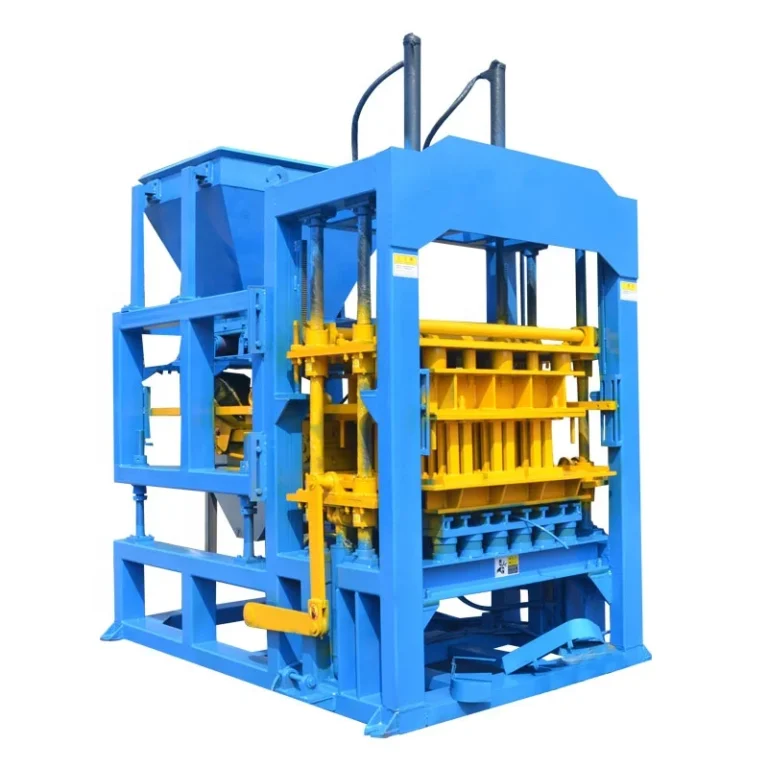
| Product Type | Automatic Hydraulic Concrete Block Making Machine |
| Rated Power | 17.9 kW |
| Control System | PLC |
| Overall Dimensions (L×W×H) | 6400 × 1500 × 2700 mm |
| Net Weight | 2500 kg |
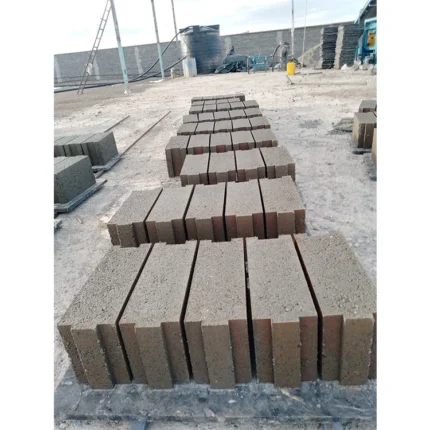
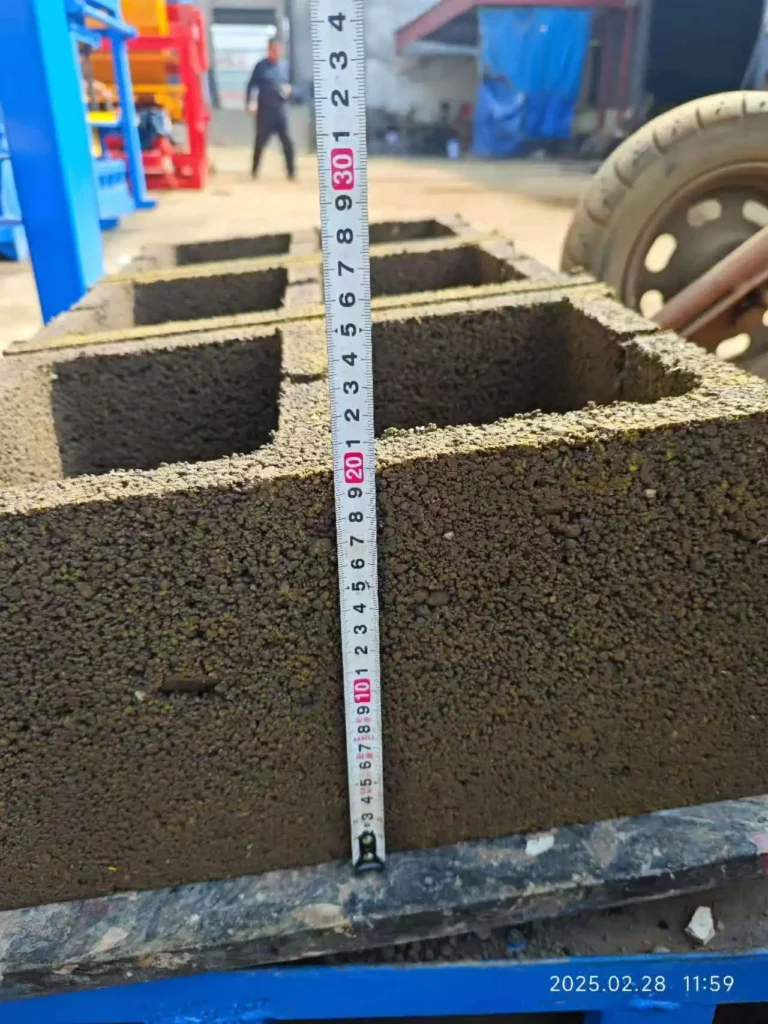
| Output Capacity | 960 pcs/h, 7680 pcs/day (based on 400×200×200 mm hollow block, 4 pcs/mould) |
| Moulding Cycle | 25 s |
| Pallet Size | 850 × 550 × 20 mm |
| Vibration Frequency | 2800 r/min |
| Vibration Force | 60 kN |
| Hydraulic Pressure | (basis to be confirmed) |
| Mould Format Options | Hollow, solid, paver, curbstone (8", 6", 5", 4") |
| Automation Level | Semi-automatic |
| Stacking Method | Manual (pallet trolley) |
| Standard Configuration | Host machine 1 set, block mould 1 set, JQ350 mixer |
| Voltage & Frequency | Configurable per buyer market (confirm before order) |
| PLC Display Language | Selectable (confirm before production) |
| Standards | CE |
Application Suitability
| Application | Material or Output |
|---|---|
| Hollow block production for building walls | Crushed stone, sand, cement, water |
| Solid block manufacturing for load-bearing structures | Aggregate, cement blend |
| Paving block production for walkways and yards | Fine aggregate, cement, pigment |
| Curbstone forming for road and driveway edges | Coarse aggregate, cement mix |
Why the Voltage Question Should Come Before the Price
An automatic QTJ4-25 block making machine arriving with the wrong voltage or a control panel in a language your operators cannot read will sit idle on your floor until an electrician and a translator arrive.
Confirming electrical standards and PLC display language before production prevents weeks of idle equipment on site.
I once shipped a unit to West Africa with the default Chinese interface on the touch panel. The local crew spent the entire first day trying to read fault codes by phone while I walked them through menus remotely. Since that afternoon, every PLC-controlled concrete block machine we build ships with a signed language and voltage confirmation sheet. Voltage mismatches cause contactor burnout, motor overheating, and PLC board failure — problems that appear only after the machine is connected to your local supply [NEED_CITE: voltage and frequency standards by export market].
What the PLC Actually Controls on a Semi-Automatic Press
The PLC on this machine governs the vibration timing, hydraulic pressure hold, and mould cycle sequence. On a semi-automatic line, the operator still places and removes pallets manually, but every forming step inside the press runs on a programmed cycle. That separation matters: it removes the variation that happens when different operators time the vibration and pressure by feel, producing blocks with uneven density across shifts.
Where the Semi-Automatic Boundary Ends
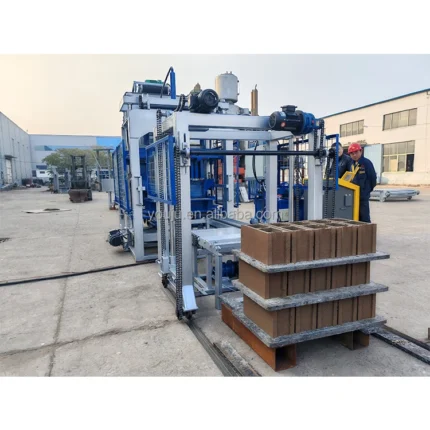
Stacking and curing are outside the automation envelope here. Finished blocks leave the press on pallets, and your crew moves them to the curing area with a trolley. The PLC-controlled concrete block machine handles the forming accuracy; the handling downstream is manual until you add an automatic stacker and pallet return system. This split keeps the initial investment contained while leaving a clear upgrade path. Buyers planning to scale later should confirm that the pallet dimensions and conveyor mounting points on the host machine will accept add-on modules [NEED_CITE: automation upgrade compatibility for block production lines].
Reading the Specs That Matter
The 60 kN vibration force and 2800 r/min frequency work together with hydraulic upper-mould compression to compact the concrete mix. Vibration alone does not determine block strength — the hydraulic pressure applied from above during the vibration phase forces aggregate particles into a denser arrangement. The 850 × 550 mm pallet size dictates how many blocks fit per cycle and must match your existing curing rack spacing and forklift tine width. The 25-second moulding cycle produces four 400×200×200 mm hollow blocks per press, yielding 960 pieces per hour on that format; smaller solid or paver formats run on the same cycle length but deliver different piece counts per mould. Mould change between formats involves loosening the mounting bolts, lifting the old mould, setting the new one, and tightening — plan for a full shift when changing formats for the first time until your crew builds familiarity.
What Happens When the Pallet Size Is Wrong
Pallets that do not match your curing rack width force you to rebuild the rack or stack blocks on the ground, losing curing uniformity. Forklift tines that are wider than the pallet overhang chip block edges during transport to the yard. A mismatch between pallet material and your local humidity causes warping, which tilts the mould fill and produces blocks with uneven heights across the batch. These problems surface only after production starts, making them expensive to correct [NEED_CITE: pallet material selection for concrete block curing environments].
Why Buyers Source This Line Here
We configure the QTJ4-25 against your actual mix design and local aggregate, not against a generic catalogue setting. The moulds are designed for the block formats your market actually sells, including custom drawings if your region uses non-standard dimensions. Voltage, frequency, and PLC language are locked in writing before production begins. The machine, mould, pallet, and handling accessories are specified as one matched system rather than assembled from separate suppliers. We provide installation guidance and operator training so your crew understands cycle parameters and daily maintenance from the first shift.
Documentation & Verification
- Line layout drawing showing press footprint and pallet flow direction
- Capacity calculation sheet stating block format assumed per cycle
- PLC language and voltage confirmation record signed before production
- Mould drawing and format list for each block type ordered
- Hydraulic and electrical schematic for local maintenance planning
- Factory test record run on your specified block format before dispatch
Installation, Commissioning & Support
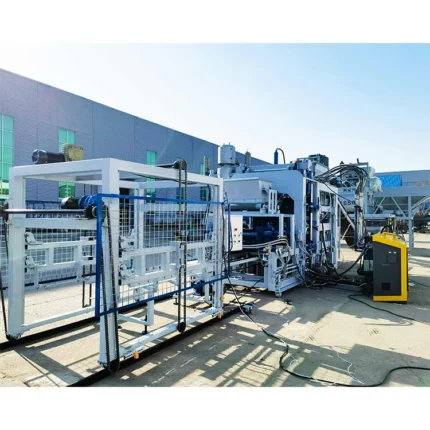
- Level concrete foundation required; 6400 mm length footprint must allow pallet trolley clearance on both ends
- 17.9 kW rated power demands a dedicated circuit breaker sized for motor start-up surge
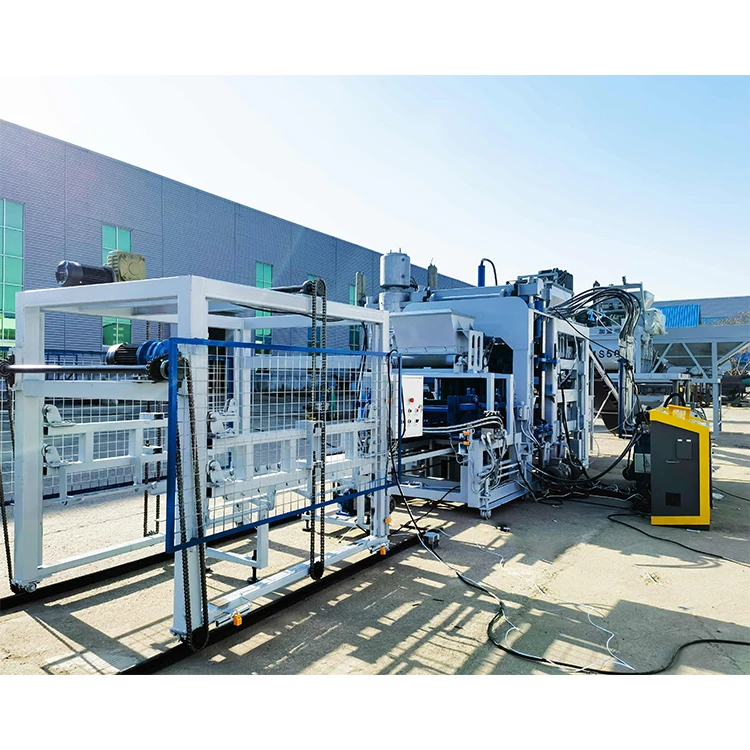
- Host machine, mixer, and mould ship separately and require on-site assembly and alignment
- PLC parameters set during commissioning to match your aggregate gradation and cement ratio
- Operator training covers cycle adjustment, mould change procedure, and daily lubrication points
- Hydraulic hoses, vibration motor bearings, and mould wear plates listed in spare parts schedule
Before You Request a Quote
Tell us which block formats your market sells and the daily volume you need per format. Share your local voltage and frequency standard, and confirm which language your operators will need on the PLC display. Let us know your available curing area dimensions so we can match pallet size to your rack layout.
Frequently Asked Questions
Q: How do I verify the capacity claim for my specific block format?
A: The 960 pieces per hour figure applies to 400×200×200 mm hollow blocks at four per mould with a 25-second cycle. Other formats use different mould cavities, so piece count per cycle changes while cycle time stays near 25 seconds. We provide a format-by-format capacity sheet with your quotation so you can plan output against your actual product mix.
Q: Can the PLC display be set to my local language?
A: The control interface supports multiple language options, but the default at the factory may not match your operators’ language. We confirm the display language in writing before production starts. Switching language on site is possible but delays commissioning, so we lock it during the build.
Q: What electrical information do you need before building my machine?
A: We require your site voltage, phase configuration, and frequency. A 50 Hz and a 60 Hz supply use different motor windings and contactor ratings. Sending us a photo of your existing panel nameplate or a utility specification sheet is enough for us to match the electrical build.
Q: How long does a mould change take between formats?
A: An experienced crew completes the change within one shift, including alignment checks and a test cycle. First-time changes take longer. We supply a mould change procedure in your operator manual and cover the steps during on-site commissioning so your team builds speed over the first week.
Q: Is there an upgrade path from semi-automatic to full automatic?
A: The host machine can accept an automatic pallet feeder, stacker, and pallet return conveyor as add-on modules. The PLC program is expanded to cover the new stations. Confirming the upgrade intent before initial production lets us prepare mounting points and wiring conduits on the press frame.