



Description
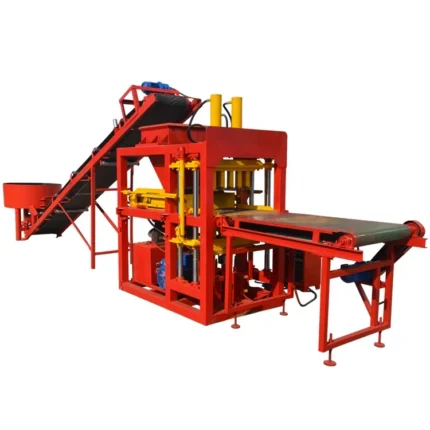
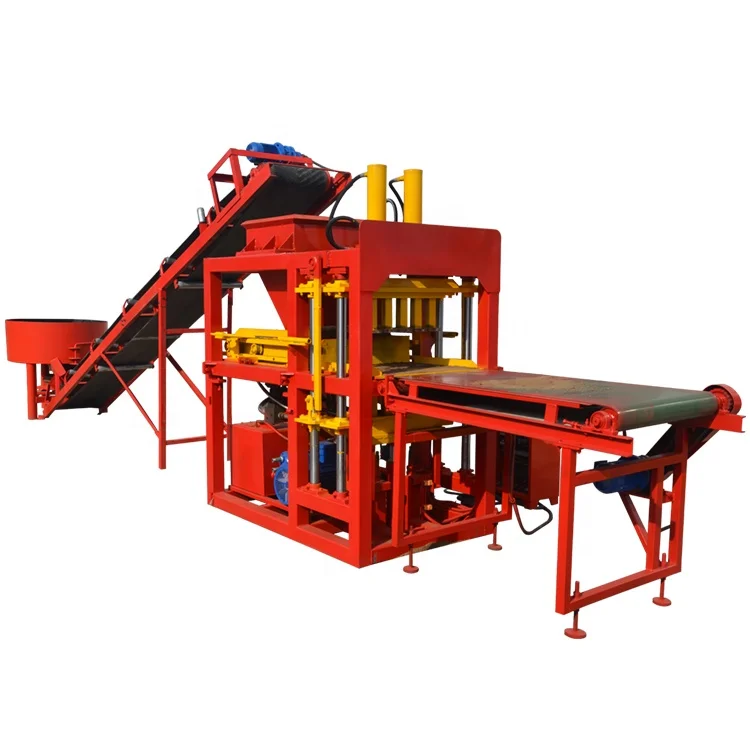
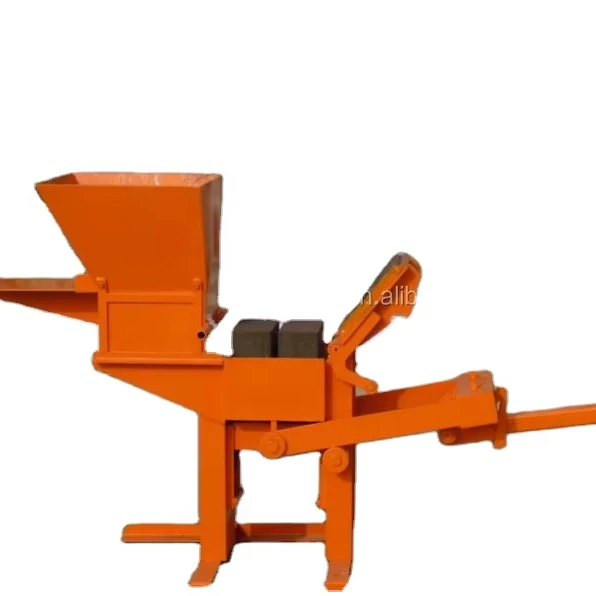
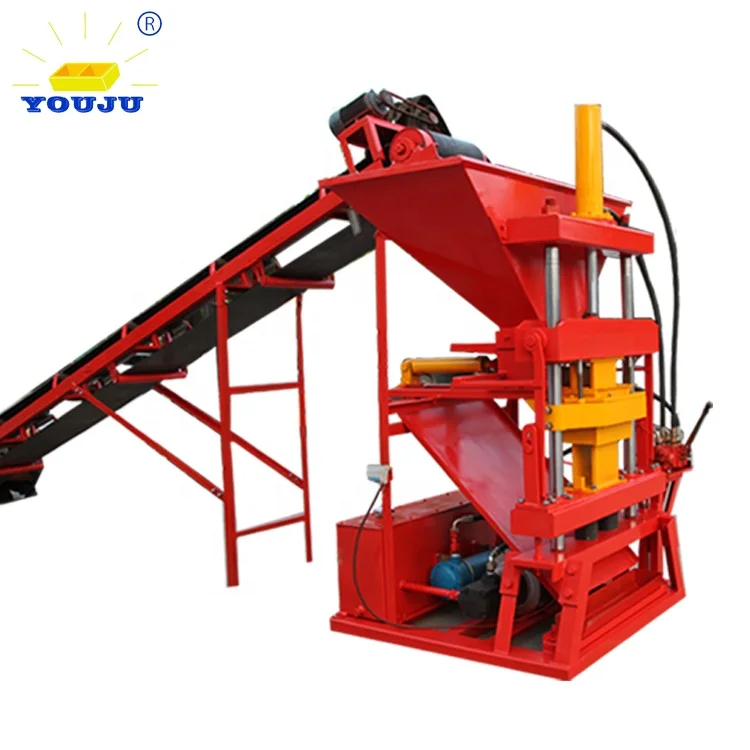
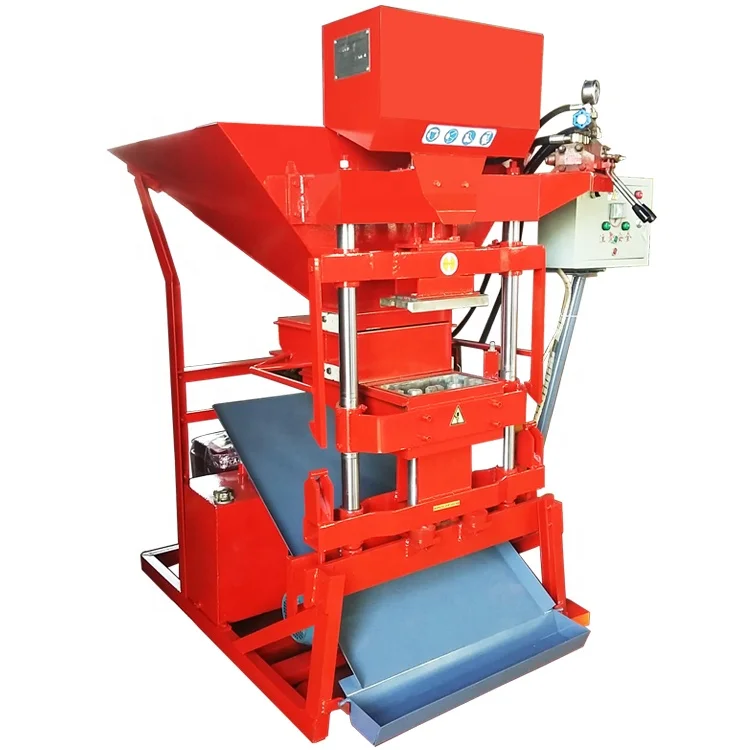
Automated cycle consistency — the ECO 2700 runs material feeding, hydraulic pressing, and mould lifting as a single PLC-governed sequence, removing manual triggers that cause density variation from one block to the next.
Technical Specifications
| Parameter | Value |
|---|---|
| Model | ECO 2700 |
| Product Type | Hydraulic Clay Interlocking Brick Machine |
| Rated Power | 7.5 kW electric motor or 12 hp diesel engine |
| Hydraulic Pressure | 16 MPa |
| Cycle Time | 10 s |
| Mould Cavity | 1 pc per mould (based on 300×150×100 mm or 250×125×75 mm block) |
| Output Capacity | 2,800 pcs / 8 h (basis not stated in source — confirm block format and mix) |
| Throughput | 350 pcs/h (basis not stated in source — confirm block format) |
| Overall Dimensions (L×W×H) | 1600 × 1300 × 2330 mm |
| Net Weight | 900 kg |
| Water Consumption | 4 tonnes per day |
| Labour Requirement | 3–4 workers |
| Workshop Area | 150 m² |
| Raw Material Compatibility | clay, soil, earth, mud, concrete, sand, cement, fly ash |
| Control System | automatic operation with PLC (type and language to be confirmed) |
| Mould System | interchangeable moulds for interlocking bricks, solid blocks, and floor tiles |
| Power Source Options | electric motor or diesel engine |
| Certification | CE (verify model-specific applicability) |
Application Suitability
| Application | Material or Output |
|---|---|
| On-site interlocking brick production for housing projects | locally sourced clay or soil blended with cement |
| Small-plant solid block manufacturing | earth, mud, and sand mixes with cement binder |
| Floor tile production for local building supply | concrete or fly ash blends with fine aggregate |
| Contractor-run block yards on remote sites | diesel-powered operation where grid supply is unreliable |
| First-line interlocking brick setup for entrepreneurs | clay and soil with low capital and minimal automation experience |
What "2,800 Bricks per Shift" Actually Requires on Site
The headline number only holds if every upstream and downstream station keeps pace with a 10-second cycle.
When I was commissioning a clay interlocking brick line in Kenya, the customer had ordered based on a brochure capacity figure. The local red soil had a much higher clay content than the test mix, and the hydraulic pressure setting needed adjustment to reach full compaction. Until we re-tuned the pressure and water ratio, daily output sat at roughly half the quoted figure, and the project timeline slipped. That gap between brochure promise and site reality is something I now see as a pattern rather than an exception [NEED_CITE: impact of local soil variability on hydraulic brick press output]. An automatic clay interlocking brick machine PLC controlled from a central panel can only deliver consistent cycles if the mixer, material feed, and curing space are all matched to the same throughput assumption.
How the Automatic Sequence Removes Operator Variability
On a manual press, the operator decides when the mould is full, when to trigger compression, and when to lift. Each of those judgements drifts across a shift as fatigue sets in. The ECO 2700 ties material feeding, hydraulic pressing, and mould lifting into a single automatic clay interlocking brick machine PLC controlled cycle, so the timing of each stage stays identical whether it is the first brick of the morning or the last before shutdown. The result is block density and dimension that hold within the mould tolerance across the full run.
Why PLC Language and Voltage Must Be Settled Before Production Starts
I have seen machines arrive on site with a PLC display in a language the operators cannot read, which means every alarm code becomes a guess. Voltage and frequency need the same early confirmation — a 50 Hz motor on a 60 Hz grid runs overspeed and burns out within weeks [NEED_CITE: voltage and frequency standards by export market]. Confirming these details during the order stage avoids a commissioning delay that can stretch into weeks while replacement contactors or transformer taps are shipped in.
Reading the Specs That Actually Shape Your Daily Output
The 16 MPa hydraulic pressure rating tells you how much compaction force is available at the mould face, but block strength also depends on the mix design and moisture content of the local clay — higher pressure alone does not guarantee a stronger brick if the soil lacks the right particle distribution. The single-cavity mould design means each cycle produces one block, so the 10-second cycle time is the real pacing item; swap the mould for a different interlocking profile and the cycle stays the same, but the daily count changes because block dimensions and demoulding behaviour shift. The 900 kg net weight keeps the machine within the range of a standard forklift for positioning, yet it is heavy enough that vibration during pressing does not walk the frame across the floor. Dual power options — 7.5 kW electric or 12 hp diesel — let you match the power source to site conditions rather than forcing a generator rental when grid supply is intermittent.
The Hidden Cost of Skipping Upstream and Downstream Matching
A press that cycles every 10 seconds needs material delivered at the same rhythm, or it sits idle waiting for the mixer. I have watched plants where the mixer was sized for a slower manual press, so the automatic cycle spent a third of its time paused for the next batch [NEED_CITE: bottleneck effects of mismatched mixer capacity in block plants]. On the output side, if the curing area cannot absorb 350 blocks an hour, fresh bricks pile up on the workshop floor and get damaged before they reach the rack. These mismatches do not show up in a machine quotation but they surface quickly once production starts.
Why Buyers Source This Machine Through Our Line
Block machinery is the only product category we build, so the press, mould, pallet, and handling equipment are specified as a matched set rather than assembled from separate suppliers. We run the buyer’s actual soil sample through a test press before finalising hydraulic pressure and cycle parameters, instead of shipping a catalogue default. Mould design covers the interlocking profiles the buyer’s market actually sells, and custom drawings are available when a local standard falls outside our existing range. Automation level is selectable — a buyer can start with the ECO 2700’s automatic feeding and pressing, then add pallet handling and stacking later as volume grows. Installation support includes operator training on the specific PLC interface and language confirmed at order.
Documentation & Verification
- Line layout and capacity calculation stating the exact block format and mix assumed
- Hydraulic and electrical schematic matched to confirmed voltage and frequency
- Factory test record on the buyer’s soil sample before dispatch
- Mould drawing and format list with dimensional tolerances
- Operation and maintenance manual in the confirmed PLC display language
- Wear parts list with part numbers for mould liners and hydraulic seals
Installation, Commissioning & Support
- 150 m² workshop floor with level concrete base to suit 1600 × 1300 mm footprint
- Dedicated circuit matching confirmed voltage and 7.5 kW motor draw
- Machine shipped assembled; diesel variant requires on-site fuel line and exhaust routing
- First-run pressure tuning against local clay sample delivered with the machine
- Operator training on PLC fault codes and mould change procedure in confirmed language
- Wear parts kit covering initial mould liner and hydraulic seal replacement intervals
What to Include in Your Inquiry
Send your target interlocking brick dimensions, the local soil or clay type you plan to use, and your daily output target so we can calculate the cycle count per format. Include your site voltage, frequency, and preferred PLC display language so the control panel arrives configured. If you already have a mixer or curing racks, share the make and capacity so we can confirm the ECO 2700 will integrate without bottlenecking the line.
Frequently Asked Questions
Q: How is the 2,800 pcs/8 h output figure verified, and which block format does it assume?
A: That figure is referenced in the product documentation but the specific block dimensions, mix design, and soil type it assumes are not stated. We verify real capacity by running the buyer’s own soil sample through the press at confirmed pressure settings, then provide a written capacity calculation tied to the exact interlocking brick format ordered.
Q: What PLC display languages are available for the automatic control system?
A: The PLC type and available language options are confirmed during the order stage based on the destination site. We lock in the display language before production so operators can read alarm codes and cycle parameters in their working language from day one of commissioning.
Q: How is the machine configured for a specific local clay or soil mix?
A: We ask the buyer to ship a soil sample before final production. That sample is test-pressed in our workshop to determine the correct hydraulic pressure setting, water ratio, and cycle timing, so the machine arrives tuned to the actual material rather than a generic catalogue mix.
Q: What upstream and downstream equipment is needed to keep the automatic cycle uninterrupted?
A: The 10-second cycle requires a mixer that can deliver material at matching pace, plus a curing area sized to absorb hourly output. We confirm mixer batch size and curing rack capacity during the proposal stage to prevent idle time between presses.