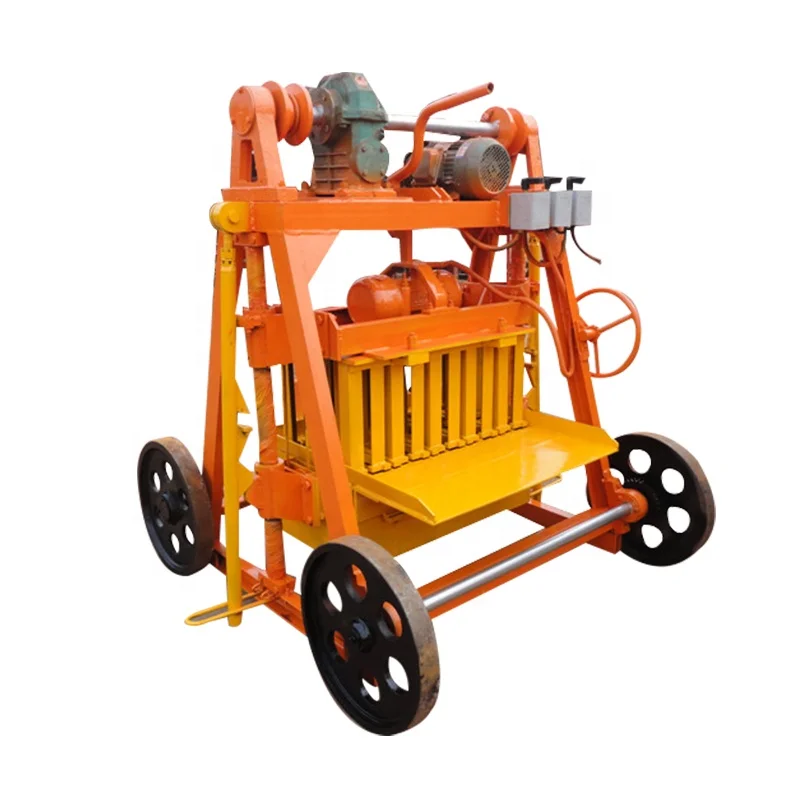


Description
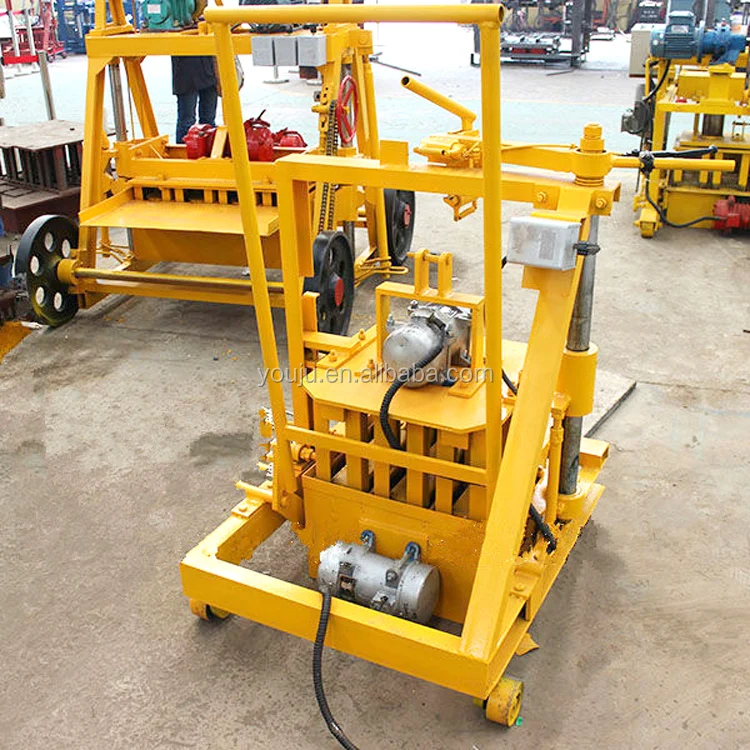
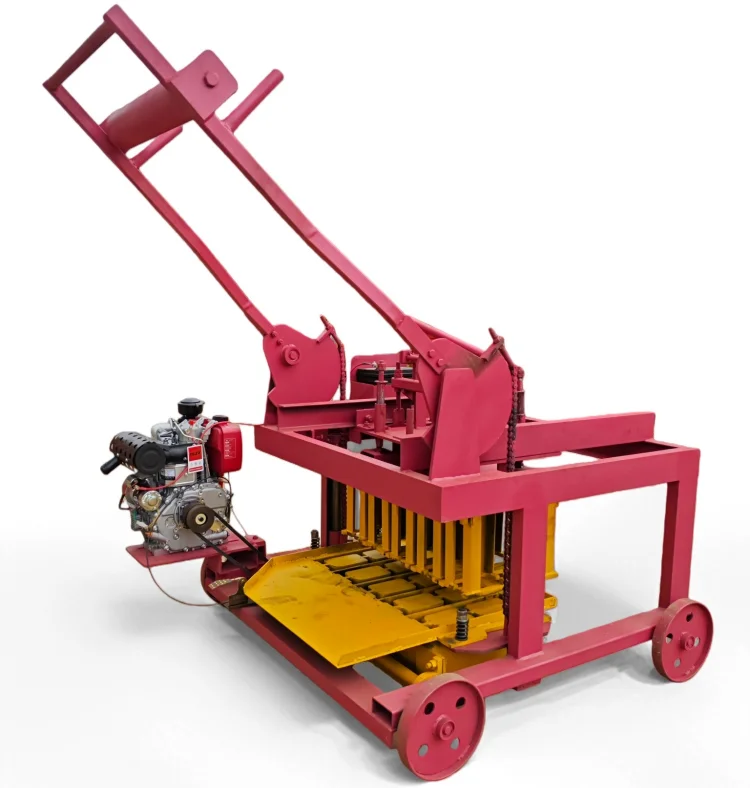
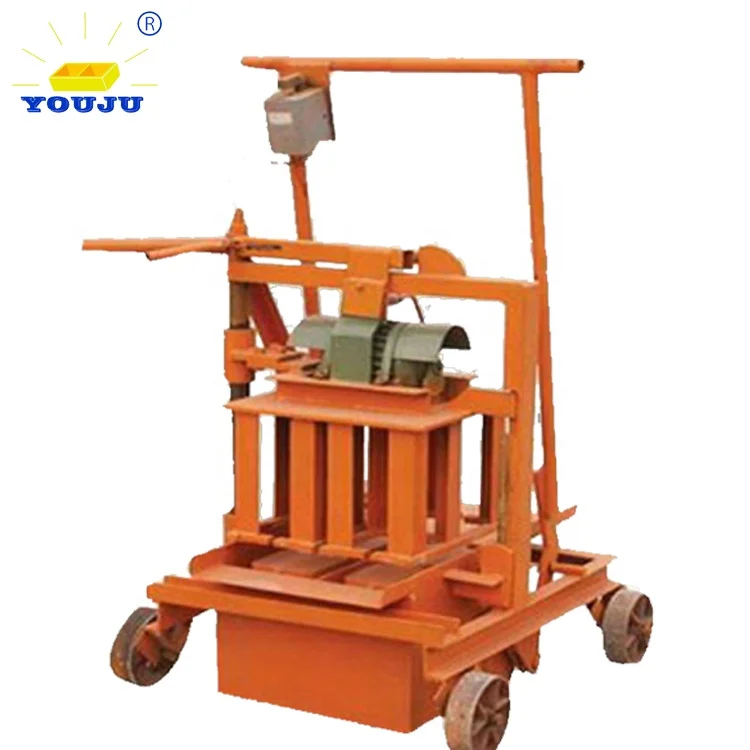
Configuration matched to your upgrade path — the QMJ4-45 mobile egg-laying machine is specified here not just for today’s manual output but with a clear automation trajectory from diesel-powered site production to PLC-controlled batching consistency.
Technical Specifications
| Parameter | Value |
|---|---|
| Model | QMJ4-45 |
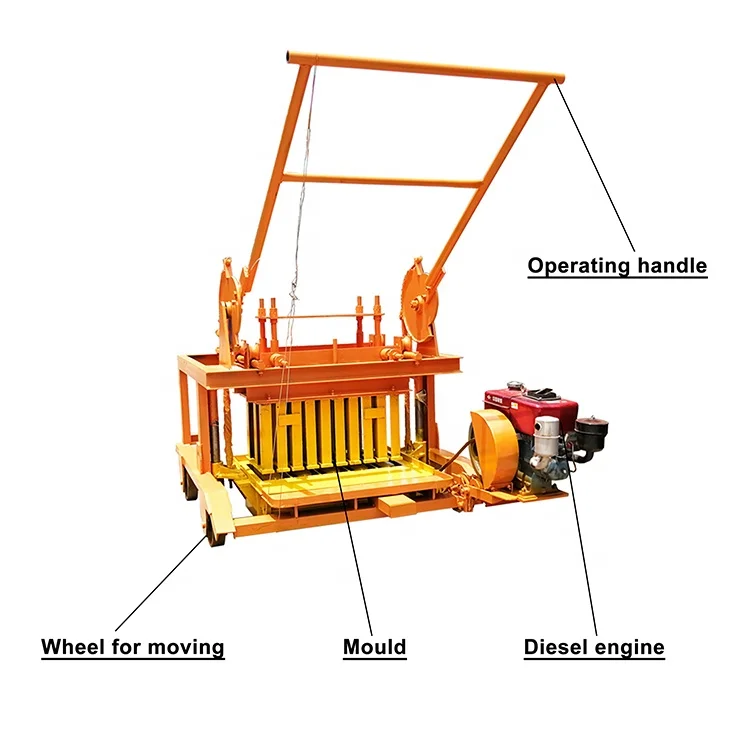
| Product Type | Manual Mobile Egg-Laying Block Making Machine |
| Molding Capacity | 4 pcs/mould (basis: 400×200×200mm hollow block) |
| Molding Cycle | 40–45 s |
| Vibration Frequency | 2400 r/min |
| Forming Method | Mold vibration (twice-vibration system) |
| Demold Method | Manual |
| Turning Method | Manual |
| Total Power | 6 kW |
| Power Source | Diesel / Petrol engine |
| Pallet Requirement | None (egg-laying type, produces directly on ground) |
| Automation Level | Manual (egg-laying / mobile) |
| Assembly State | Skid-mounted, mobile |
| Hollow Block Productivity (400×200×200mm) | 3000 pcs/day (basis: 4 pcs/mould, 40–45s cycle, 8-hour shift) |
| Hollow Block Productivity (400×150×200mm) | 3500 pcs/day (basis: 5 pcs/mould, 40–45s cycle, 8-hour shift) |
| Hollow Block Productivity (400×120×200mm) | 4500 pcs/day (basis: 6 pcs/mould, 40–45s cycle, 8-hour shift) |
Application Suitability
| Application | Material or Output |
|---|---|
| On-site hollow block production | Crushed stone, sand, cement mix laid directly on compacted ground |
| Small-scale contractor block making | 200mm, 150mm, 120mm width hollow blocks at project locations |
| Remote or off-grid construction sites | Diesel or petrol engine operation without grid electricity |
| First-time entrepreneur block plant | Low-investment entry with future automation upgrade trajectory |
What "3000 Blocks per Day" Leaves Out About Mobile Machines
The daily output figure only holds when the block format, cycle time, and shift length all align with the stated assumption — change any one and the number moves.
When I first started commissioning mobile block machines on Latin American sites, buyers would point at a capacity plate and plan their entire project timeline around it. The automatic QMJ4-45 mobile block machine lists 3000 pieces per day, but that assumes 400×200×200mm hollow blocks, a consistent 40–45 second cycle, and a full eight-hour shift with no interruptions [NEED_CITE: common capacity misrepresentation in mobile block machine quotations]. Switch to 120mm width blocks and the per-mould count rises to six, pushing the figure higher — but only if your mix design and ground conditions allow the same cycle speed. The vibration system and manual demolding rhythm must match the aggregate you are actually sourcing locally, not the sand the factory tested with.
The Operator Variable in Egg-Laying Production
Every block the QMJ4-45 produces depends on the operator maintaining a steady walking pace, consistent feed timing, and level ground preparation. This is the defining characteristic of any egg-laying machine: the PLC controlled mobile egg-laying block machine concept does not apply here because the human is the positioning system. On a well-prepared concrete slab the results hold up, but uneven soil introduces variation in block height and density that no vibration frequency can fully compensate for.
Where Automation Enters the Picture
The value of starting with a manual egg-laying machine is the low initial investment and the ability to prove your market before committing capital. The real planning question is what to automate first when production scales. Batching consistency — controlling the water-to-cement ratio and aggregate proportions by weight rather than shovel count — typically delivers the most noticeable improvement in block-to-block strength. From there, automatic pallet feeding and stacking remove the heaviest manual tasks, though these upgrades require moving off the ground and onto a pallet-based system entirely [NEED_CITE: automation upgrade sequence for egg-laying block operations].
Twice-Vibration and Block Density
The QMJ4-45 uses a mold-core vibration system running at 2400 r/min, applied twice per cycle rather than once. In practice this means the concrete mix settles in two stages: the first vibration collapses the larger voids, and the second compacts the finer aggregate structure. For hollow blocks this matters because wall thickness varies across the mould cavity, and a single vibration pass tends to leave denser material at the bottom with weaker zones near the top. The twice-vibration approach narrows that density gap, which shows up as more consistent breaking strength across a production run.
The Hidden Cost of Skipping Ancillary Planning
A mobile machine needs no pallets and no fixed foundation, which makes the quotation look clean. What the quotation does not show is the curing area you need to prepare, the water supply for curing over the following days, or the ground leveling work required before the first block is laid. I have visited sites where a QMJ4-45 was producing well but half the output cracked during curing because the ground absorbed moisture unevenly [NEED_CITE: curing failures on unprepared ground for egg-laying block machines]. Ground preparation, curing covers, and water access are not optional — they are part of the system whether they appear on the invoice or not.
Why Source This Machine Through a Single-Focus Block Machinery Supplier
Block machinery as a sole product focus means the machine, mould, and diesel drive are specified as a matched set rather than assembled from unrelated catalogue pages. The QMJ4-45 configuration is set against your actual mix design and target block format, not a default that ships the same to every market. Moulds for the block widths your local construction market actually buys — 200mm, 150mm, 120mm — are designed and supplied with the machine, and custom mould drawings are available when your market needs a format outside the standard range. Voltage and control language are confirmed before dispatch so ancillary electrical systems match your site supply. Wear parts and mould replacement lists ship inside the container, which matters when you are on a remote project and cannot wait weeks for an air-freighted part.
Documentation & Verification
- Line capacity calculation stating which hollow block format and shift length the output assumes
- Machine specification sheet with diesel engine rating and vibration frequency confirmed
- Mould drawing and format list for each block width included in the quotation
- Hydraulic and electrical schematic covering all ancillary systems on the skid
- Factory test record run on your specified block format before dispatch
- Operation and maintenance manual with wear parts replacement schedule
Installation, Commissioning & Support
- Ground preparation requirements specified for level concrete slab suited to egg-laying operation
- Diesel or petrol engine commissioning with fuel grade and oil specification confirmed on site
- Vibration frequency and mould alignment checked against your local aggregate mix design
- Operator training covering walking pace, feed timing, and manual demold technique
- First replacement wear parts and mould components packed in the shipment container
- Daily and weekly maintenance intervals documented for the 6 kW vibration drive system
Before You Request a Quotation
To configure the QMJ4-45 for your site, share the hollow block dimensions your market demands, the aggregate and cement types available locally, and whether your site has any grid electricity for ancillary equipment. If you plan to scale into pallet-based production later, mention that timeline so the automation upgrade path can be discussed from the start. Confirm the control display language you need and the local fuel grade for the diesel or petrol engine.
Frequently Asked Questions
Q: How is the daily output figure calculated for this mobile machine?
A: The stated productivity figures each assume a specific block format — 4 pcs per mould for 200mm width, 5 pcs for 150mm, and 6 pcs for 120mm — with a 40–45 second cycle and an eight-hour shift. Changing your block size or shift length shifts the daily total accordingly.
Q: What does the automation upgrade path look like from here?
A: The natural first step is PLC-controlled batching to lock in mix consistency by weight. Moving to pallet-based production opens automatic stacking and cubing, but that is a different machine class entirely. The QMJ4-45 serves as the entry point while you prove your market volume.
Q: Can ancillary electrical systems be set to my local language?
A: Yes. Even on a diesel-powered machine, any ancillary controls or future batching system displays can be specified in your operator’s language before dispatch. This is confirmed during the quotation stage to avoid commissioning delays on site.
Q: How does twice-vibration affect block strength versus single-vibration machines?
A: The two-stage vibration at 2400 r/min settles the mix in passes, reducing density variation across the hollow block wall thickness. The result is more uniform breaking strength throughout a production run rather than stronger blocks at the bottom of each mould and weaker ones at the top.
Q: What remote diagnostics are available if I add PLC batching later?
A: When you upgrade to a PLC-controlled batching station alongside this machine, remote diagnostics capability can be included so mix parameters and fault codes are accessible off-site. This is specified at the batching system level, not on the manual egg-laying machine itself.