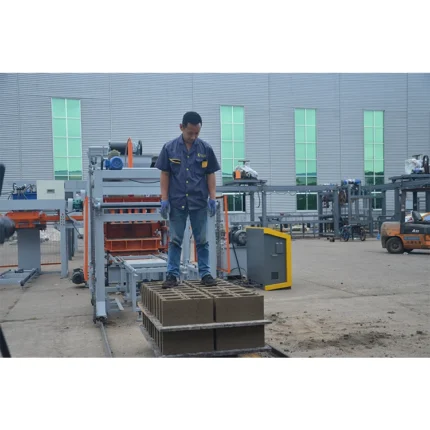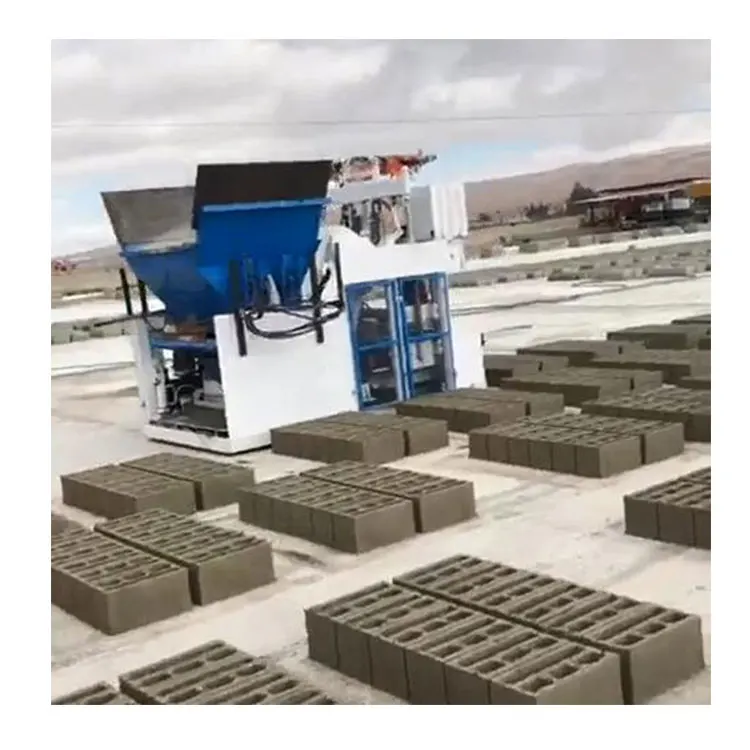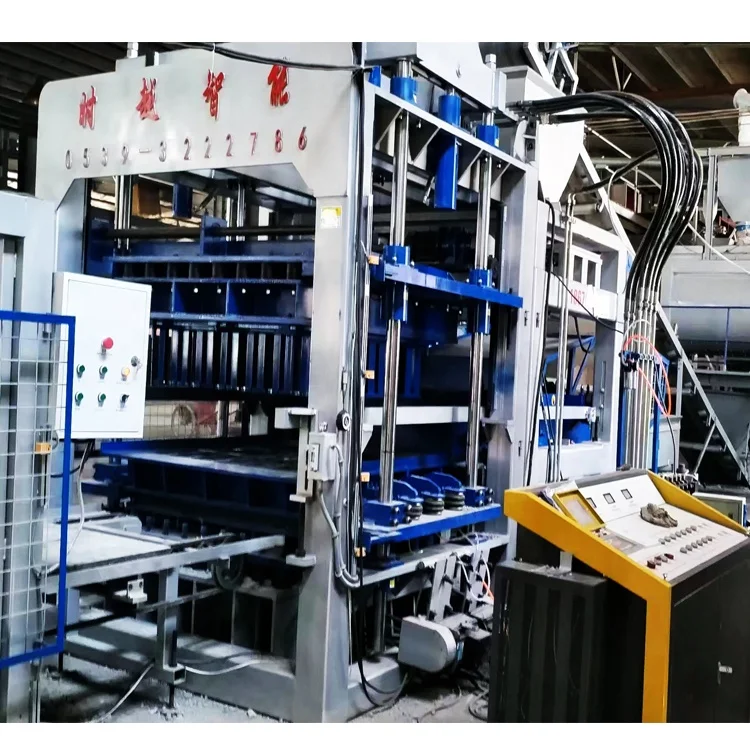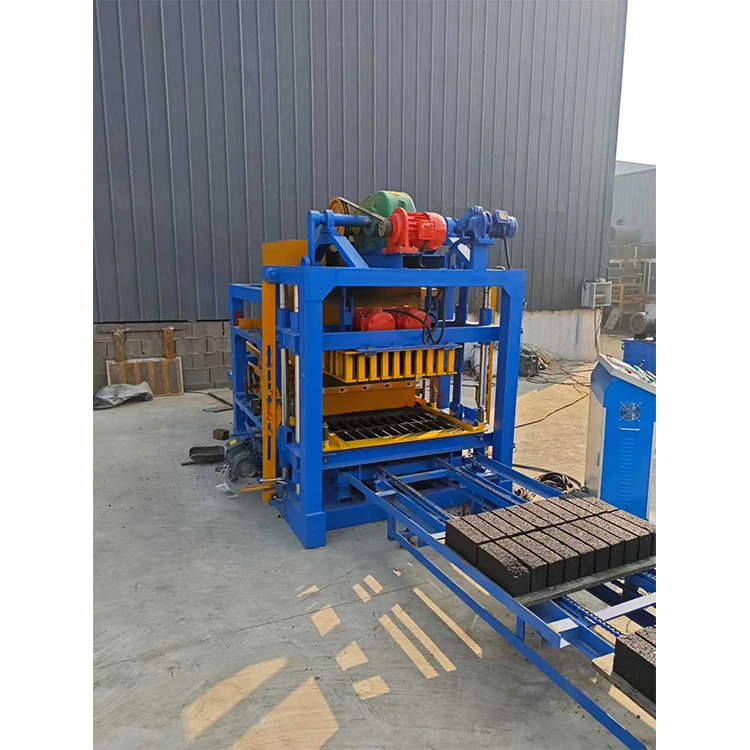


Description
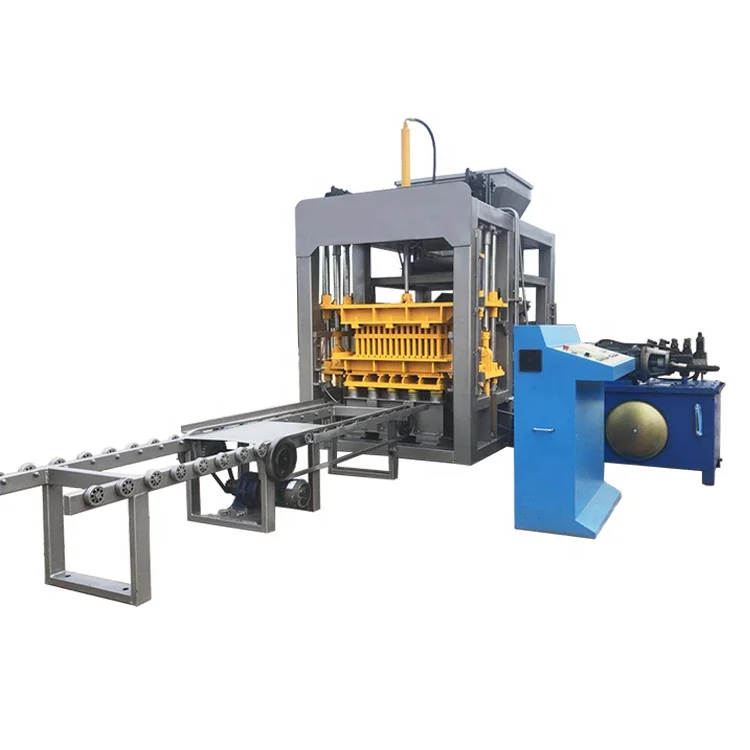
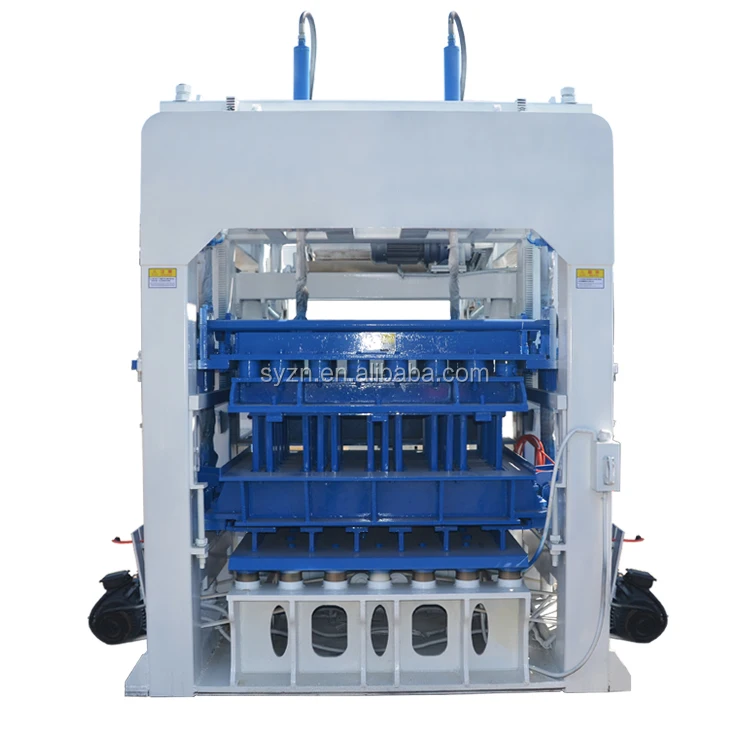
System-Matched Configuration — The automatic QT10-15 block machine PLC controlled system is specified around the buyer’s target format, local aggregate and existing plant layout rather than a generic catalogue default.
Technical Specifications
| Parameter | Value |
|---|---|
| Model | QT10-15 |
| Product Type | Automatic Hydraulic Concrete Block Making Machine |
| Control System | PLC control cabinet |
| Hydraulic System | Independent integrated hydraulic station |
| Vibration Mode | Vertical station mode resonance, automatic FM-AM |
| Mould Change | Simple replacement for multi-format production |
| Components Included | Pallet feed machine, block making machine, storage hopper, conveyor, hydraulic unit, PLC control cabinet |
| Cycle Time (400×200×200mm hollow block) | 15–20 s |
| Output (400×200×200mm hollow block, 10 pcs/mould) | 1,800–2,400 pcs/h | 14,400–19,200 pcs/8 hr |
| Cycle Time (400×150×200mm hollow block) | 15–20 s |
| Output (400×150×200mm hollow block, 12 pcs/mould) | 2,160–2,880 pcs/h | 17,280–23,040 pcs/8 hr |
| Cycle Time (240×115×53mm solid brick) | 15–20 s |
| Output (240×115×53mm solid brick, 62 pcs/mould) | 8,928–11,160 pcs/h | 71,424–89,280 pcs/8 hr |
| Cycle Time (200×100×60mm paving block) | 20–25 s |
| Output (200×100×60mm paving block, 27 pcs/mould) | 5,184–6,480 pcs/h | 41,472–51,840 pcs/8 hr |
| Cycle Time (225×112.5×60mm interlocking block) | 20–25 s |
| Output (225×112×60mm interlocking block, 24 pcs/mould) | 4,032–5,040 pcs/h | 32,256–40,320 pcs/8 hr |
| Rated Power | not stated in source — confirm with manufacturer |
| Voltage & Frequency | not stated in source — confirm target market requirements |
| Hydraulic Pressure | not stated in source — confirm with manufacturer |
| Vibration Force | not stated in source — confirm with manufacturer |
| Pallet Size | not stated in source — confirm with manufacturer |
| Mould Change Time | not stated in source — confirm with manufacturer |
| Overall Dimensions | not stated in source — confirm with manufacturer |
| Net Weight | not stated in source — confirm with manufacturer |
| PLC Display Language | not stated in source — confirm with manufacturer |
| Warranty | 1 year for whole machine (excluding spare parts) |
Application Suitability
| Application | Material or Output |
|---|---|
| Hollow block production (400×200×200 mm, 400×150×200 mm) | Crushed stone, sand, cement and water mix |
| Solid / standard brick production (240×115×53 mm) | Fly ash or sand-lime blended with cement |
| Paving block production (200×100×60 mm) | High-density aggregate-cement mix for surface abrasion resistance |
| Interlocking block production (225×112.5×60 mm) | Graded aggregate with cement binder |
| Multi-cellular brick production | Lightweight aggregate or foamed concrete mix |
| Plants upgrading from semi-automatic lines | Existing manual pallet handling replaced by PLC-governed feed cycle |
| On-site or fixed-plant contracting | Production by construction contractors at project location |
Why the Language on the PLC Screen Should Be Decided Before the Machine Ships
A Spanish-speaking operator staring at a Chinese-language PLC panel costs three days of commissioning before a firmware update arrives.
I once shipped an automatic line to Colombia and watched the local operator scroll through fault codes he could not read. The machine sat idle for the better part of a week while we pushed a Spanish-language firmware patch over a slow connection. Since that job, I have made control language, voltage and frequency a line item on the order sheet — not an afterthought once the container is sealed. The automatic QT10-15 block machine PLC controlled interface is configurable, but only if someone asks the right questions before production starts [NEED_CITE: voltage and frequency standards by export market].
What Automation Actually Removes from the Operator
On a semi-automatic press the operator watches the mould fill, triggers the vibration cycle, waits for the pallet to advance and then signals the stacker. Each decision point is a place where timing drifts. The QT10-15 places the pallet feed, press cycle, material delivery and output handling under one PLC sequence. The operator sets the recipe once per mould and the controller repeats the timing, vibration duration and hydraulic pressure profile cycle after cycle. That is what makes the automatic QT10-15 block machine PLC controlled loop different from a manual line — the recipe stays identical whether it is the first block of the shift or the last.
Where Consistency Shows Up in the Block
Block strength inconsistency is rarely a cement problem. It is more often a vibration problem: the operator shortens the vibration window because the next pallet is already waiting, or extends it because the hopper ran low. With an independent integrated hydraulic station isolated from the host vibration and dust, the QT10-15 holds its pressure profile regardless of how many cycles have run that day. The vertical station mode resonance system adjusts vibration frequency and amplitude automatically, matching the energy delivered to the mix density in real time. The result is a block whose compressive strength does not wander across the shift [NEED_CITE: concrete block compressive strength testing standards].
Reading the Specification Sheet Without Getting Misled
Cycle time is the number most buyers focus on, and the QT10-15 quotes 15–20 seconds for hollow blocks and 20–25 seconds for paving and interlocking formats. What matters more is what happens between cycles. If the mixer cannot deliver a fresh batch fast enough, or if the pallet feeder cannot return an empty pallet in time, the press waits and the quoted cycle time becomes theoretical. That is why the line configuration — pallet feeder, press, hopper and conveyor — must be balanced as one system. The QT10-15 ships as a line configuration with those stations included, but upstream batching and downstream stacking must also be sized to the same output rate. Hydraulic pressure and vibration force need to be confirmed against the buyer’s specific mix design and local aggregate; a default setting tuned for river sand will not produce the same block with crushed volcanic rock.
What Happens When Line Stations Are Not Balanced
A press rated at a given cycle time will deliver that number only if every upstream and downstream station keeps pace. I have seen plants where the mixer could not feed the hopper fast enough and the press spent half the shift idling. The buyer then concludes the machine is slow, when in reality the bottleneck was a station that was never part of the original quotation. Pallet handling, stacking and curing are the same story: if they are left out, output piles up at the end of the line and workers move blocks by hand, undoing the labour reduction that automation was supposed to deliver [NEED_CITE: block plant line balancing and bottleneck analysis].
Why the QT10-15 Is Configured Rather Than Catalogued
Block machinery is the single focus here, which means the press, mould, pallet and handling equipment are specified as one matched system instead of assembled from separate suppliers. The configuration is set against the buyer’s actual mix design and target block format, not a generic table. Moulds are designed for the formats the buyer’s market actually sells, including custom drawings when the standard catalogue does not cover a local standard. The automation level is selectable — a buyer can start with the pallet feeder and PLC-controlled press, then add automatic stacking and cubing later as volume grows. Installation support includes operator training on the specific PLC language chosen, and the documentation package confirms voltage, frequency and control wiring before the machine leaves the factory.
Documentation & Verification
- Line layout and capacity calculation stating the block format assumed for each output figure
- Machine specification sheet with hydraulic and electrical schematics
- Mould drawing and format list matched to buyer’s local market standards
- Voltage, frequency and PLC display language confirmation signed before production
- Factory test record covering all confirmed block formats
- Operation and maintenance manual with wear parts and mould replacement list
Installation, Commissioning & Support
- Foundation plan sized to the QT10-15 overall dimensions and vibration load before machine arrival
- Dedicated power circuit matching confirmed voltage and frequency with correct breaker rating
- Machine shipped as line configuration with pallet feeder, press, hopper and conveyor for on-site assembly
- PLC parameter setting and recipe programming for each confirmed mould during first-run commissioning
- Operator training on the chosen display language covering fault diagnosis and mould change procedure
- Wear parts list identifying hydraulic seals, vibration springs and mould liners for first reorder
What to Prepare Before Requesting a Quotation
Send the target block formats your market sells, the daily output you need, the local raw materials you can source and the voltage and frequency at your site. If you already have a mixer, batching system or forklift, include their specifications so the pallet size and line speed can be matched. Confirm the PLC display language your operators read — this single item avoids commissioning delays that no amount of on-site troubleshooting can shorten.
Frequently Asked Questions
Q: How is the output capacity of the QT10-15 verified per block format, and what cycle time does each format assume?
A: Each capacity figure is tied to a specific block size, mould cavity count and cycle time — for example, 1,800–2,400 hollow blocks per hour assumes a 400×200×200 mm block at 10 pieces per mould with a 15–20 second cycle. A capacity calculation sheet is provided stating the format assumed so the buyer can match it against their actual product mix.
Q: Which PLC brands and display languages are available, and can recipes be stored per mould?
A: The PLC cabinet is configurable for the destination market, and the display language is confirmed before the order sheet is signed — a step I insist on after watching an operator lose three days to an unreadable screen. Recipes are stored per mould so that a format changeover requires selecting the correct program rather than re-entering timing values manually.
Q: How does the independent hydraulic station protect the system from press vibration and dust?
A: The integrated hydraulic station sits apart from the main vibration frame, so shock loads from the press cycle do not travel through the valve block. Dust seals and isolation mounts keep abrasive particles out of the fluid circuit, which extends seal life and reduces the frequency of hydraulic oil changes across long production shifts.
Q: What automation level is included as standard, and what is the upgrade path from semi-automatic?
A: The standard line includes the pallet feed machine, press, storage hopper, conveyor and PLC cabinet. Buyers starting from a semi-automatic setup can run the QT10-15 with manual pallet handling at first, then add automatic stacking and cubing modules later. The PLC architecture supports those additions without a full control system replacement.
Q: How are voltage, frequency and control wiring confirmed before the machine leaves the factory?
A: Voltage and frequency are written into the order confirmation alongside the PLC display language. The electrical schematic is reviewed with the buyer before production so that motor wiring, breaker ratings and control transformer taps match the destination site, avoiding rewiring work after the container arrives [NEED_CITE: industrial equipment voltage and frequency compatibility for export markets].