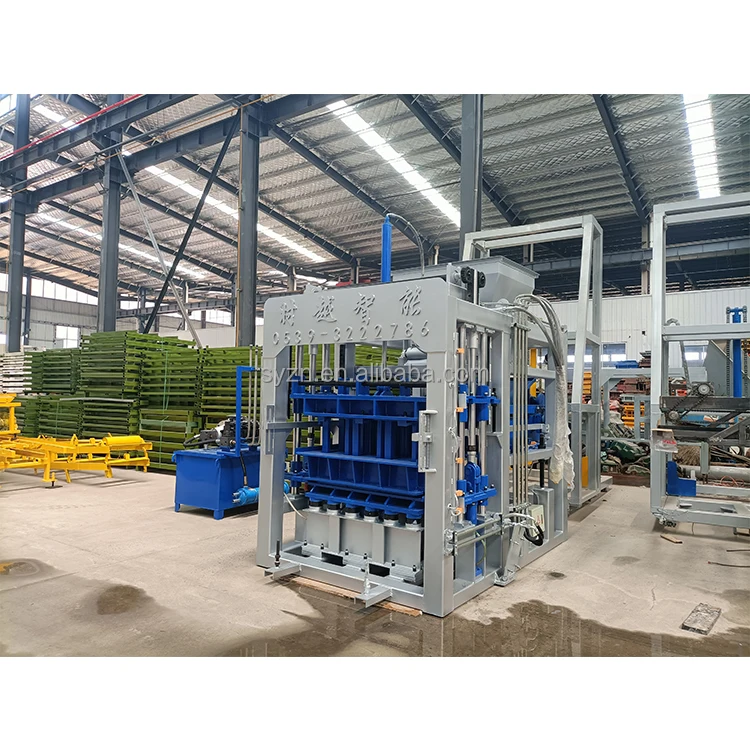
Description
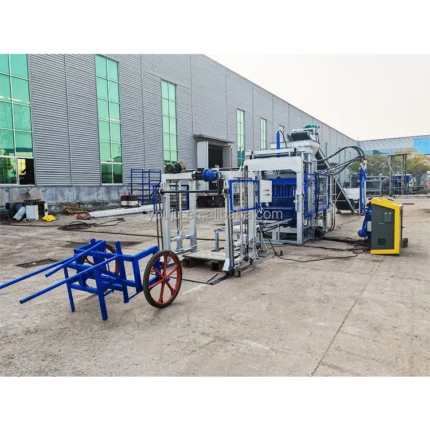
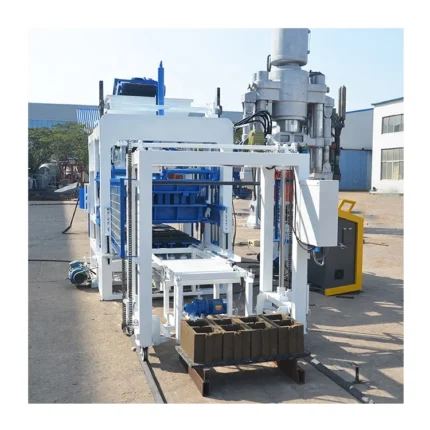
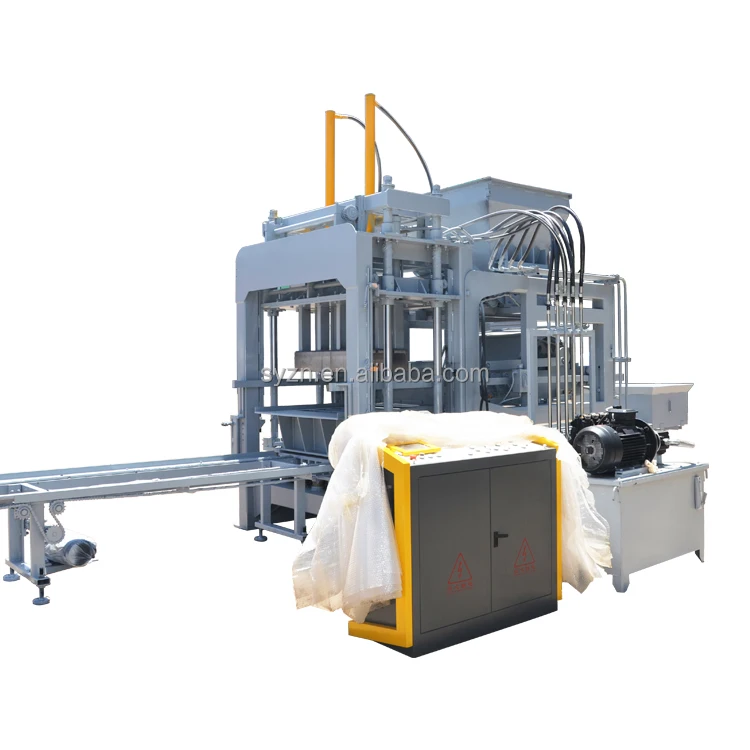
Siemens PLC integration — The QT10-15 runs an original Siemens PLC with touch screen control, managing every station from pallet feeding through stacking without operator guesswork.
Technical Specifications
| Parameter | Value |
|---|---|
| Model | QT10-15 |
| Product Type | Automatic Concrete Block Making Machine |
| Host Machine Dimensions (L×W×H) | 5870×2220×2850 mm |
| Host Machine Weight | 12 Tons |
| Molding Area | 1100×900 mm |
| Host Machine Power | 57 kW |
| Vibration Force | 100 kN |
| Vibration Method | Hydraulic + Platform Vibration |
| Vibration Frequency | 2800–4500 Times/Minute |
| Pallet Size | 1100×900×30 mm |
| Voltage | 220/380/415/440V (Customized) |
| Control System | Original Siemens PLC with Touch Screen |
| Motor Brand | Germany SIEMENS or CE standard brand |
| Travel Switch | France Schneider and Japan Omron |
| Mould Heat Treatment | Carburizing, hardness 54–58 HRC, lifespan over 100,000 cycles |
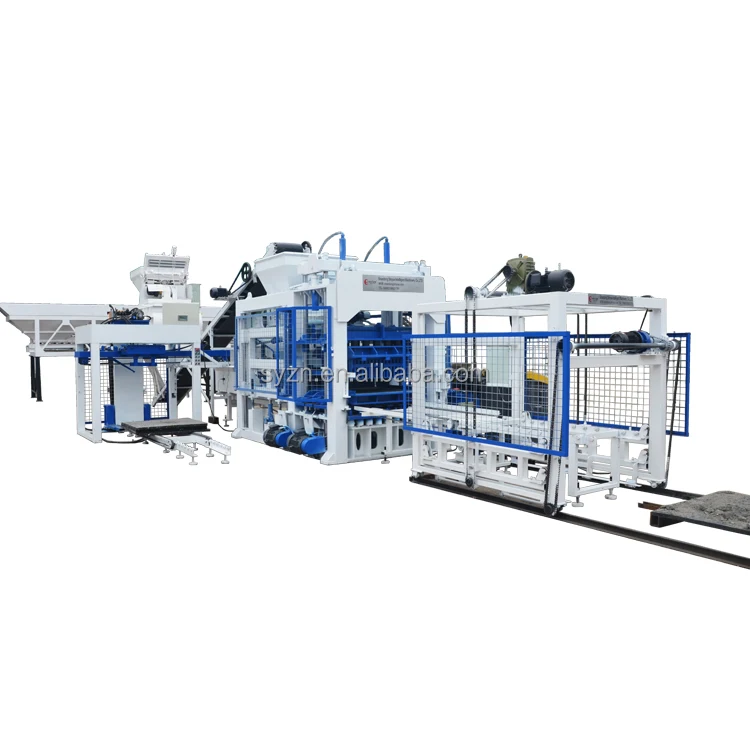
| Batching Machine (PLD1200) | 1200L weigh-batching hopper, 4×2.5m³ storage hopper |
| Mixer (JS750) | 1200L charging / 750L discharging volume |
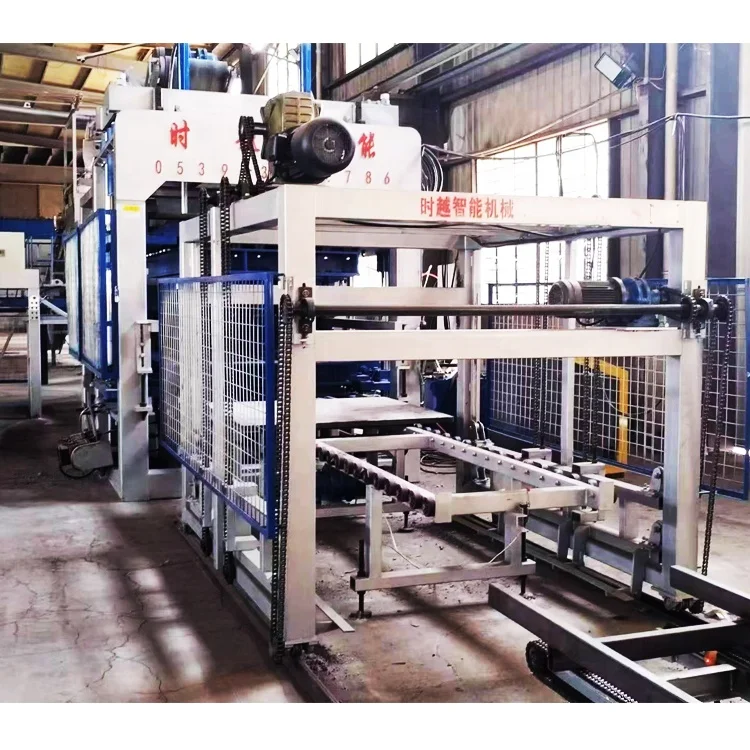
| Stacker (SY-8) | 3 kW, 600 kg lifting capacity |
| Standards | CE |
Application Suitability
| Application | Material or Output |
|---|---|
| Hollow block production | Crushed stone, sand, cement, fly ash blends |
| Solid block production | Dense aggregate mixes requiring high compaction |
| Paving block production | Fine aggregate with color pigment feed option |
| Interlocking brick production | Stabilized soil or cement-bound granular mixes |
What the PLC Actually Controls — and What It Cannot Fix
Automation removes inconsistency from the operator’s hands, but it cannot compensate for a mix design that does not match the machine’s vibration profile.
A common pattern in block production: the automatic block machine PLC controlled system cycles perfectly, pallets feed on time, the stacker cubes the output neatly — yet blocks still crack during curing or fail compressive strength tests. The root cause usually sits in the hopper, not the control panel. I once traced a QT10-15 field issue to a buyer’s local sand source containing high clay content; the PLC was executing the same pressing routine, but the material behavior had changed entirely. The vibration frequency range of 2800–4500 times per minute needs a consistent feed to deliver consistent density [NEED_CITE: relationship between aggregate clay content and block compressive strength].
Recipe-Based Mould Changeover Through the Touch Screen
The touch screen interface stores parameters for each block format — vibration duration, pressure hold time, feed cycles — so switching from hollow blocks to pavers does not mean recalibrating by hand. Operators select the recipe, and the PLC adjusts the cycle accordingly. This matters because manual adjustment during format changes introduces variation that accumulates across a production shift. With the automatic block machine PLC controlled recipe system, the first block off a new mould matches the fiftieth, assuming the raw material feed remains stable.
Where the Line Either Synchronizes or Bottlenecks
The PLD1200 batching machine delivers ingredients to the JS750 mixer, which feeds the press. If the mixer discharge cycle runs slower than the press demand, the PLC simply waits — and the cycle time stretches beyond what the capacity calculation assumed. The SY-8 stacker must clear cured pallets at the same rhythm the press produces them. I always map these station intervals against each other before confirming the line layout, because the slowest station defines the real output, regardless of what the host machine is rated for [NEED_CITE: production line bottleneck analysis for concrete block plants].
Vibration Force and Hydraulic Pressure as a Paired System
The 100 kN vibration force works in combination with hydraulic pressure to compact the mix inside the mould. Higher frequency does not automatically mean better density; the correct setting depends on the aggregate gradation and cement content. A coarse crushed stone mix typically needs lower frequency with longer vibration time, while fine sand blends respond to higher frequency with shorter duration. The mould area of 1100×900 mm means the vibration must distribute evenly across a large surface — uneven distribution causes density variation from one side of the pallet to the other, which shows up as inconsistent block strength during quality checks.
When Automation Hides a Deeper Configuration Mismatch
A fully automated line can run for weeks before a problem surfaces. By then, thousands of blocks have been produced with a mix the machine was never configured for. The PLC logs every cycle, but it does not flag that the aggregate source changed or that the batching ratios drift outside what the vibration profile expects. Plant owners upgrading from semi-automatic operation sometimes assume the control system will catch these issues — it will not. The operator still needs to verify block weight and dimensions at regular intervals and feed that data back into recipe adjustments [NEED_CITE: quality control sampling intervals in automated block production].
Why Sourcing the Line as One System Matters
Block machinery is our single focus, so the press, mould, pallet, batching, and stacking stations are specified as one matched system rather than assembled from separate suppliers. The mould design corresponds to the formats the buyer’s market actually sells, with carburizing treatment rated for over 100,000 cycles. Automation level is selectable — a buyer can commission the QT10-15 with semi-automatic pallet handling and add the SY-8 stacker later without rewiring the PLC. Voltage, frequency, and PLC display language are confirmed before production, not discovered at commissioning. Factory testing runs the actual block format the buyer intends to produce, with cycle time and block strength recorded for that specific configuration.
Documentation & Verification
- Factory test record showing cycle time and block strength for your target format before dispatch
- PLC program backup and touch screen parameter sheet for your configured block recipes
- Hydraulic and electrical schematic matching your confirmed voltage and frequency
- Mould drawing with format dimensions and pallet size confirmation
- Wear parts list with mould and hydraulic component specifications
Installation, Commissioning & Support
- Foundation plan based on the 5870×2220 mm host footprint and 12-ton operating weight
- Dedicated 57 kW power circuit matching your confirmed voltage and frequency before arrival
- PLC display language set to your operator team’s preference before factory testing
- Batching parameters calibrated on-site using your actual aggregate and cement source
- Operator training covering recipe selection, fault diagnostics, and daily maintenance routines
- Spare mould and hydraulic seal kits identified against your production format schedule
What We Need to Configure Your Line
Before we propose a layout, share the block formats your market requires, the daily volume you need to sustain, and your local aggregate characteristics. Confirm your site voltage and the language your operators will use on the touch screen. If you already run a curing yard and forklift, provide the pallet dimensions you use so the feeder and stacker align with your existing handling equipment.
Frequently Asked Questions
Q: What automation functions does the PLC control manage versus what still requires manual intervention?
A: The Siemens PLC automates batching ratios, pallet feeding, vibration cycles, pressing, and stacking through the SY-8 unit. Operators still load raw materials into the storage hoppers, perform mould changes physically, and conduct periodic quality sampling. The touch screen handles recipe selection and fault display, but material replenishment and visual block inspection remain manual tasks.
Q: How does the system handle mould changeover — is it recipe-based through the touch screen?
A: Yes. Each block format has a stored recipe containing vibration duration, feed cycles, and pressure parameters. The operator selects the recipe on the touch screen, and the PLC applies those settings automatically. The physical mould swap still requires manual work, but the control system eliminates the need for manual calibration after each change.
Q: Can the control system store multiple block format recipes, and how is batch traceability logged?
A: The PLC stores multiple recipes for different formats such as hollow blocks, pavers, and interlocking bricks. Cycle counts and production timestamps are logged per recipe. For full batch traceability including material lot tracking, buyers typically integrate the PLC output with their own plant management software through available communication ports.
Q: What is the upgrade path if I start with semi-automatic pallet handling and want full stacking later?
A: The QT10-15 PLC is pre-wired for the SY-8 stacker and automatic pallet feeder even if they are not installed initially. Adding the stacker later requires mechanical installation and enabling the corresponding PLC modules — no control panel replacement is needed. This keeps the initial investment lower while preserving the full automation path.
Q: How do I confirm the PLC interface language and voltage before commissioning?
A: Both are confirmed during the quotation stage and locked before production begins. The touch screen language is set to your operator preference, and the electrical system is built to your site voltage and frequency. A factory test record verifies these settings before shipment, so there are no surprises when the machine arrives on-site.