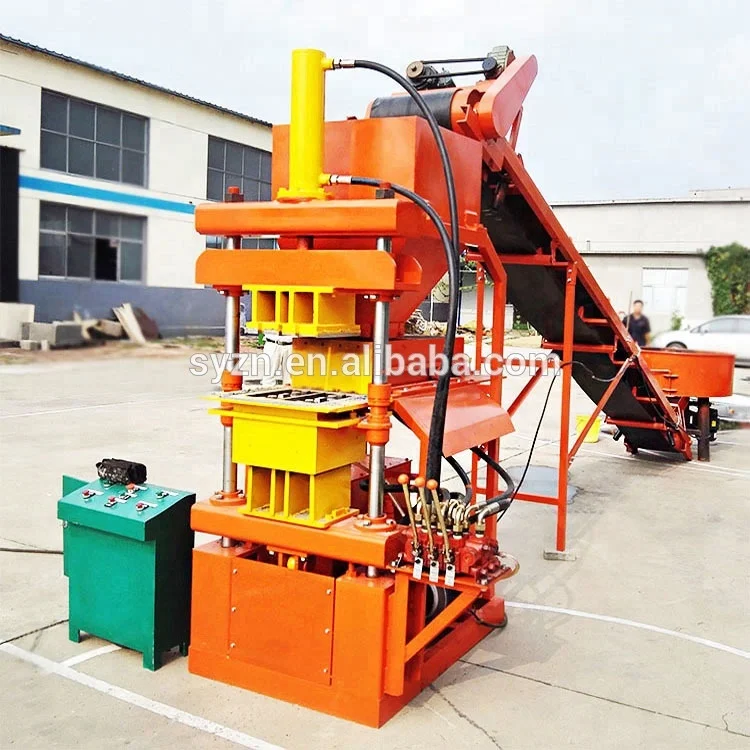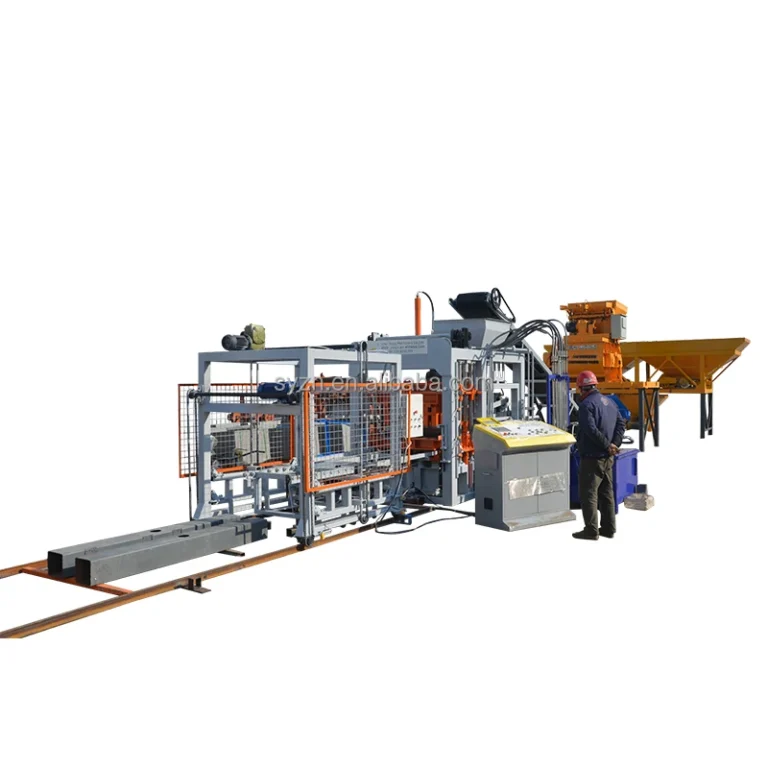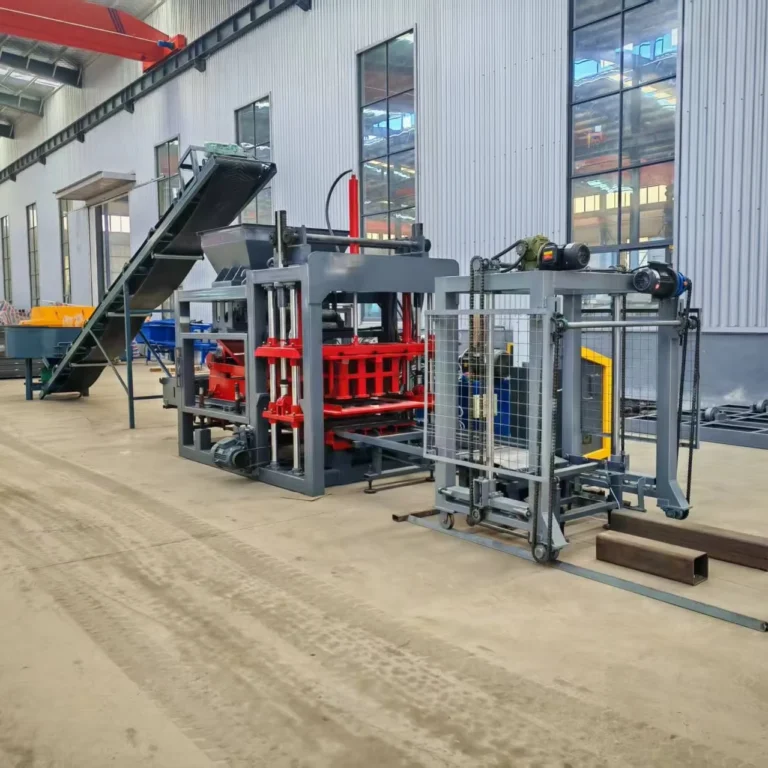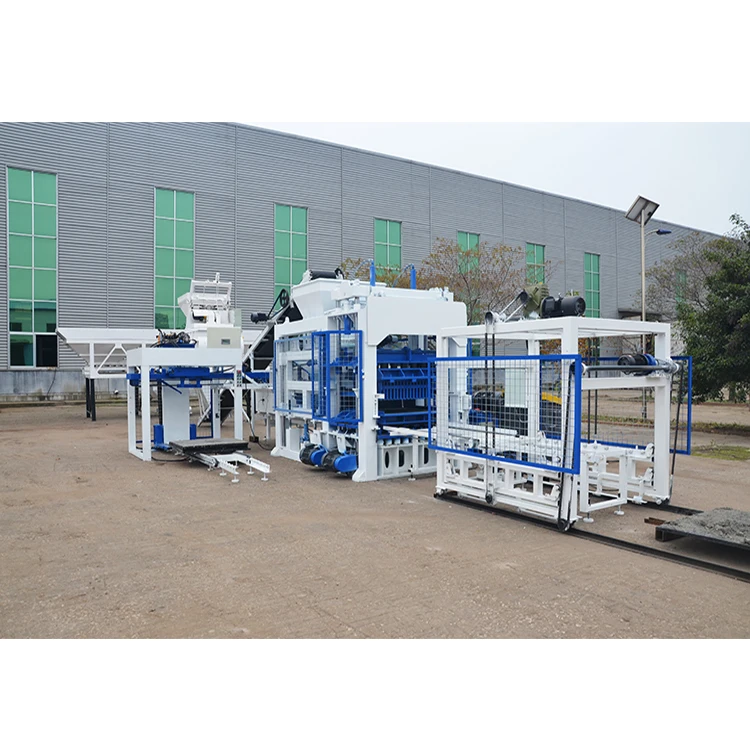
Description
Automation scope matched to your shift layout — the QT10-15 is quoted with the exact pallet feeding, press cycle and hydraulic stations included, so you know what the operator still handles before signing.
Technical Specifications
| Parameter | Value |
|---|---|
| Model | QT10-15 |
| Product Type | Automatic Concrete Block Making Machine |
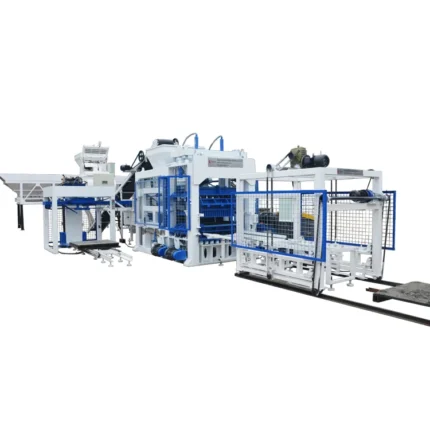
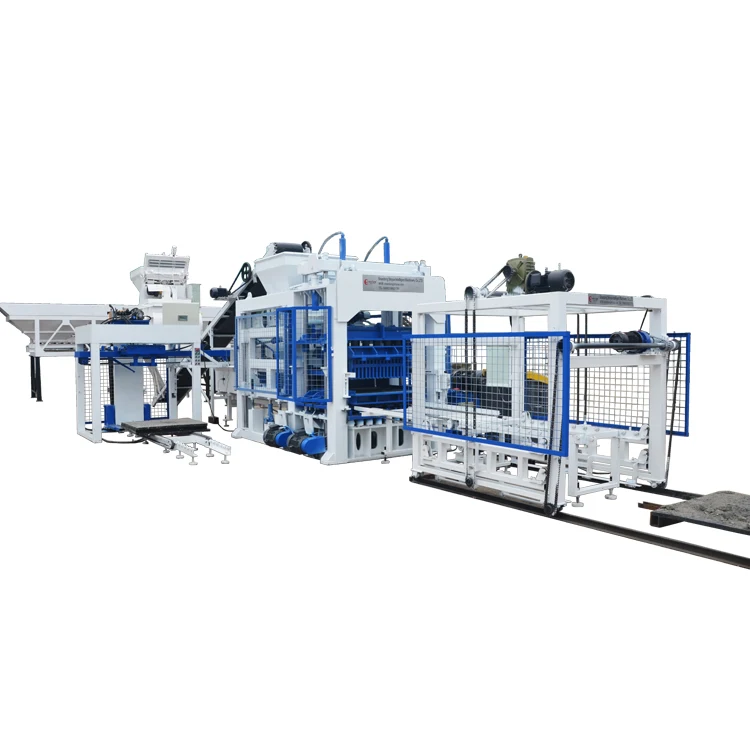
| Automation Level | Automatic (pallet feed, block making, storage hopper, conveyor, hydraulic unit, PLC control cabinet) |
| Control System | PLC control cabinet |
| Hydraulic System | Independent integrated hydraulic station |
| Mould Change System | Simple replacement of mould for multi-format production |
| Cycle Time (400×200×200 mm, 10 pcs/mould) | 15–20 s, 1800–2400 pcs/hour (basis: stated block format in source) |
| Cycle Time (400×150×200 mm, 12 pcs/mould) | 15–20 s, 2160–2880 pcs/hour (basis: stated block format in source) |
| Cycle Time (240×115×53 mm, 62 pcs/mould) | 15–20 s, 8928–11160 pcs/hour (basis: stated block format in source) |
| Cycle Time (200×100×60 mm, 27 pcs/mould) | 20–25 s, 5184–6480 pcs/hour (basis: stated block format in source) |
| Cycle Time (225×112.5×60 mm, 24 pcs/mould) | 20–25 s, 4032–5040 pcs/hour (basis: stated block format in source) |
| Vibration Force | Not stated in source (confirm with supplier) |
| Hydraulic Pressure | Not stated in source (confirm with supplier) |
| Pallet Size | Not stated in source (confirm pallet dimension and material with supplier) |
| Rated Power | Not stated in source (confirm with supplier) |
| Voltage & Frequency | Not stated in source (confirm with supplier) |
| Overall Dimensions | Not stated in source (confirm with supplier) |
| Net Weight | Not stated in source (confirm with supplier) |
| Stacking Method | Not stated in source (confirm with supplier) |
| Warranty | 1 year for the whole machine (excluding spare parts) |
| Language Options (PLC display) | Not stated in source (confirm with supplier) |
Application Suitability
| Application | Material or Output |
|---|---|
| Hollow block production | Crushed stone, sand, cement and fly ash blends for 400×200×200 mm and 400×150×200 mm cavity formats |
| Solid / standard brick production | Dense aggregate and cement mixes for 240×115×53 mm solid units |
| Multi-cellular brick production | Lightweight aggregate or aerated mixes for partition and infill blocks |
| Paving block production | Fine-graded sand and cement for 200×100×60 mm and 225×112.5×60 mm interlocking pavers |
| Kerbstone and interlocking formats | Custom mould profiles matched to site-specific boundary and retaining applications |
What "Cycles per Hour" Leaves Out When You Size an Automatic Concrete Block Making Machine PLC Controlled
A single headline capacity number hides the block format it assumes.
When I first visited a plant in southern Spain that had just commissioned a new press, the owner showed me the brochure figure and then pointed to the pallet rack — half the shift was spent chasing output that never matched the quoted rate. The problem was not the machine. The quotation listed a cycle time based on a small solid brick, while the plant’s daily schedule was built around 400 mm hollow blocks with a longer cure window and a slower press stroke. Without tying every output figure to a named format, the automatic concrete block making machine PLC controlled line looked capable on paper but left the stacking crew idle and the curing yard under-filled. This gap between brochure capacity and shift reality is where most block plant disputes start [NEED_CITE: common causes of block machine commissioning disputes].
How the PLC Governs the Full Press Cycle
The PLC control cabinet on the QT10-15 manages the pallet feed, material storage hopper gate, press stroke sequence and conveyor hand-off as a single timed loop. When the cycle runs correctly, the press never waits for a pallet and the mixer never overfills the hopper. This coordination is what separates a true automatic concrete block making machine PLC controlled setup from a collection of individual stations that each need an operator watching them.
Why the Independent Hydraulic Station Matters Across a Full Shift
The integrated hydraulic station sits apart from the main vibration table and the dust path of the material feed. Isolating it from continuous vibration and abrasive fines protects valve seals and hose fittings over sustained production. On machines where the hydraulics share the same frame as the vibration table, I have seen hydraulic lines of this class loosen within the first season, causing pressure drops that show up as inconsistent block density on the last pallet of the day [NEED_CITE: hydraulic reliability in vibrating block press environments].
Reading the Capacity Table by Block Format
The cycle time ranges published for the QT10-15 are tied to specific block dimensions and piece counts per mould. Hollow blocks at 400×200×200 mm run at 15–20 seconds for 10 pieces per cycle, while pavers at 200×100×60 mm run at 20–25 seconds for 27 pieces per cycle. This difference matters because a plant quoting daily output needs to multiply the correct cycle time by the actual shift hours and the format the market is buying this week, not a blended average. Choosing a machine without this format-level detail means your line sizing rests on an assumption you cannot verify.
What Vibration Force and Hydraulic Pressure Together Determine
On any hydraulic-vibration press, the vibration force consolidates the mix into the mould cavity while the hydraulic head applies the compaction pressure from above. If the vibration is high but the head pressure is low, the block surface finishes well but the core density falls short of the strength class the buyer’s market requires. The reverse — high pressure with weak vibration — leaves voids in thin-web hollow blocks. The QT10-15 specs for vibration force and hydraulic pressure are not stated in the source documentation and must be confirmed against the buyer’s mix design and local aggregate before the machine is configured.
The Cost of Skipping Voltage and Language Confirmation
A control panel built for 380 V / 50 Hz arriving at a site wired for 440 V / 60 Hz will not run, and rewinding motors on-site is a multi-week delay, not an afternoon fix. Equally, a PLC display in a language the shift operator cannot read turns a straightforward fault code into a phone call across time zones. I once spent two days remotely re-flashing a control board because the operator spoke Spanish and the interface shipped in English — a confirmation checklist before production would have prevented it entirely [NEED_CITE: voltage and frequency standards by export market].
Why Procurement Should Happen Here
Block machinery is the sole focus of the production team behind the QT10-15, so the press, mould, pallet and handling equipment are specified as one matched system rather than assembled from separate suppliers. Machine configuration is set against the buyer’s actual mix design, local aggregate and target block format instead of a catalogue default. Mould design covers the formats the buyer’s market sells, with custom drawings accepted. Automation level is selectable, allowing a buyer to start semi-automatic and expand later. Installation support includes on-site commissioning and operator training so the PLC interface and mould change procedure are verified before the first full shift.
Documentation & Verification
- Line layout and capacity calculation stating the block format assumed for each output figure
- Machine specification sheet with hydraulic and electrical schematic
- Mould drawing and format list covering all five listed block dimensions
- Pallet specification confirming size and material against your curing yard
- Voltage, frequency and PLC display language confirmation before production
- Factory test record on your target block format before dispatch
Installation, Commissioning & Support
- Foundation plan matched to the QT10-15 overall dimensions and vibration isolation requirements
- Dedicated power circuit sized to the machine’s rated kW and confirmed voltage
- Assembly state and dismantling plan for container loading verified before shipment
- On-site PLC parameter setup covering cycle timing for each confirmed block format
- Operator training on mould change procedure and hydraulic station daily checks
- Wear parts and mould inventory list with first replacement schedule
What to Include in Your Enquiry
Share your target block formats by dimension and the daily volume your market absorbs for each. Confirm the voltage, frequency and phase at your site, along with the PLC display language your operators need. Let us know whether pallet feeding, stacking and cubing should be included in the scope, and describe the curing area and forklift you already have so pallet size can be matched.
Frequently Asked Questions
Q: How is the output capacity calculated, and which block format does each figure assume?
A: Every capacity figure for the QT10-15 is tied to a named block dimension and a cycle time range. For example, 400×200×200 mm hollow blocks run at 15–20 seconds for 10 pieces per mould. Request the full capacity calculation sheet so you can multiply by your actual shift hours and confirm the format your market demands.
Q: What PLC brand and display language options are available?
A: The PLC control cabinet brand and the display language must be confirmed before production begins. This is treated as a fixed specification, not a default, because an interface the operator cannot read delays commissioning and turns simple fault codes into cross-timezone troubleshooting calls.
Q: What voltage and frequency does the QT10-15 require?
A: Voltage, frequency and phase configuration are not fixed in the source documentation and must be confirmed against your site supply before the electrical cabinet is built. Shipping a control panel rated for the wrong frequency typically results in a multi-week delay while motors are replaced on-site.
Q: How long does a full mould change take, and is training included?
A: The mould change system is designed for straightforward replacement, but actual changeover time depends on the format size and the operator’s familiarity with the procedure. Operator training during commissioning covers the full mould change sequence so your shift team can verify the time against your production schedule.
Q: Which automation stations are included versus optional?
A: The QT10-15 quotation covers pallet feed, block making, storage hopper, conveyor, hydraulic unit and PLC control cabinet as standard. Stacking and cubing are separate scope items — confirm whether they should be included so the line does not rely on manual pallet handling from the press output onward.