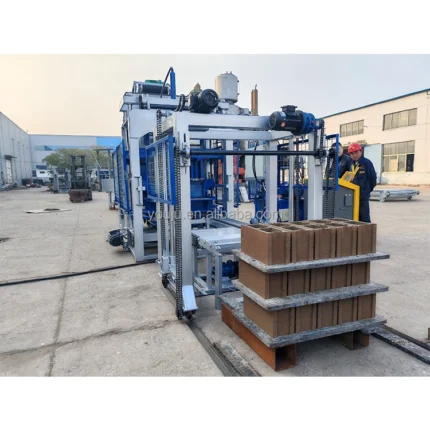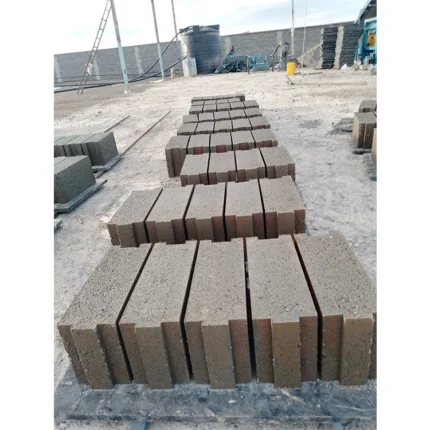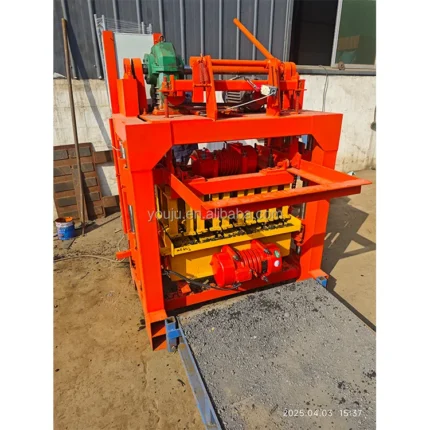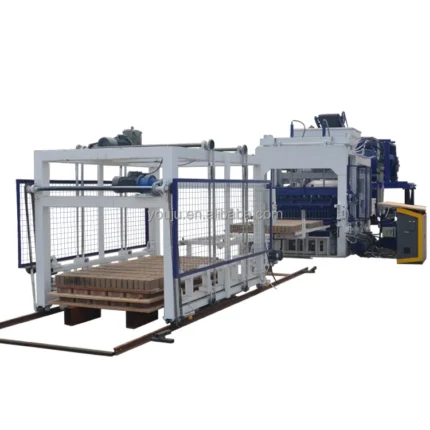



Description
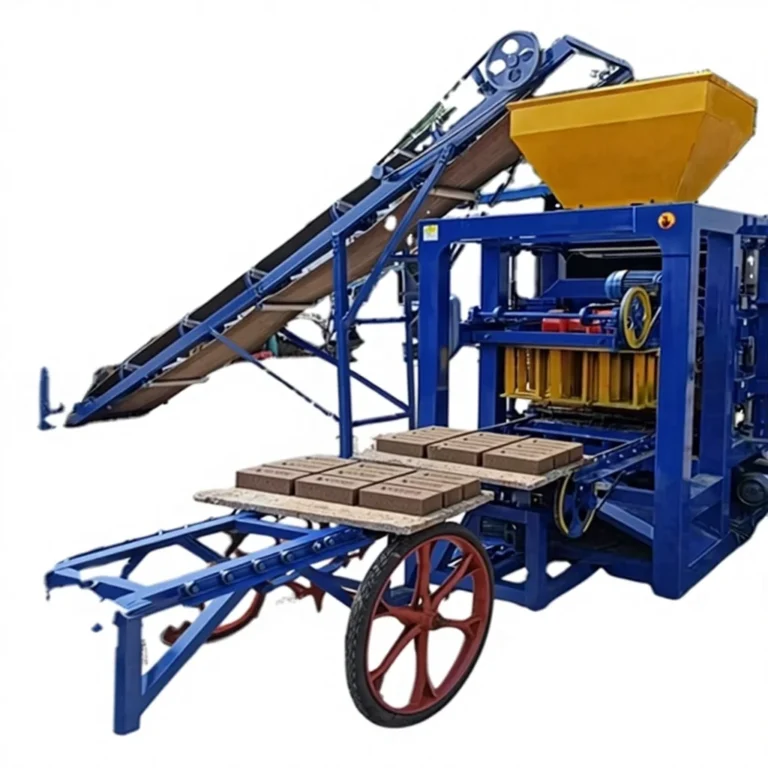
PLC-Driven Consistency — vibration timing, frequency and braking are managed by the control system on the QT4-15 so every cycle matches the previous one without operator guesswork.
Technical Specifications
| Parameter | Value |
|---|---|
| Model | QT4-15 |
| Product Type | Automatic Concrete Block Making Machine |
| Rated Power | 27.5 kW |
| Voltage | 380 V (configurable per site supply) |
| Control System | PLC with computer-controlled directional vibration |
| Vibration Force | 40 kN |
| Moulding Cycle | 15 s (basis to be confirmed by block format) |
| Pallet Size | 1020 × 570 mm |
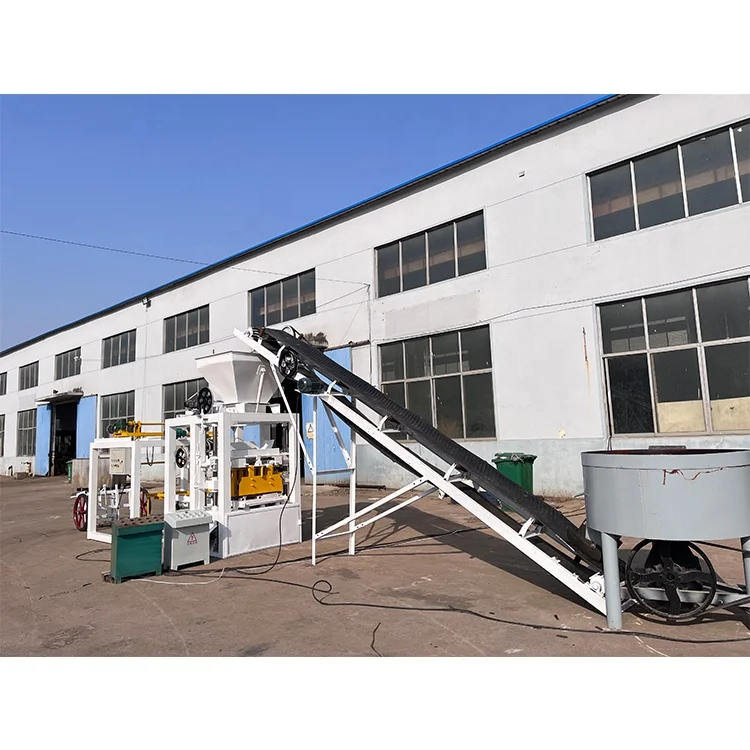
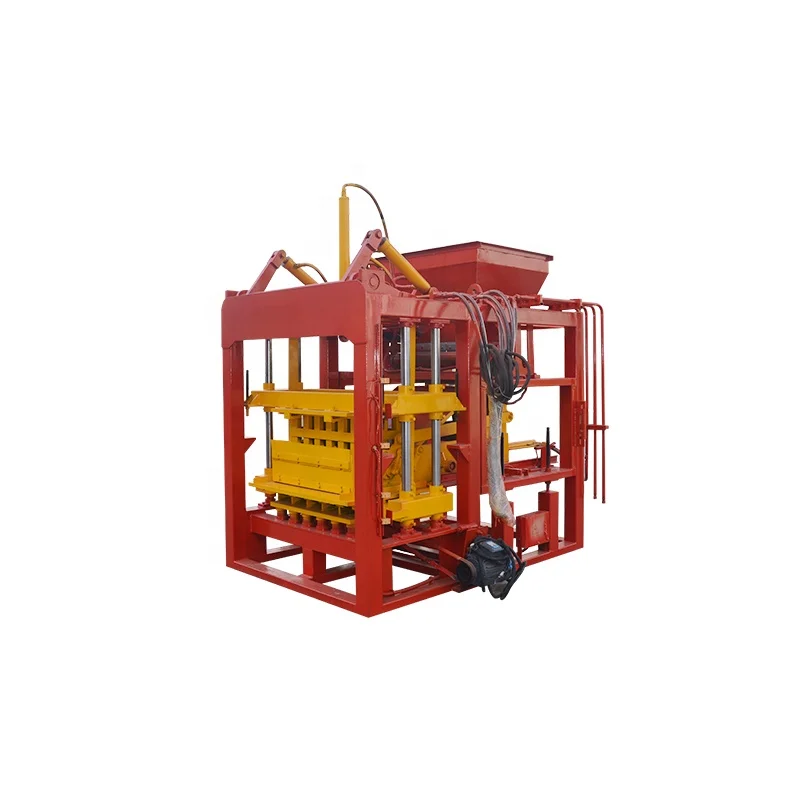
| Overall Dimensions (L × W × H) | 7100 × 1600 × 2610 mm |
| Net Weight | 5 T |
| Mixer Model | JS500 |
| General Water Consumption | 4 T per day |
| Workers Required | 3 – 4 |
| Workshop Area | 150 m² |
| Motor | Siemens |
| Key Features | Swing-type cutting hopper, photoelectric material sensor, low-frequency feeding / high-frequency vibrating sequence |
Application Suitability
| Application | Material or Output |
|---|---|
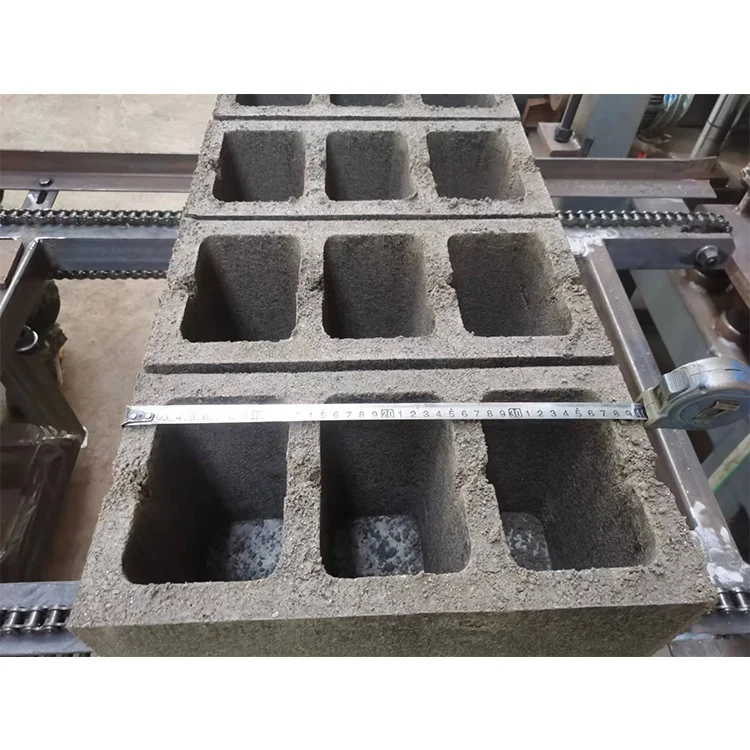
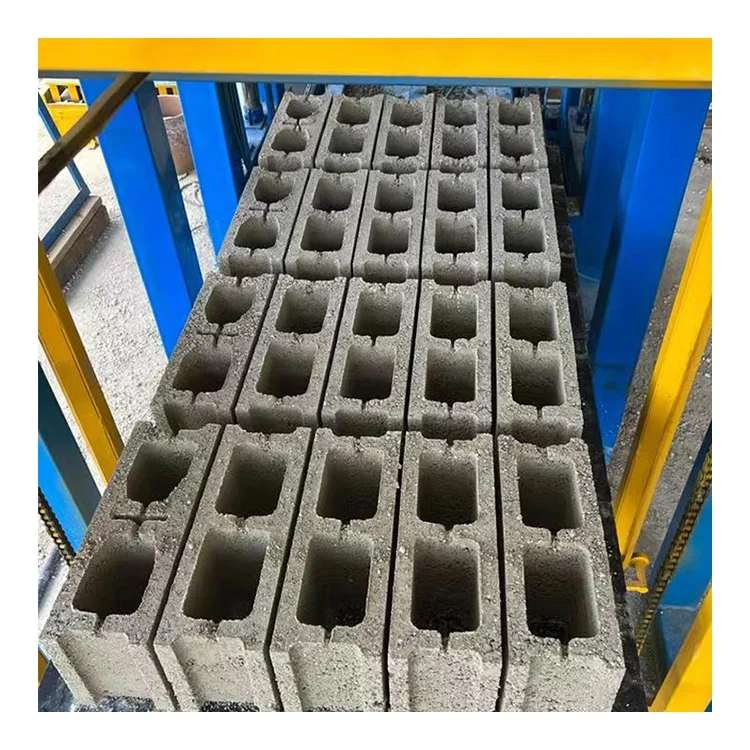
| Hollow block production | Crushed stone, cement, sand, fly ash blends |
| Multicellular brick forming | Lightweight aggregate and cement mixes |
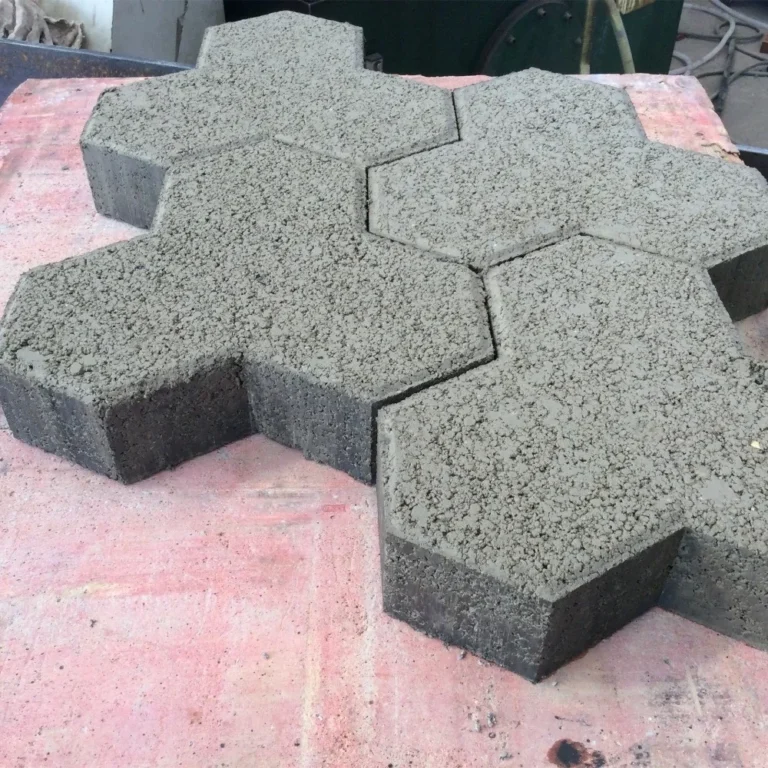
| Paving brick manufacturing | High-density concrete with fine aggregate gradation |
| Standard solid brick production | Local quarry sand and Portland cement |
| Small-to-mid stationary plant operation | Continuous daily shifts with pallet-based curing |
Why "Automatic" Means Nothing Without Control Language and Voltage Alignment
An automatic QT4-15 concrete block making machine only stays automatic if the PLC speaks the operator’s language and the voltage matches the local grid.
I spent weeks in Central America watching a brand-new stationary block press sit idle because the HMI defaulted to a language the crew could not read. The machine was not broken — it was simply locked behind a screen nobody understood. Voltage mismatches cause harder problems: undersized transformers overheat, contactors chatter and PLC boards fail within the first month. These are not warranty conversations anyone wants to have after ocean freight [NEED_CITE: voltage and frequency standards by export market].
How PLC Control Removes Operator Variables
The automatic QT4-15 concrete block making machine sequences vibration frequency, duration and braking through programmable logic rather than manual timing. Low-frequency feeding spreads the concrete evenly across the mould cavity, then high-frequency vibration liquefies the mix within seconds. Once the target density is reached, the PLC cuts vibration and applies braking so residual energy does not crack freshly formed blocks. The operator monitors the cycle; the controller executes it.
What Photoelectric Sensing Adds to Batch Consistency
A swing-type cutting hopper feeds material into the mould, and a photoelectric sensor tracks the fill level in the host hopper. When material drops below the set threshold, the system triggers a refill automatically. This prevents the inconsistent fill depths that cause density variation from one pallet to the next. Combined with directional vibration, the result is uniform block weight across a full shift — the kind of consistency that keeps building inspectors satisfied and reduces breakage during pallet handling [NEED_CITE: CE machinery directive requirements for block forming equipment].
Reading the Specs That Actually Matter
The 40 kN vibration force must be evaluated alongside hydraulic pressure — together they determine how tightly the aggregate compacts inside the mould cavity. A 1020 × 570 mm pallet size defines the mould footprint; every block format you produce must fit within that envelope, so confirming pallet dimensions against your curing racks and forklifts before ordering avoids costly site modifications. The Siemens motor is selected for sustained vibration duty rather than intermittent use, which matters when the press runs consecutive shifts. Workshop area of 150 m² covers the press and mixer; stacking and curing space sits outside that figure and must be planned separately. The 15-second moulding cycle is a reference point — actual cycle time depends on block height, mix workability and the vibration profile the PLC is set to run.
The Cost of Skipping Configuration Checks
Buyers who confirm price before voltage end up paying again on-site: replacement transformers, rewired control cabinets, and idle crews waiting for parts. A PLC set to the wrong display language turns trained operators back into trainees. Moulds ordered without verifying local block dimensions force the plant to produce formats the market does not buy. These are not rare failures — they repeat across markets where procurement rushes past the configuration conversation [NEED_CITE: common commissioning failures in exported concrete equipment].
Why Sourcing This Machine Here Makes Sense
Configuration is set against your actual mix design, local aggregate and target block format — not pulled from a catalogue default. The PLC display language, voltage and frequency are confirmed line-by-line before production starts, so the machine arrives ready to run. Mould design covers the formats your market actually sells, with custom drawings available when standard sizes do not match. Automation level is selectable: you can begin with the current setup and add automatic stacking or cubing later. Installation support includes operator training so your crew is producing saleable blocks before the technician leaves site.
Documentation & Verification
- Line layout and capacity calculation stating the block format assumed for output figures
- PLC display language and voltage confirmation sheet signed before production
- Factory test record documenting actual cycle time and block density per format
- Mould drawing and format list matching your local market dimensions
- Hydraulic and electrical schematic for on-site troubleshooting
- Operation and maintenance manual with wear parts and mould replacement schedule
Installation, Commissioning & Support
- Foundation must support 5 T net weight across the 7100 × 1600 mm footprint with level tolerance
- Dedicated 380 V circuit with confirmed frequency before the 27.5 kW motor is energised
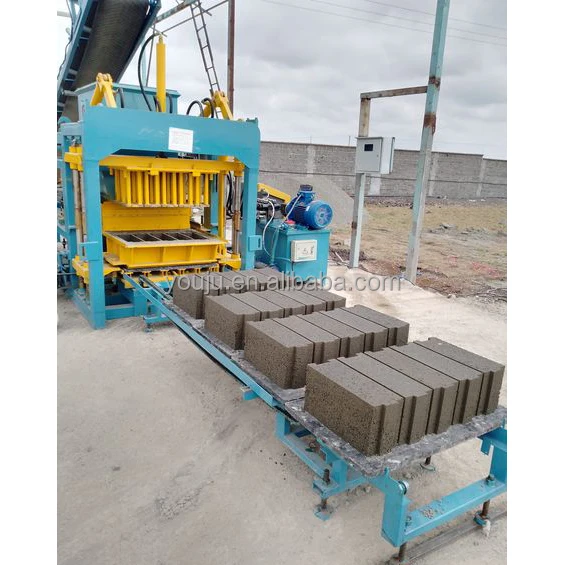
- JS500 mixer positioned for direct feed into the swing-type hopper to minimise transfer time
- PLC parameters set to local block format, mix workability and target density during commissioning
- Operator training covers mould change procedure, vibration profile adjustment and daily maintenance checks
- Wear parts list and mould inventory reviewed before handover to ensure first replacements are on hand
What to Share When You Open an Inquiry
Send the block formats your market demands, including dimensions and required compressive strength. Confirm your site voltage, frequency and the language your operators read on a screen. Share your local aggregate type and any existing pallet inventory so the configuration matches what is already on the ground.
Frequently Asked Questions
Q: How is the output capacity of this machine calculated, and which block format does it assume?
A: Output depends on block height, mould cavity count and the vibration profile set for your specific mix. A 15-second cycle is a reference figure — actual throughput must be calculated against the exact block format you plan to produce. We provide a capacity table per format so you see realistic daily numbers before committing.
Q: How does PLC control adjust vibration to match different mix designs?
A: The PLC stores multiple vibration profiles. Low-frequency feeding and high-frequency compacting durations are tuned to your aggregate gradation and cement ratio. When you switch between hollow block and paving brick formats, the controller loads the matching profile so density stays consistent without manual timing.
Q: What is the upgrade path from this configuration to full automation?
A: The press supports additional stations — automatic pallet feeding, stacking and cubing — that can be added as separate modules. Electrical and PLC architecture on the QT4-15 accommodates these additions without replacing the core controller, so you scale automation as production volume grows.
Q: How are voltage, frequency and PLC language confirmed before shipment?
A: We send a written confirmation sheet listing your site voltage, frequency and preferred HMI language. You sign off before production begins. The factory test then runs under those exact settings so you can verify the configuration matches your requirements prior to dispatch.
Q: Which mould formats are available, and how does the system handle changeovers?
A: Standard moulds cover hollow block, multicellular brick, paving brick and solid brick within the 1020 × 570 mm pallet envelope. Custom moulds can be designed to your drawings. The PLC stores cycle parameters per mould, so when you swap tooling the controller loads the matching vibration and timing profile to reduce changeover duration.