Description
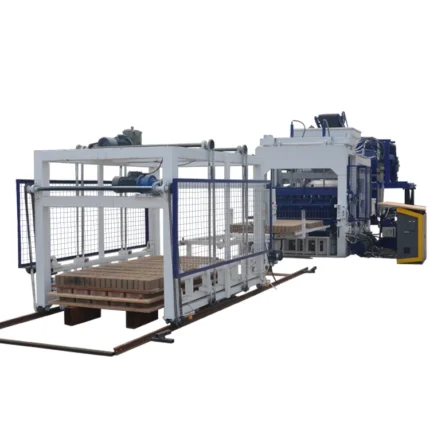
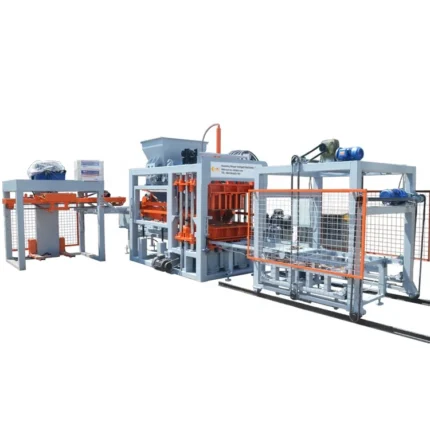
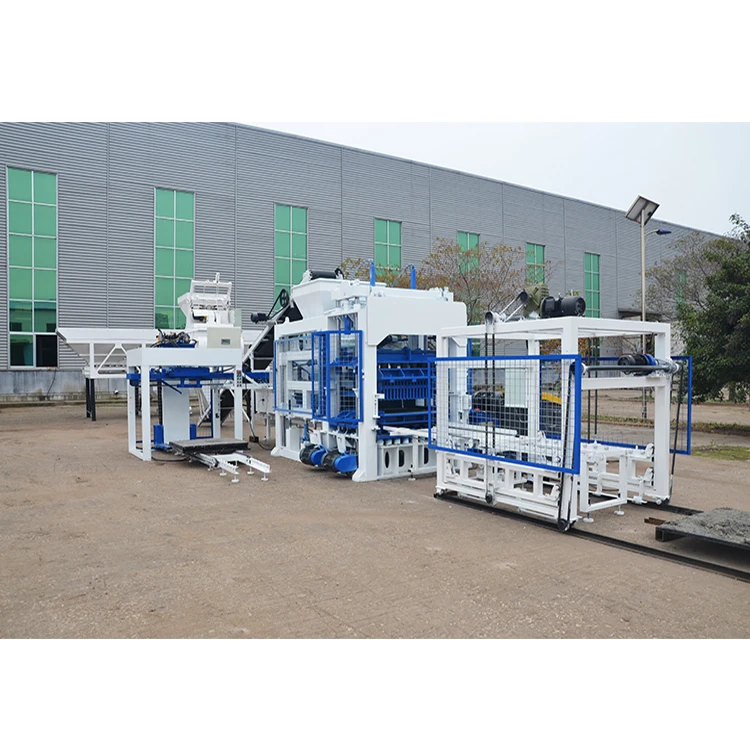
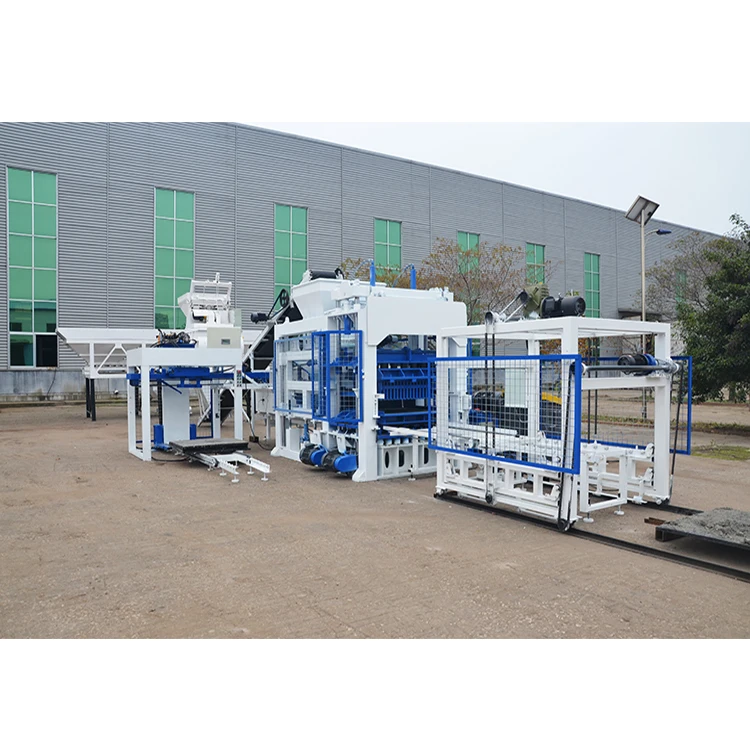
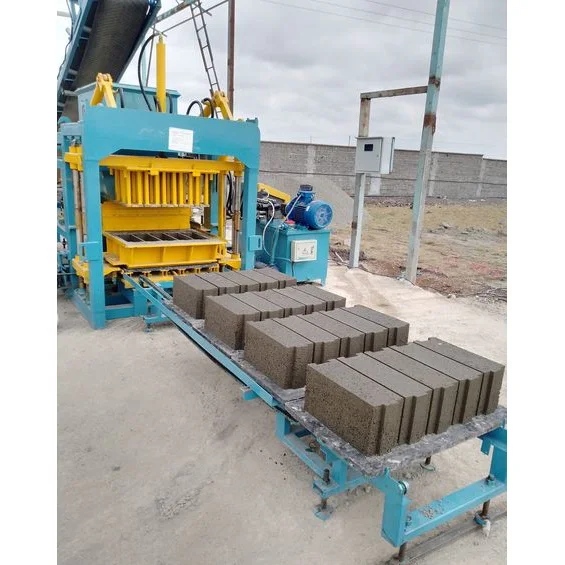
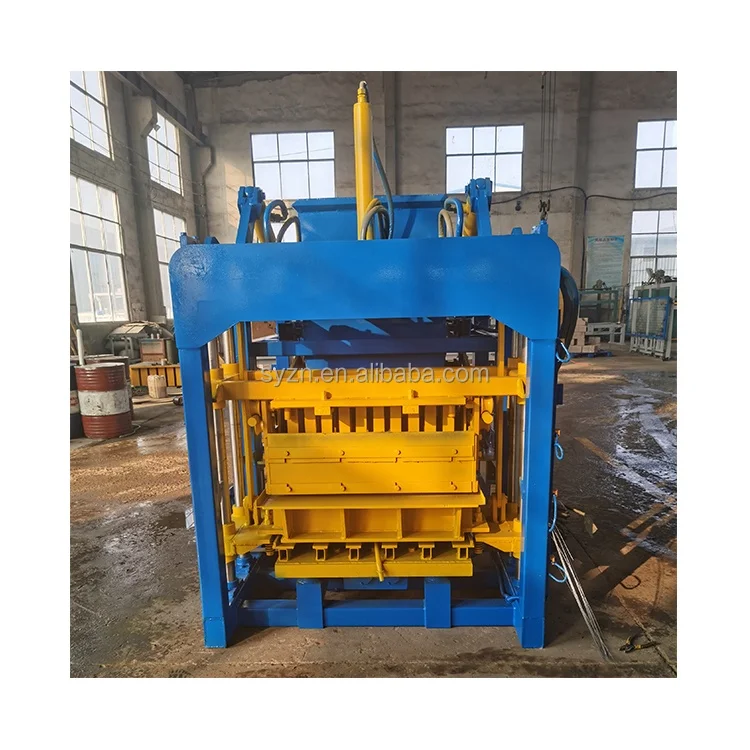
PLC Logic as the Core — The QT4-15 is built around a programmable control system that removes manual handling variables, so the operator monitors rather than drives each cycle.
Technical Specifications
| Parameter | Value |
|---|---|
| Model | QT4-15 |
| Product Type | Fully Automatic Concrete Block Making Machine |
| Overall Dimensions (L×W×H) | 7100×1600×2610 mm |
| Molding Cycle | 15–25 s |
| Vibration Frequency | 4600 r/min |
| Exciting Power (Vibration Force) | 40–50 kN |
| Rated Power | 18.45 kW |
| Mixer Model | JQ350 |
| Pallet Size | 850×550×25 mm |
| Net Weight | 3 T |
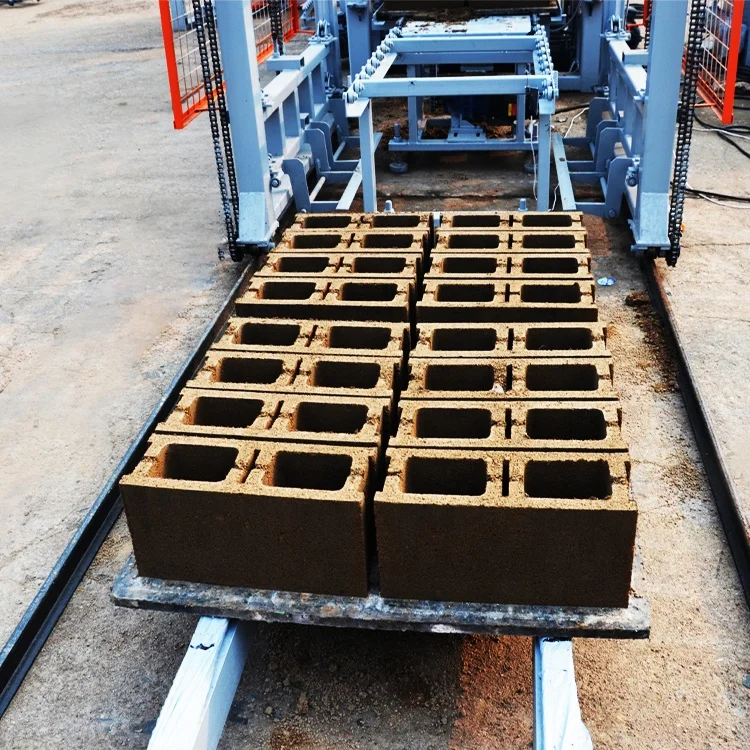
| Applied Products | Paver, solid block, hollow block, curbstone |
| Raw Materials | Crushed stones, sand, cement, dust, fly ash |
| Output Capacity (Hollow Block 400×200×200 mm) | 4 pcs/mould, 408 pcs/h, 3264 pcs/8hr |
| Output Capacity (Hollow Block 400×150×200 mm) | 5 pcs/mould, 510 pcs/h, 4080 pcs/8hr |
| Output Capacity (Solid Brick 240×115×53 mm) | 18 pcs/mould, 2100 pcs/h, 17000 pcs/8hr |
| Control System | PLC |
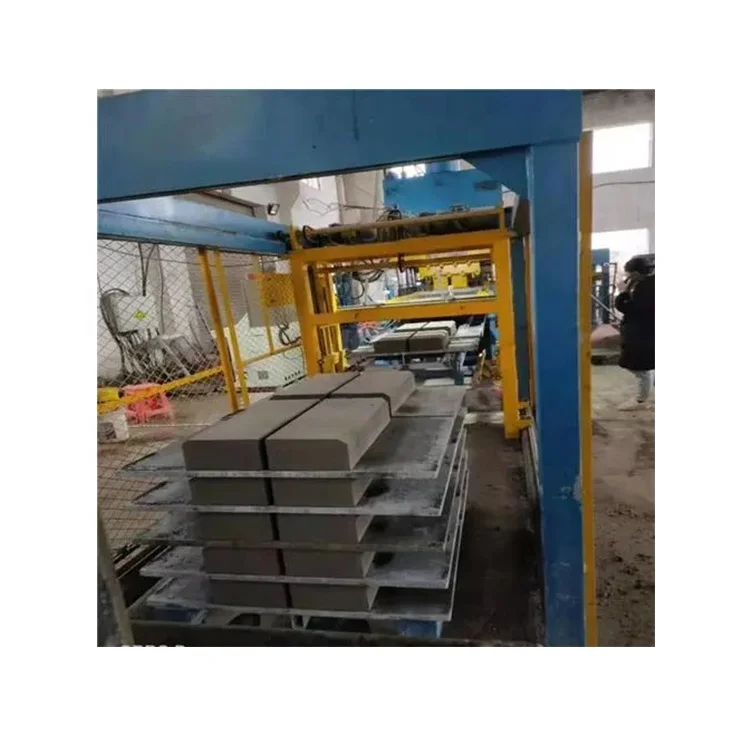
| Automation Level | Fully Automatic (with automatic stacker) |
| Voltage & Frequency | Configurable per buyer confirmation (basis to be confirmed) |
| Hydraulic Pressure | Basis to be confirmed |
| Mould Change Time | Basis to be confirmed |
| Stacking Method | Automatic stacker |
| Standards | CE |
Application Suitability
| Application | Material or Output |
|---|---|
| Hollow block production for load-bearing walls | Crushed stone and cement mixes yielding 400×200×200 mm blocks at 408 pcs/h |
| Solid brick production for partition walls | Sand and fly ash blends yielding 240×115×53 mm bricks at 2100 pcs/h |
| Paver production for driveways and walkways | Aggregate and cement mixes for interlocking formats with consistent surface density |
| Curbstone production for roadside and drainage channels | High-density concrete compacted at 4600 r/min vibration frequency |
Why the Voltage Question Should Come Before the Price
Specifying the automatic QT4-15 block machine PLC controlled without first confirming site voltage, frequency, and HMI language can stall commissioning for weeks after the machine arrives.
I once saw a fully automatic line sit idle on a site in Mauritania because the factory default was set to 380V/50Hz while the local grid ran on a different standard, and the PLC screen text was still in Chinese. The electricians could not read the fault codes, and the commissioning engineer had to wait for a language pack and a transformer to arrive by air [NEED_CITE: voltage and frequency standards by export market]. That single omission cost the buyer more in lost production days than the electrical upgrade itself. When you purchase an automatic QT4-15 block machine PLC controlled, the voltage confirmation is not a footnote — it is the first line of the specification sheet.
How PLC Logic Replaces Manual Timing
The QT4-15 stores cycle parameters — feed time, vibration duration, press stroke, and demoulding speed — inside the PLC rather than relying on an operator to adjust timers by feel. Each block format gets its own program slot, so switching from a 400×200×200 mm hollow block to a 240×115×53 mm solid brick means recalling a saved recipe, not recalibrating limit switches by hand. The automatic QT4-15 block machine PLC controlled therefore holds cycle time within the 15–25 s window regardless of shift changes or operator experience level.
Consistency from First Pallet to Last
Batch-to-batch density depends on the vibration force staying at 40–50 kN and the hydraulic station maintaining pressure through every stroke. On a manual line, the operator may shorten vibration time when the shift falls behind schedule, producing blocks that pass a visual check but crack under load. The PLC on this automatic QT4-15 block machine PLC controlled locks the vibration duration at the programmed value and will not release the press until the cycle is complete [NEED_CITE: concrete block compressive strength testing standards]. This removes the temptation to cut corners and keeps block strength uniform across an eight-hour run.
Reading the Numbers Behind the Output Figures
The published output figures — 3264 hollow blocks per 8-hour shift at 400×200×200 mm, or 17000 solid bricks at 240×115×53 mm — assume the molding cycle is running at the faster end of the 15–25 s range with a matched mix design and uninterrupted pallet feed. The vibration frequency of 4600 r/min and exciting power of 40–50 kN are tuned to compact a standard crushed stone and cement blend; if your local aggregate has a higher fines content or a different moisture profile, the cycle may need to run longer to reach target density. Pallet size at 850×550×25 mm determines how many blocks fit per stroke, and the automatic stacker must clear pallets at the same rate the press produces them, or the press waits. The rated power of 18.45 kW covers the press, vibration motor, and hydraulic pump running simultaneously, so the site transformer and cable run must be sized accordingly to avoid voltage drop under peak draw.
What Happens When Automation Is Misconfigured
If the pallet feeder timing does not match the press cycle, the automatic stacker receives wet blocks before the concrete has set enough to stack, and the bottom course crushes under the weight of the upper layers [NEED_CITE: concrete block curing time and early stacking risks]. If the PLC language on the HMI is not confirmed before shipment, fault alarms display in a script the local operator cannot read, turning a simple proximity sensor failure into a half-shift of downtime. And if the hydraulic schematic is not handed over in English with labeled test points, the local maintenance team cannot bleed the circuit after a hose replacement, leaving the press running at partial pressure for weeks before anyone notices the blocks are coming out soft.
Why Buyers Source This Line Here
Block machinery is the single focus of this production facility, so the press, mould, pallet, and stacker are specified as one matched system rather than assembled from separate vendors. Configuration is set against the buyer’s actual mix design and target block format, not a catalogue default. Mould design covers the formats the buyer’s market sells, with custom drawings available for non-standard sizes. The automation level is selectable, so a buyer can start with semi-automatic pallet handling and add the full stacker later without replacing the press. Installation includes on-site commissioning and operator training, with voltage and control language verified before the machine leaves the factory [NEED_CITE: CE machinery directive requirements for industrial equipment].
Documentation & Verification
- Line layout and capacity calculation stating the block format assumed for each output figure
- Voltage, frequency, and PLC display language confirmed in writing before production starts
- Hydraulic and electrical schematic provided with labeled test points for local maintenance
- Factory test record demonstrating cycle time and block output per format before shipment
- Operation and maintenance manual with mould change procedure and wear parts list
- Packing photographs and customs documentation support for smooth port clearance
Installation, Commissioning & Support
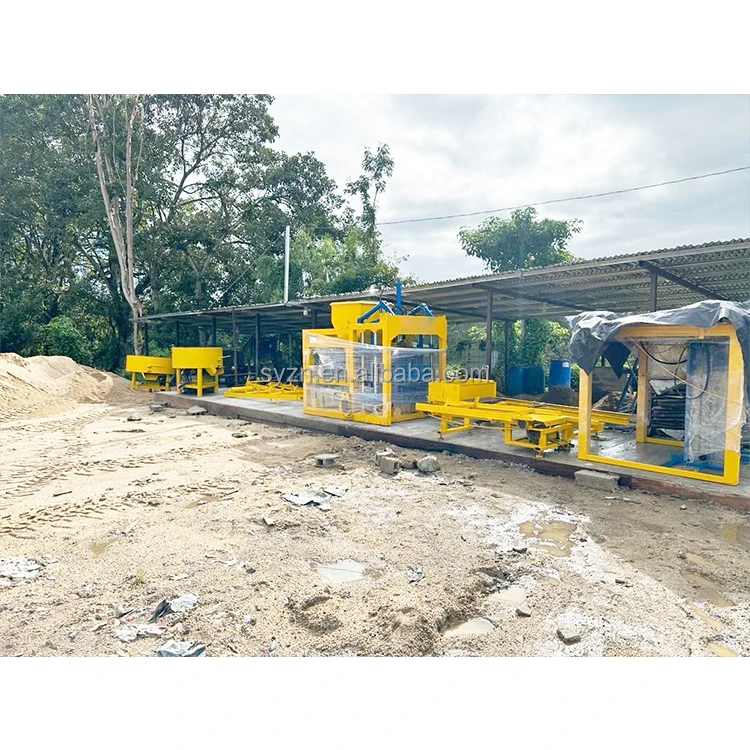
- Foundation plan sized to the 7100×1600 mm machine footprint with anchor bolt layout
- Dedicated power circuit rated for the 18.45 kW draw with voltage and frequency verified before energizing
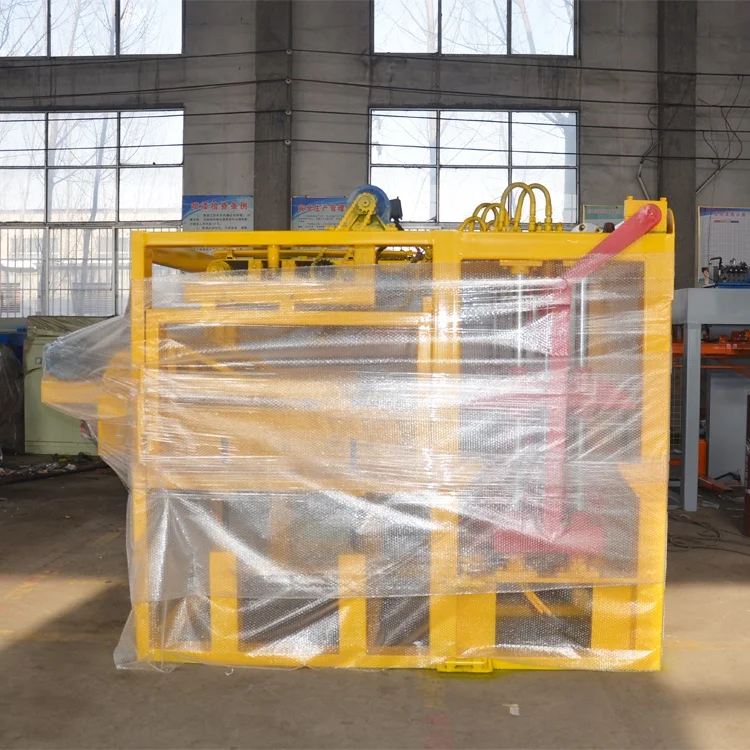
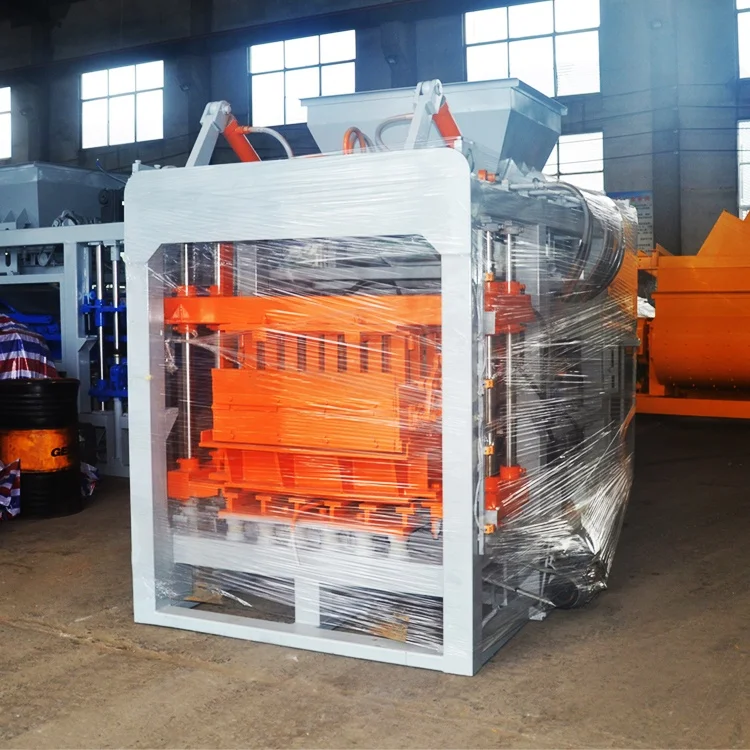
- Machine shipped in dismantled state with reassembly sequence documented in the manual
- First-run commissioning covers PLC parameter tuning for the buyer’s specific mix and block format
- Operator training on HMI navigation, mould change, and daily greasing of vibration bearings
- Wear parts list with reorder codes for hydraulic seals, vibration motor brushes, and pallet guides
Before You Request a Quote
Send your target block formats with dimensions, your daily output target, and the raw materials available locally including aggregate grading and moisture range. Confirm your site voltage, frequency, and phase, along with the preferred HMI display language for the operator. Let me know whether your curing yard uses a forklift or a manual cart, so the pallet size and stacker height can be matched to your existing handling equipment.
Frequently Asked Questions
Q: How is the output capacity verified and what block format does each figure assume?
A: Each output figure is tied to a specific block dimension and a molding cycle at the faster end of the 15–25 s range. The 3264 hollow blocks per 8-hour shift assumes 400×200×200 mm blocks at four per mould with uninterrupted pallet feed and a matched mix design.
Q: What PLC brand is used and can the HMI display language be set to the operator’s language?
A: The PLC brand is confirmed during the specification stage, and the HMI display language is set to the buyer’s choice before shipment. Language options are finalized in writing so the screen text matches the operator’s working language at first power-on.
Q: How does the automation level scale — can I start semi-automatic and upgrade later?
A: Yes. The press and control system are designed to accept add-on modules. A buyer can start with manual pallet handling and later fit the automatic pallet feeder and stacker without replacing the main frame or the PLC cabinet.
Q: How is vibration force and hydraulic pressure matched to my local aggregate and mix design?
A: The buyer sends a sample mix description and target block strength. The factory adjusts the vibration frequency and hydraulic pressure settings on the QT4-15 during the factory test, and the final parameters are recorded in the test report.
Q: What is the mould change procedure and how long does a format switch take on the QT4-15?
A: The mould is bolted to the press table with quick-release clamps. The operator disconnects the vibration link, lifts the old mould with a hoist, lowers the new one, and re-tightens. The exact time depends on the operator and the hoist available on site.