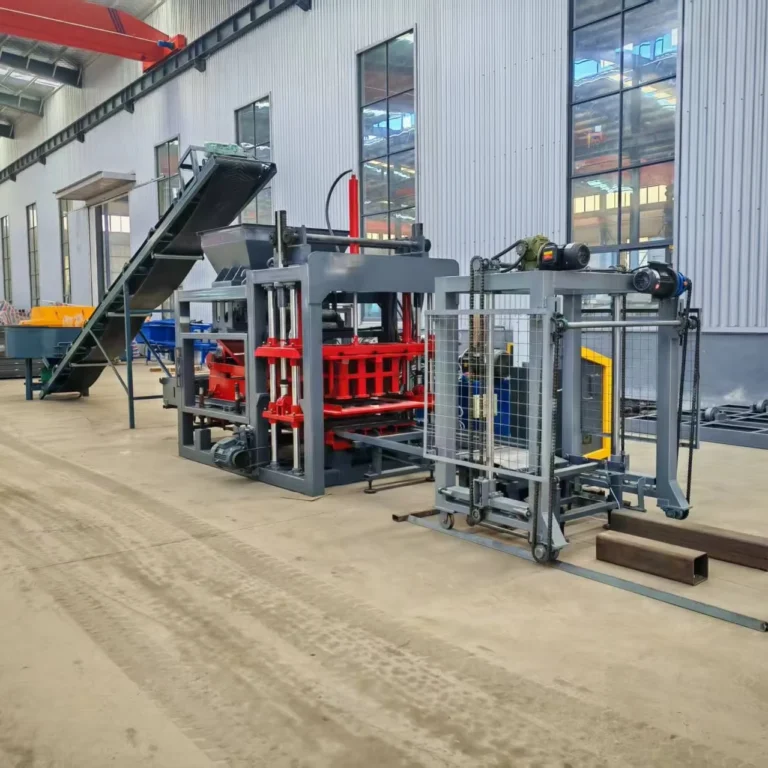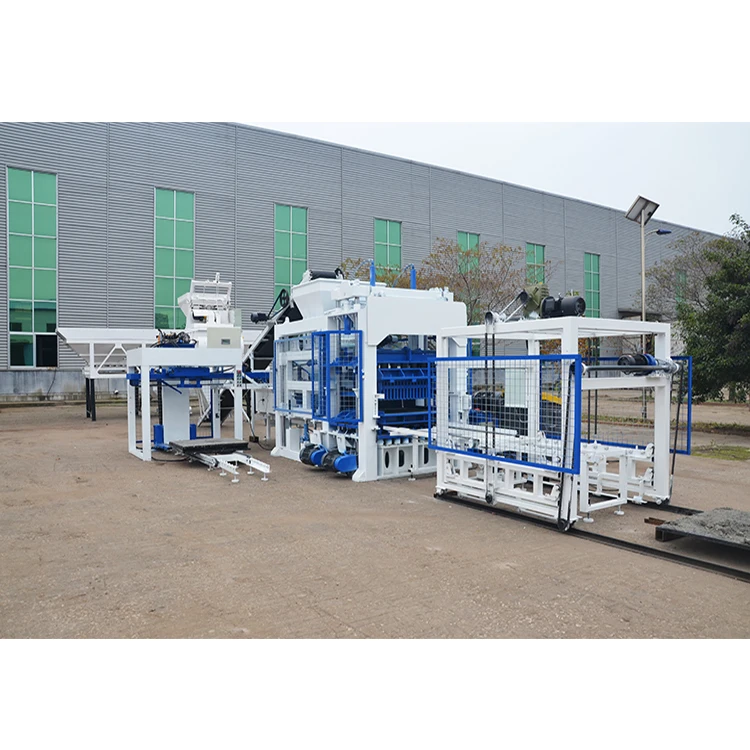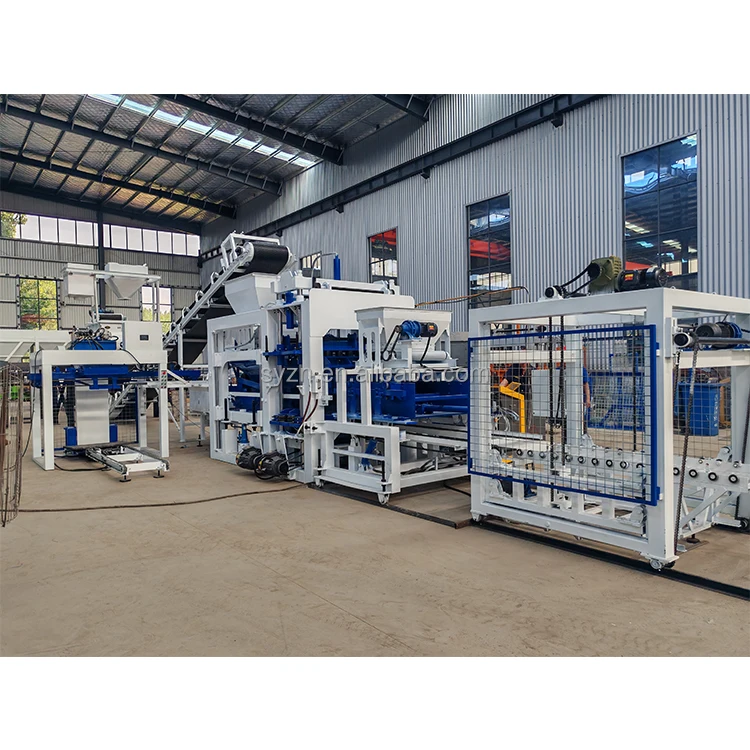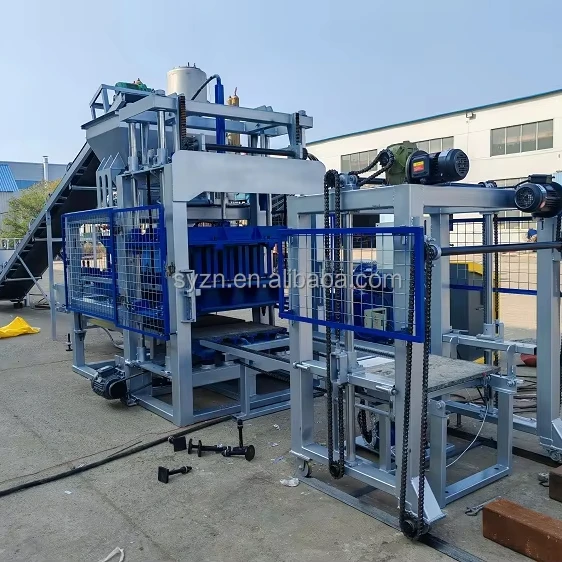
Description
Configured Control Logic — the PLC interface language and remote diagnostics are locked to the operator’s native terms before the automatic PLC controlled block making machine enters production, preventing a silent line on day one.
Technical Specifications
| Parameter | Value |
|---|---|
| Model | QT4-15 |
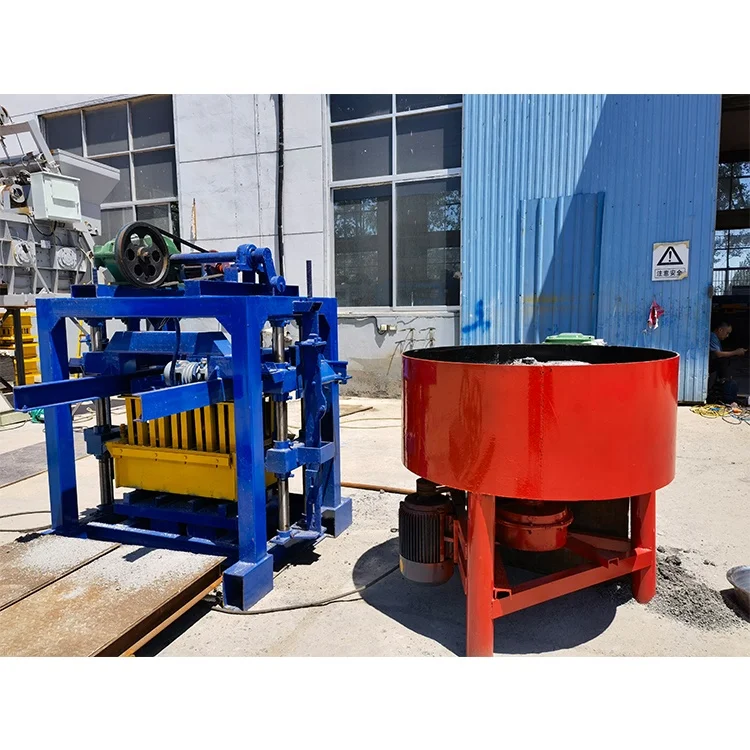
| Product Type | Automatic Interlock Hollow Block Making Machine |
| Overall Dimensions | 3900 × 1600 × 2300 mm |
| Molding Cycle | 15–25 s |
| Vibration Force | 40–50 kN |
| Total Power | 24 kW |
| Mixer Model | JQ350 |
| Pallet Size | 850 × 550 × 25 mm |
| Hydraulic Station | Equipped (high-pressure) |
| Automation Level | Full Automatic / Semi-Automatic (configurable) |
| Output: 400×200×200 mm Hollow Block | 1200–1680 pcs/hr, 9600–13440 pcs/8hr (basis: 15–20 s cycle) |
| Output: 400×150×200 mm Hollow Block | 1800–2400 pcs/hr, 14400–19200 pcs/8hr (basis: 15–20 s cycle) |
| Output: 240×115×53 mm Solid Brick | 3240 pcs/hr, 16200–19440 pcs/8hr (basis: 15–20 s cycle) |
| Control System | PLC (brand and language to be confirmed) |
| Voltage & Frequency | To be confirmed before production |
| Raw Materials | Crushed stones, sand, cement, dust, fly ash |
| Applied Products | Paver, solid block, hollow block, curbstone, interlock block |
Application Suitability
| Application | Material or Output |
|---|---|
| Hollow block production for residential walls | Crushed stone, sand, cement mix on 850×550 mm pallets |
| Interlock paver manufacturing for driveways and walkways | Fine aggregate and cement with pigment dosing |
| Solid brick runs for load-bearing structures | Dense aggregate blend with high-pressure hydraulic forming |
| Curbstone and kerb production for municipal projects | Coarse aggregate mix requiring extended vibration cycles |
| On-site block production for housing developments | Locally sourced sand and fly ash with mobile batching |
Why the Language on the PLC Screen Matters Before the Price
An automatic PLC controlled block making machine that speaks the wrong language is a silent line until someone teaches every icon by hand.
I once stood in a humid workshop watching an operator stare at a screen full of English alarm codes he could not read. The forming cycle had stalled, the pallet feeder was waiting, and the entire line sat idle while we translated error messages one by one. That delay had nothing to do with the press itself [NEED_CITE: on-site commissioning delays linked to unconfigured control interfaces]. When the control language is confirmed in writing before the machine ships, the first shift runs instead of the first week.
What the PLC Actually Removes from the Operator
The QT4-15 uses a programmable logic controller to coordinate the hydraulic station, vibration motors, and pallet feeder in a single timed sequence. The operator sets the cycle parameters once, and the automatic PLC controlled block making machine repeats them across every shift without drift. Batch-to-batch density stays consistent because the vibration force and pressing duration do not depend on who is standing at the panel.
Where Remote Diagnostics Shorten the Downtime Window
When an alarm triggers, the PLC logs the fault code with a timestamp. A technician at the factory can read that log over a remote connection and identify whether the issue is a sensor, a valve, or a limit switch before anyone opens the cabinet. This diagnostic path turns what used to be a multi-day troubleshooting visit into a guided phone call, keeping the line moving while spare parts are still in transit [NEED_CITE: remote diagnostic adoption rates in mid-tier block plants].
Reading the Numbers Behind the Cycle Time
The vibration force of 40–50 kN works with the high-pressure hydraulic station to compact the mix from both directions simultaneously. Higher vibration alone would leave the block surface loose; higher pressure alone would trap air inside. The QT4-15 balances both so the 15–25 s molding cycle produces a block that holds its edge when the pallet tips. The 850 × 550 × 25 mm pallet size determines how many blocks fit per cycle and how those blocks stack in the curing area — a mismatch here means the forklift cannot reach the top row, and the curing racks sit half empty.
What Happens When the Automation Stops at the Press
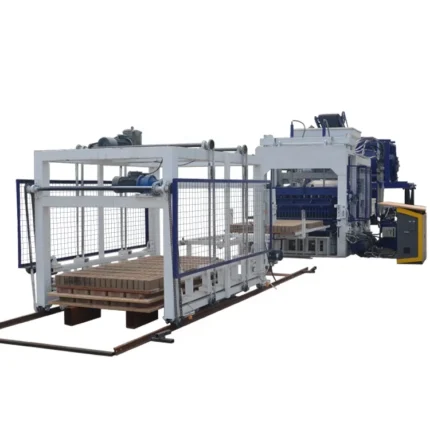
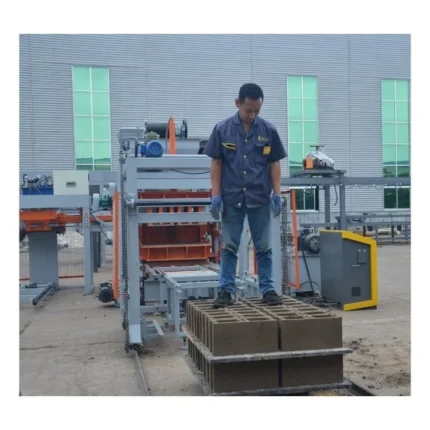
A machine that forms blocks automatically but leaves them on the pallet for manual stacking simply moves the bottleneck downstream. The operator who used to press a button now spends the shift lifting wet blocks onto a cart. The QT4-15 addresses this by integrating an automatic stacker into the line, so the formed blocks are placed and stacked without a second pair of hands. Without that station, the cycle time advantage disappears into a pile of unstacked pallets [NEED_CITE: labour allocation studies in semi-automated block plants].
Why a Matched System Beats a Catalogue Default
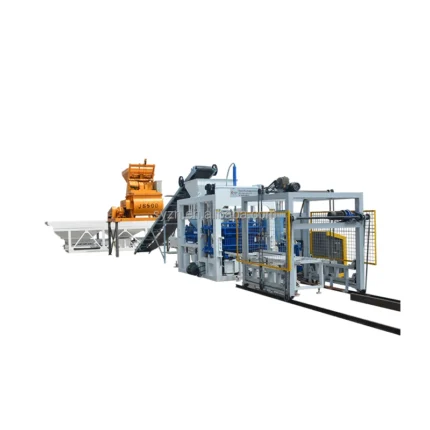
Shiyue Machinery specifies the QT4-15 as a complete line — press, pallet feeder, stacker, and curing rack handling — rather than quoting the press alone and leaving the rest to the buyer. The pallet size is checked against the curing area the buyer already has. The voltage and frequency are confirmed against the local grid before production starts. The moulds are chosen for the formats the buyer’s market actually sells, not the formats that happen to be in stock. The PLC language is set to the operator’s first language, not the factory’s.
Documentation & Verification
- Line layout showing each station and capacity per block format
- Voltage, frequency, and PLC display language confirmed in writing
- Hydraulic and electrical schematic for site integration
- Factory test record run on buyer’s mix design and aggregate
- Mould drawing and format list matching target market products
Installation, Commissioning & Support
- Foundation plan sized to the 3900 × 1600 mm footprint and dynamic vibration load
- Dedicated power circuit rated for the 24 kW total draw at confirmed voltage
- PLC language and alarm codes verified before the first production run
- Operator training on mould change procedure and daily lubrication points
- Wear parts list with hydraulic seals and vibration motor brushes itemized
What to Prepare Before Requesting a Quote
Share the block formats your market moves fastest, the daily volume you need per format, and the aggregate you can source within a reasonable transport distance. Include the voltage and frequency at your site, the language your operators read, and the dimensions of the curing area you plan to use. If you already own pallets or a forklift, send the pallet size and the forklift’s lift capacity so the line can be matched to what is already on the ground.
Frequently Asked Questions
Q: How is output capacity verified for each block format?
A: Every capacity figure on this page is tied to a specific block size and a 15–20 second molding cycle. We provide a line layout document that states the format assumed for each number, so the daily target you plan against is the same number the machine delivers on site.
Q: Which PLC brand and control language will I receive?
A: The PLC brand and display language are confirmed in writing before production starts. We set all alarm messages, menu labels, and error codes to the language your operators read, and we document that configuration in the commissioning file.
Q: How does automation change the labour count on the line?
A: The QT4-15 with automatic pallet feeding and stacking removes the manual handling roles between the press and the curing rack. The exact labour count depends on whether raw material batching is also automated, which we confirm during the line layout stage.
Q: How is pallet size matched to my existing curing setup?
A: We ask for your curing rack dimensions and forklift capacity before specifying the pallet. The 850 × 550 × 25 mm pallet is the standard for this model, but the final choice must fit your racks and your lift equipment to avoid double-handling after the stacker.
Q: What electrical confirmation happens before the machine ships?
A: Voltage, frequency, and plug configuration are confirmed against your site supply in writing before the electrical cabinet is wired. This prevents the situation where the machine arrives and the local transformer cannot support the 24 kW draw at the required phase.