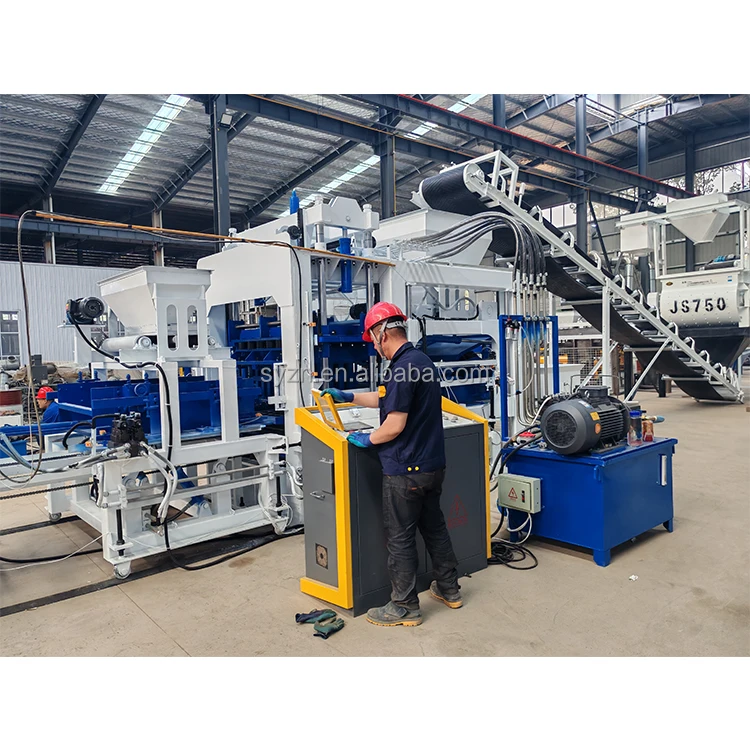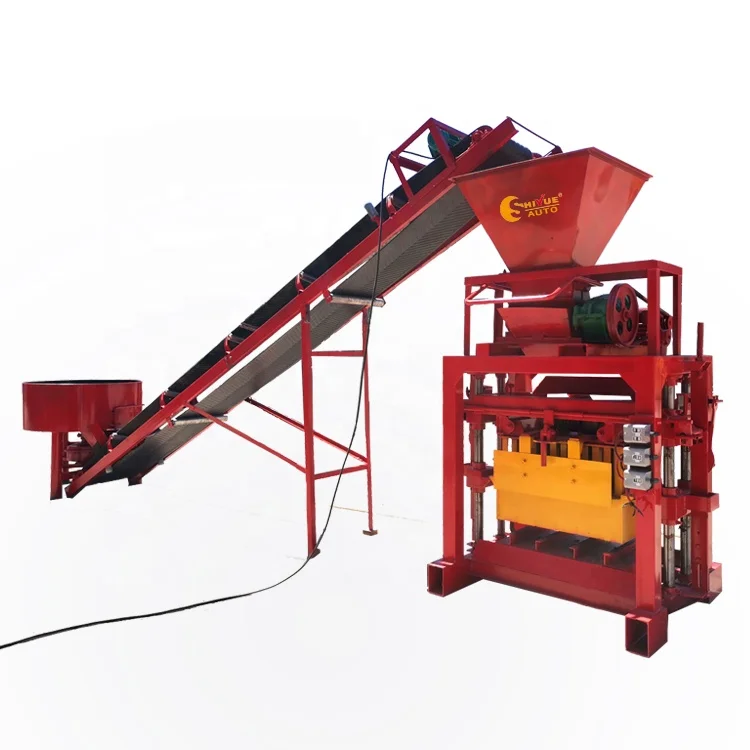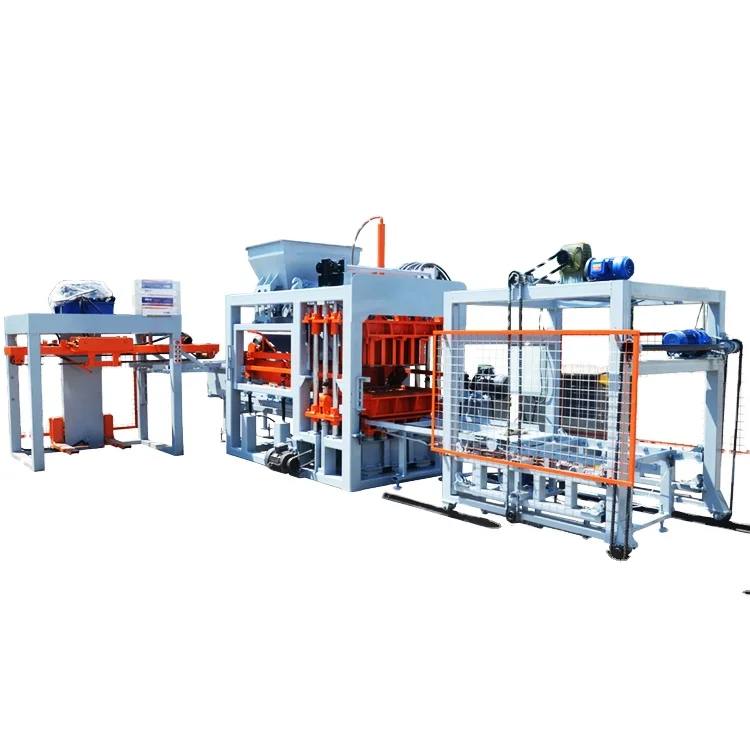


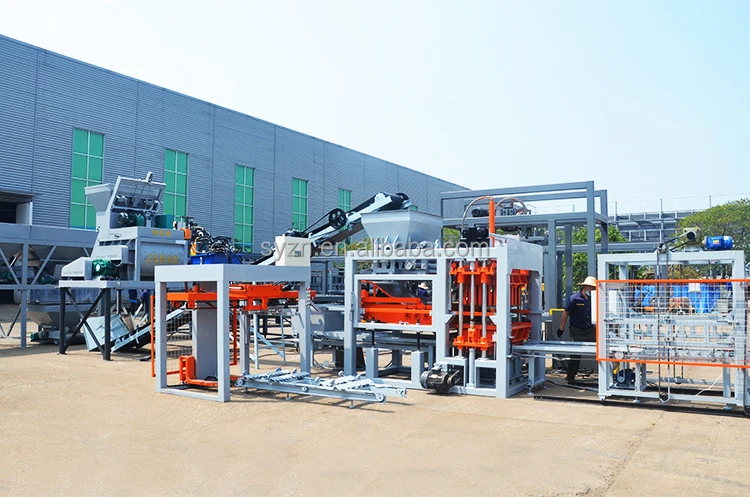
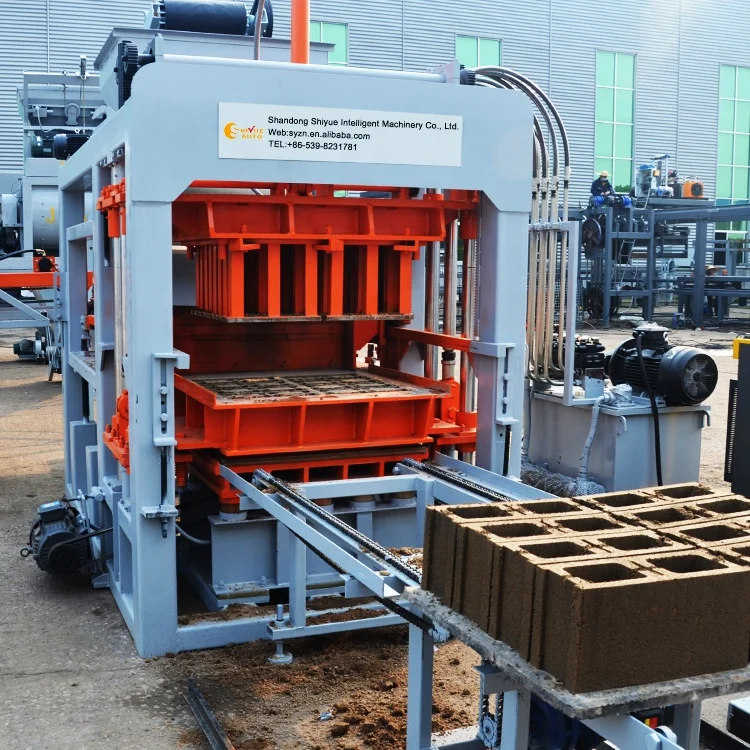

Description
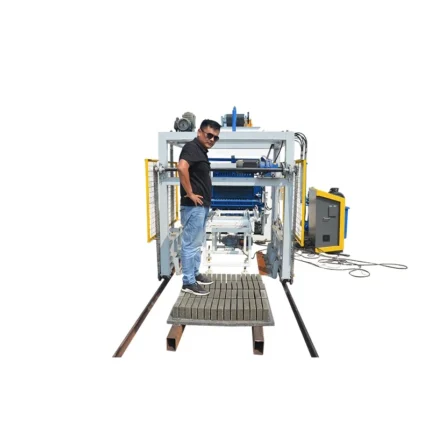
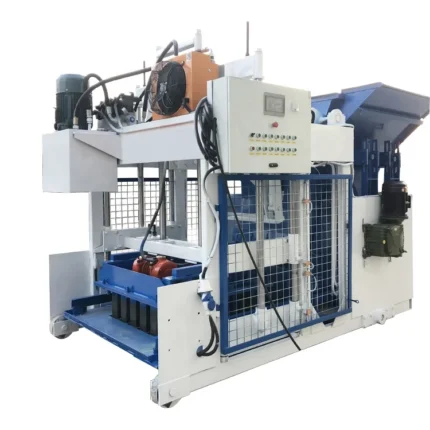
Automation that removes the operator from the sequence — the QT6-15 coordinates press cycle, pallet feeding, and block conveying through a single PLC logic so one person runs the line instead of three.
Technical Specifications
| Parameter | Value |
|---|---|
| Model | QT6-15 |
| Product Type | Fully Automatic Hydraulic Vibration Block Making Machine |
| Overall Dimensions (L×W×H) | 7400×1900×2660 mm |
| Molding Cycle | 15–25 s |
| Vibration Frequency | 4600 r/min |
| Exciting Power (Vibration Force) | 40–50 kN |
| Total Power | 31.25 kW |
| Mixer Model | JQ350 |
| Pallet Size | 850×550×25 mm |
| Total Weight | 7 T |
| Applied Products | Paver, solid block, hollow block, curbstone |
| Raw Materials | Crushed stones, sand, cement, dust, fly ash |
| Control System | PLC control system |
| Hydraulic Station | High-pressure hydraulic system included |
| Automation Level | Fully automatic with pallet feeder, brick conveyor, block sweeper |
| Output Capacity | 1200–1680 pcs/h (based on 400×200×200 mm hollow block) |
| Output Capacity | 1800–2400 pcs/h (based on 400×150×200 mm hollow block) |
| Output Capacity | 3240 pcs/h (based on 240×115×53 mm solid brick) |
| Daily Output (8 hr) | 9600–13440 pcs (400×200×200 mm hollow block) |
| Daily Output (8 hr) | 14400–19200 pcs (400×150×200 mm hollow block) |
| Daily Output (8 hr) | 16200–19440 pcs (240×115×53 mm solid brick) |
| Included Equipment | Block making machine, hydraulic station, PLC control system, pallet feeder, brick conveyor, block sweeper |
| Free Accessories | Manual hydraulic trolley, spare parts, tools |
| Packing | Nude packing in 20GP container, approx. 500 pcs of pallets loaded |
Application Suitability
| Application | Material or Output |
|---|---|
| Hollow block production | Crushed stone, sand, cement, fly ash mixes for load-bearing and non-load-bearing walls |
| Solid brick production | Dense aggregate and cement blends for standard 240×115×53 mm bricks |
| Paver and curbstone forming | Finer sand and cement mixes with higher compaction for surface finish requirements |
| On-site construction block production | Locally sourced aggregate and cement for project-specific formats |
What "Fully Automatic" Actually Includes on the QT6-15
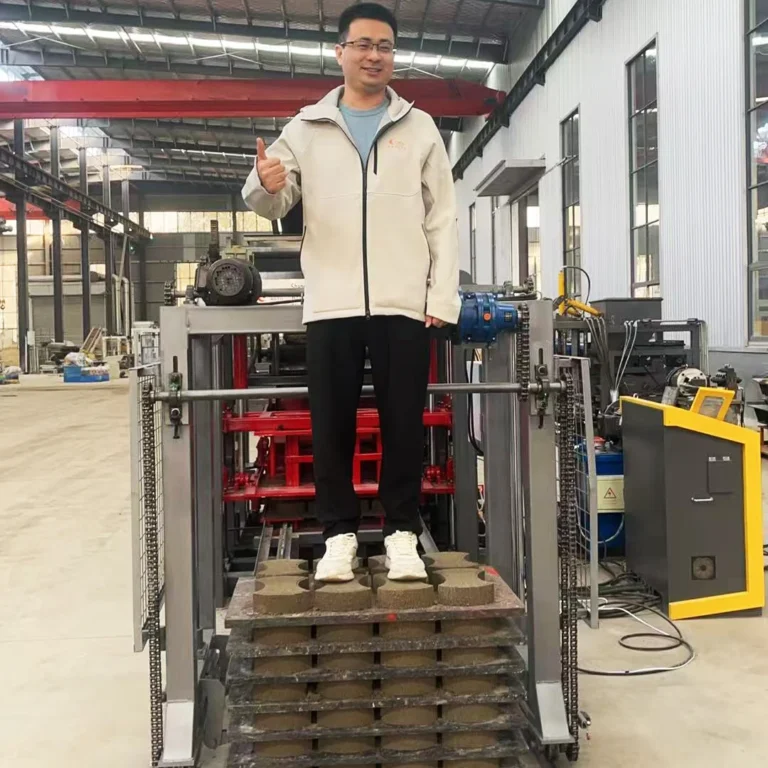
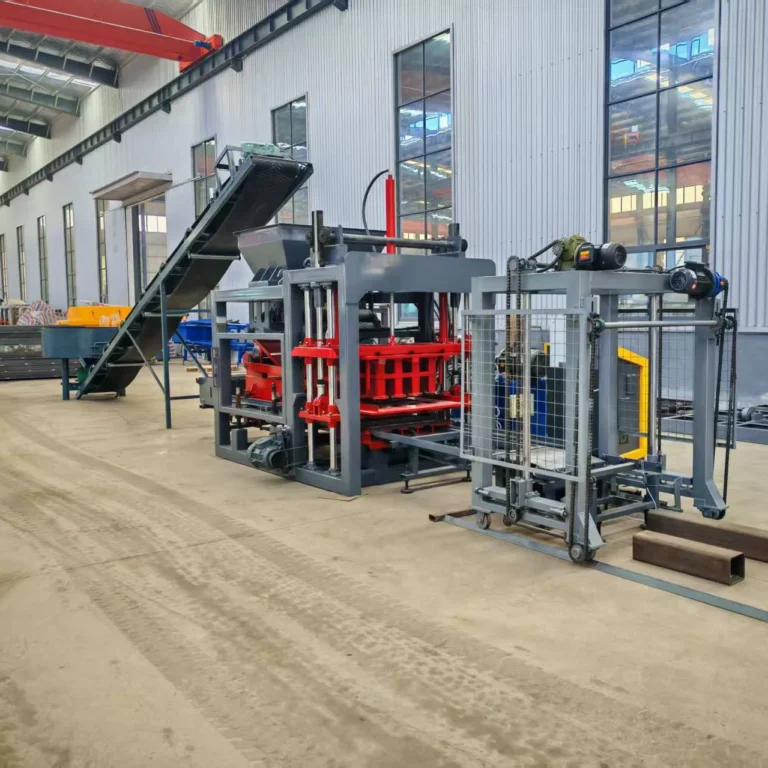
The automatic QT6-15 block making machine ships with pallet feeder, brick conveyor, and block sweeper as standard stations, not optional extras.
I once watched a buyer in Southeast Asia pay for a "fully automatic" line, then discover on arrival that pallets had to be fed by hand and finished blocks stacked manually. The press ran fine, but the three workers assigned to pallet and block handling wiped out any labour saving the automation promised. With the QT6-15, the PLC coordinates pallet feeding, pressing, conveying, and sweeping in one continuous sequence. The operator sets the recipe and monitors the HMI. [NEED_CITE: typical labour allocation differences between semi-automatic and fully automatic block lines]
How the PLC Ties Every Station Together
The PLC control system on this automatic QT6-15 block making machine sequences the hydraulic press, vibration table, pallet feeder, and brick conveyor as one coordinated loop. When the press completes a cycle, the conveyor advances the loaded pallet and the feeder loads the next empty pallet without operator input. This removes the timing gaps that occur when stations are run independently, keeping the molding cycle consistent at 15–25 seconds across shifts.
What Happens When the Control Language Is Wrong
I sent a QT6-15 unit overseas without confirming the PLC display language with the buyer. The machine arrived with a Chinese interface, the operators could not read the menus, and they ran everything manually for two days until we pushed a language file remotely. Since then, every automatic QT6-15 block making machine we ship requires a signed confirmation sheet covering PLC language, voltage, and frequency before it leaves the factory. Commissioning delays from unconfirmed electrical specs are entirely preventable. [NEED_CITE: commissioning delay causes reported by international block machinery buyers]
Reading the Specs That Matter for Daily Output
The vibration force of 40–50 kN at 4600 r/min works together with the high-pressure hydraulic station to compact the mix into a dense, consistent block. Higher vibration alone without matched hydraulic pressure leaves voids; pressure alone without sufficient vibration fails to settle fine aggregate into the mould corners. The 850×550×25 mm pallet size determines how many blocks form per cycle and must align with the curing racks and forklifts already on site. The JQ350 mixer feeds raw material at a rate that keeps the press fed without bottlenecking the 15–25 second molding cycle. Total power draw of 31.25 kW covers the press, hydraulic station, mixer, and conveyor together — a figure the buyer’s electrician needs for dedicated circuit planning before the machine arrives.
The Cost of Skipping the Configuration Conversation
Buyers who choose a machine from a catalogue page without discussing local aggregate, target block format, and existing pallet inventory often discover the mismatch after installation. The mould does not fit the block the local market actually buys. The pallets specified do not match the curing rack spacing already built on site. The voltage and frequency are wrong for the local grid, and a transformer must be sourced before commissioning can begin. These are not machine faults — they are configuration failures that cost weeks of downtime. [NEED_CITE: common configuration errors in international block machinery procurement]
Why Source the QT6-15 Through Shiyue
Block machinery is our single focus, so the QT6-15 press, moulds, pallets, and handling equipment are specified as one matched system rather than assembled from separate suppliers. The PLC control language and voltage are confirmed on a signed sheet before production begins, eliminating the commissioning delays I have seen derail other shipments. Automation level is selectable — a buyer can start with the standard pallet feeder, conveyor, and sweeper, then add automatic stacking and cubing later as production volume grows. Every configuration is set against the buyer’s actual mix design and local aggregate, not a catalogue default. Mould design covers the formats the buyer’s market sells, including custom drawings.
Documentation & Verification
- Factory test record showing press cycle and output on your specified block format before dispatch
- PLC language, voltage, and frequency confirmation sheet signed before production release
- Mould drawing and format list matching your local market block dimensions
- Hydraulic and electrical schematic for your site engineer to plan connections
- Operation and maintenance manual with wear part replacement intervals
- Packing photographs showing dismantling and container loading arrangement
Installation, Commissioning & Support
- Foundation plan matching the 7400×1900 mm footprint and 7 T operating weight
- Dedicated 31.25 kW circuit with voltage and frequency confirmed on your signed spec sheet
- Machine dismantled for 20GP container loading with reassembly guidance on site
- PLC parameter tuning to match your local aggregate and target block density
- Operator training covering mould change procedure, daily maintenance, and fault codes
- Wear parts list with hydraulic seals and mould liner replacement schedule
Before You Request a Quote
To configure the automatic QT6-15 block making machine for your line, share your target block formats with dimensions, daily output requirement by format, local raw material type and source, available curing area and pallet handling equipment, and your site voltage and frequency. If you have an existing mixer or conveyor, note the model so the line can be integrated without duplication.
Frequently Asked Questions
Q: How is the PLC control language and voltage confirmed before shipment?
A: Before the QT6-15 enters production, we send a confirmation sheet listing the PLC display language, voltage, frequency, and control parameters. The buyer signs and returns it. Only then does the electrical cabinet get wired. This step prevents the commissioning standstill I once caused by shipping a Chinese-language interface to a Spanish-speaking site.
Q: Does "fully automatic" include stacking and cubing?
A: The standard QT6-15 configuration includes the pallet feeder, brick conveyor, and block sweeper. Automatic stacking and cubing are available as an upgrade. Buyers often start with the base automation and add stacking later when production volume justifies the investment. The PLC architecture supports this upgrade without replacing the core control system.
Q: How does cycle time vary by block format?
A: The molding cycle ranges from 15 to 25 seconds depending on block height and density requirement. Output is rated at 1200–1680 pcs/h based on a 400×200×200 mm hollow block, and 3240 pcs/h based on a 240×115×53 mm solid brick. Taller blocks with longer vibration and pressing sequences sit at the upper end of the cycle range.
Q: Can the line be upgraded to full stacking and cubing later?
A: Yes. The PLC control system is designed to accept additional I/O modules for automatic stacking and cubing stations. The upgrade involves adding hardware and updating the program — the existing press, feeder, and conveyor remain unchanged. This path allows a plant to grow automation in stages as market demand increases.
Q: How are vibration and hydraulic pressure matched to my mix?
A: The QT6-15 vibration force of 40–50 kN and hydraulic pressure are calibrated against the buyer’s specific aggregate type and mix design during factory testing. A mix with coarse crushed stone needs different vibration amplitude and pressure timing than one using fine fly ash. The settings are documented in the test record shipped with the machine.