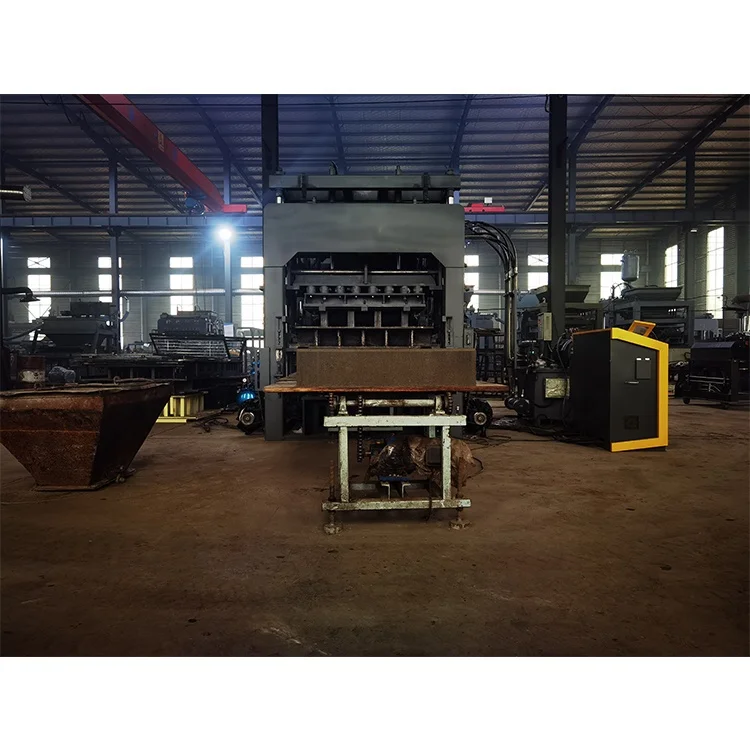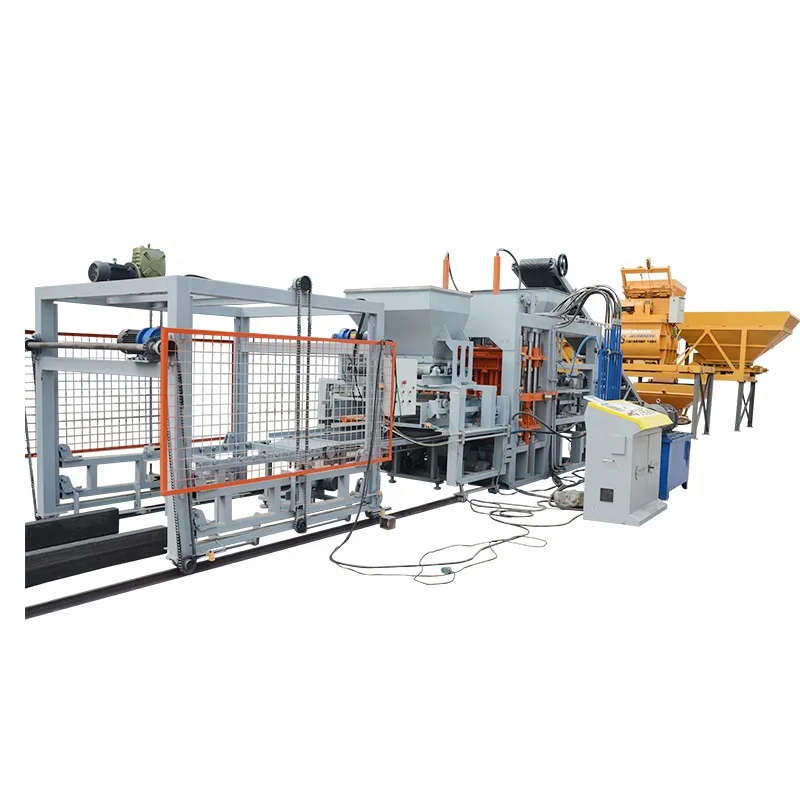


Description
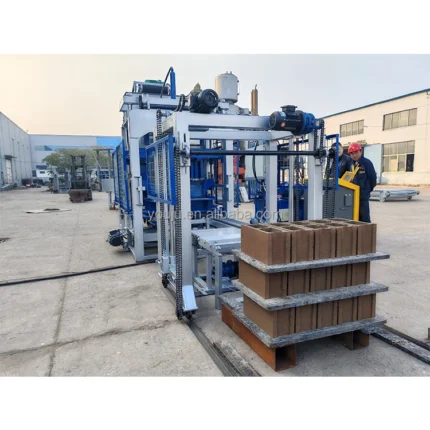
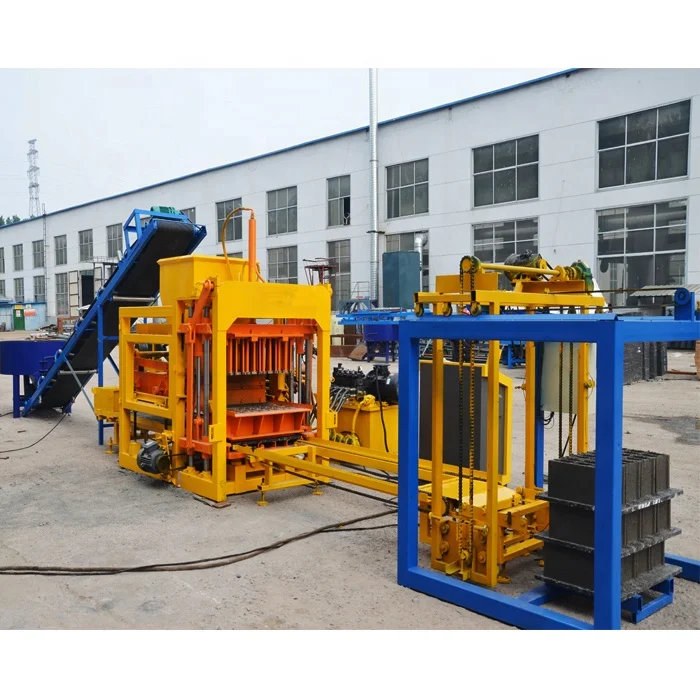
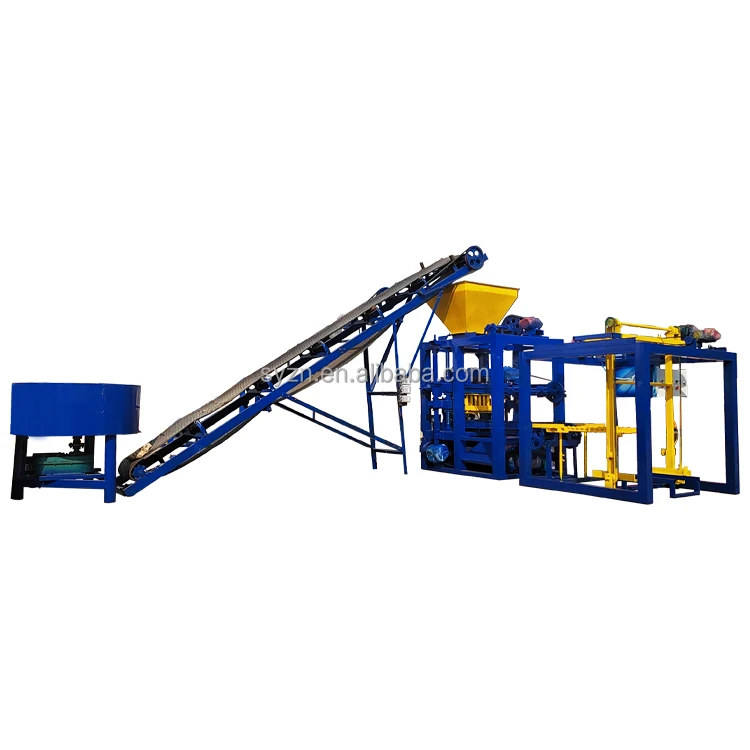
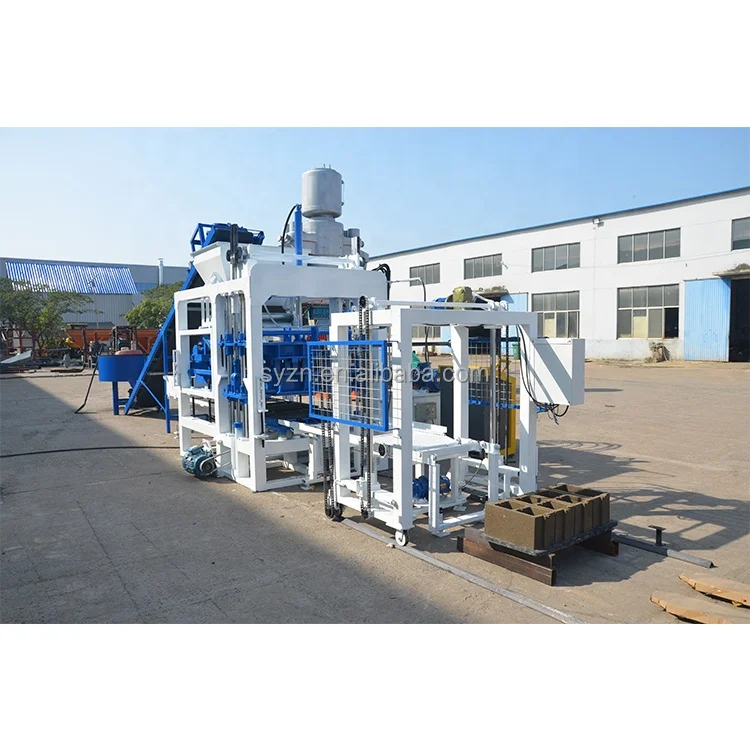
Integrated Line Logic — The QT7-15 is configured so batching, mixing, pressing, and stacking cycle times are calculated together, preventing the press from waiting on upstream stations or flooding downstream handling.
Technical Specifications
| Parameter | Value |
|---|---|
| Model | QT7-15 |
| Product Type | Automatic Hydraulic Hollow Block Making Machine |
| Host Machine Dimensions | 3200×2300×2750 mm |
| Host Machine Weight | 6 Tons |
| Molding Area | 1150×700 mm |
| Workshop Area Required | 200 m² |
| Host Machine Power | 45 kW |
| Vibration Force | 100 kN |
| Vibration Method | Hydraulic + Platform Vibration |
| Vibration Frequency | 2800–4500 Times/Minute |
| Pallet Size | 1150×700×25 mm |
| Voltage | 220/380/415/440V (Customized) |
| Molding Period | 15 Seconds |
| Control System | Siemens PLC with independently developed control program |
| Motor | Germany SIEMENS brand or CE standard brand |
| Travel Switch | France Schneider / Japan Omron |
| Mould Heat Treatment | Carburizing, 54–58 HRC, lifespan over 100,000 cycles |
| Welding | Carbon dioxide protection welding |
| Automation Level | Automatic (pallet feeder, brick receiver, hydraulic station, stacker) |
| Batching Machine | PLD1200, 1200L weigh-batching hopper, ±2% precision, 56 m³/h theoretical |
| Mixer | JS500, 800L charging / 500L discharging, 25 m³/h capacity, 18.5 kW motor |
| Stacker | SY-4, 3 kW, 600 kg capacity |
| Color Paver Option | Color feeding system available as add-on |
| Output Capacity | (basis not stated in source — confirm block format, material, and thickness) |
Application Suitability
| Application | Material or Output |
|---|---|
| Hollow block production | Crushed stone, sand, cement, fly ash blends |
| Solid block production | Dense aggregate and cement mixes |
| Paving block production | Fine aggregate with cement, standard or colored |
| Color paver production | Face-mix concrete with optional color feeding system |
| On-site contractor block supply | Local aggregate adapted to project mix design |
What the PLC Actually Controls — and What It Does Not
The QT7-15 automatic block making machine PLC controlled system manages cycle timing, vibration sequences, and pallet flow — but operator involvement still shapes output consistency.
When a buyer sees "fully automatic," the assumption is often that the machine runs itself. In practice, an automatic block making machine PLC controlled setup handles the repetitive timing work: when the mould drops, how long vibration holds, when the pallet advances. What it does not do is adjust for a wet aggregate delivery or a worn mould lip. Those decisions still land on the operator. On Latin American sites where I have commissioned lines like this, the first week usually involves fine-tuning the PLC parameters against the actual local mix, not just pressing start. [NEED_CITE: PLC parameter adjustment during block machine commissioning]
Cycle Matching Across the Line
The press is only as fast as the slowest station feeding or clearing it. The PLD1200 batcher and JS500 mixer must deliver fresh material at a rate that matches the 15-second moulding cycle, and the SY-4 stacker must clear cured pallets before the next press stroke. The QT7-15 automatic block making machine PLC controlled program coordinates these handoffs so the hydraulic station, pallet feeder, and receiver operate in sequence rather than fighting for floor space.
Where Automation Removes Variability
Manual pallet handling introduces timing drift — one operator is faster than another, shifts lose rhythm after lunch. The automatic pallet feeder and brick receiver in the QT7-15 line hold the cycle constant. Combined with the Siemens PLC managing vibration frequency between 2800 and 4500 cycles per minute, block density stays within a tighter band from first pallet to last. [NEED_CITE: vibration frequency impact on concrete block density consistency]
Reading the Spec Sheet for Real Production Impact
The 100 kN vibration force paired with hydraulic pressure determines how densely aggregate compacts in the mould cavity. A higher vibration force is only useful if the hydraulic clamping holds the mould halves rigid during the shake — otherwise energy dissipates into frame flex instead of the mix. The 1150×700 mm moulding area sets the maximum pallet footprint, which in turn governs how many blocks fit per cycle and how much curing floor space the plant needs. The carburized mould surface at 54–58 HRC resists abrasive wear from sharp aggregate, preserving dimensional accuracy past the 100,000-cycle mark. Batching precision at ±2% from the PLD1200 means cement content stays within a narrow band, which matters more for block strength than most operators realize.
The Cost of Skipping Configuration Checks
A line shipped with the wrong PLC display language does not break — it just sits idle while someone translates menus. Voltage mismatches are worse: a 380V motor on a 440V supply will run hot and fail within weeks, not years. I have seen pallets specified without checking the buyer’s existing forklift tine width, which meant every pallet had to be repositioned by hand before stacking. These are not machine defects. They are configuration oversights that turn a commissioning week into a month. [NEED_CITE: industrial equipment commissioning delays from specification mismatches]
Why Source This Line Through a Single-Focus Supplier
Block machinery is the only product category here, which means the press, mould, pallet, and handling equipment are specified as a matched set rather than assembled from unrelated vendors. Configuration starts from the buyer’s actual mix design and local aggregate, not a catalogue default. Mould design covers the formats the buyer’s market sells, with custom drawings available. Automation level can be set at semi-automatic and expanded later, so capital outlay tracks actual production growth. Installation support includes operator training on the specific PLC program loaded on the shipped machine.
Documentation & Verification
- Line layout showing station spacing and pallet flow for the QT7-15 configuration
- Capacity calculation document stating the exact block format used for output figures
- Hydraulic and electrical schematic matching the shipped voltage and valve arrangement
- Factory test record run with buyer-specified mix and target block dimensions
- Mould drawing set listing all cavity formats and pallet registration points
- Voltage, frequency, and PLC display language confirmation sheet signed before production
Installation, Commissioning & Support
- Workshop requires 200 m² clear floor with level concrete slab for the QT7-15 host machine
- Dedicated 45 kW circuit with voltage matching confirmed before motor connection
- Host machine arrives assembled; pallet feeder, stacker, and conveyor bolt on site
- PLC parameters tuned against local aggregate and mix during first production run
- Operator training covers mould change procedure and cycle adjustment on the Siemens HMI
- Carburized moulds and hydraulic wear parts listed with reorder intervals
- JS500 mixer bearing greasing and PLD1200 hopper calibration at scheduled intervals
Before You Request a Quote
To size this line accurately, share the specific block formats your market demands, the local aggregate and cement types available, and your target daily output per format. Confirm your site voltage, frequency, and the language your operators need on the PLC display. If you have existing curing racks, forklifts, or pallets, provide dimensions so the pallet and stacking configuration fits your floor.
Frequently Asked Questions
Q: How is output capacity verified, and which block format is the capacity figure based on?
A: Capacity depends entirely on block format, wall thickness, and mix composition. The QT7-15 capacity figure must state which block size it assumes — a hollow block cycle yields fewer pieces than a paving block cycle from the same pallet area. We provide a written capacity calculation tied to your specific format before order confirmation.
Q: What does the PLC control, and what still requires operator judgment?
A: The Siemens PLC manages mould descent, vibration timing and frequency, pallet indexing, and stacker coordination. Operators still monitor raw material moisture, adjust mix consistency, and inspect block quality at the receiver. The automatic block making machine PLC controlled system reduces timing variability but does not replace material judgment.
Q: How do I confirm voltage, frequency, and HMI language before shipment?
A: A configuration confirmation sheet listing voltage, frequency, and PLC display language is signed off before production begins. This document is matched against the electrical schematic and factory test record. I always verify this step personally — arriving on site to find a Spanish-speaking crew facing an English-only HMI is a delay nobody needs.
Q: Can this line expand into color paver or kerbstone production later?
A: The QT7-15 supports a color feeding system as an add-on, enabling face-mix color pavers without replacing the press. Kerbstone production requires a taller mould and possibly a heavier pallet. The PLC program can accommodate additional mould profiles, provided hydraulic pressure and vibration settings are recalibrated for the new format.
Q: How does the batching and mixing cycle match the press to prevent idle time?
A: The PLD1200 batcher delivers measured aggregates to the JS500 mixer, which discharges a 500L batch in a cycle timed to feed the press hopper before the current charge runs out. The PLC coordinates pallet release with mixer discharge so neither station waits. If mix consistency changes, the operator adjusts water dosing at the batcher, not the press speed.