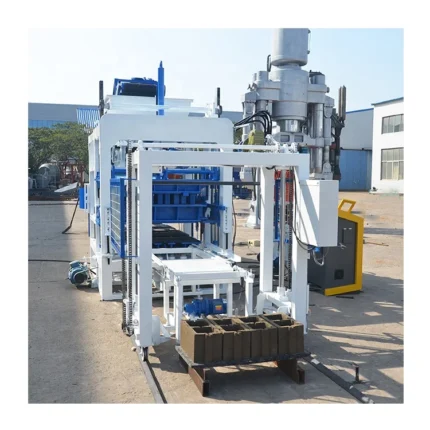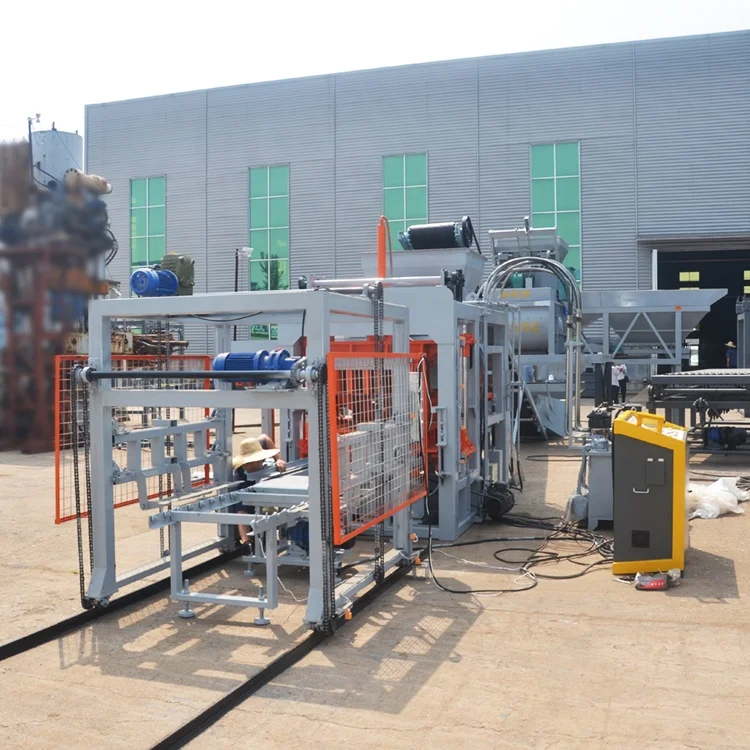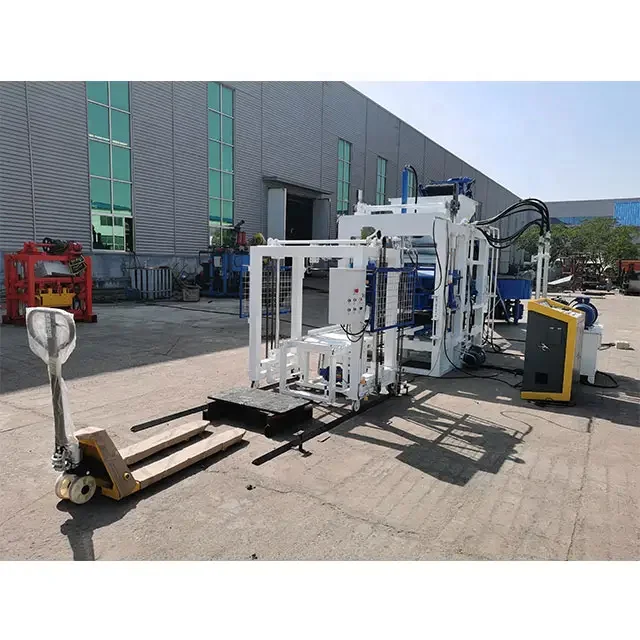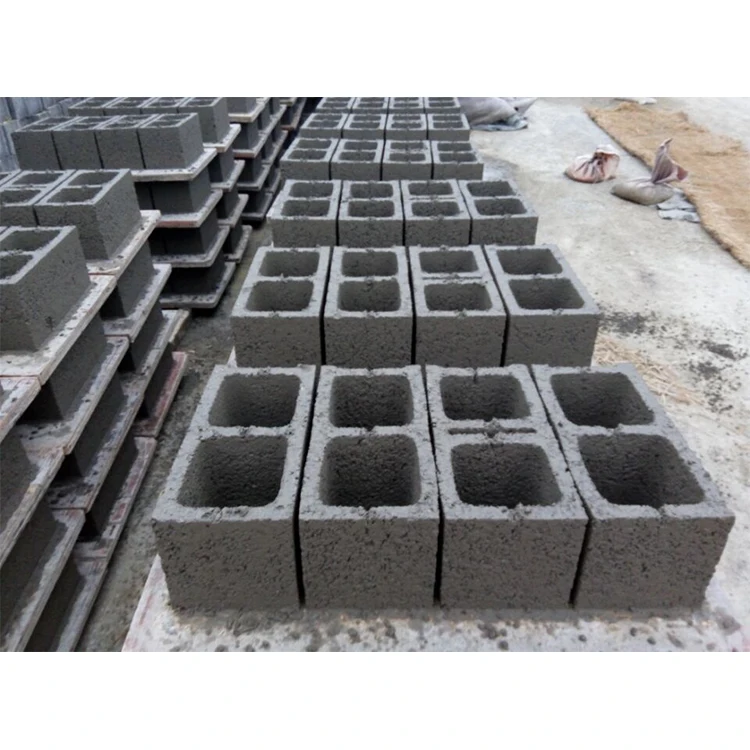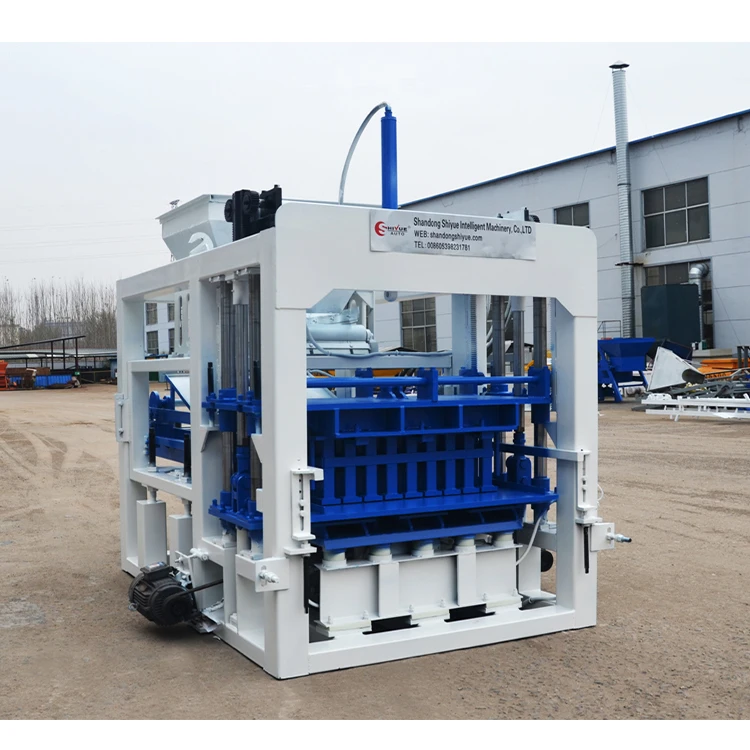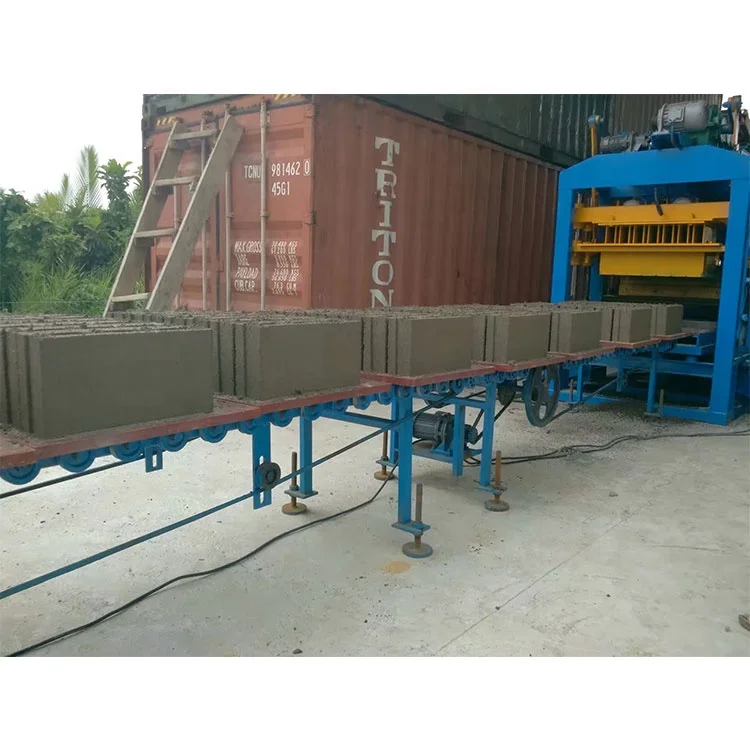
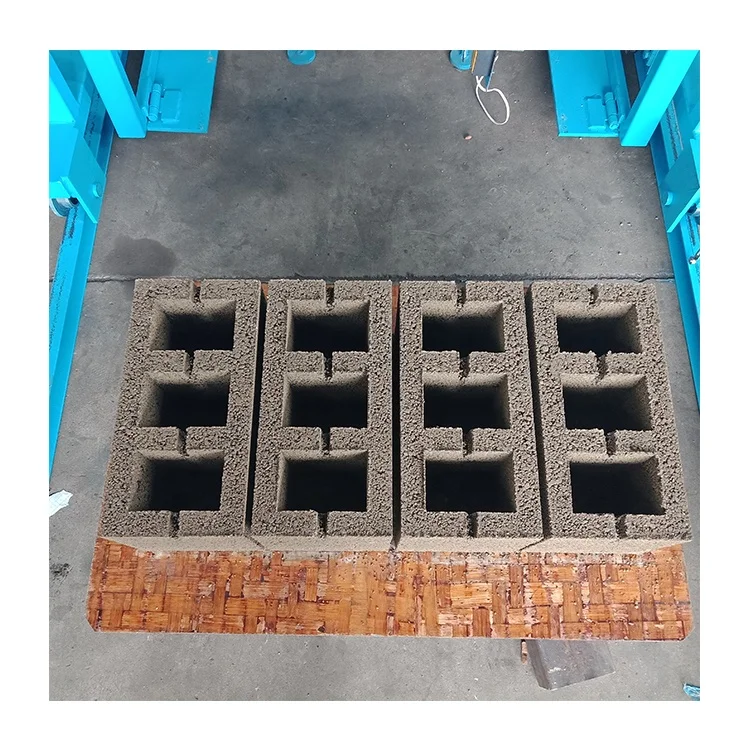
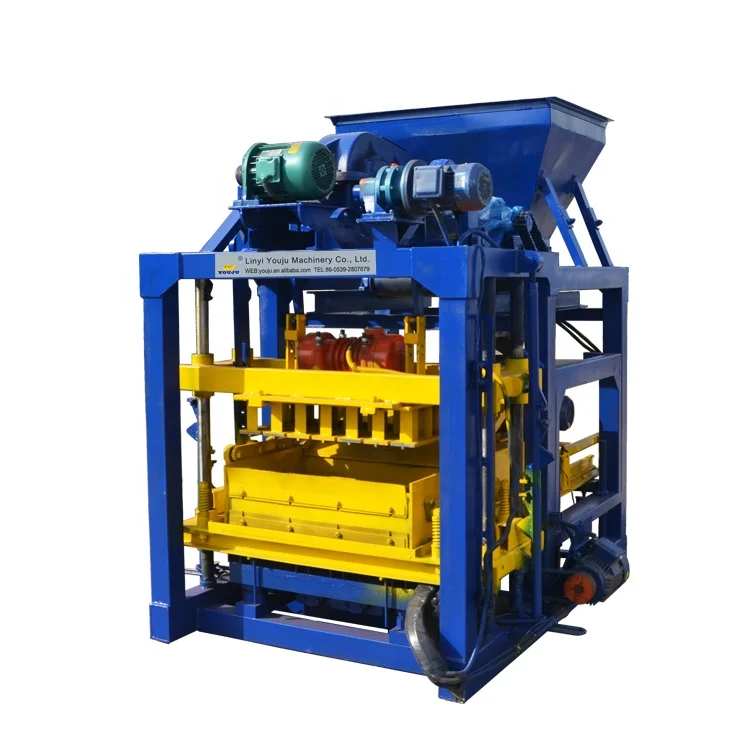
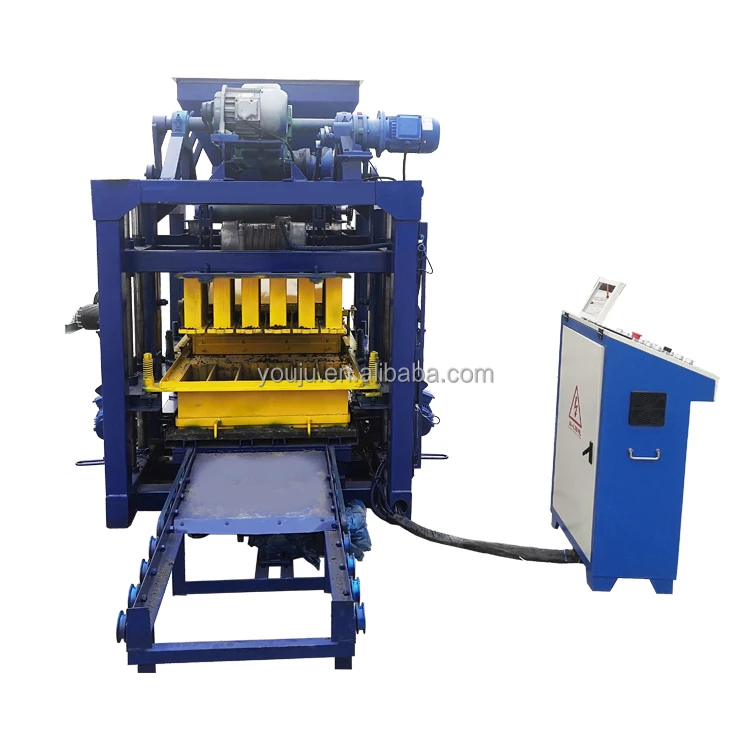
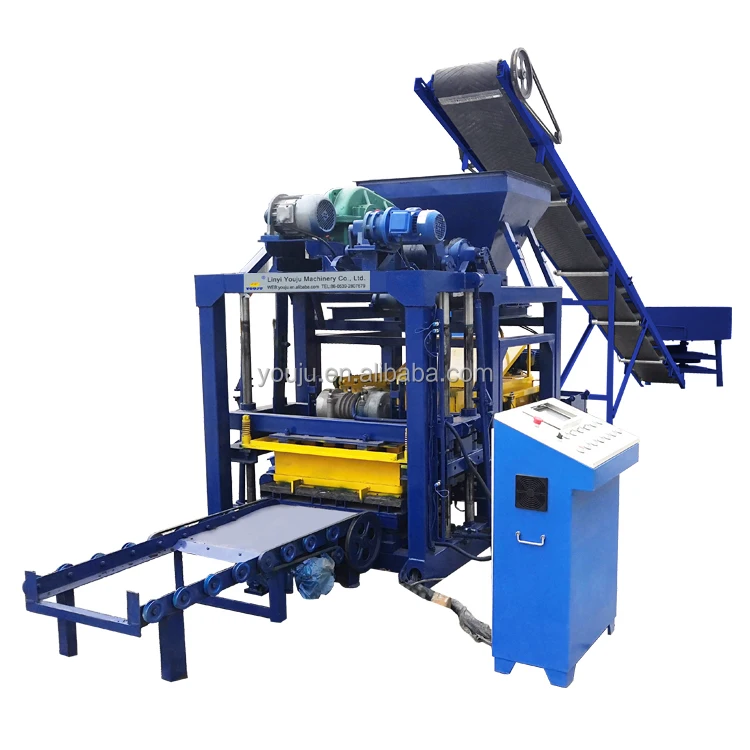
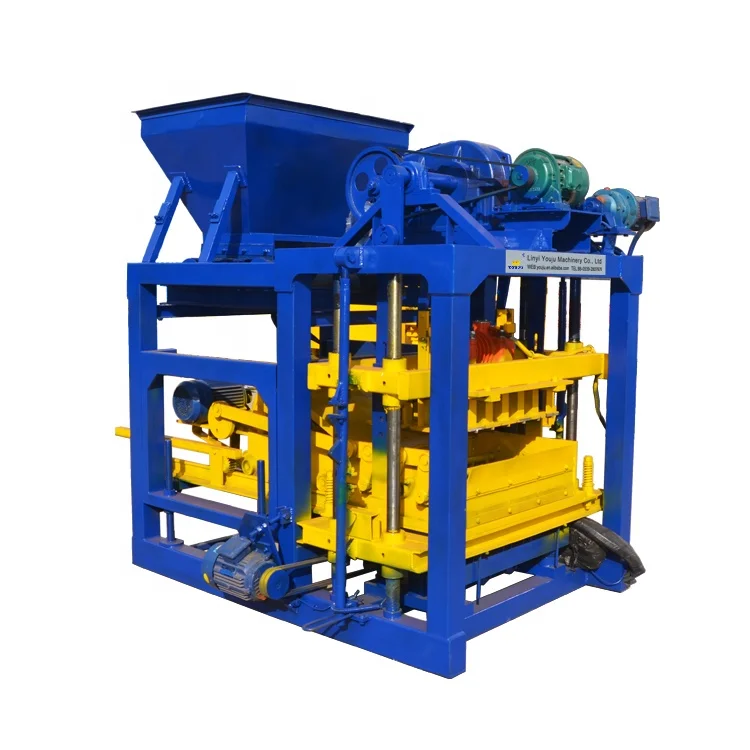
Description
Intelligent Control Upgrades — every PLC screen and alarm message is translated to your local language before the QTJ4-25 leaves the factory, so operators start production on day one without waiting for an interpreter.
Technical Specifications
| Parameter | Value |
|---|---|
| Model | QTJ4-25 |
| Product Type | Automatic Block Making Machine |
| Overall Dimensions (L×W×H) | 3000 × 1800 × 2680 mm |
| Total Mass | 3.5 T |
| Overall Power | 16.58 kW |
| Vibration Force | 60 kN |
| Main Vibration Form | Platform Vibration |
| Vibration Frequency | 2800–4500 r/min |
| Pallet Size | 850 × 480 mm |
| Molding Cycle | 25 s |
| Demolding Method | Mechanical |
| Factory Area Required | 300 m² |
| Control System | PLC-based (language configurable) |
| Voltage & Frequency | Configurable to site supply |
| Guide Column Design | Four-column, overlong guide, chrome-plated |
| Frame Material | National standard manganese steel |
| Output (400×200×200 mm hollow block) | 4 pcs/mould, 580 pcs/h, 4640 pcs/day (8 h) |
| Output (240×115×90 mm block) | 9 pcs/mould, 1400 pcs/h, 11200 pcs/day (8 h) |
| Output (240×115×53 mm solid brick) | 21 pcs/mould, 3300 pcs/h, 26400 pcs/day (8 h) |
| Applied Products | Hollow blocks, solid blocks, pavers, interlocking blocks, curbstone, colored pavers |
| Raw Materials | Crushed stone, sand, cement, fly ash, gravel, slag |
| Warranty | 1 year (excluding spare parts) |
Application Suitability
| Application | Material or Output |
|---|---|
| Hollow block production | Crushed stone, sand, cement, fly ash mixes |
| Solid brick manufacturing | Sand, gravel, slag-based blends |
| Interlocking paver runs | Pigmented concrete with fine aggregate |
| Curbstone forming | Coarse aggregate and cement at higher compaction |
| Small-to-medium block plant start-ups | Multi-format output on one press |
| On-site contractor production | Local aggregate sourced near project location |
Why the PLC Language Setting Matters More Than You Think
When an automatic block making machine with PLC control arrives with a Chinese-only interface, the commissioning clock stops before it starts.
I have stood on job sites in West Africa watching electricians stare at a touchscreen that offered no English, let alone French or Portuguese. Two days lost while the supplier scrambled to send an updated program file over patchy mobile data. [NEED_CITE: on-site commissioning delays caused by untranslated HMI screens]. The QTJ4-25 ships with PLC language and alarm prompts configured to your operator’s working language, verified at the factory before crating. Voltage, frequency, and control logic are matched to your site supply so the first power-on becomes a production run, not a troubleshooting session.
From Semi-Automatic Baseline to Full Line Automation
The QTJ4-25 leaves the factory with mechanical demolding as its baseline, meaning pallet handling and stacking rely on manual labour or downstream conveyors you source separately. That configuration keeps the initial investment manageable for a first plant. The automation upgrade path adds automatic pallet feeding, stacking, and cubing modules that integrate with the existing PLC, so you do not rip out the control cabinet when you scale.
This staged approach matters because block demand rarely stays flat. A buyer starting with hollow blocks at moderate volume can later introduce pavers and interlocking formats without replacing the press, simply by adding moulds and adjusting the PLC recipe parameters. The automatic block making machine with PLC control becomes the anchor of a line that grows with your market rather than one you outgrow within a season.
PLC Recipes, Batch Consistency, and What Operators Actually See
Every block format runs from a stored recipe: vibration frequency, cycle duration, feed volume, and pressure dwell are recalled with a screen tap instead of re-entered from memory. [NEED_CITE: PLC recipe management reducing batch-to-batch variance in concrete forming]. When a shift change brings a new operator, the stored parameters remove guesswork. Mould changeover involves loading the physical tooling and selecting the matching program, so the press does not run a paver cycle on a hollow block mould.
The HMI screen also surfaces fault codes in plain language. A proximity sensor failure or a pallet misfeed shows up as a named alarm, not a cryptic numeric string. On a remote site where the nearest technician is hours away, that clarity lets your maintenance crew diagnose and resolve common faults without a video call across time zones.
Platform Vibration, Column Design, and Block Density
The 60 kN vibration force operates through platform vibration at 2800–4500 r/min, compacting aggregate from below while the upper mould applies additional vibration for uniform density through the block height. The four-column overlong guide design with chrome-plated surfaces keeps the mould aligned over thousands of cycles, preventing the taper wear that causes blocks to stick or crack at demolding.
The 850 × 480 mm pallet size defines your curing rack spacing and forklift tine width before the machine ships. If your existing racks are narrower, pallets will not seat properly. Manganese steel framing absorbs vibration energy that would otherwise fatigue mild-steel welds, which matters when the press cycles every 25 seconds for eight hours straight. The 16.58 kW total power draw is modest enough that most small plants can run it without a dedicated transformer upgrade, but the circuit must still be sized to handle motor starting current.
The Downtime Cost of Skipping Configuration Checks
Buyers who confirm only the model number and skip the voltage and language conversation often discover mismatches after the container arrives. A 380 V/50 Hz machine plugged into a 440 V/60 Hz supply will run, but motors overheat and contactors fail on a compressed timeline. [NEED_CITE: electrical supply mismatches causing premature motor failure in exported industrial machinery]. Mechanical demolding works, but without planning pallet circulation and stacking labour, your actual daily output stays well below what the cycle time suggests. These are not defects; they are configuration gaps that turn into expensive site modifications.
What Backs This Machine Beyond the Spec Sheet
Block machinery is our single focus, so the QTJ4-25 press, moulds, pallets, and handling equipment are specified as a matched set rather than assembled from separate vendors. Configuration starts with your actual mix design and local aggregate, not a catalogue default. Mould design covers the formats your market sells, with custom drawings when standard tooling does not match.
The automation level is selectable, letting you begin with semi-automatic operation and add pallet feeding and stacking modules when volume justifies it. Factory testing runs your chosen block format before dispatch, so the test record reflects your product, not a generic sample. Installation support and operator training bring the line to steady production rather than leaving your crew to figure it out alone.
Documentation & Verification
- Factory test record on your target block format before crating
- Line layout showing capacity per named format and pallet size
- Voltage, frequency, and PLC language confirmation sheet signed before dispatch
- Mould drawings and format list matching your market requirements
- Hydraulic and electrical schematic for on-site troubleshooting
- Wear parts and mould catalogue for first replacement planning
Installation, Commissioning & Support
- 300 m² factory area requirement confirmed against your building dimensions before order
- 16.58 kW total load checked against site transformer and circuit breaker capacity
- QTJ4-25 arrives in dismantled state with reassembly guided by numbered components
- First production run supervised with PLC parameters tuned to your local aggregate
- Operator training covers mould change, recipe selection, and alarm response
- Wear parts list supplied so spares are on hand before first replacement is due
What We Need to Size Your Line Correctly
Share your target block formats, the daily volume you plan to sell, and the aggregate materials available locally. Confirm your site voltage, frequency, and preferred PLC display language. Let us know whether you need manual pallet handling to start or are planning automatic stacking from the first run. With those details, the configuration proposal will quote capacity per format, not a single optimistic number.
Frequently Asked Questions
Q: How is capacity verified per block format, and what cycle time does each format assume?
A: Every output figure ties to a specific block dimension and the 25-second moulding cycle. For the 400×200×200 mm hollow block, the QTJ4-25 produces 4 pieces per mould at 580 pieces per hour. Smaller formats like the 240×115×53 mm solid brick yield 21 pieces per mould. Capacity calculations in the proposal state the format assumed, so you can match the number to your actual product mix.
Q: What automation level does the QTJ4-25 ship with, and how does the upgrade path work?
A: The baseline configuration uses mechanical demolding with manual pallet handling. Automatic pallet feeding, stacking, and cubing modules can be added later, integrating with the existing PLC without replacing the control cabinet. This lets you start semi-automatic and move toward full automation as production volume grows and labour costs shift the balance.
Q: How are voltage, frequency, and PLC display language confirmed before dispatch?
A: Before production begins, we send a confirmation sheet covering your site voltage, frequency, and the language for the HMI screen and alarm prompts. You sign off on each item. The PLC is programmed with these settings and tested at the factory so the machine powers on in your operator’s language when it arrives on site.
Q: Which moulds are included, and how long does a format change take on the shop floor?
A: The standard package includes moulds for the formats specified in your order. Changing formats involves unbolting the current mould, lifting in the new one, and selecting the matching PLC recipe. On the QTJ4-25, a trained operator can complete a swap within a single shift, keeping downtime manageable when you run multiple block types.
Q: What is involved in moving from mechanical demolding to fully automatic pallet handling?
A: The upgrade adds an automatic pallet feeder, a stacking station, and a cubing module that communicate with the existing PLC. Lead time depends on module availability and shipping. The press itself does not need modification, which keeps the transition straightforward and avoids taking the line offline for an extended refit.