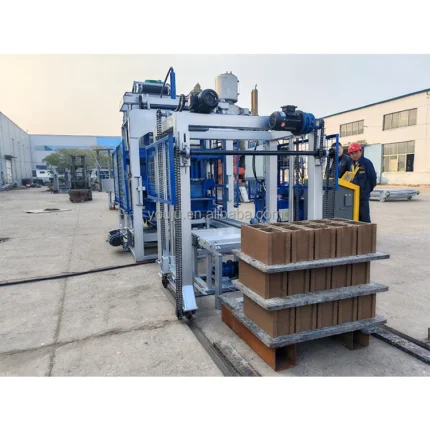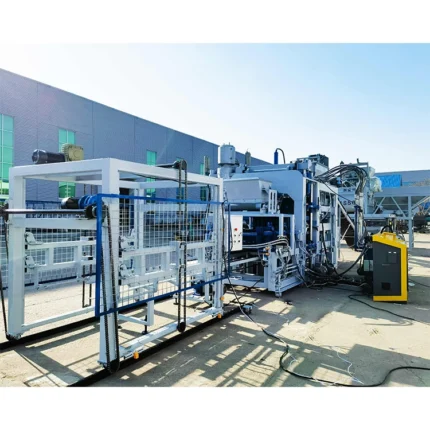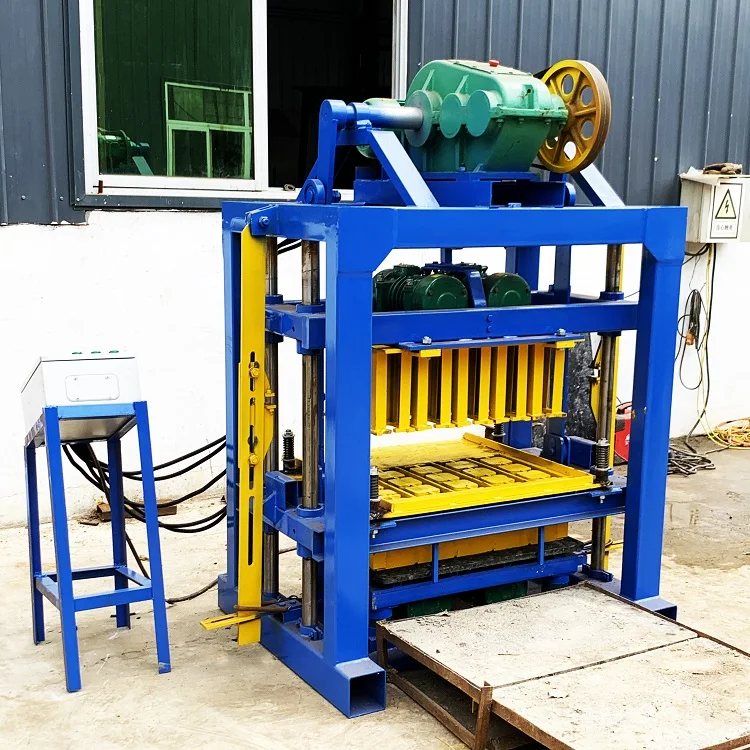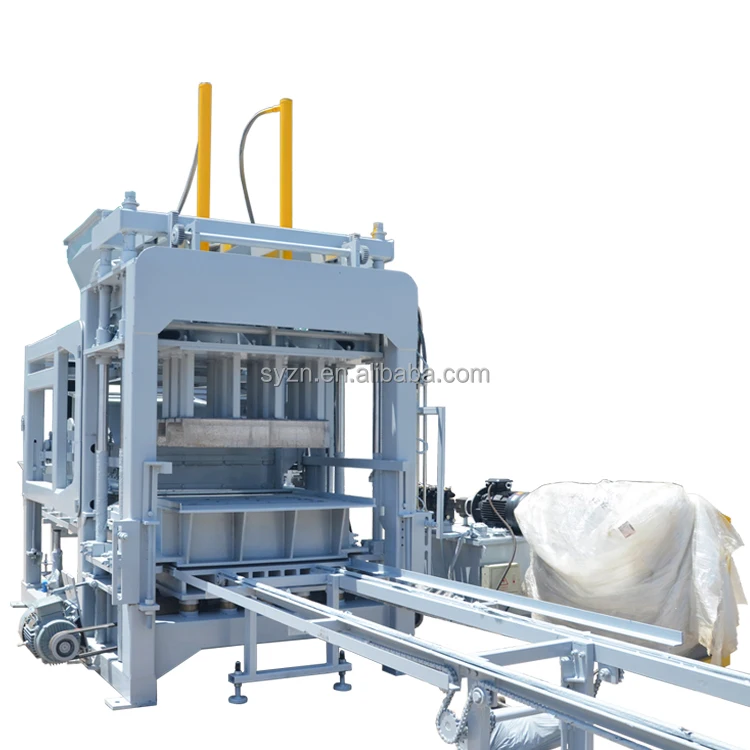



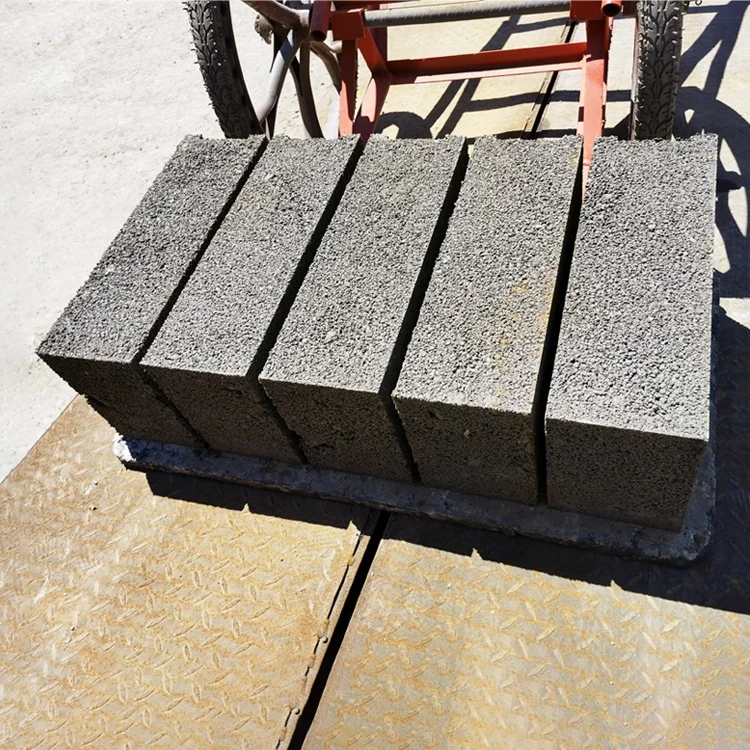
Description
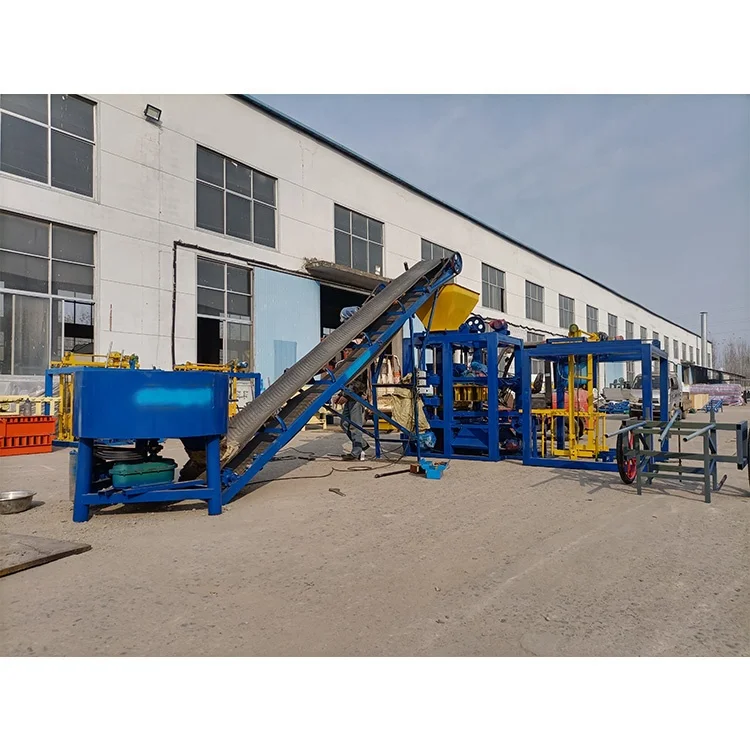
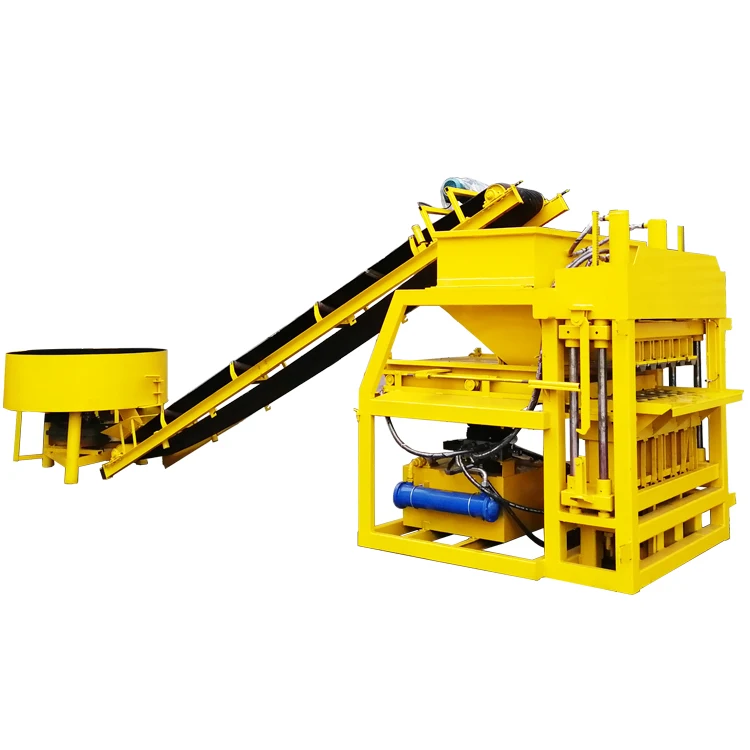
Matched Control Logic — every automation component on the QTJ4-40 is specified against your actual mix design and block format, not pulled from a catalogue default.
Technical Specifications
| Parameter | Value |
|---|---|
| Model | QTJ4-40 |
| Product Type | Manual Concrete Block Making Machine |
| Overall Dimensions (L×W×H) | 1350 × 1460 × 1800 mm |
| Pallet Size | 850 × 450 mm |
| Overall Power | 9.5 kW |
| Vibration Frequency | 2800 RPM |
| Vibration Force | 35 kN |
| Control System | Mechanical and electric combination |
| Output Capacity | 2880 pcs/day (basis not stated in source — confirm block format / material / thickness) |
| Mixer Type Recommended | Vertical type 350 |
| Assembly State | Requires on-site assembly |
| Voltage & Frequency | Three-phase four-wire (confirm for target market) |
| Hydraulic Pressure | Not applicable (mechanical vibration type) |
| Stacking Method | Manual |
| Mould Format Options | Hollow block, paver block |
Application Suitability
| Application | Material or Output |
|---|---|
| Small-scale hollow block plant | Crushed stone, sand, and cement blends |
| On-site contractor production | Locally sourced aggregate with cement binder |
| First plant for entrepreneurs | Paver blocks and hollow blocks for local market |
| Manual block yard expansion | Existing semi-manual setup adding format variety |
What the QTJ4-40 Control System Means for Your Daily Consistency
The automatic QTJ4-40 block making machine delivers mechanical-electric operation as a baseline — its real value lies in how clearly you can see the upgrade path to PLC-controlled production.
When I first visited a block yard outside Nairobi, the operator was pulling pallets by hand and watching the vibration timer on a wall clock. The blocks coming off the line varied in density because the cycle time depended entirely on his pace. With the QTJ4-40, this is the starting condition: a fixed vibration force of 35 kN and a mechanical-electric control panel that runs the cycle but does not log it, adjust it, or lock it against operator drift. [NEED_CITE: impact of operator-dependent cycle times on block compressive strength variance]
The question every plant owner should ask is not whether this machine runs today, but whether the control system can grow with your output targets. A PLC-controlled block machine upgrade replaces the wall-clock timing with programmable cycle management, batching accuracy, and a record you can review when a batch fails a strength test.
From Mechanical Switches to Programmable Cycles
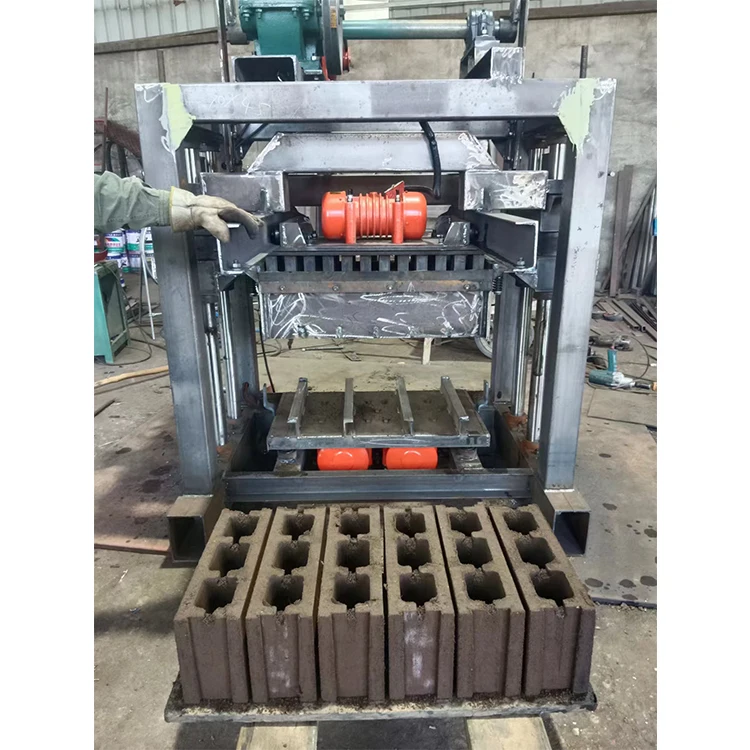
The QTJ4-40 ships with an electrical control panel that starts and stops the vibration motor and manages the table vibration feeding sequence. This is reliable for a single-operator yard where the same person runs the machine every shift. The limitation appears when you add a second shift or hire new staff — without a PLC, there is no way to enforce a consistent cycle time across different operators. Introducing a programmable logic controller locks the vibration duration, pause intervals, and pallet feed timing so that every block receives identical treatment regardless of who is at the controls.
Where Automation Removes the Operator from the Equation
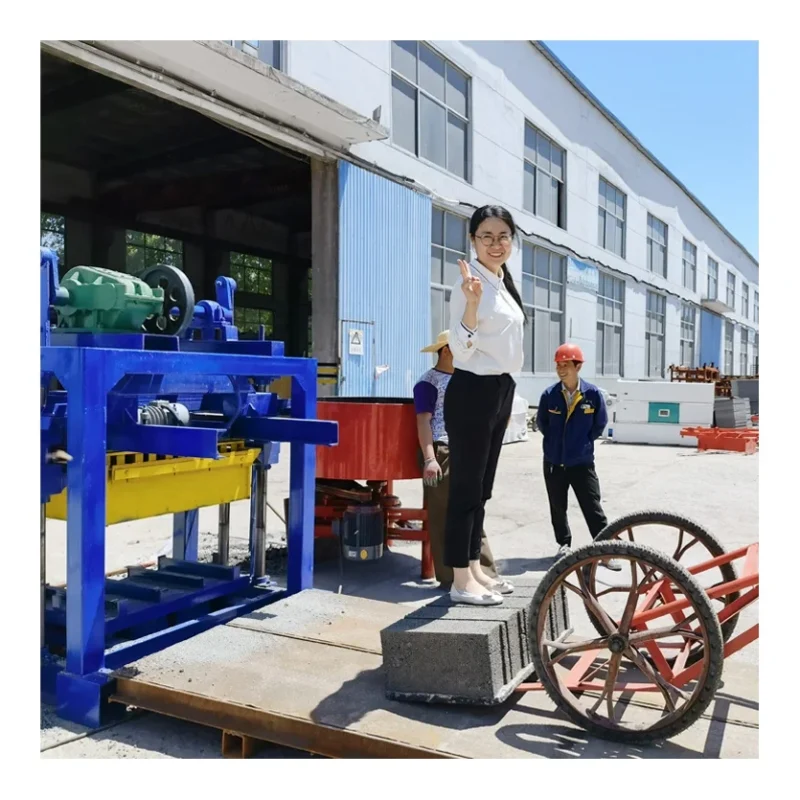
Manual pallet handling on the QTJ4-40 means one worker feeds empty pallets and another pulls finished blocks. On a long shift, fatigue slows the pace and the daily output drops. Adding an automatic pallet feeder and a stacking module does not change the press itself — it changes the rhythm around it. The press no longer waits for a pallet, and finished blocks move to the curing rack without a second worker lifting them. This is where the automatic QTJ4-40 block making machine concept takes shape: the press stays mechanical, but the line around it becomes programmable. [NEED_CITE: labour reduction through pallet automation on small block machines]
Reading the Numbers That Matter
The vibration force of 35 kN at 2800 RPM is a fixed mechanical setting. On a hydraulic machine you can dial pressure up or down to suit a new aggregate; here the vibration profile is set by the motor and eccentric block design. If your local sand is fine and well-graded, 35 kN may compact it thoroughly. If you are using a coarse volcanic scoria — as I encountered on a job in northern Tanzania — the fixed force may leave the core under-compacted and the block fragile at the edges. A PLC-controlled block machine upgrade allows you to introduce variable vibration stages, matching the energy input to what your specific mix actually needs.
The 9.5 kW overall power draw is modest and suits a small yard running off a generator or a local grid connection. The three-phase four-wire supply must be confirmed against your site voltage before the machine ships — arriving with a 380V motor in a 415V region or a 50Hz machine in a 60Hz market will stall commissioning for weeks.
The 850 × 450 mm pallet size determines your curing rack layout and forklift compatibility. If your existing racks are built for a different pallet dimension, you will either replace the racks or order custom pallets before the machine arrives.
The Cost of Skipping the Control Conversation
I once configured a machine for a client who assumed the control panel would include a digital cycle counter and an adjustable timer. It did not — the machine had a simple contactor box. By the time he realized the gap, the machine was already in a container. He spent the first two months training operators to count seconds manually, and block rejection rates stayed high until we retrofitted a timer module. When buyers treat the control system as an afterthought, the consequences show up in inconsistent block weight, unpredictable daily output, and a reliance on one experienced operator who cannot take a day off. [NEED_CITE: common commissioning delays caused by unspecified control language and voltage]
Why Source This Machine Through a Matched-Line Approach
The QTJ4-40 is a single-focus block machine, which means the mould, pallet, and handling equipment are specified as one system rather than assembled from separate suppliers. You receive a mould drawing and format list that matches the blocks your market actually buys, not a generic set.
The configuration is set against your local aggregate and target block format, so the vibration force and cycle parameters are reviewed before production starts. Voltage and control display language are confirmed in writing before the machine ships, avoiding the most common commissioning delay I see on site.
If you start with the mechanical-electric QTJ4-40 today, the automation upgrade path — pallet feeder, stacker, PLC panel — is designed to be added as modules without replacing the press. Installation support includes operator training on your specific mix, and wear parts availability is confirmed before the first mould change is due.
Documentation & Verification
- Capacity calculation stating the block format assumed for daily output
- Machine specification sheet with confirmed voltage and frequency
- Mould drawing and format list matched to your market
- Pallet specification cross-checked against your curing rack dimensions
- Voltage and control language confirmation before production
- Factory test record on your selected block format before dispatch
Installation, Commissioning & Support
- On-site assembly of main machine, mixer, and electrical connections required
- Three-phase four-wire supply must match confirmed voltage before energizing
- Vertical type 350 mixer positioned to feed the 1350 mm machine length
- 850 × 450 mm pallets stocked and curing racks verified before first run
- Operator training covers mechanical-electric panel operation and mould change procedure
- Wear parts list and mould inventory provided at handover
Before You Request a Quote
Tell us your target block format and dimensions, the aggregate you plan to use, and the daily output you need to hit. Confirm your site voltage, frequency, and the control display language your operators will read. If you already have curing racks or a forklift, share the pallet dimensions they accept so the QTJ4-40 pallet size is verified against your existing equipment.
Frequently Asked Questions
Q: How is the 2880 pcs/day capacity calculated, and which block format does it assume?
A: That figure appears in the source documentation without a stated block format, material, or shift length. We provide a capacity calculation tied to your specific block dimensions and mix design so you know exactly what throughput to expect under your conditions, not a generic number.
Q: Can the QTJ4-40 be upgraded to full PLC control, and what does that include?
A: Yes. The upgrade path covers a PLC panel, automatic pallet feeder, and stacking module. The press itself remains mechanical, but cycle timing, pallet movement, and output handling become programmable, removing operator-dependent variation from your daily production.
Q: What voltage, frequency, and control language options are available?
A: The machine runs on a three-phase four-wire supply. Exact voltage and frequency must be confirmed for your market before production. The control display language is specified at the order stage so operators can read the interface on day one of commissioning.
Q: How does automation level affect labour and batch consistency on this tier?
A: At the mechanical-electric level, one operator manages the cycle and another handles pallets. Adding PLC control and automatic pallet feeding reduces the crew and locks cycle timing, so block density and dimensions stay consistent across shifts regardless of who is running the line.
Q: What is the cycle time per block format, and how does manual operation affect output?
A: Cycle time varies by mould format and mix design. Under manual operation, the operator controls the pace, so real daily output fluctuates with fatigue and experience. A PLC-controlled block machine upgrade enforces a fixed cycle, making output predictable and repeatable.