

Description
Localized Automation — every HMI screen and fault code on the QT12-15 is configured to the operator’s native language before shipment, preventing misdiagnosis that once cost a European buyer a hydraulic pump.
Technical Specifications
| Parameter | Value |
|---|---|
| Model | QT12-15 |
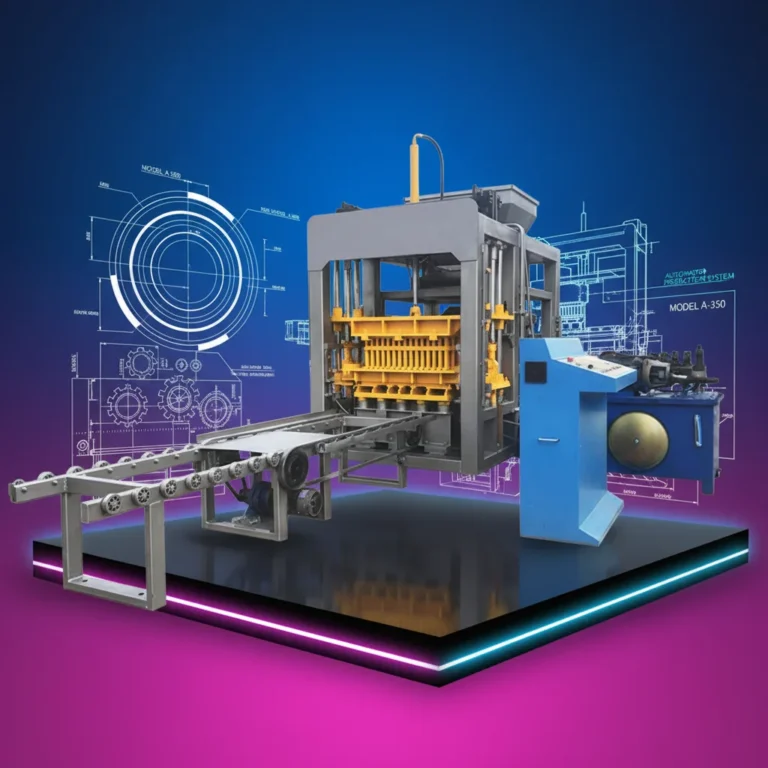
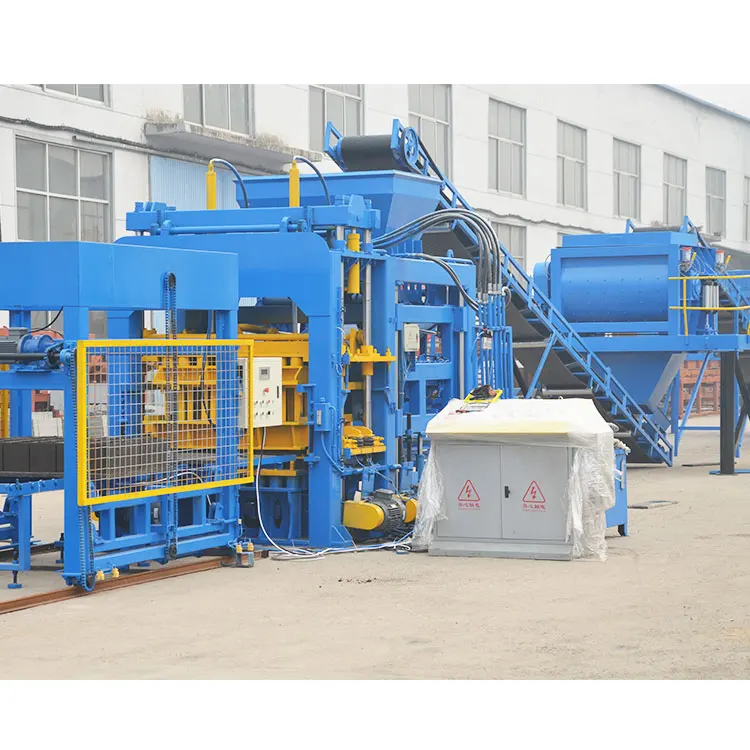
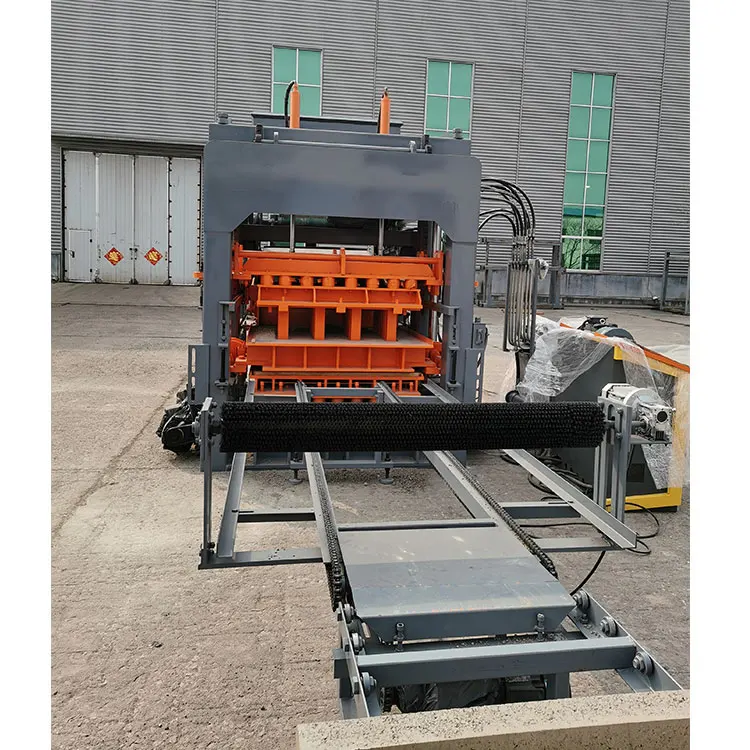
| Product Type | Automatic Hydraulic Block Making Machine |
| Overall Dimensions (L×W×H) | 9350 x 2520 x 2950 mm |
| Rated Hydraulic Pressure | 21 MPa |
| Vibration Form | Platform Vibration |
| Vibration Frequency | 2800–4500 r/min |
| Vibration Acceleration | 15–20 g |
| Exciting Force | 120 kN |
| Block Height Range | 50–200 mm |
| Pallet Size | 1350 x 850 mm |
| Molding Cycle | 15–25 s |
| Storage Hopper Volume | 0.4 m³ |
| Feeding Device Volume | 0.31 m³ |
| Total Installed Power | 50.7 kW |
| Total Machine Weight | 12000 kg |
| Control System | PLC controlled (mechanical-hydraulic synthesis) |
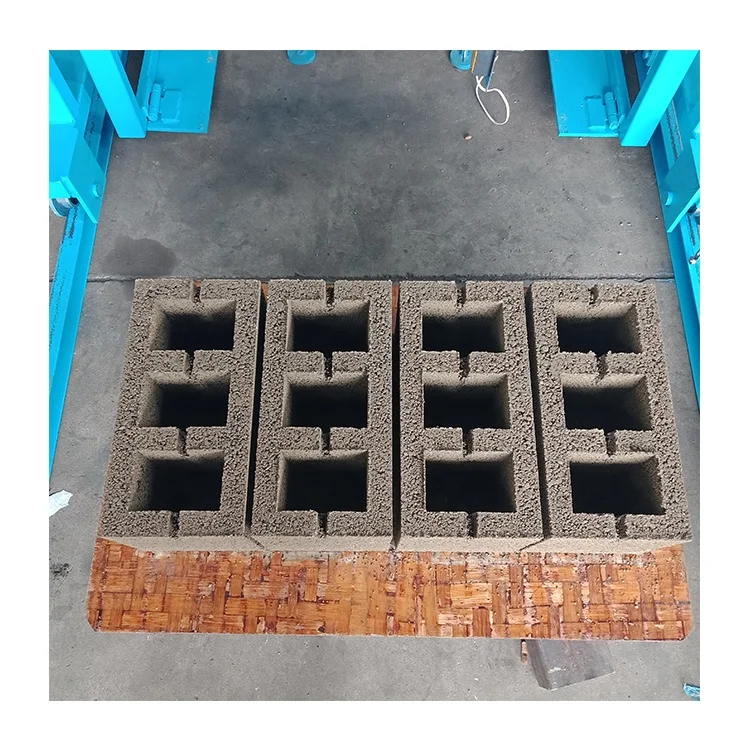
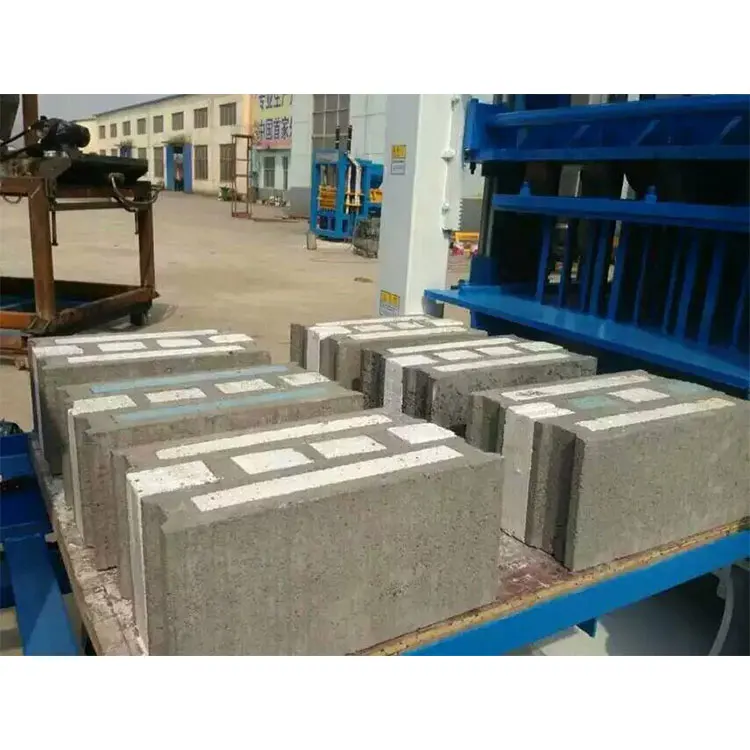
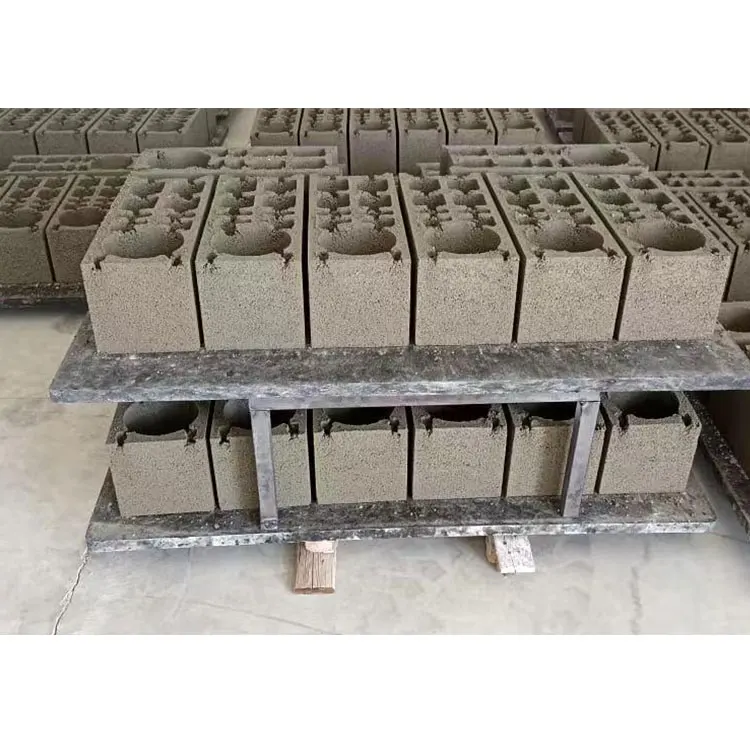
| Output Capacity — Hollow Block 390×190×190 mm | 1720–2160 pcs/h, 13700–17200 pcs/8h (12 pcs/mould) |
| Output Capacity — Porous Block 240×115×90 mm | 5040–6300 pcs/h, 40300–50400 pcs/8h (35 pcs/mould) |
| Output Capacity — Standard Block 240×115×53 mm | 13100–14800 pcs/h, 105000–119000 pcs/8h (62 pcs/mould) |
| Mould Cartridge Material | Manganese steel, carburized and quenched |
| Frame Structure | Gantry frame, super steel, shock resistant |
| Feeding Mode | Driving-type storage with net wave swing feeding |
| Compressive Strength of Blocks | > 15 MPa |
| Voltage & Frequency | Configurable per market (basis to be confirmed) |
| Automation Level | Fully automatic PLC synthesis |
| Stacking Method | Stacker (simple line configuration) |
Application Suitability
| Application | Material or Output |
|---|---|
| Hollow block production | Cement, crushed stone, sand — structural wall units for multi-storey construction |
| Porous block production | Lightweight aggregate, fly ash blends — partition blocks requiring thermal insulation |
| Standard solid block production | Dense aggregate mixes — high-compressive foundation and load-bearing units |
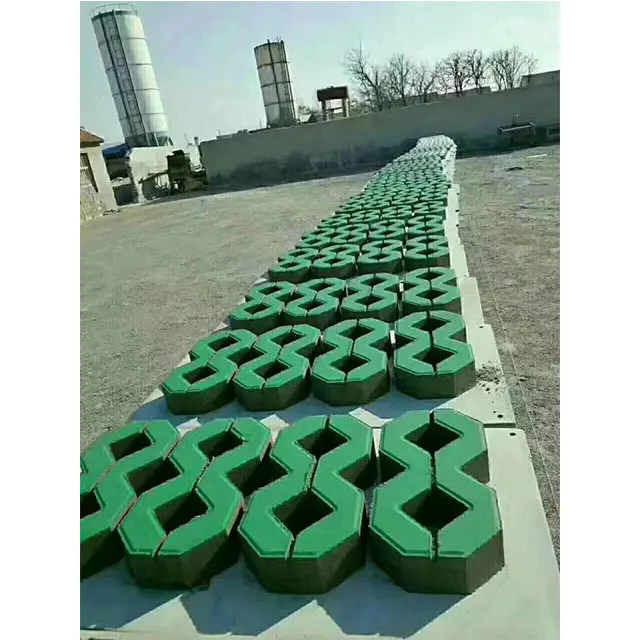
| Paving block and interlock brick production | Fine-graded sand and cement — driveways, walkways, municipal hardstanding |
| Fly ash block production | Fly ash, lime, gypsum blends — low-cost masonry for housing projects |
Why the Language on Your PLC Screen Determines Whether Automation Actually Works
An automatic PLC controlled block making machine is only as intelligent as the operator’s ability to read its diagnostics in real time.
I watched a QT12-15 equivalent line stall for two full shifts in a Portuguese plant because a hydraulic over-pressure alarm displayed in Mandarin. The operator, seeing an unfamiliar fault code, forced a manual reset through the HMI — the hydraulic pump seized within seconds. That incident shaped every configuration decision we now make before shipping. When an automatic PLC controlled block making machine arrives on site, the operator must read every prompt, alarm and recipe parameter in their own language, without guessing. [NEED_CITE: PLC interface localization standards for exported industrial machinery]
From Semi-Automatic to Full PLC Synthesis
Moving from a relay-logic or semi-automatic press to the QT12-15 changes the operator’s role from cycle trigger to process monitor. The PLC synchronizes hydraulic pressure ramp-up with platform vibration frequency across the 15–25 second molding cycle, a timing sequence that no manual operator can hold consistent across an eight-hour shift. This automatic PLC controlled block making machine stores recipe parameters per block format, so switching from 390×190×190 mm hollow blocks to 240×115×53 mm standard solids requires a recipe recall and a mould change, not a full recalibration.
How the Control System Coordinates the Line Around the Press
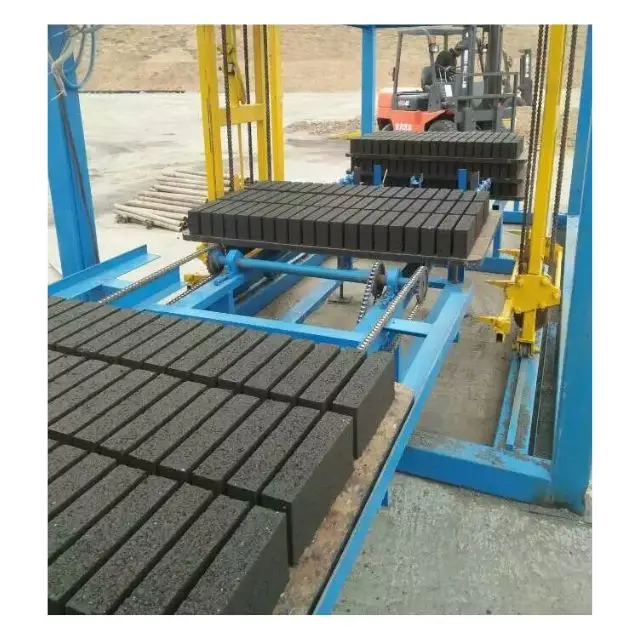
The press does not work alone. The PLC tracks pallet position upstream, signals the net wave swing feeder to dose material only when a pallet is confirmed in place, and releases the stacker downstream once the curing rack has capacity. When any station falls out of sync, the press pauses rather than producing uncured units on the floor. This interlock logic is where most semi-automatic upgrades fail — the press is upgraded but the surrounding equipment still relies on manual timing, leaving the operator to bridge gaps the PLC expects to be closed. [NEED_CITE: PLC interlock requirements between block press and pallet handling system]
Reading the Numbers That Actually Matter
The 21 MPa rated pressure and 120 kN exciting force together define the compaction energy available per cycle — pressure consolidates the mix while vibration re-arranges aggregate particles into a denser matrix, and neither achieves target strength alone. The 15–20 g vibration acceleration range is selectable per recipe: fly ash blends with low cohesion need higher acceleration to pack, while stiff paver mixes require lower frequency with longer dwell. The 1350×850 mm pallet dimension must match the curing rack slot width and forklift tine spacing already in the buyer’s yard; a mismatch here means pallets pile on the floor regardless of how automated the press is. The 50.7 kW total power draw determines cable sizing, breaker rating and transformer capacity at the connection point — confirming local voltage and frequency before production is non-negotiable.
The Cost of Skipping the Configuration Conversation
Buyers who select an automatic PLC controlled block making machine on price alone frequently discover after arrival that the HMI language is wrong, the voltage does not match the panel, and the pallet size does not fit their existing racks. Commissioning then requires a specialist visit to re-flash the PLC, re-terminate the power feed, and fabricate adapter rails — costs that erase whatever saving the original quotation offered. [NEED_CITE: common commissioning delays on exported block production equipment]
Why Sourcing This Line Here Reduces On-Site Surprises
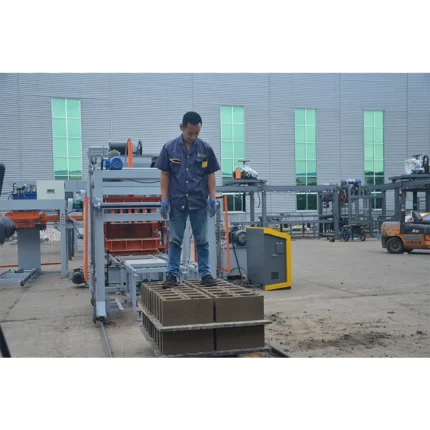
Block machinery is the single product focus, so the QT12-15 press, moulds, pallets and handling equipment are specified as one matched system rather than assembled from unrelated suppliers. Every recipe is configured against the buyer’s actual mix design and local aggregate, not pulled from a catalogue default. Mould design covers the formats the buyer’s market actually sells, with custom drawings accepted for non-standard profiles. The automation level is selectable — a plant can start with the stacker in simple mode and add full cubing later without replacing the press. Voltage, frequency and PLC display language are confirmed before the machine leaves the factory, not after it arrives. Installation support includes operator training on the specific recipes configured for that plant.
Documentation & Verification
- Factory test record run on your confirmed block format and mix proportions before dispatch
- PLC fault code list and HMI screen captures in your operator’s language included in manual
- Electrical schematic showing all PLC I/O points for integration with your existing batching system
- Hydraulic circuit diagram with valve settings matched to your 21 MPa operating pressure
- Mould drawing package listing every confirmed format with dimensional tolerances
- Packing photographs showing dismantling state and container loading sequence
Installation, Commissioning & Support
- Foundation pad sized for the 9350×2520 mm footprint and 12000 kg dynamic load with vibration isolation
- Dedicated power circuit rated for 50.7 kW continuous draw with voltage and frequency confirmed pre-shipment
- Machine shipped in dismantled sections with gantry frame bolted on site to maintain shock-resistant alignment
- Commissioning includes first-cycle parameter tuning for your local aggregate across all confirmed block formats
- Operator training covers PLC recipe selection, alarm response and mould change procedure in native language
- Wear parts list with mould cartridge lead times for manganese steel replacements specific to your formats
What to Include in Your Inquiry
To size the QT12-15 correctly, provide the specific block formats your market sells, your target daily output per format, and the local raw materials available including aggregate type and grading. Confirm your site’s voltage, frequency, and the language your operators need on the HMI. If you already have pallets, curing racks or a batching plant in place, share their specifications so the line configuration can be matched to what is already on the ground.
Frequently Asked Questions
Q: How does the PLC maintain consistency when switching between block formats?
A: The PLC stores a dedicated recipe for each confirmed format — vibration frequency, hydraulic pressure profile, feed volume, and cycle duration are all recalled automatically. When the operator selects a new format and installs the corresponding mould, the machine runs its first cycle with those stored parameters, removing the trial-and-error that causes scrap in manual setups.
Q: What is the upgrade path from the simple stacker to full cubing?
A: The QT12-15 control architecture supports adding an automatic cubing station without replacing the main PLC. The upgrade requires additional I/O modules, the cubing hardware, and a software revision that coordinates stack height and transfer timing. Planning the upgrade path at inquiry stage simplifies the electrical layout.
Q: How are voltage and PLC language configured for different export markets?
A: Voltage, frequency, and HMI language are confirmed during the proposal stage and locked into the build order. The electrical panel is wired for the target supply, and the PLC project file is loaded with the operator’s language before factory testing. Changes after shipment require on-site rework that delays commissioning.
Q: How does the press synchronize with upstream batching and downstream curing?
A: The PLC monitors pallet availability from the feeder and curing rack capacity from the stacker. If either station signals a delay, the press holds at the end of its cycle rather than producing units onto an unprepared surface. This interlock prevents the most common cause of waste on semi-automatic lines.
Q: What remote diagnostics are available for automation faults?
A: The PLC logs fault history with timestamps and parameter snapshots at the moment of alarm. With a site network connection, these logs can be accessed remotely to guide on-site troubleshooting before a service visit is necessary, reducing the diagnostic time on most electrical and sensor faults.