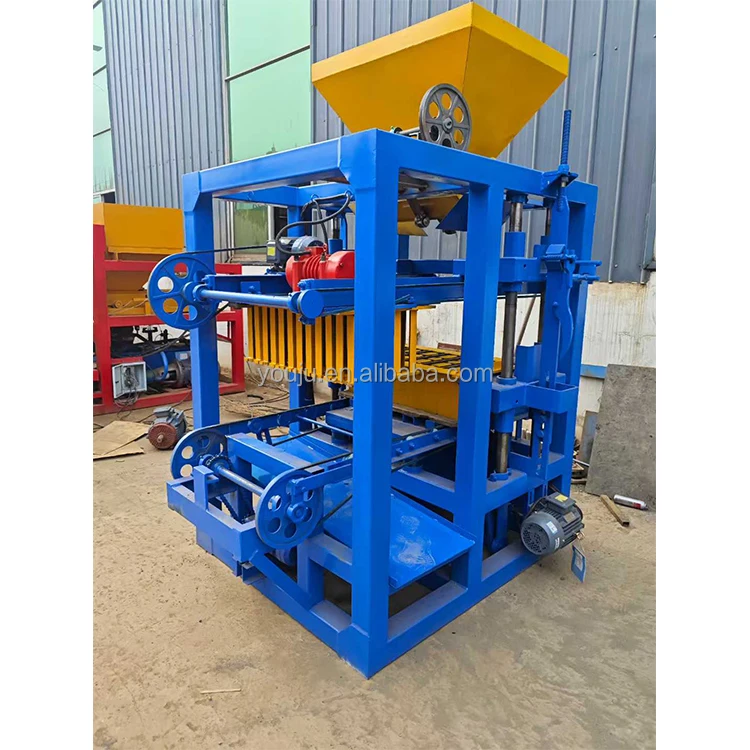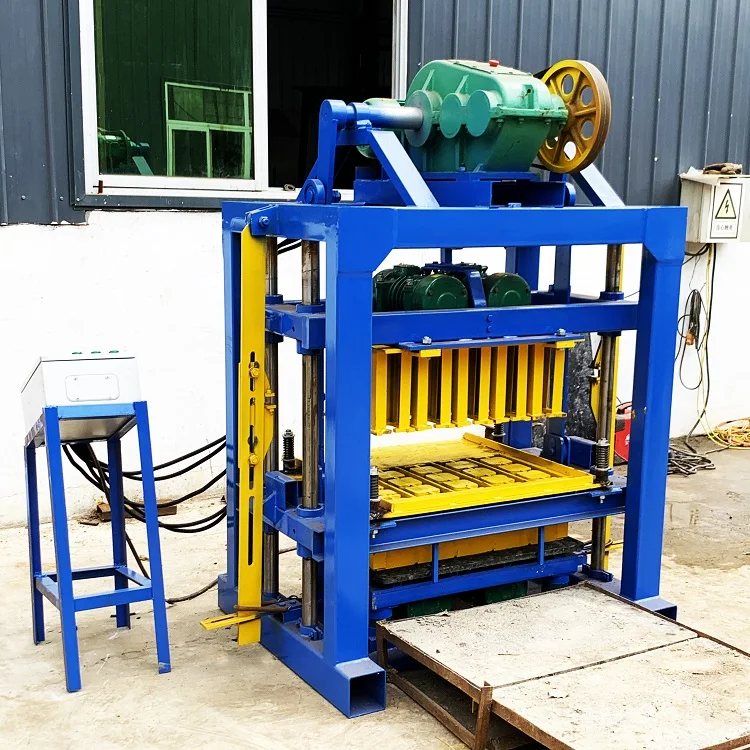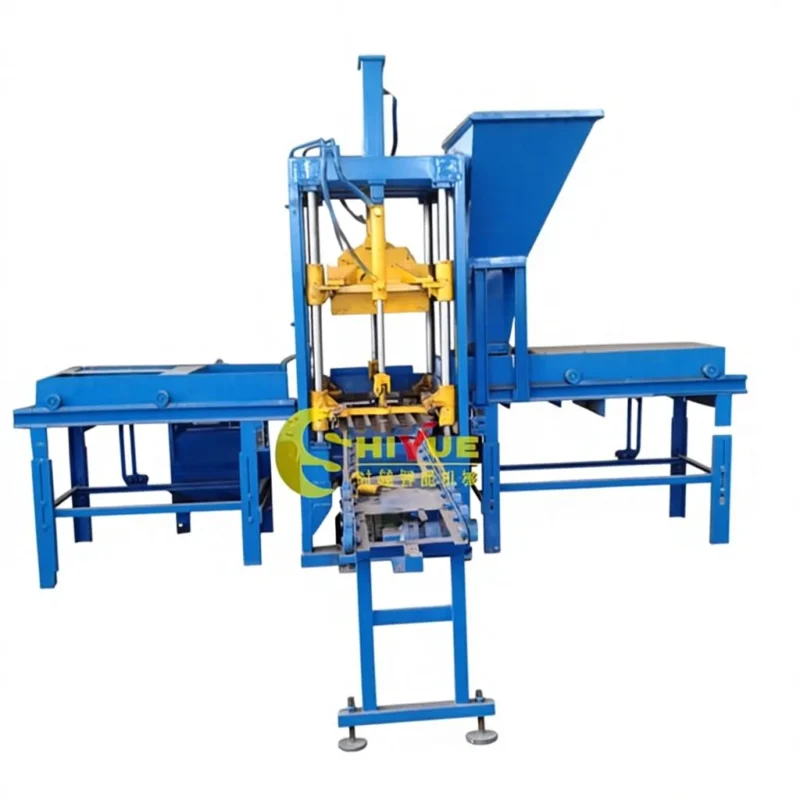

Description
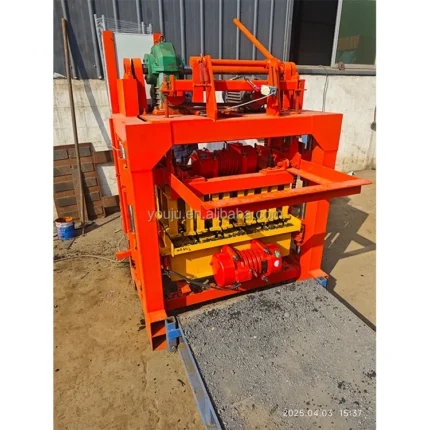
Controlled Mould Change Logic — the QTF3-20 semi-automatic stationary press integrates hydraulic clamping with PLC-managed vibration cycles, reducing format changeover friction rather than relying on manual adjustment alone.
Technical Specifications
| Parameter | Value |
|---|---|
| Model | QTF3-20 |
| Product Type | Stationary Block Machine |
| Overall Dimensions (L×W×H) | 4000×3500×2300 mm |
| Total Mass | 2870 kg |
| Total Power | 17.5 kW |
| Drive System | Hydraulic |
| Vibration Form | Platform Vibration |
| Control System | Semi-Automatic, PLC controlled |
| Output Capacity | 4320 pcs/day (basis not stated in source — confirm block format and cycle time) |
| Monitoring | No-contact proximity switch |
| Feeding System | Double layer (raw material and color surface material) |
| Main Electrical Components | Imported (Germany or Chinese famous brand) |
| Main Hydraulic Components | Imported (Germany or Chinese famous brand) |
| Compatible Mixer | JQ350 mixer with 8-meter conveyor belt |
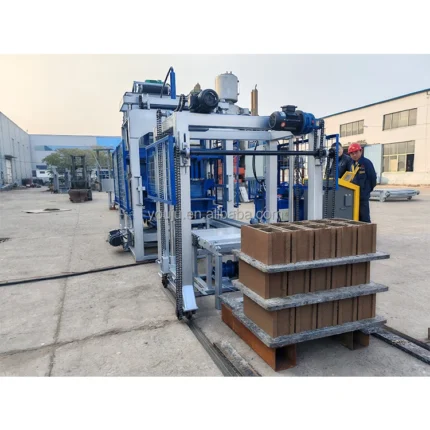
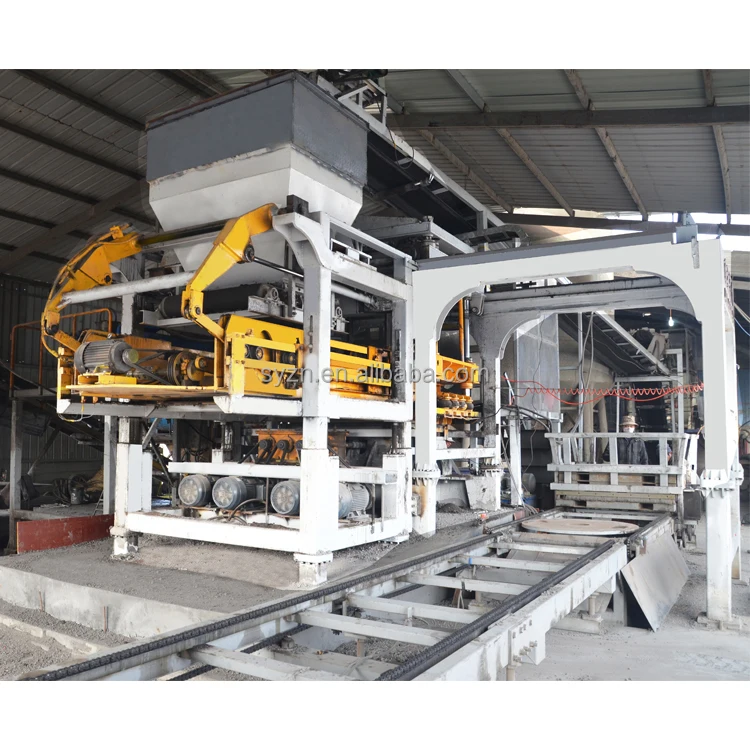
| Line Configuration | Host machine, material feeding machine, color material machine, pallet feeder, block conveyor, hydraulic station, electricity box |
Application Suitability
| Application | Material or Output |
|---|---|
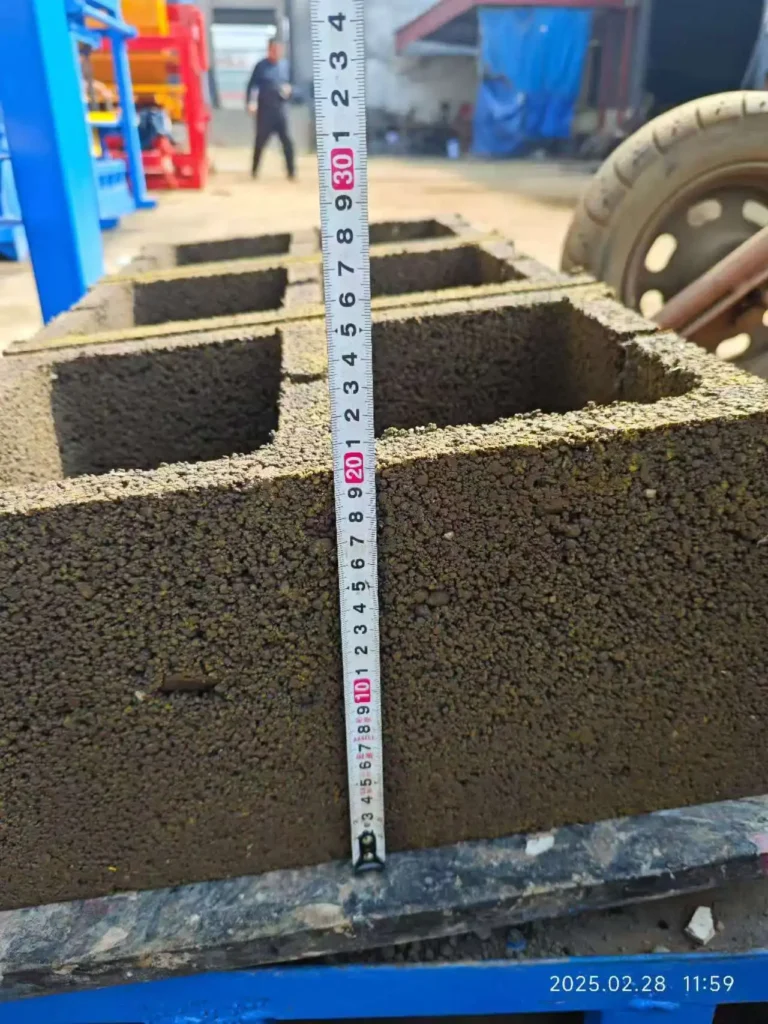
| Hollow block production | Cement, sand, coarse aggregate |
| Color paving block production | Face-mix color layer over standard concrete base |
| Interlocking brick manufacturing | Crushed stone, fly ash, cement blends |
| Park grass brick and slope protection brick | Porous concrete mixes with larger aggregate |
| Solid and standard brick runs | Fly ash, slag, cement combinations |
Why the PLC Language Question Should Come Before the Quotation
An automatic QTF3-20 block machine PLC controlled in a language your operators cannot read is a semi-manual machine in practice.
I once spent three days in Kenya蹲 next to a hydraulic hollow block press, rewriting PLC parameters and adjusting mould gaps because the local stone powder had high clay content. The vibration force was not matched to the mix, and every brick cracked the moment the platform shook. The machine was rated for a specific daily output, but none of that mattered when the HMI displayed menus in a language the floor supervisor could not navigate under pressure [NEED_CITE: operator language mismatch causing commissioning delays in block plants]. Confirming the PLC display language, voltage, and frequency before production begins is not paperwork — it determines whether the automatic QTF3-20 block machine PLC controlled actually runs automatically on your floor.
How PLC Coordination Replaces Operator Guesswork
On a semi-automatic stationary press, the PLC manages the sequence: pallet feed, material charge, vibration cycle, hydraulic press, and block ejection. The automatic QTF3-20 block machine PLC controlled uses no-contact proximity switches to confirm each station position before the next step fires, removing the mechanical wear that causes timing drift on limit-switch systems. This repeatability matters most when you switch from hollow blocks to color pavers mid-shift — the control logic adjusts vibration duration and press force per recipe, so the operator selects a program rather than dials in settings by feel.
The Double-Layer Feeding Advantage Under Automation
Color pavers and face-mix bricks require two separate material charges in a single cycle: a base layer of standard concrete and a thinner surface layer of pigmented mix. The QTF3-20’s double-layer feeding system, managed through the PLC, meters both charges with batch-to-batch accuracy that manual scooping cannot hold [NEED_CITE: color layer thickness consistency in automated versus manual block feeding]. When the control system times the color material machine to deposit after the base charge is leveled, the face-mix thickness stays uniform across the pallet — a detail that separates sellable pavers from reject stock.
Reading the Specifications That Actually Shape Your Output
The 17.5 kW total power rating covers the hydraulic pump, vibration motor, and conveyor drives running simultaneously. Platform vibration, as opposed to mould-only vibration, transmits force through the entire pallet surface, which is necessary for dense formats like interlocking bricks and slope protection blocks where edge compaction matters. The hydraulic drive system with imported components holds pressure steady across cycles, but hydraulic pressure and vibration force must be matched to your specific mix design — a high-fly-ash blend responds differently than a coarse-aggregate hollow block mix. The QTF3-20’s 4000×3500 mm footprint includes the host machine, material feeding station, and pallet feeder, so plan your floor layout around the full line configuration, not just the press dimensions.
What Happens When Electrical Specs Are an Afterthought
A buyer who confirms voltage after the machine is built faces one of two outcomes: a rewound motor and replaced transformer on arrival, or a machine that sits idle while a local electrician sources compatible components. I have seen block plants lose their first two weeks of production because the 50 Hz PLC timers ran fast on a 60 Hz supply, shortening every vibration cycle and producing under-compacted blocks [NEED_CITE: frequency mismatch effects on PLC timed cycles in industrial machinery]. The no-contact proximity switches and imported electrical components on the QTF3-20 are specified for a voltage and frequency range — that range must match your site supply before the electricity box is wired.
Why Sourcing the Press and Line Together Matters
Block machinery as a single focus means the QTF3-20 host machine, JQ350 mixer, pallet feeder, and block conveyor are specified as one matched system. The line configuration accounts for cycle time coordination so the press is not left waiting for the mixer or the pallet feeder between charges. Configuration is set against the buyer’s actual mix design and target block format, not a catalogue default that assumes ideal materials. Mould design covers the formats the buyer’s market actually sells, including custom drawings for non-standard interlock profiles. The automation level is selectable — a buyer can start with semi-automatic pallet handling and add automatic stacking later without replacing the host machine. Installation support includes operator training on the specific PLC programs loaded for your block formats.
Documentation & Verification
- Factory test record on your target block format before dispatch
- Hydraulic and electrical schematic matching your confirmed voltage
- PLC program structure showing upgrade path to automatic stacking
- Mould drawing and format list with cycle time per brick type
- Operation manual covering mould change procedure and daily checks
Installation, Commissioning & Support
- Foundation must support 2870 kg static mass plus dynamic vibration load across the 4000×3500 mm footprint
- Dedicated power circuit sized for 17.5 kW continuous draw with the confirmed voltage and frequency
- PLC language and HMI labels set to operator language before the electricity box leaves the factory
- First-run parameter tuning on your local aggregate sample to match vibration force and hydraulic pressure
- Mould change training covering quick-release tooling if included or standard bolt-on procedure
What to Include in Your Technical Inquiry
Send your target block formats with dimensions, the daily volume you need per format, and a sample of your local aggregate so the mix design can be tested against the vibration and pressure settings. Confirm your site voltage, frequency, and the language your operators need on the PLC display. If you plan to expand toward automatic stacking or cubing later, mention that now so the PLC program structure and electrical cabinet layout leave room for the upgrade.
Frequently Asked Questions
Q: How is the 4320 pcs/day capacity calculated for the QTF3-20?
A: That figure appears in source data without a stated block format, cycle time, or material basis. Actual daily output depends on whether you run hollow blocks, solid bricks, or pavers, each with a different cycle length. Request a capacity table that lists output per format so you can plan production against your real product mix.
Q: What is the upgrade path from semi-automatic to fully automatic?
A: The QTF3-20’s PLC program structure supports adding automatic pallet feeding, stacking, and cubing stations without replacing the host machine. The electrical cabinet and control logic are laid out so future stations can be integrated. Confirm this upgrade path during the quotation stage so wiring and mounting points are prepared during initial build.
Q: Can the PLC HMI language be configured before shipment?
A: Yes, the PLC display language is set during factory programming based on your confirmation. This must be specified before the electricity box is assembled, not after arrival. Operators who cannot read the HMI will run the machine manually, negating the consistency that the automatic QTF3-20 block machine PLC controlled is designed to deliver.
Q: How do vibration force and hydraulic pressure coordinate for different mixes?
A: The PLC manages vibration duration and hydraulic press force as a coordinated cycle rather than two independent settings. For a high-fly-ash mix, the control system can extend vibration time at lower pressure; for coarse aggregate, it shortens vibration and increases press force. These parameters are tuned during commissioning using your actual material sample.