

Description
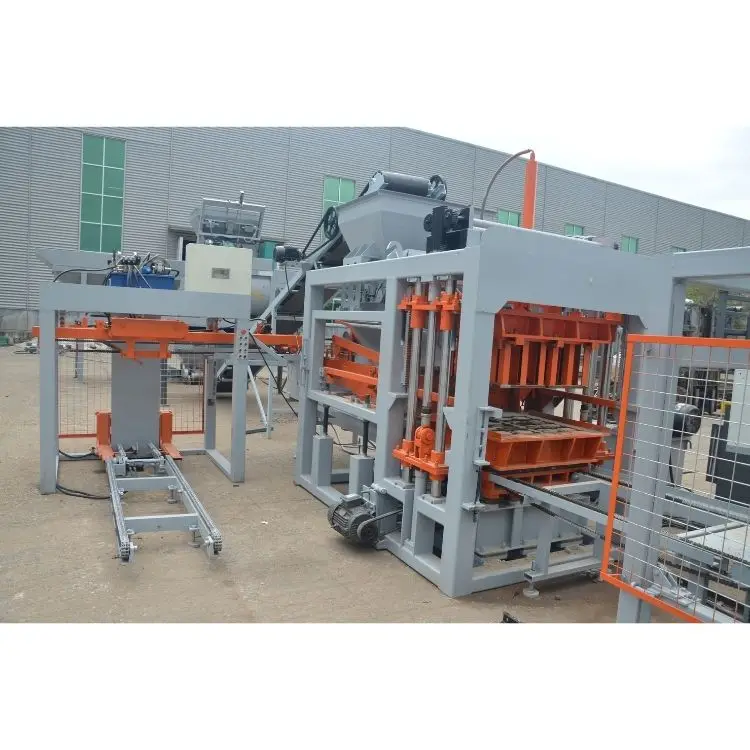
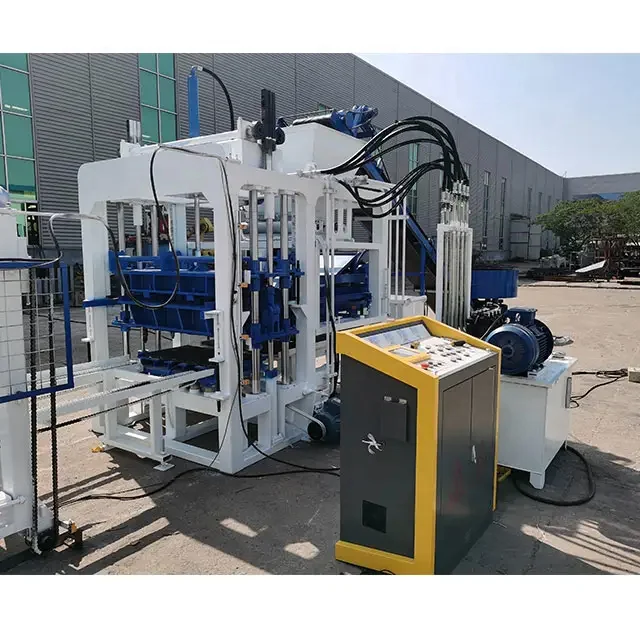
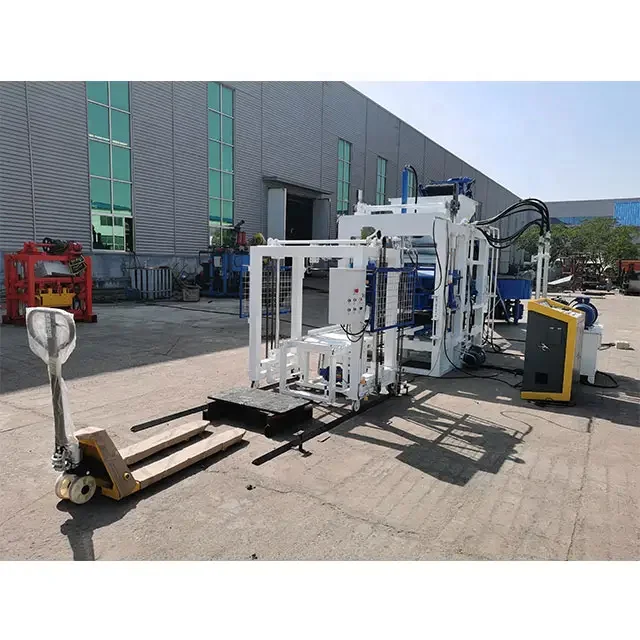
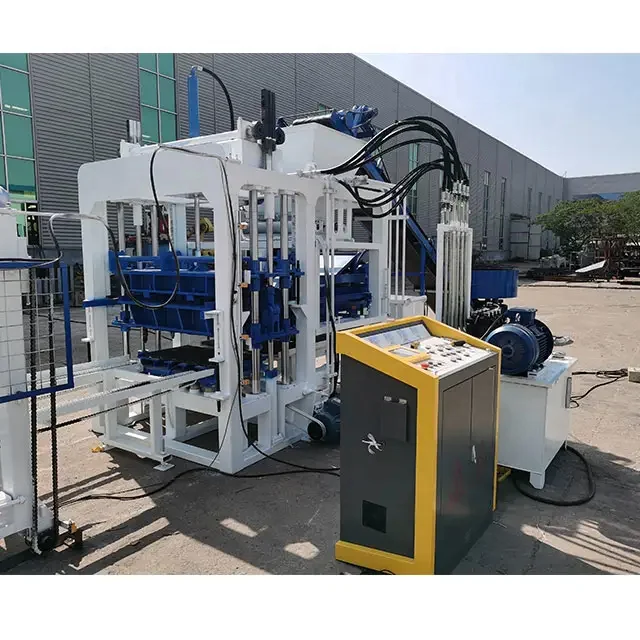
PLC-Controlled Block Production — the QT4-18 ships with frequency converter logic and Schneider electricals to remove manual guesswork from every pressing cycle.
Technical Specifications
| Parameter | Value |
|---|---|
| Model | QT4-18 |
| Product Type | Automatic Block Making Machine |
| Overall Dimensions | 2500×1750×2200mm |
| Rated Pressure | 16 MPa |
| Vibration Form | Platform Vibration |
| Pallet Size | 950×550mm |
| Molding Cycle | 18-25s (basis to be confirmed by block format) |
| Overall Power | 27.5kW |
| Control System | PLC with frequency converter |
| Electrical Components | Schneider brand |
| Mould Lifting Mechanism | Double-sided synchronous gears |
| Material Feeder | Distribution belt hopper |
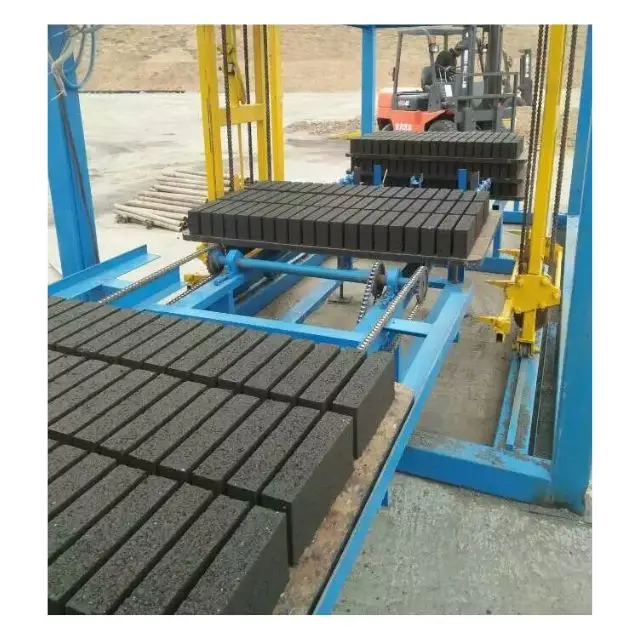
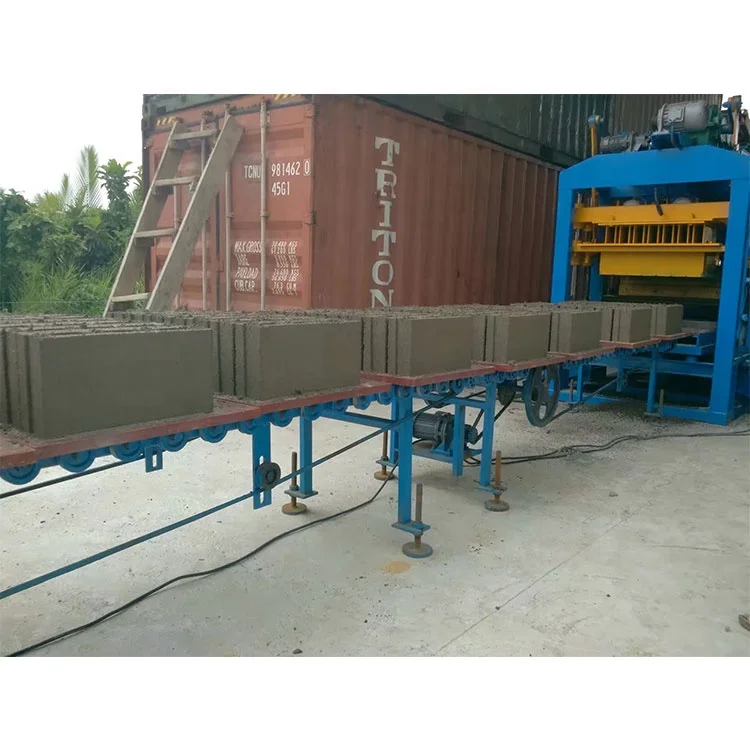
| Support Equipment Included | JQ500 concrete pan mixer, 8m belt conveyor (6m optional), stacker, block clamper, trolley |
| Mould | One free hollow mould included; extra moulds customizable |
| Voltage & Frequency | Configurable (basis to be confirmed by destination market) |
Application Suitability
| Application | Material or Output |
|---|---|
| Hollow block production | Crushed stone, cement, and sand aggregates |
| Solid block manufacturing | Fly ash, concrete, and local gravel mixes |
| Paving block forming | High-density concrete with fine aggregate finishes |
| On-site contractor production | Small to medium batch runs using locally sourced materials |
| Start-up block plant operations | Single-operator production with automated cycle management |
What "Automatic" Actually Means on the Shop Floor
The QT4-18 automatic block making machine PLC controlled system does not simply mean a screen on the cabinet wall; it means the vibration duration, hydraulic dwell time, and feeder travel are locked into repeatable parameters that an operator cannot accidentally override mid-shift.
I spend most of my time wiring PLC cabinets and debugging frequency converters for block lines leaving Shandong. The machines that come back with field complaints almost always trace back to a control parameter that someone changed locally without documenting the original value. When a buyer selects an automatic block making machine PLC controlled configuration, the goal is consistency across batches, not just replacing a push-button station with a touchscreen. The real value appears when the second shift produces blocks that test to the same compressive strength as the first, because the PLC holds the cycle logic regardless of who is standing at the controls. [NEED_CITE: compressive strength testing standards for concrete masonry units]
How the Frequency Converter Changes Vibration Behaviour
A standard contactor-driven vibration motor runs at fixed speed, so the vibration force applied to the mould cavity stays constant regardless of the block format being pressed. The frequency converter on the QT4-18 adjusts motor speed in real time, which means the vibration profile can be tuned for a lightweight hollow block and then reprogrammed for a dense paving block without mechanical adjustment. This is what separates an automatic block making machine PLC controlled setup from a relay-based panel: the control system manages the vibration curve, not just on-off states.
Synchronous Gear Lifting and Mould Alignment
The double-sided synchronous gear mechanism lifts the mould box evenly on both sides, preventing the uneven wear that occurs when one side of a chain-driven lift stretches faster than the other. On a machine running three or four mould changes per week, the gear system keeps the mould cavity parallel to the pallet across thousands of cycles. [NEED_CITE: mould alignment tolerances in hydraulic block presses]
Reading the Specification Sheet Against Your Actual Mix
The 16 MPa rated pressure and platform vibration form the mechanical foundation, but the moulding cycle of 18-25 seconds only holds if the buyer’s aggregate gradation and cement ratio allow the mix to consolidate within that window. A dry mix with high coarse aggregate content may need the full 25-second cycle, while a finer sand-heavy mix could press at 18 seconds. The distribution belt hopper feeds material into the mould cavity uniformly, which matters most when the mix design includes lightweight aggregates that tend to segregate in a gravity-fed shoe. The 950×550mm pallet size determines how many blocks fit per cycle and must match the curing rack spacing the buyer already has on site — a detail I now confirm with photographs before releasing any line layout drawing.
When the PLC Language Becomes a Commissioning Delay
A machine can arrive on site with every mechanical system intact and still sit idle for days because the PLC display is in a language the local electrician cannot read. [NEED_CITE: common commissioning delays in exported industrial machinery] I have watched entire installation schedules slip because the HMI text was confirmed too late, after the cabinet was already wired and tested. The voltage and frequency must also match the destination grid before the machine leaves the factory; rewiring a 380V/50Hz panel for a 440V/60Hz site is possible but adds days of work that could have been avoided with a confirmation document signed before production started.
Why This Configuration Supports a Future Upgrade Path
The QT4-18 ships with a stacker and block clamper in the support equipment list, which means the basic material handling loop is already in place. A buyer starting with manual pallet return can later add an automatic pallet feeder and cubing station without replacing the press itself, because the PLC has unused I/O channels reserved for those additions. This is the practical meaning of a semi-automatic starting point with a clear automation upgrade path: the control architecture is designed to accept additional stations rather than requiring a full cabinet swap.
Why Buyers Source This Line From Shandong
The QT4-18 is configured as a matched system where the JQ500 pan mixer output rate, the 8m belt conveyor throughput, and the press cycle time are balanced so no single station bottlenecks the others. The mould design starts from the buyer’s actual block format and local aggregate rather than a default catalogue drawing. Schneider electrical components mean that replacement contactors and overload relays are available through regional distributors in most export markets, reducing the downtime when a component eventually fails. The factory test record demonstrates cycle repeatability under the buyer’s target block format before the machine is crated. Documentation includes hydraulic and electrical schematics that local maintenance teams can follow without calling back to the factory for every fault code.
Documentation & Verification
- Factory test record showing cycle repeatability on your specified block format before crating
- Electrical schematic with Schneider component references and PLC I/O allocation map
- Voltage and frequency confirmation document signed before production release
- Hydraulic circuit diagram with pressure settings matched to your mould configuration
- Wear parts list covering mould liners, vibration springs, and hydraulic seals
- PLC display language confirmation prior to HMI programming
Installation, Commissioning & Support
- Foundation pad must accommodate 2500×1750mm footprint with vibration isolation for the 16 MPa pressing load
- Dedicated power circuit required for the 27.5kW total load with phase sequence verification on arrival
- PLC parameter backup loaded to USB before shipping, enabling on-site restore if settings are lost
- Operator training covers frequency converter adjustment for each block format in your production schedule
- Mould change procedure documented step-by-step with double-sided synchronous gear lockout sequence
- First-year spare parts package sized around the specific mould and hydraulic wear items in your quotation
Before You Request a Quotation
Send the block format you intend to produce most often, including dimensions and target compressive strength. Provide your local voltage and frequency, the PLC display language your electricians read, and photographs of your existing curing racks and forklift so the 950×550mm pallet specification can be verified against your site before production begins.
Frequently Asked Questions
Q: What automation level does the QT4-18 ship with, and what is the upgrade path?
A: The machine ships with PLC-controlled pressing, automated material feeding via the distribution belt hopper, and a stacker and block clamper for basic output handling. The PLC reserves I/O channels for future additions such as an automatic pallet feeder or cubing station, allowing the line to grow from semi-automatic material handling toward fully automatic stacking without replacing the control cabinet.
Q: How are PLC display language and control parameters confirmed before shipment?
A: We request written confirmation of the destination voltage, frequency, and required HMI language before the electrical cabinet is wired. The PLC program is then loaded with your block format cycle parameters, and a factory test record is generated showing repeatable cycle timing on the specified mould before the machine is approved for dispatch.
Q: Does the cycle time vary by block format, and how is this programmed?
A: The 18-25 second range covers different block formats and mix designs. The PLC stores a separate recipe for each mould, including vibration duration, pressure dwell, and feeder travel speed. When the operator selects a format on the HMI, the frequency converter adjusts vibration speed automatically to match that recipe.
Q: How does the frequency converter improve vibration consistency?
A: Instead of running the vibration motor at a single fixed speed, the frequency converter adjusts motor RPM based on the block format being pressed. This means a lightweight hollow block receives a different vibration profile than a dense paving block, producing more uniform compaction and reducing the risk of corner breakage on demoulding.
Q: What electrical component brand is used, and are replacements available locally?
A: The control cabinet uses Schneider contactors, overload relays, and circuit breakers. These are standard industrial components stocked by regional distributors in most export markets, so a replacement can typically be sourced locally without waiting for a factory shipment when a component reaches end of life.