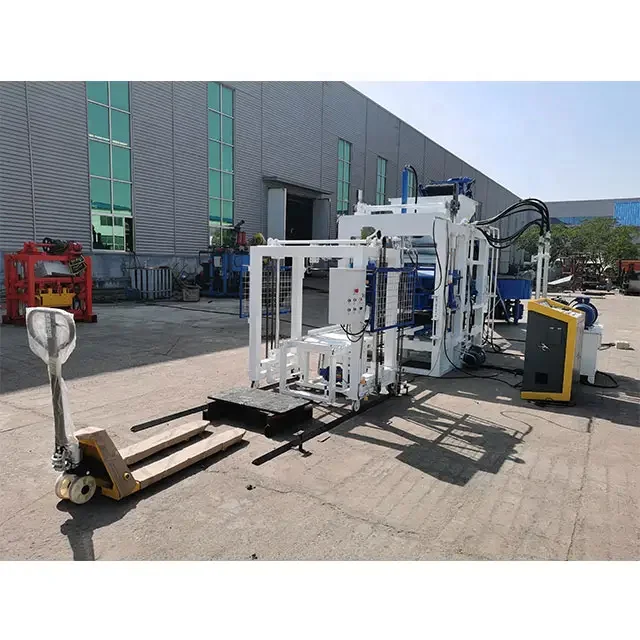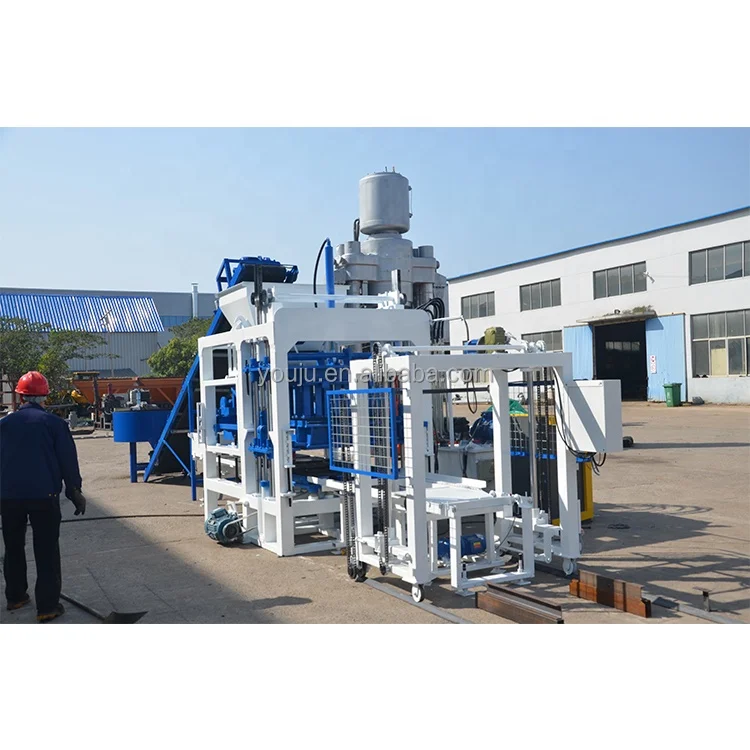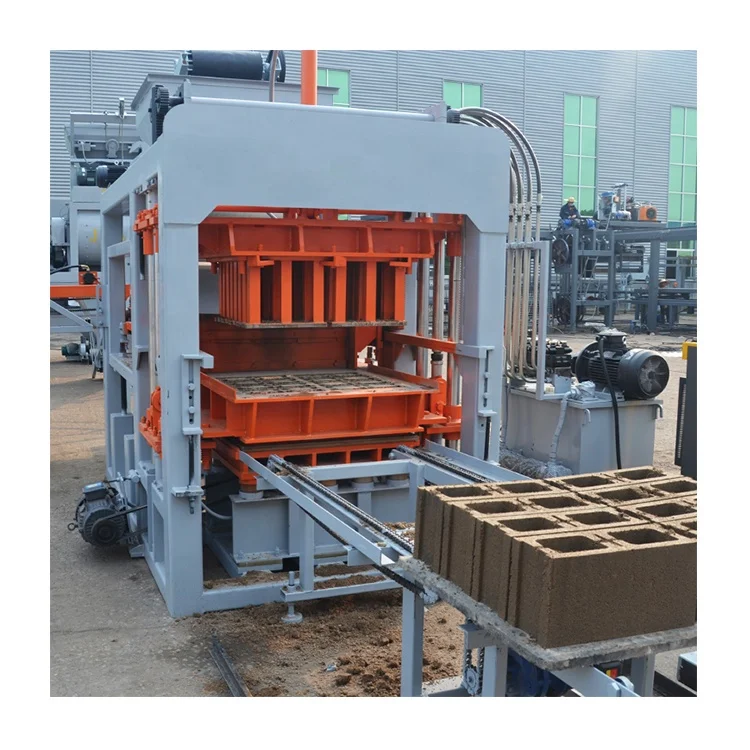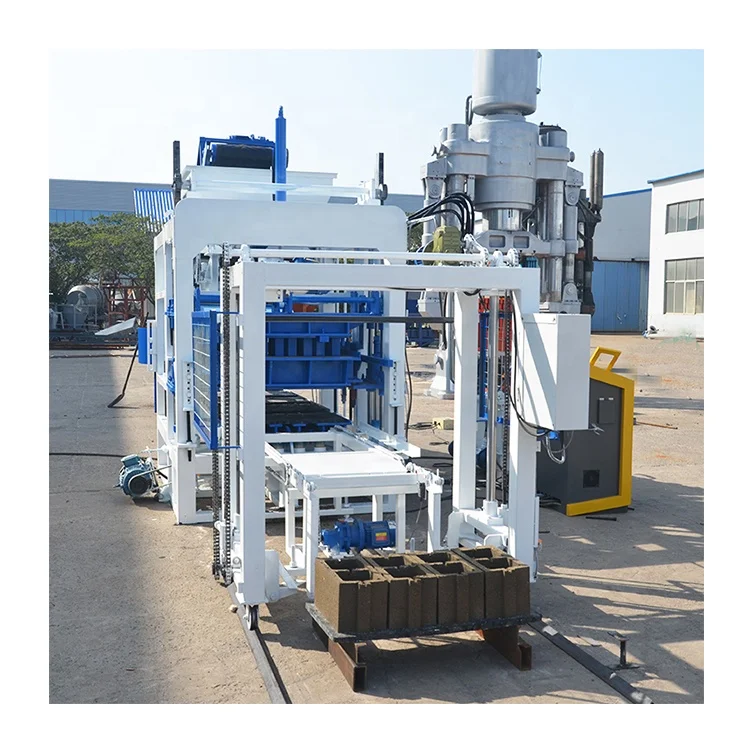


Description
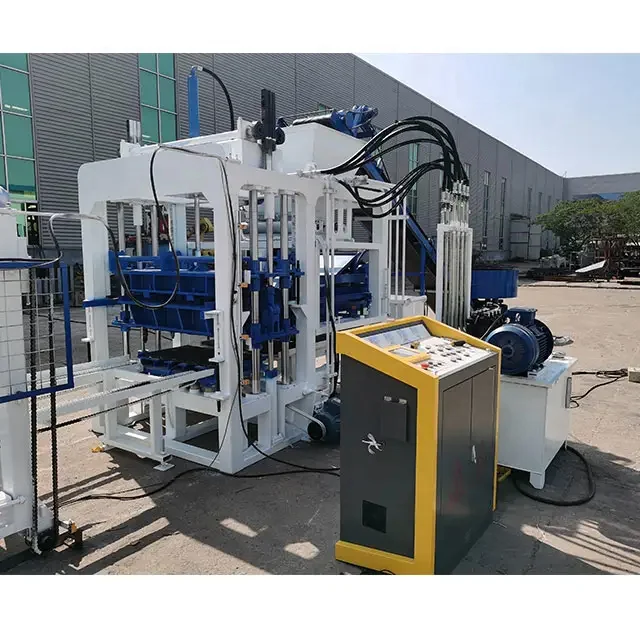
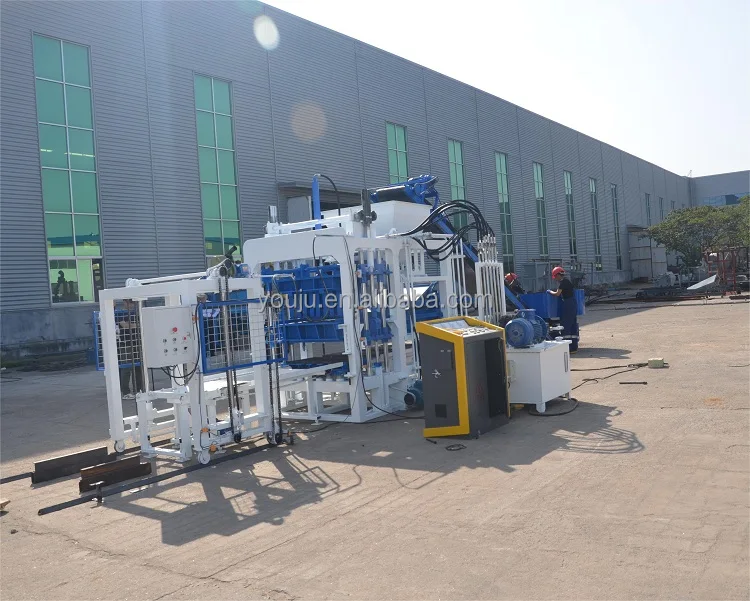
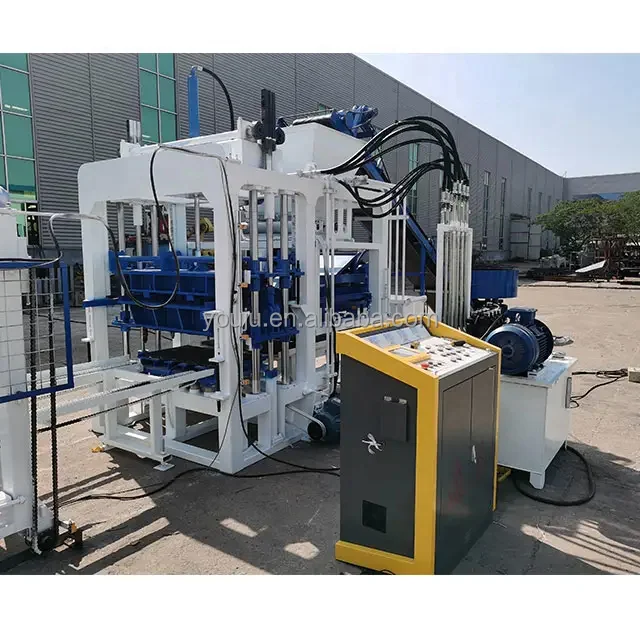
Intelligent cycle control — The QT4-18 locks vibration force and hydraulic pressure into a PLC-managed sequence so every block meets the same density target, regardless of shift changes or operator experience.
Technical Specifications
| Parameter | Value |
|---|---|
| Model | QT4-18 |
| Product Type | Semi-Automatic Concrete Block Making Machine |
| Overall Dimensions | 2500×1750×2200 mm |
| Rated Pressure | 16 MPa |
| Vibration Form | Platform Vibration |
| Pallet Size | 950×550 mm |
| Molding Cycle | 18–25 s (basis not stated in source — confirm block format / material / thickness) |
| Overall Power | 27.5 kW |
| Control System | PLC with frequency converter |
| Electrical Components | Schneider (source value — verify against manufacturer catalog) |
| Mould Lifting Mechanism | Double-sided synchronous gears |
| Material Feeding | Distribution belt hopper |
| Automation Level | Semi-automatic (manual or machinery block transfer to curing yard) |
| Supporting Equipment | JQ500 pan mixer, 6 m or 8 m belt conveyor, block stacker, block clamper, cement silo, batching plant |
Application Suitability
| Application | Material or Output |
|---|---|
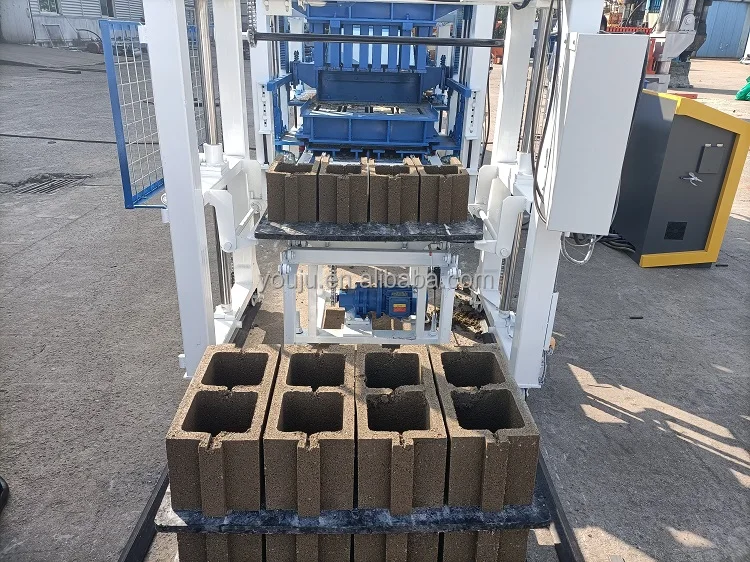
| Hollow block production | Crushed stone, sand, cement, water — target wall and partition blocks |
| Solid brick production | Fine aggregate and cement blends for load-bearing masonry |
| Paving block production | High-density concrete mixes for pedestrian and light-traffic surfaces |
| On-site contractor production | Local aggregate with portable mixing and manual curing-yard transfer |
Why Vibration Parameters Must Match Your Aggregate Before You Sign
The automatic QT4-18 block machine only repeats what the PLC is told to repeat — if the input profile is wrong for your mix, every cycle will be consistently wrong.
I remember a Middle East project where the buyer ordered a semi-automatic line based on catalogue output figures. Their local sand carried high clay content, which absorbed vibration energy differently from the clean river sand used in factory tests. The blocks looked fine on the outside but crumbled under compressive-strength testing. It took on-site parameter recalibration and a revised mix formula before the PLC controlled block making machine produced sellable output. That experience shaped how I approach every quotation now: I ask for your aggregate sieve analysis and a sample mix before I confirm cycle parameters [NEED_CITE: ASTM C90 compressive strength requirements for load-bearing concrete masonry units].
Frequency Converter Precision Across the Molding Cycle
The PLC with frequency converter on this automatic QT4-18 block machine regulates motor speed at each stage — feed, vibration, press, demould — rather than switching between fixed on/off states. This means the vibration force ramps up and tapers off in a controlled curve, reducing micro-cracks that form when full-amplitude vibration hits fresh concrete abruptly. For hollow blocks with thin webs, that controlled ramp is the difference between intact walls and hairline fractures visible only after curing.
Double-Sided Gear Lifting and Format Changeover
The mould lifting mechanism uses double-sided synchronous gears, keeping the mould box level as it rises. When you swap from a 400×200×200 mm hollow block mould to a paving block mould, the gears prevent one side from dragging ahead and scarring the green block surface. Repeatable alignment also means the operator does not spend twenty minutes shimming after every change.
How Pressure, Vibration, and Pallet Size Interact
The 16 MPa rated pressure and platform vibration work together: pressure compresses the mix while vibration liquefies it enough to flow into mould corners. If one dominates, you get either over-compacted blocks that crack during demoulding or under-compacted blocks that slump on the pallet. The 950×550 mm pallet size determines how many blocks fit per cycle and must align with your curing-yard rack spacing and forklift tine width — a mismatch means blocks stacked on the floor instead of racked. [NEED_CITE: concrete block curing humidity and temperature standards]
Distribution Belt Hopper and Batch Consistency
The distribution belt hopper meters material into the mould box in a controlled pass, reducing the density variation that occurs when a manual shovel deposits uneven piles. Uniform fill means the PLC controlled block making machine delivers the same block weight cycle after cycle, which is what your quality-control inspector measures when pulling samples from the curing yard.
The Cost of Ignoring Control Language and Voltage Confirmation
Buyers who skip voltage and frequency confirmation sometimes discover on arrival that the PLC display runs in a language their operators cannot read, or the motor contactors are rated for 50 Hz on a 60 Hz grid. The machine sits under tarp for weeks while replacement components ship. With the automatic QT4-18 block machine, these details must be locked before production starts — not after the container is loaded [NEED_CITE: international voltage and frequency standards for industrial machinery exports].
Why Sourcing Here Differs from a Catalogue Order
The QT4-18 is configured against your actual mix design and local aggregate rather than a default factory setting. Moulds are selected or custom-designed for the block formats your market actually buys, not the formats that photograph well in a brochure. Automation level is selectable, so a semi-automatic start today can accommodate automatic stacking and cubing integration later without replacing the press. Supporting equipment — mixer, conveyor, stacker, clamper — is specified as one matched line so cycle times align and the press is not left waiting between stages.
Documentation & Verification
- Line layout and capacity calculation stating the specific block format assumed
- PLC program printout with parameter ranges set for your mix profile
- Factory test record logging cycle time per target block format before dispatch
- Hydraulic and electrical schematic with Schneider component references
- Mould drawing and format list matching your confirmed order
- Packing photographs and customs documentation support
Installation, Commissioning & Support
- Foundation plan sized to the 2500×1750 mm footprint and 27.5 kW total power draw
- Dedicated circuit specification for 16 MPa hydraulic pump start-up surge
- Skid-mounted delivery with partial disassembly noted for container loading
- PLC parameter tuning on-site using your local aggregate and confirmed mix ratio
- Operator training covering mould change procedure and frequency converter settings
- Wear parts list identifying first-replacement intervals for hydraulic seals and vibration springs
What We Need to Quote Accurately
Tell us your target block format and daily volume, the aggregate sieve analysis available at your site, and the voltage and frequency of your plant supply. If you already run a mixer or conveyor, share the model so we can confirm pallet feed height and cycle synchronization. We will return a configuration proposal with capacity stated per format, not a single headline number.
Frequently Asked Questions
Q: What automation functions does the PLC control, and what remains manual on the QT4-18?
A: The PLC manages material feed timing, vibration duration and intensity, press pressure application, and mould lifting sequence through the frequency converter. Pallet transfer to the curing yard and block stacking remain manual or require a separate block stacker and clamper, which can be added as supporting equipment within the line.
Q: How is the 18–25 second molding cycle verified, and for which block format?
A: That range comes from the source data without a stated block format or material basis. Before production, we run a factory test using your confirmed mould and mix to log actual cycle time, and that figure becomes the reference in your test record and capacity calculation document.
Q: Can the control system be upgraded to fully automatic stacking and cubing later?
A: Yes. The semi-automatic configuration leaves interface capacity for automatic pallet return, stacking, and cubing equipment. When you are ready to add those stations, the existing PLC program is extended rather than replaced, keeping operator familiarity intact.
Q: How do I confirm PLC display language and voltage before commissioning?
A: We lock both during the quotation stage. You specify the operator language and your plant voltage and frequency; we confirm them in writing and record them on the electrical schematic and factory test report before the machine ships.