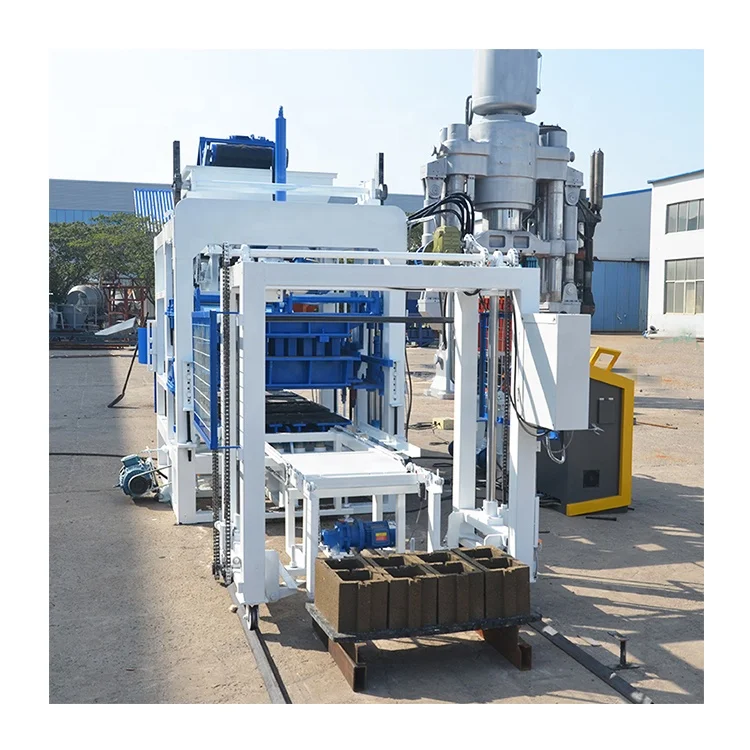
Description
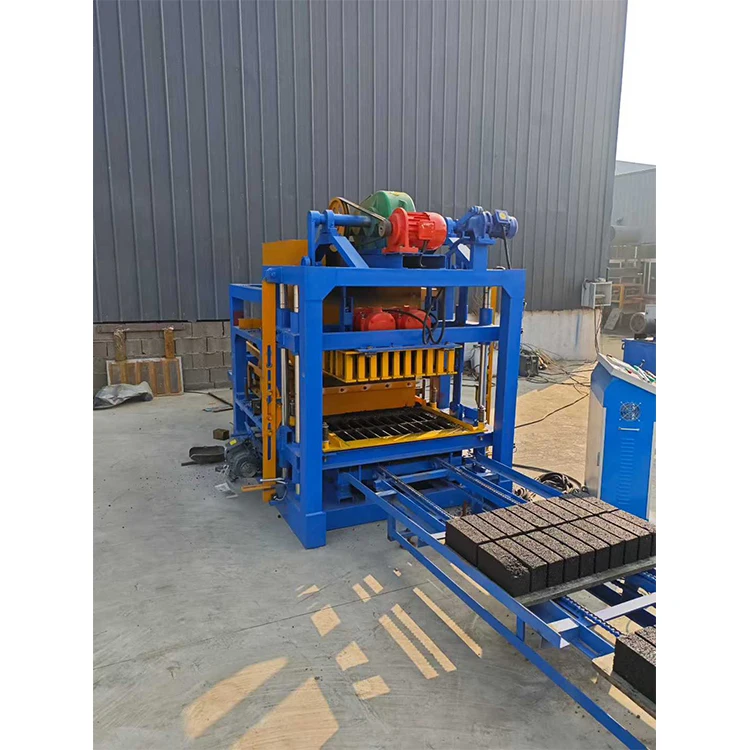
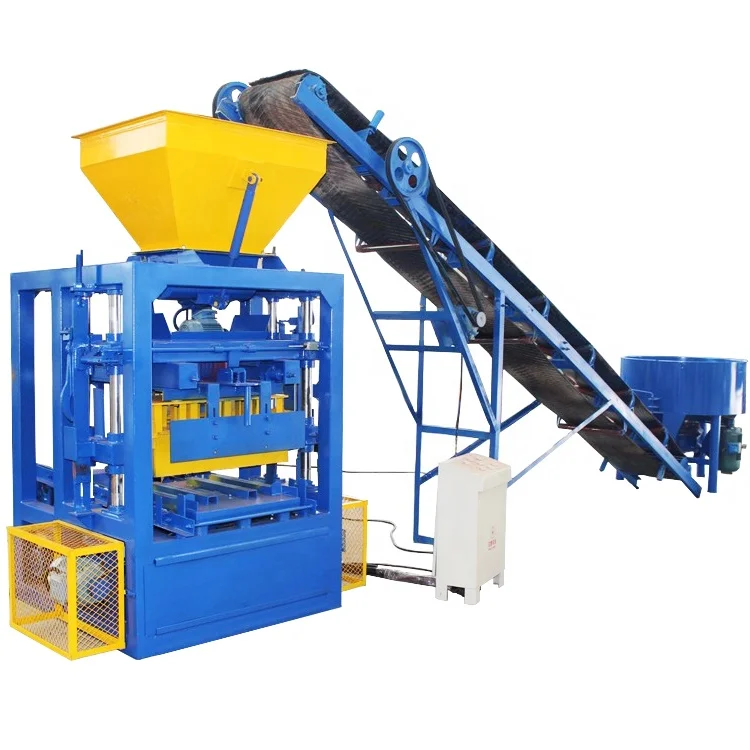
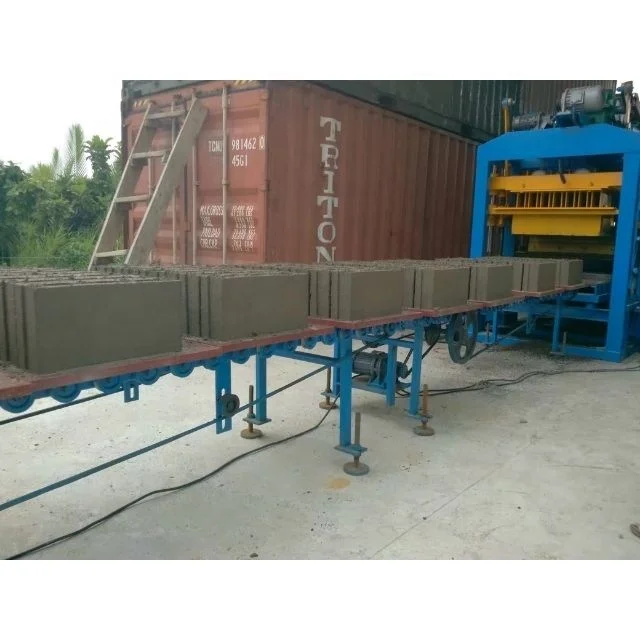
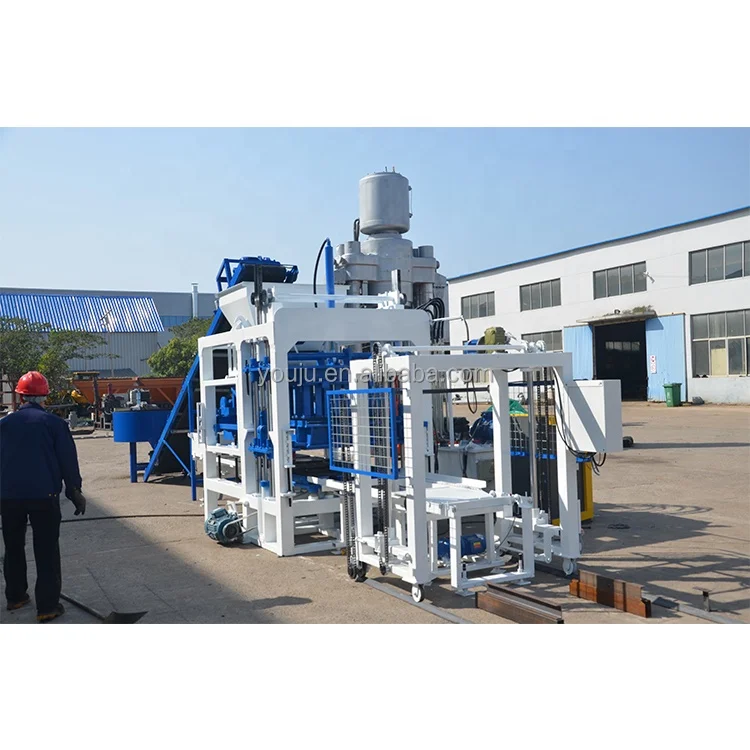
Integrated System Specification — The QT4-16 block machine, pallet handling, and mould tooling are engineered as a matched set rather than sourced separately, ensuring cycle times align from the mixer through to the curing rack.
Technical Specifications
| Parameter | Value |
|---|---|
| Model | QT4-16 |
| Product Type | Automatic Hydraulic Concrete Block Making Machine |
| Overall Dimensions (L×W×H) | 7400×1950×2800mm |
| Total Mass | 5T |
| Rated Pressure | 21MPa |
| Main Vibration Form | Platform Vibration |
| Vibration Frequency | 2800-4500 r/min |
| Vibration Force | 40KN |
| Pallet Size | 900×550mm |
| Molding Cycle | 15-20s (basis not stated in source — confirm block format / material / thickness) |
| Demolding Method | Hydraulic |
| Machine Frame Material | Manganese steel (China national standard) |
| Control System | PLC intelligent control with man-machine interface, logic control, production program, malfunction diagnosis system and remote control function |
| Automation Level | Full automatic |
| Applied Products | Concrete blocks, hollow/solid blocks, pavers, interlocking blocks, curbstone, colored pavers |
| Raw Materials | Crushed stone, sand, cement, dust, fly ash, gravel, slag |
| Factory Area | 600m² |
Application Suitability
| Application | Material or Output |
|---|---|
| Hollow block production for residential walls | Crushed stone, sand, and cement mixes |
| Solid block manufacturing for load-bearing structures | Gravel, fly ash, and slag aggregates |
| Interlocking paver production for driveways and walkways | Colored concrete mixes with fine aggregates |
| Curbstone forming for road and pavement edges | High-strength concrete with coarse gravel |
Why Your PLC Language Matters Before the Machine Arrives
A control interface your operators cannot read turns an automatic block machine PLC controlled system back into a manual one.
I have watched plant owners spend the first week of commissioning just translating fault codes on the HMI screen because the default language did not match the floor team. The QT4-16 ships with a malfunction diagnosis system designed to guide operators through fault elimination, but that guidance only works if the text on screen is readable. Confirming display language and voltage frequency before production starts prevents delays that no amount of on-site troubleshooting can fix quickly [NEED_CITE: voltage and frequency standards by export market].
What the PLC Actually Removes from the Operator
The QT4-16 runs complete production program sequencing through its PLC logic, meaning the press cycle, pallet feed timing, and vibration duration are locked into a repeatable routine. An operator no longer decides when to trigger the hydraulic demolding or how long the platform vibration holds at peak force. This is where an automatic block machine PLC controlled architecture earns its value — not by replacing the operator, but by removing the variables that cause batch-to-batch drift when humans manage timing by feel.
Remote Diagnostics and What They Change on the Floor
The remote control and long-distance scrutiny function allows off-site monitoring of production parameters and fault states. When a warning signal triggers, the malfunction diagnosis system points toward the specific subsystem rather than requiring a specialist to walk the line. For plant owners who do not keep a controls engineer on staff, this capability shortens the gap between a fault appearing and production resuming [NEED_CITE: PLC remote diagnostics adoption in block manufacturing].
Reading the Specs That Shape Block Density
The 21MPa rated pressure and 40KN vibration force work together during compaction — hydraulic pressure compresses the mix from above while platform vibration at 2800–4500 r/min settles aggregate into voids below. If your local sand runs high in fines or clay content, the vibration frequency range matters because finer material needs different frequency tuning to achieve full densification. The 900×550mm pallet size determines how many blocks form per cycle, and that pallet must match the spacing on your existing curing racks and the fork dimensions of the forklift already on site. Manganese steel frame construction handles the repeated shock loading from vibration cycles without progressive deformation, which keeps the mould alignment true over extended production runs.
The Cost of Skipping the Automation Scope Conversation
Buyers sometimes assume "full automatic" covers everything from raw material feeding through to stacked and cubed output, only to find the quotation stops at the press. When pallet feeding, stacking, and curing rack handling are not included, workers end up moving wet blocks by hand — negating the consistency the automatic block machine PLC controlled system was purchased to deliver. Clarifying which stations are automated and which remain manual before the order is placed avoids a line that is automatic in name but labour-heavy in practice [NEED_CITE: automation scope mismatches in block plant procurement].
Why This Line Is Configured as One System
Block machinery is our single focus, so the QT4-16 press, moulds, pallets, and handling equipment are specified as a matched set rather than assembled from separate suppliers. Configuration is set against your actual mix design and local aggregate, not a catalogue default — because a vibration profile tuned for clean river sand will underperform with high-clay laterite. Mould design covers the formats your market actually sells, including custom drawings when standard hollow or solid block profiles do not match local building codes. The automation level is selectable, so a buyer can start with the PLC-controlled press and add automatic stacking or cubing later as production volume justifies the investment.
Documentation & Verification
- Machine specification sheet confirming QT4-16 pressure, vibration, and pallet dimensions
- PLC display language and control interface language confirmation before production
- Line layout showing QT4-16 footprint within your 600m² factory area allocation
- Factory test record demonstrating cycle performance on your target block format
- Hydraulic and electrical schematic matching your confirmed voltage and frequency
- Mould drawing and format list for every block profile included in the order
Installation, Commissioning & Support
- Foundation must support 5T machine mass plus dynamic vibration loads across the 7400×1950mm footprint
- Dedicated electrical circuit required matching confirmed voltage and frequency before QT4-16 energization
- PLC man-machine interface configured to operator language prior to first production run
- Vibration frequency tuned between 2800–4500 r/min against your specific aggregate and mix design
- Mould change procedure trained on-site so format switches do not consume a full shift
- Wear parts list and hydraulic seal kit supplied with initial QT4-16 shipment for first replacement cycle
What We Need to Size Your Configuration
Send us your target block formats, the daily output you need per format, and a sample of your local aggregate so we can run a mix test before recommending vibration and pressure settings. Confirm your site voltage, frequency, and the language your operators read on a control screen. Tell us which upstream and downstream stations you already have in place so the QT4-16 automation scope fills the actual gaps in your line.
Frequently Asked Questions
Q: How does the PLC control system manage cycle parameters and ensure batch-to-batch consistency?
A: The PLC stores complete production programs that lock vibration duration, hydraulic pressure application, and demolding timing into repeatable sequences. Once parameters are set for a specific block format and mix, the system executes the same cycle every time, removing the variation that comes from operators adjusting timing manually between shifts.
Q: What remote diagnostics and fault elimination capabilities are included?
A: The malfunction diagnosis system displays warning signals on the man-machine interface and points operators toward the specific subsystem causing the fault. The remote scrutiny function allows off-site engineers to view production parameters and fault logs, enabling troubleshooting guidance without requiring a specialist visit for every stoppage.
Q: What automation level is covered in a typical QT4-16 quotation?
A: The press itself runs full automatic under PLC control, but pallet feeding, stacking, and cubing may be configured separately. Confirm exactly which stations are included so you know where manual handling begins and ends. The automation scope can be expanded later as your production volume grows.
Q: How do I confirm voltage, frequency, and PLC display language before production?
A: Provide your site electrical specifications and your operator team’s preferred language during the inquiry stage. These details are confirmed in writing before the QT4-16 enters production so the control panel and electrical cabinet match your facility on arrival, avoiding rewiring or reprogramming delays during commissioning.