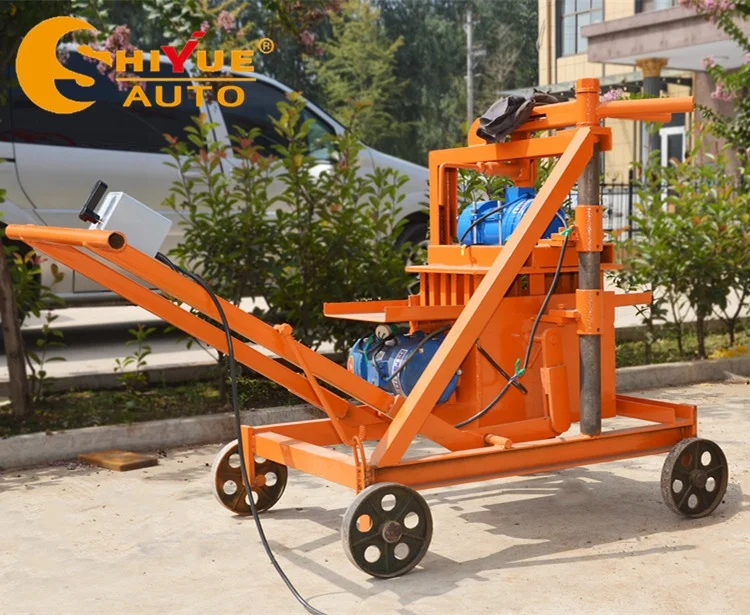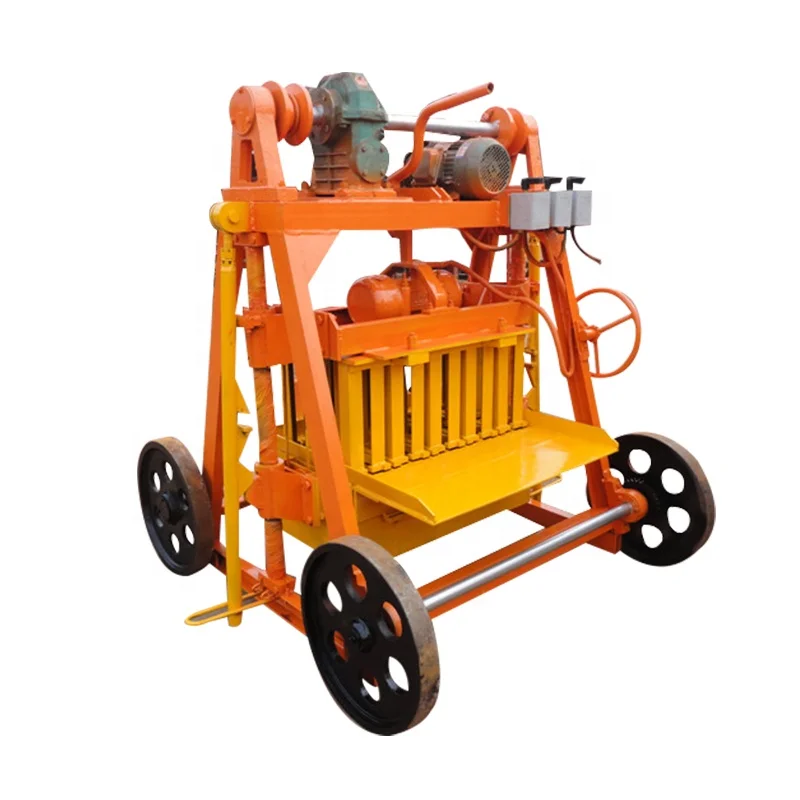


Description
Block machinery as a single focus — the QMJ4-45 is specified against your actual mix design and local aggregate rather than shipped as a catalogue default, ensuring the vibration frequency and molding cycle produce consistent density from the first block to the last.
Technical Specifications
| Parameter | Value |
|---|---|
| Model | QMJ4-45 |
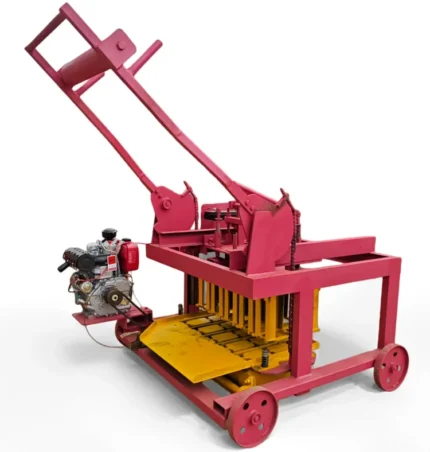
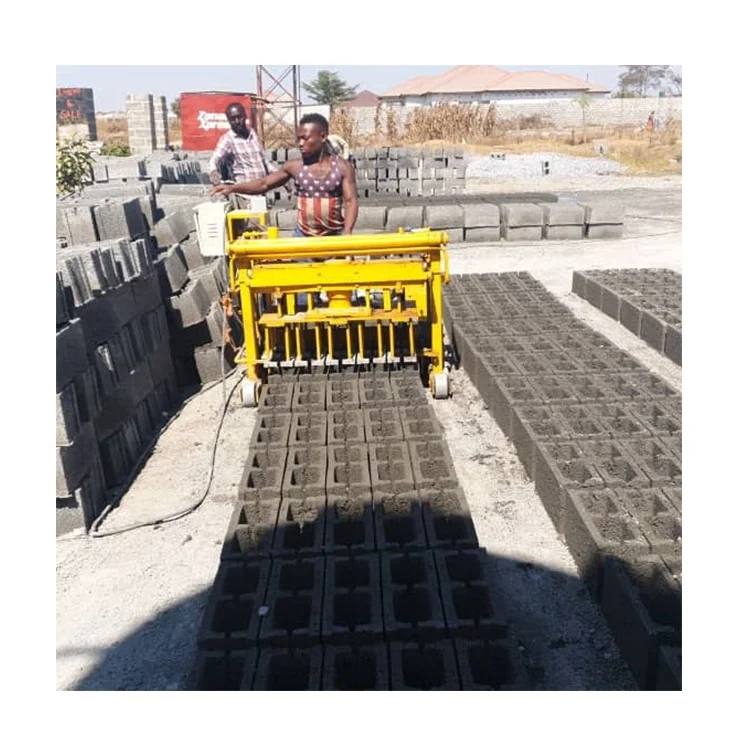
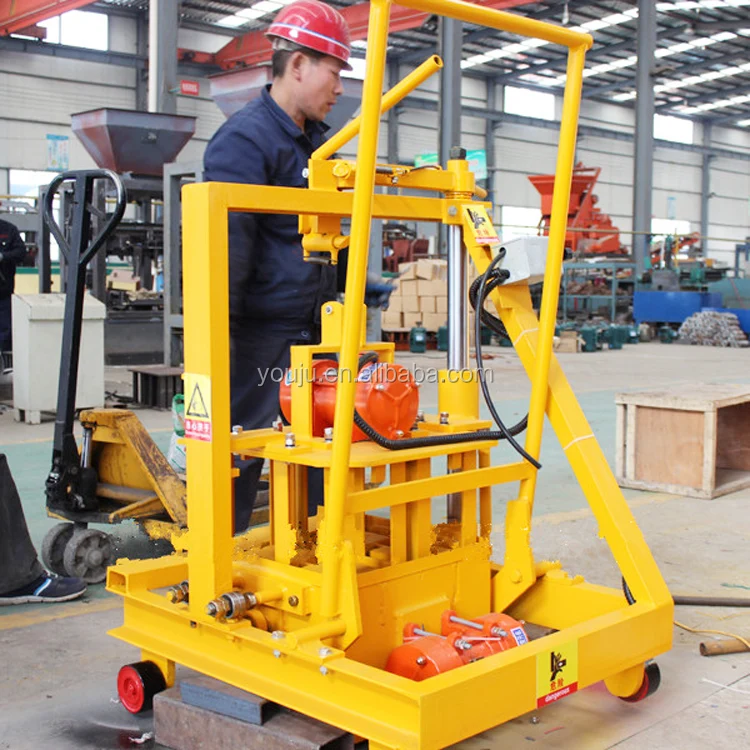
| Product Type | Manual Mobile Egg-Laying Concrete Block Making Machine |
| Molding Capacity | 4 pcs/mould (basis: 400×200×200mm hollow block) |
| Vibration Frequency | 2400 r/m |
| Output Capacity | 3000 pcs/day for 400×200×200mm; 3500 pcs/day for 400×150×200mm; 4500 pcs/day for 400×120×200mm (based on 8-hour shift) |
| Forming Method | Twice-vibration of molding core |
| Demold Method | Manual |
| Turning Method | Manual |
| Total Power | 6 kW |
| Power Source | Diesel / Petrol engine |
| Molding Cycle | 40–45 s per format |
| Pallet Requirement | None (egg-laying type) |
| Automation Level | Manual |
| Mould Formats | Hollow block 400×200×200mm, 400×150×200mm, 400×120×200mm |
| Mobility | Mobile, moves along production site |
| Warranty | 1 year (whole machine) |
Application Suitability
| Application | Material or Output |
|---|---|
| On-site hollow block production at housing projects | Crushed stone, river sand, cement mixes laid directly on compacted ground |
| Small-scale block yards in off-grid locations | Diesel-driven operation where grid power is unavailable |
| Remote infrastructure sites | Engine-powered mobility across uneven terrain |
| First-block-yard startups | Low-capital entry with hollow block formats from 120mm to 200mm width |
What "Manual Operation" Really Means for Block Consistency
On a machine with no PLC or batching control, mix consistency and block density fall entirely on the operator feeding the mould.
When a manual mobile block machine arrives at a job site, the vibration frequency is fixed at 2400 r/m and the molding cycle runs 40–45 seconds. That part is repeatable. What varies is the raw material: how much water the operator adds, whether the sand moisture changed after overnight rain, and how evenly the mix is shoveled into the mould cavity. I have seen crews in tropical climates produce strong blocks in the morning and crumbly ones by afternoon because the aggregate dried out and nobody adjusted the water ratio. Without an automatic batching system, the operator becomes the control loop. [NEED_CITE: aggregate moisture variation effects on concrete block compressive strength]
Where the QMJ4-45 Fits in the Mobile Range
The QMJ4-45 sits at the entry point of the mobile block machine family. It is engine-driven, pallet-free, and entirely manual — meaning an operator handles demolding, turning, and repositioning for every cycle. For buyers who need a few thousand hollow blocks per day at a remote site with no electricity, this is a practical starting point. The automatic mobile block machine category exists above it for those who want PLC-controlled batching and consistent output without relying on operator judgment.
The Automation Upgrade Path from Manual to Controlled
Moving from a manual egg-laying machine to a semi-automatic or PLC-controlled egg-laying block machine changes three things. First, a batching mixer meters cement, sand, and water by weight rather than by shovel, removing the largest source of density variation. Second, automatic vibration timing ensures every mould receives the same 40–45 second cycle regardless of operator fatigue. Third, a controlled mobile unit can log production counts and cycle data, giving the plant owner visibility that a fully manual machine simply cannot provide. [NEED_CITE: PLC control benefits in small-scale concrete block production]
Reading the Specs That Matter on This Machine
The 6 kW total power rating covers the vibration motor and any auxiliary systems, but since the QMJ4-45 runs on a diesel or petrol engine, that figure translates differently than it would on a grid-connected unit — fuel consumption and engine governor response become part of the power equation. The twice-vibration molding core is an upgrade from single-vibration designs: two vibration phases compact the mix more evenly, which matters when the aggregate contains a mix of fine sand and coarse chips. The 2400 r/m vibration frequency suits standard concrete mixes but may need assessment if your local aggregate is unusually heavy or lightweight. The egg-laying design eliminates pallet costs entirely, but it also means the ground surface becomes part of your production quality — uneven or soft ground will produce uneven blocks.
The Hidden Cost of Skipping the Mix Trial
Buyers who order a manual egg-laying machine without sending a sample of their local sand and aggregate for trial pressing often discover problems after the first week of production. The vibration force and frequency were set at the factory for a standard mix. When the actual material arrives — perhaps river sand with higher clay content, or crushed limestone dust instead of quartz sand — the blocks may look right fresh from the mould but fail strength tests after curing. On a PLC-controlled machine, you could adjust parameters through the screen. On the QMJ4-45, adjustments are limited to what the operator can change manually, which means getting the mix right before production starts is not optional. [NEED_CITE: local aggregate testing before block machine commissioning]
Why Procurement Here Reduces Your Configuration Risk
Block machinery is our single focus, so the QMJ4-45 is not assembled from mismatched suppliers — the vibration motor, mould, and engine are specified as one system. We configure each unit against the buyer’s actual mix design and target block format, not a catalogue default. Mould design covers the hollow block dimensions your market sells, and custom drawings are available for formats outside the standard 400×200×200mm, 400×150×200mm, and 400×120×200mm range. The automation level is selectable within the mobile family, so a buyer can start with the QMJ4-45 and move to a semi-automatic or PLC-controlled egg-laying block machine when volume justifies it. Installation support includes on-site commissioning with operator training focused on mix-water adjustment and mould-change procedure.
Documentation & Verification
- Line layout and capacity calculation stating the block format assumed for the QMJ4-45 output figure
- Machine specification sheet confirming engine type, vibration frequency, and mould format list
- Factory test record run on your local aggregate sample before dispatch
- Mould drawing and format list for each hollow block dimension ordered
- Operation and maintenance manual covering engine servicing and mould wear inspection
- Packing photographs documenting the QMJ4-45 condition prior to container loading
Installation, Commissioning & Support
- Ground preparation guidance: the QMJ4-45 lays blocks directly on compacted, level surfaces with no pallet system
- Engine startup and fuel system commissioning by our technician during the first production run
- Vibration frequency verification at 2400 r/m against your specific mix design and aggregate type
- Mould change training for operators switching between 400×200×200mm and narrower hollow block formats
- Spare wear parts list covering vibration springs, mould liners, and engine consumables for the first year
Before You Send the Inquiry
Tell us which hollow block dimensions your market actually buys, your target daily output, and the type of sand and aggregate available locally. If you are working at a site without grid power, confirm the ambient temperature range so we match the engine specification. For buyers planning an eventual move to an automatic mobile block machine, let us know your growth timeline so we can map the upgrade path now.
Frequently Asked Questions
Q: How do I verify realistic daily output per block format on a manual egg-laying machine?
A: Daily output on the QMJ4-45 changes significantly between formats: 3000 pieces per day for 400×200×200mm hollow blocks, 3500 for 400×150×200mm, and 4500 for 400×120×200mm, all based on an 8-hour shift. Ask your supplier to state which format underpins the quoted capacity, because a single number without a format basis is not a reliable planning figure.
Q: What does the automation upgrade path look like from a manual QMJ4-45?
A: Within the mobile block machine family, you can step up to a semi-automatic model that adds controlled batching and timed vibration, or further to a PLC-controlled egg-laying block machine with automatic mix metering. The upgrade replaces manual feeding with measured input, improving batch-to-batch consistency. Ask for a migration cost comparison and lead time before your initial order.
Q: How does engine-driven operation affect consistency compared to PLC-controlled machines?
A: An engine-driven QMJ4-45 delivers fixed vibration frequency at 2400 r/m, but mix proportioning remains manual. On a PLC-controlled egg-laying block machine, the control system meters water and cement by weight for every cycle, removing operator judgment from the density equation. Engine-driven units suit remote sites; controlled units suit buyers who need repeatable strength across large volumes.
Q: Can the vibration force be adjusted to match my local aggregate?
A: The QMJ4-45 operates at a fixed 2400 r/m vibration frequency with a twice-vibration molding core. While the frequency itself is not user-adjustable on a manual unit, the mix design — particularly the sand-to-cement ratio and water content — can be tuned to work with your aggregate. We require a material sample before dispatch to confirm the settings produce adequate density.
Q: What is the labour requirement difference between this manual model and a semi-automatic machine?
A: The QMJ4-45 requires operators for feeding, demolding, turning, and repositioning every 40–45 second cycle. A semi-automatic mobile machine automates the vibration timing and often the mix feeding, reducing crew size and removing the most physically demanding tasks. The right choice depends on local labour cost and whether your production volume justifies the higher machine investment.