

Description
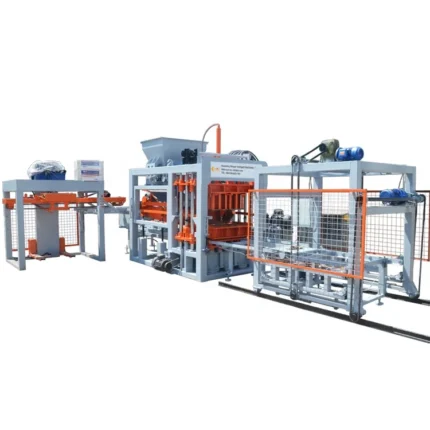
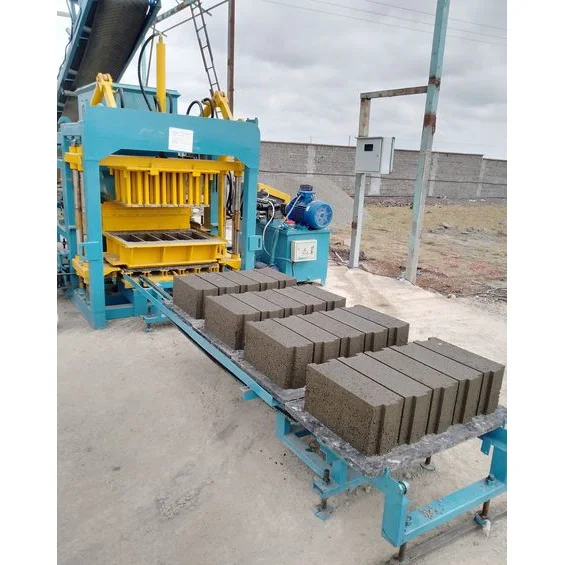
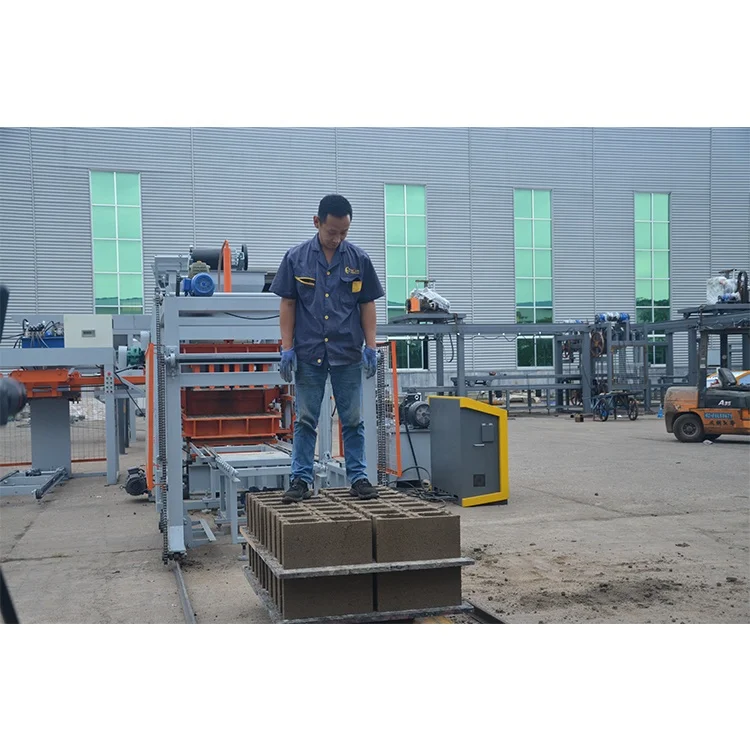
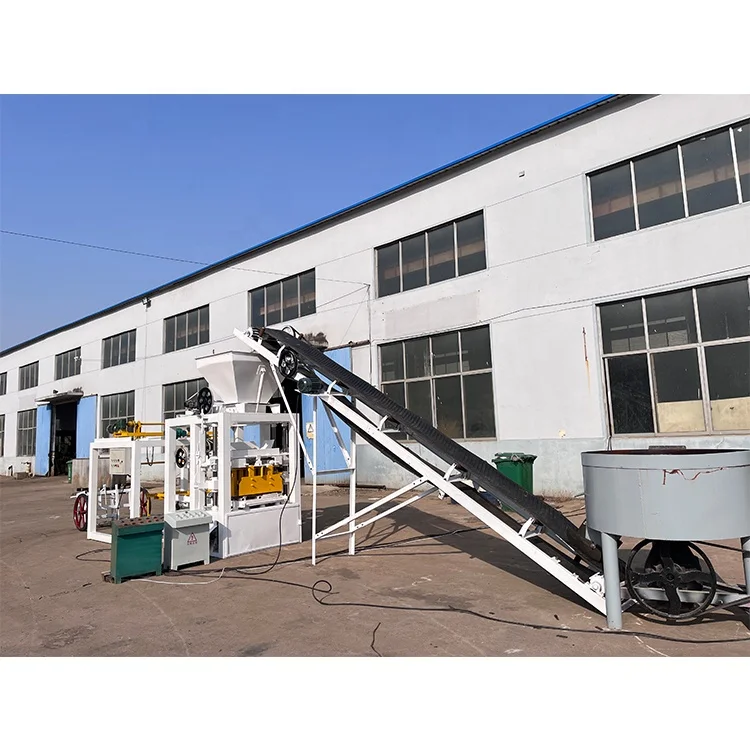
Semi-Automatic Control Precision — The QTJ4-40 block machine reduces operator dependency through integrated vibration, compression, and automated scraper functions, delivering repeatable density without requiring a full-line automation investment.
Technical Specifications
| Parameter | Value |
|---|---|
| Product Type | Semi-Automatic Concrete Block Making Machine |
| Model | QTJ4-40 |
| Rated Power | 9.5 kW |
| Molding Cycle | 40 s |
| Theoretical Output (400×200×200 mm hollow block, 4 pcs/mould) | 360 pcs/h, 2800 pcs/day |
| Theoretical Output (400×150×200 mm hollow block, 5 pcs/mould) | 450 pcs/h, 3600 pcs/day |
| Theoretical Output (225×112.5×60 mm solid brick, 9 pcs/mould) | 800 pcs/h, 6400 pcs/day |
| Overall Dimensions (L×W×H) | 1350 × 1460 × 1800 mm |
| Pallet Size | 850 × 450 mm |
| Machine Weight | 1 T |
| Automation Level | Semi-automatic (automatic scraper, push-pull top die, dual vibration) |
| Voltage | Configurable to buyer’s local voltage and frequency |
| Control System | To be confirmed (PLC or relay panel options) |
| Raw Materials | Concrete, sand, cement, fly ash, lime, gypsum |
Application Suitability
| Application | Material or Output |
|---|---|
| Hollow block production for load-bearing and partition walls | Concrete, fly ash, crushed stone aggregate |
| Solid brick manufacturing for masonry and paving | Cement, sand, lime, gypsum blends |
| Interlocking brick and paver production for landscaping | Concrete mixes with fine aggregate |
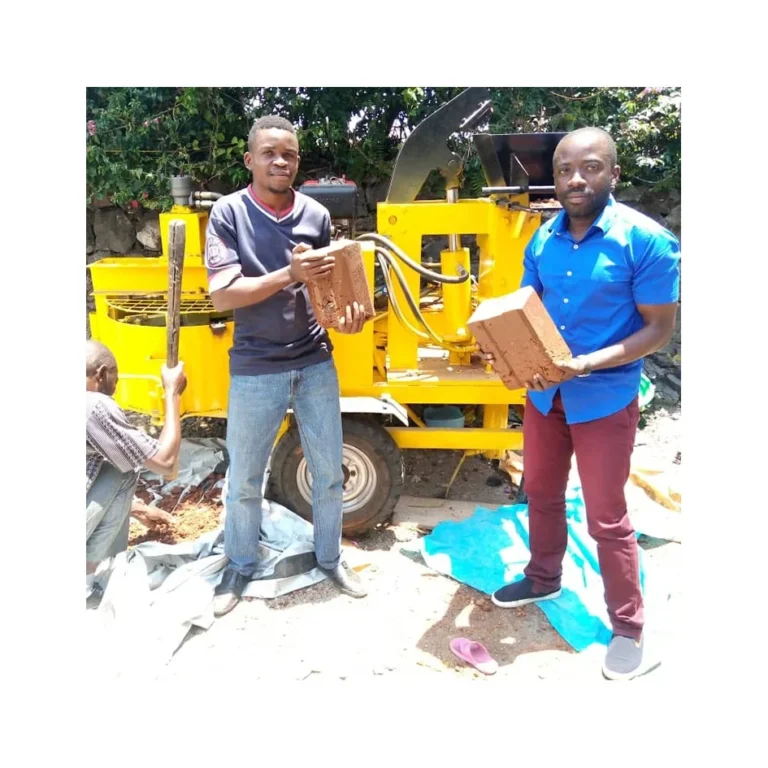
| On-site block production for housing and infrastructure projects | Locally sourced sand and cement |
| Small-scale block plant startups | Low-capital semi-automatic operation |
Why the Control Language Question Must Come Before the Voltage Check
An unreadable screen on day one stops production before it starts.
When I was on a commissioning trip in Peru, a semi-automatic line sat idle for forty-eight hours because the PLC display defaulted to Chinese. The local operators could not navigate a single menu, and the plant manager had to fly me back to Lima just to reflash the firmware. That single oversight cost more in lost production than the entire control panel was worth. With the QTJ4-40, the control interface — whether a PLC touchscreen or a relay-based panel — must be specified in the buyer’s language before the machine enters assembly. Voltage and frequency matter, but an operator who cannot read the cycle timer will make errors that no amount of hydraulic pressure can fix [NEED_CITE: IEC standards for industrial control interface language].
Dual Vibration Meets Compression for Density Consistency
The QTJ4-40 combines vertical vibration at the bed mould with compression vibration from the upper mould. This dual action forces aggregate particles into tighter alignment while the top die applies downward pressure during the 40-second cycle. The result is a block with more uniform density from face to core, reducing the weak spots that cause breakage during pallet handling and curing. For buyers switching between hollow blocks and solid bricks, this system maintains consistency across formats without manual tamp adjustments.
What Semi-Automation Actually Removes from the Operator
On a fully manual egg-laying machine, the operator controls feed timing, scraper movement, and die retraction by hand — every cycle introduces human variance. The automatic QTJ4-40 block machine takes the scraper and top die push-pull out of the operator’s hands, executing those motions at fixed intervals each cycle. This does not eliminate labour, but it narrows the gap between the best and worst block in a shift. Operators still load pallets and monitor material feed, yet the molding sequence itself becomes repeatable regardless of fatigue or experience level [NEED_CITE: operator variance impact on block compressive strength].
Reading the Specs That Matter Beyond the Nameplate
The 9.5 kW rated power drives both the vibration motors and the hydraulic scraper mechanism, meaning the electrical supply must sustain that draw continuously across an eight-hour shift — not just at startup. The 850 × 450 mm pallet size determines curing rack spacing and forklift tine width; a buyer whose existing racks were built for 900 × 500 mm pallets will face either a pallet replacement cost or a curing bottleneck. The 1-tonne machine weight keeps the footprint manageable for on-site production, but also means the foundation must absorb repeated vibration impulses without settlement. Hydraulic pressure and vibration force ratings, while not published in the standard spec sheet, must be confirmed against the buyer’s specific mix design — a fly ash-heavy blend responds differently to vibration than a crushed-stone concrete mix.
The Hidden Cost of Skipping the Automation Scope Check
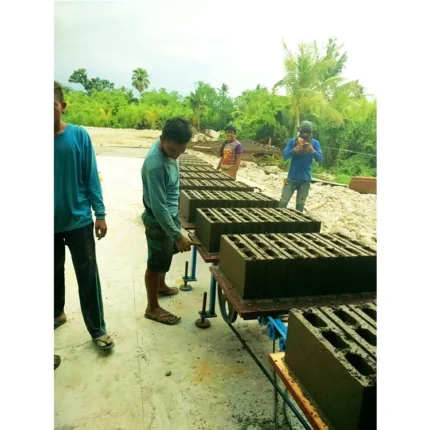
Buyers often compare quotations on the press alone, only to discover after delivery that pallet feeding, stacking, and curing rack handling were never included. With a semi-automatic machine like the QTJ4-40, pallets are loaded and unloaded manually unless the quotation explicitly states otherwise. A plant expecting automatic stacking will find workers hand-carrying green blocks to the curing area, introducing drop damage and slowing the cycle the press was designed to hold. This gap between expected and actual automation is one of the most common sources of post-commissioning disputes [NEED_CITE: automation scope misalignment in block machinery procurement].
Why Buyers Specify Here
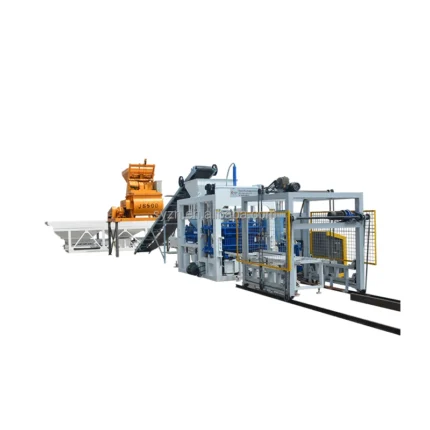
Block machinery is the single product focus, so the QTJ4-40 is quoted as a matched system — press, mould, pallet, and handling — rather than assembled from unrelated suppliers. Each configuration is set against the buyer’s actual mix design and local aggregate, not a catalogue default that may not suit regional materials. Mould design covers the formats the buyer’s market actually sells, with custom drawings available for non-standard interlocking or paver profiles. The automation level is selectable, allowing a buyer to start with semi-automatic operation and plan a future upgrade to full stacking and cubing without replacing the press itself. Installation support includes operator training on the specific control language and panel layout confirmed during the order process.
Documentation & Verification
- Machine specification sheet listing confirmed voltage, frequency, and control language
- Capacity calculation sheet stating block format and cycle time assumptions per product type
- Mould drawing and format list covering all ordered block profiles
- Hydraulic and electrical schematic matching the as-built configuration
- Factory test record run on buyer’s specified pallet size and mould format
- Operation and maintenance manual in the confirmed operator language
Installation, Commissioning & Support
- Foundation pad sized to the 1350 × 1460 mm footprint with vibration isolation provisions
- Dedicated electrical circuit rated for the 9.5 kW continuous draw at confirmed voltage
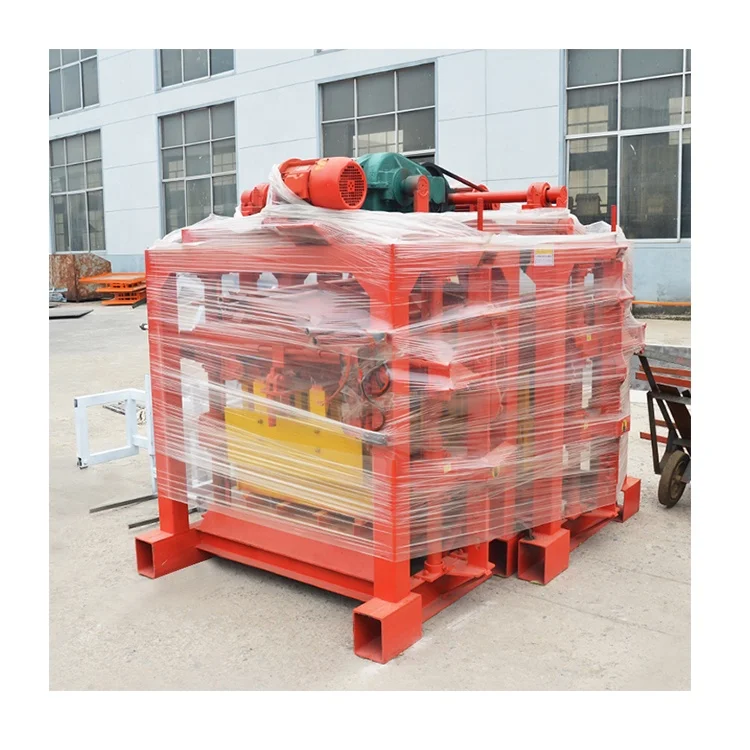
- Machine arrives assembled; on-site setup limited to pallet track alignment and mould mounting
- First-run commissioning includes cycle timing verification across each ordered block format
- Operator training covers control panel navigation, scraper adjustment, and mould change procedure
- Wear parts list and mould maintenance schedule provided at handover
Before You Request a Quotation
Send the exact block formats your market sells, along with your target daily output per format and the raw materials available locally. Confirm your site voltage, frequency, and the language your operators read. If you already have curing racks and forklifts, share the pallet dimensions they accept so the handling configuration is built around your existing infrastructure.
Frequently Asked Questions
Q: What automation level does the QTJ4-40 provide, and what is the upgrade path?
A: The QTJ4-40 operates as a semi-automatic press with automatic scraper and push-pull top die. Pallet feeding and stacking remain manual unless added to the quotation. The upgrade path involves adding automatic pallet feeders, stackers, and cubing stations around the existing press, so buyers can scale without replacing the core machine.
Q: How is cycle time verified per block format, and which format does the quoted output assume?
A: The 40-second molding cycle applies across formats, but daily output varies — 2,800 pieces per day assumes 400×200×200 mm hollow blocks at four per mould. Buyers should request a capacity sheet that states output for each specific format they plan to produce, not a single headline number.
Q: Is the control system PLC-based, and can the display language match local operators?
A: The control system configuration is confirmed during the order process, with PLC or relay panel options available. Display language must be specified before production — default settings do not automatically match the buyer’s market, and changing language after arrival causes costly commissioning delays.
Q: How does the dual vibration system adapt to different mix designs?
A: The bed mould vertical vibration and upper mould compression vibration work together to compact aggregate and cement uniformly. However, a fly ash blend and a crushed-stone mix respond differently to the same vibration profile, so the hydraulic pressure and vibration settings must be matched to the buyer’s confirmed material during commissioning.
Q: Is pallet handling included, and does the quote cover stacking equipment?
A: The standard QTJ4-40 quotation covers the press, mould, and pallets. Pallet feeding, automatic stacking, and curing rack handling are separate line items. Buyers should verify exactly which stations are included before confirming the order to avoid manual handling where automation was expected.