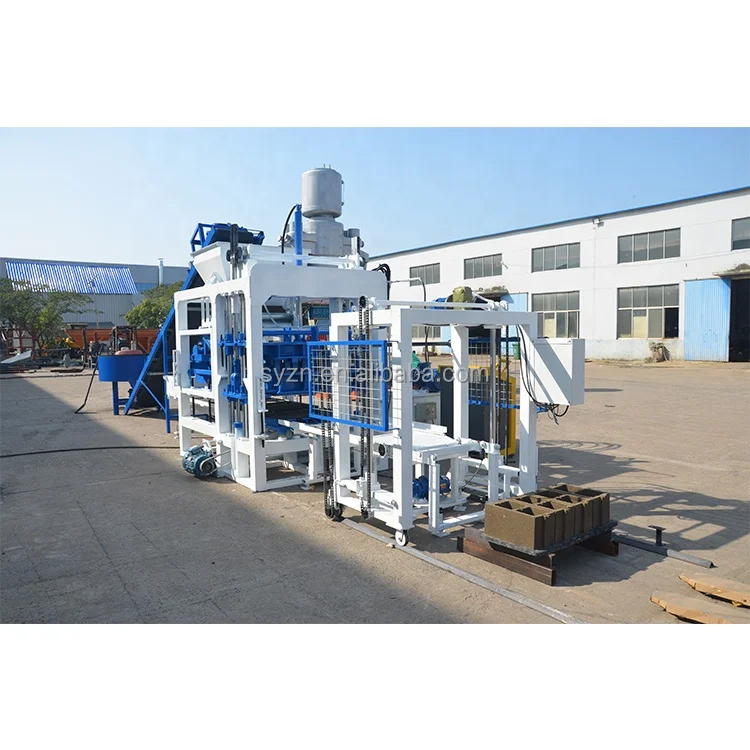
Description
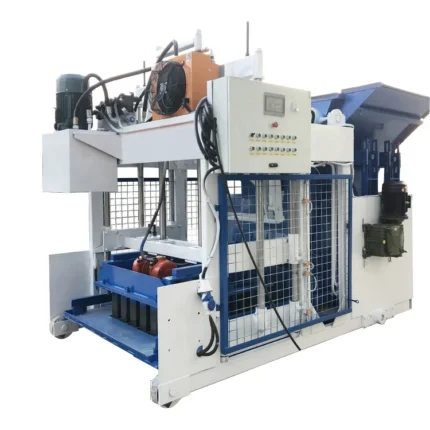
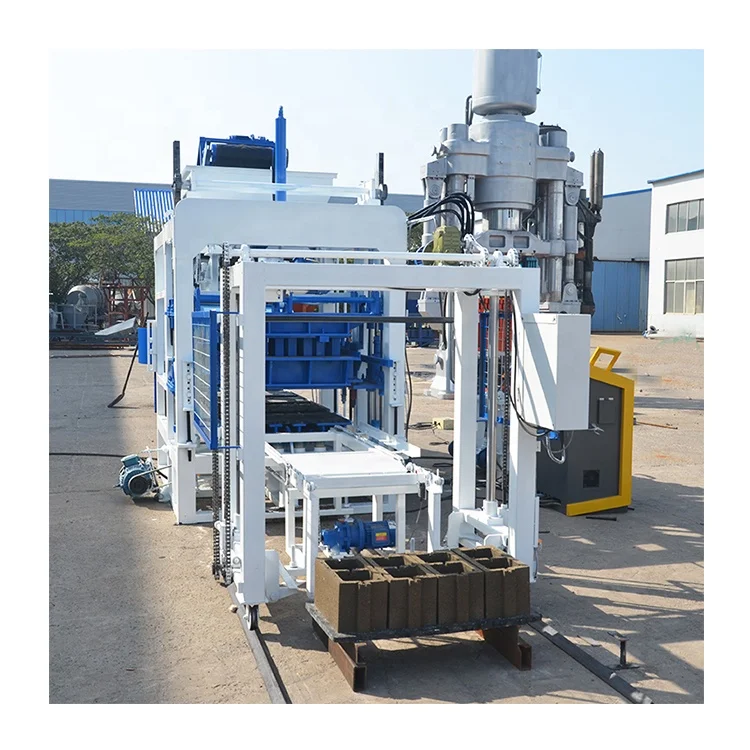
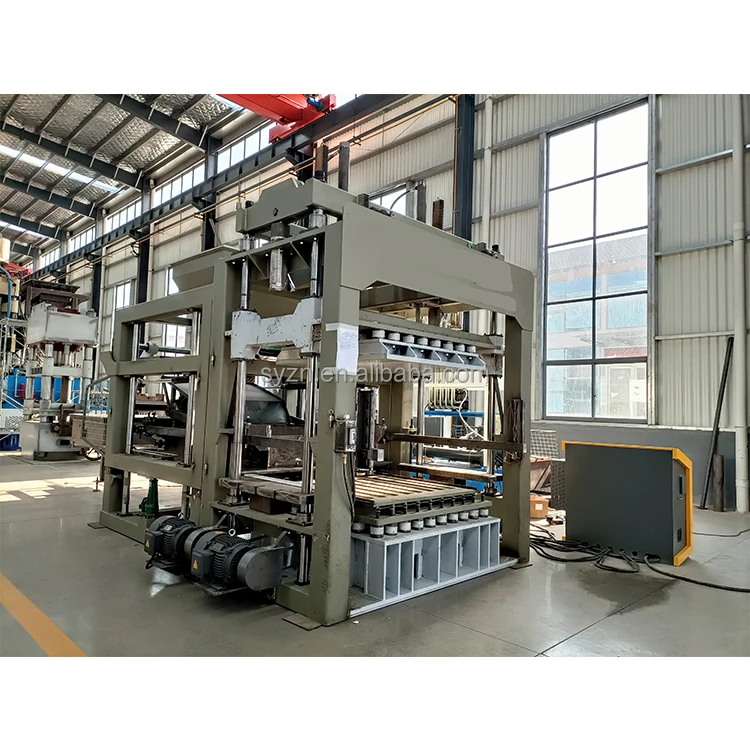
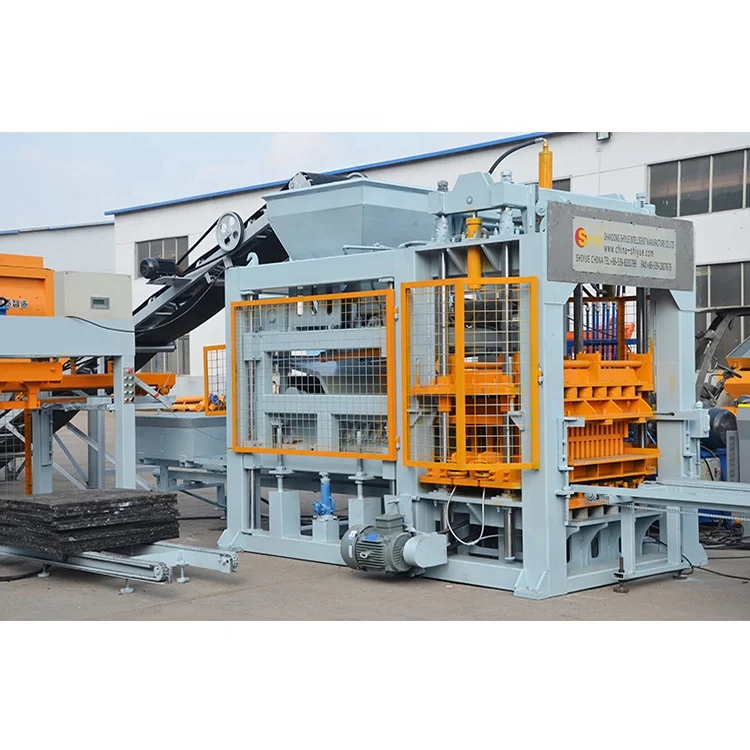
PLC-Controlled Consistency — The QT4-18 pairs hydraulic station pressure with bed-mould vertical vibration under programmable logic control, so block density holds steady across every shift rather than drifting with operator fatigue.
Technical Specifications
| Parameter | Value |
|---|---|
| Model | QT4-18 |
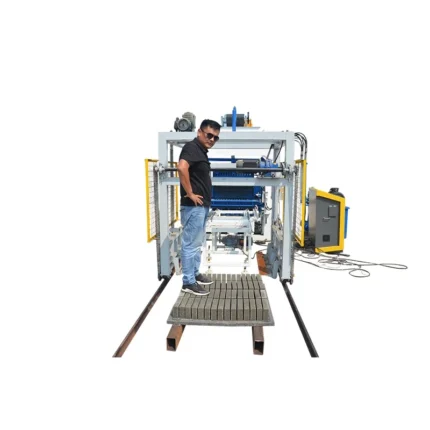
| Product Type | Automatic Hydraulic Concrete Block Making Machine |
| Overall Dimensions (L×W×H) | 3900×1600×2300 mm |
| Total Weight | 3T |
| Rated Power | 24KW |
| Molding Cycle | 15-25s |
| Exciting Power (Vibration Force) | 40-50KN |
| Mixer Model | JQ350 |
| Pallet Size | 850×550×25mm |
| Hydraulic System | Equipped with hydraulic station for high pressure and stable operation |
| Automation Level | Semi-automatic (based on original medium and small-scale block machine) |
| Key Features | PLC control, mould change capability, upgrade path to full automatic pallet feeding and stacking |
Application Suitability
| Application | Material or Output |
|---|---|
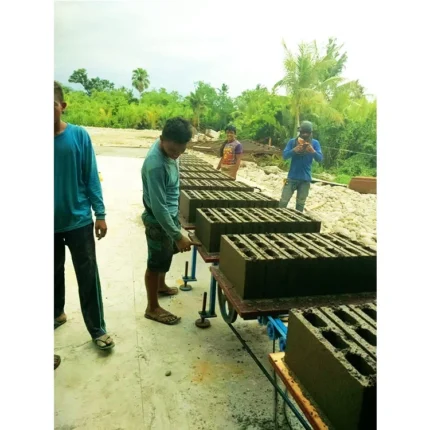
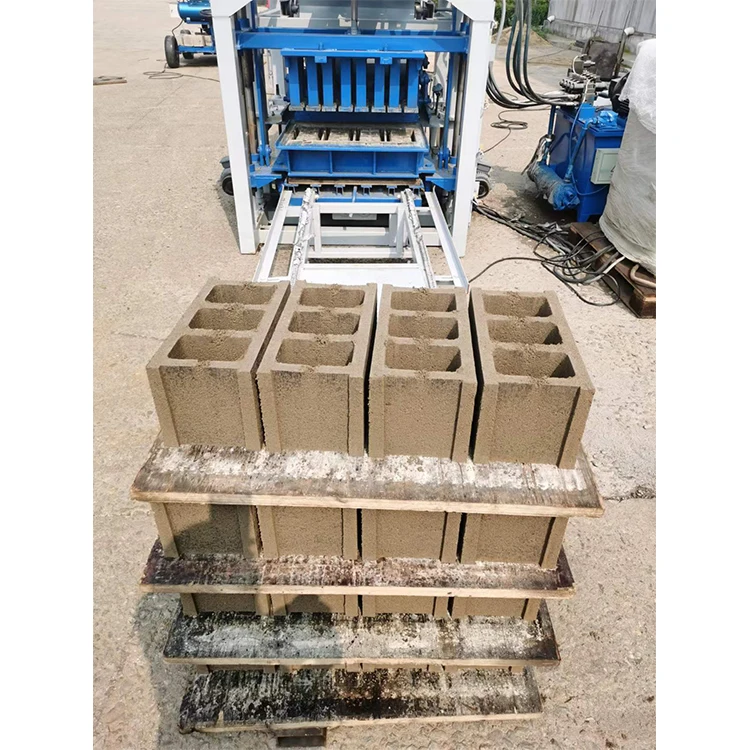
| Hollow block production | Crushed stone, sand, cement, fly ash (400×200×200mm or 400×150×200mm) |
| Solid brick production | Sand, cement, dust, fly ash (240×115×53mm) |
| Paver and curbstone production | Crushed stone, sand, cement (by changing mould) |
| On-site contractor block production | Local aggregate and cement for project-specific formats |
What PLC Control Actually Removes From the Operator
An automatic QT4-18 block machine PLC controlled setup takes cycle timing, vibration duration, and hydraulic pressure sequencing out of manual judgment.
In my after-sales work across the Pearl River Delta, I saw semi-automatic lines produce strong blocks in the morning and crumbling ones by afternoon — not because the press changed, but because the operator shortened the vibration cycle to chase output. When the logic controller owns the cycle, the vibration force of 40-50KN is applied for the exact same duration on every stroke. That consistency matters more than raw pressure [NEED_CITE: PLC control impact on batch-to-batch consistency in hydraulic forming]. The real gain is not speed — it is the removal of variation between operators, shifts, and production days.
Where Programmable Logic Replaces Operator Guesswork
On a manual or relay-controlled press, the operator watches the mould fill and decides when to trigger the upper-mould compression vibration. With the automatic QT4-18 block machine PLC controlled system, the sequence — feed, vibrate, compress, demould — runs on fixed timers that you set once per mould format. When you switch from 400×200×200mm hollow blocks to 240×115×53mm solid bricks, the cycle parameters change in the program rather than in the operator’s head. That is the difference between a machine that runs the same way every day and one that runs the way the operator feels.
The Automation Upgrade Path From Semi-Automatic to Full Line
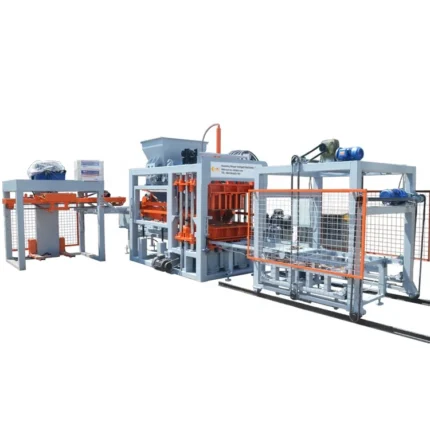
The QT4-18 ships as a semi-automatic press built on a medium and small-scale block machine platform, meaning the core hydraulic and vibration systems are already in place. The upgrade path adds automatic pallet feeding, stacking, and cubing stations around the existing host. For a plant owner currently running manual pallet handling, this means you can start production immediately and layer on automation as labour costs or output targets change — without replacing the press itself [NEED_CITE: phased automation investment in concrete block plants].
Reading the Specs That Matter for Consistent Output
The 15-25 second molding cycle is the window where hydraulic pressure and vibration force work together. The hydraulic station delivers sustained high-pressure forming, while the bed-mould vertical vibration combined with upper-mould compression vibration ensures the mix is compacted uniformly from bottom to top. A mismatch between these two forces is the most common cause of blocks that pass visual inspection but fail the drop test. The 850×550×25mm pallet size determines your curing rack spacing and forklift fork width — confirming this against your existing yard layout before production avoids a pallet-handling bottleneck that has nothing to do with the press.
The Cost of Skipping Voltage and Language Confirmation
I installed a QT4-18 automatic hydraulic block machine for a Southeast Asian client and discovered on day one that the PLC interface was in Chinese. The operators could not read the cycle parameters, and we lost two days before a remote firmware update loaded the English language pack. The voltage question is equally costly: a 380V/50Hz machine arriving in a 220V/60Hz market will not run without a transformer, and the hydraulic pump motor will draw wrong current even if it spins. Confirming voltage, frequency, and PLC display language before the machine enters production is the single highest-return step in the entire order process [NEED_CITE: voltage and frequency standards by export market].
Why Sourcing From a Single-Focus Block Machinery Builder Matters
Block machinery is the sole product focus here, so the press, mould, pallet, and handling equipment are specified as one matched system rather than assembled from unrelated suppliers. Configuration is set against your actual mix design and local aggregate, not pulled from a catalogue default. Mould design covers the formats your market sells, including custom drawings when standard sizes do not match. The automation level is selectable — semi-automatic now, full stacking and cubing later — so your capital outlay tracks your actual growth. Installation support includes operator training on the PLC interface, and wear parts lists are provided so your first mould or hydraulic seal replacement does not become an emergency.
Documentation & Verification
- Machine specification sheet with confirmed pallet size and hydraulic pressure ratings
- Mould drawing and format list showing exact block dimensions covered by each mould
- Voltage, frequency, and PLC display language confirmation signed before production
- Hydraulic and electrical schematic for your local maintenance team
- Factory test record on your target block format before dispatch
Installation, Commissioning & Support
- Foundation must support 3T total weight across the 3900×1600 mm footprint
- Dedicated power circuit required for 24KW rated power with confirmed voltage and frequency
- Machine ships in dismantled state; reassembly and hydraulic line connection on site
- PLC parameter setting per mould format during commissioning with operator walk-through
- Wear parts list and mould maintenance schedule provided at handover
- Pallet size 850×550×25mm verified against your curing rack and forklift before shipment
What We Need To Quote Accurately
Tell us your target block format and daily output requirement so we can calculate cycle capacity per mould. Share your local raw materials and whether you plan to use fly ash or crushed stone as aggregate. Confirm your site voltage and frequency, the PLC language your operators read, and whether you currently have pallets and curing racks on site that we need to match.
Frequently Asked Questions
Q: How is output capacity verified per block format, and what cycle time does each format assume?
A: Capacity is calculated per format using the 15-25 second molding cycle. For 400×200×200mm hollow blocks at 4 pcs per mould, output is 1200-1680 pcs/hr. For 400×150×200mm hollow blocks, it is 1800-2400 pcs/hr. For 240×115×53mm solid bricks, it is 3240 pcs/hr. Each figure assumes continuous operation with matched pallet feeding.
Q: Can the QT4-18 be upgraded from semi-automatic to full automatic stacking and cubing later?
A: Yes. The host machine, hydraulic station, and PLC platform remain in place. Automatic pallet feeding, stacking, and cubing stations are added as separate modules around the existing press. The upgrade path is designed so you do not replace the core machine when scaling up.
Q: What PLC language options and voltage configurations are available for the target market?
A: PLC display language is confirmed before production — common options include English, Spanish, Arabic, and Russian. Voltage and frequency are set to match your local grid standard. Both are locked in writing before the machine enters the build cycle to prevent commissioning delays.
Q: How are vibration force and hydraulic pressure matched to local aggregate and mix design?
A: The hydraulic station pressure and 40-50KN vibration force are calibrated against your specific mix — including local sand gradation, fly ash percentage, and cement ratio. A mismatch here causes inconsistent block density, which is why we request your material data before finalising the machine configuration.