

Description
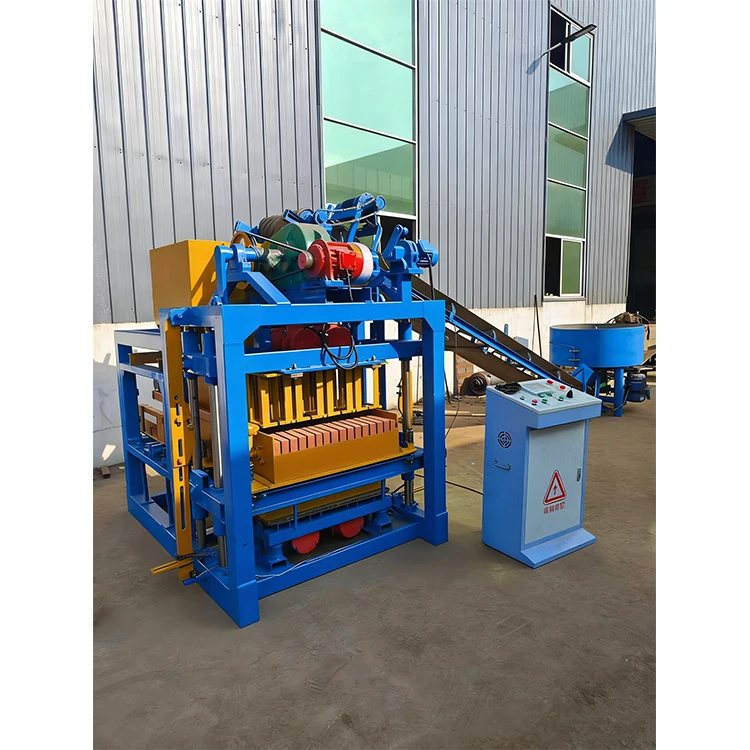
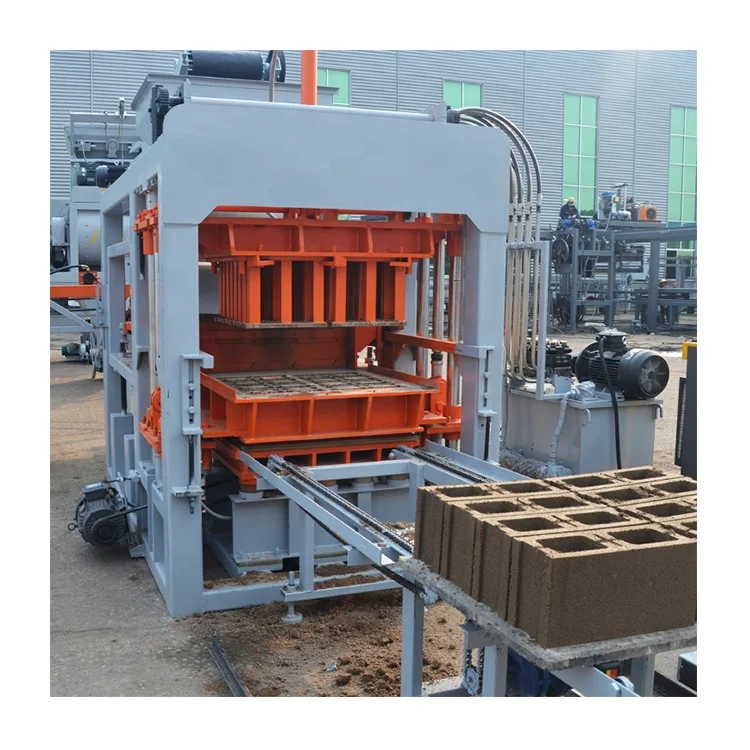
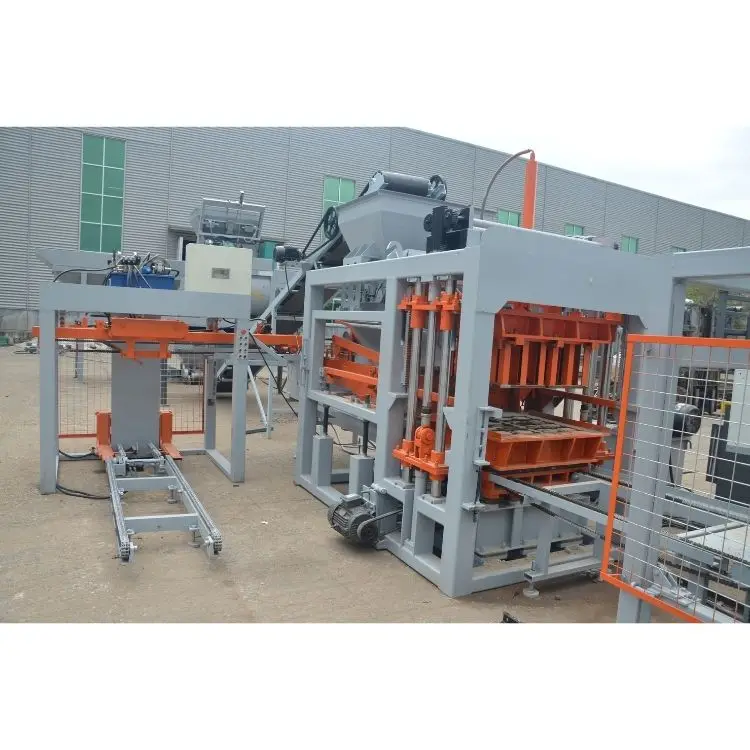
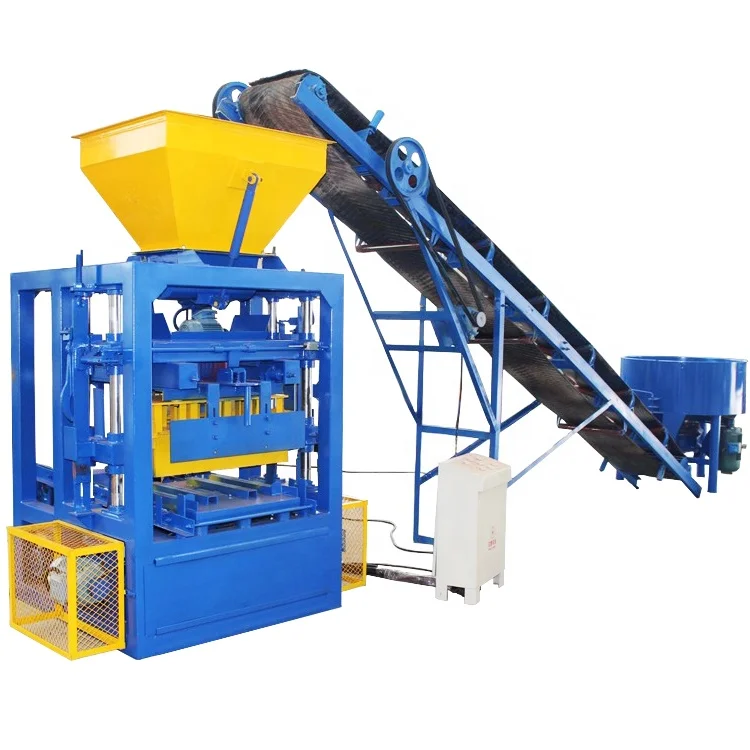
System Integration Baseline — The QTJ4-24 provides a stable control foundation with frequency converting motors, enabling producers to build toward full automation without replacing the core press.
Technical Specifications
| Parameter | Value |
|---|---|
| Product Type | Semi-Automatic Concrete Block Making Machine |
| Model | QTJ4-24 |
| Overall Dimensions | 2060×1730×2580 mm |
| Main Vibration Form | Platform vibration |
| Vibration Frequency | 4200 r/min |
| Exciting Force | 35.5 kN |
| Rated Pressure | 15 MPa |
| Pallet Size | 880×480×38 mm |
| Molding Cycle | 26 s (basis not stated in source — confirm block format / material / thickness) |
| Total Power | 14.25 kW |
| Control System | Electro-mechanical integration with frequency converting control |
| Mould System | Exchangeable moulds |
| Voltage & Frequency | 380V / 3-phase / 50Hz (customizable to local voltage) |
| Warranty | 1 year (excluding wearing parts) |
Application Suitability
| Application | Material or Output |
|---|---|
| Hollow block production for small-scale masonry plants | Crushed stone, sand, cement blend |
| Solid block manufacturing for local building supply | Aggregate and cement with standard moisture content |
| Interlocking paver production for residential projects | Fine aggregate, pigment, and cement mix |
| On-site construction block making for contractor yards | Locally sourced sand and gravel with cement binder |
Why the Control Panel Language Matters More Than the Cycle Time Claim
A block press that runs but cannot be read by the operator is a block press that does not run.
I once shipped a QTJ4-24 to a customer in East Africa. The control panel arrived showing Chinese characters by default. The operator spent the entire first day pressing buttons he could not read, producing nothing. That single oversight cost more downtime than any mechanical issue ever could. When evaluating any automatic QTJ4-24 block machine PLC controlled upgrade path, confirming the display language and voltage before the machine leaves the factory is the simplest insurance against a dead-on-arrival experience [NEED_CITE: voltage and frequency standards by export market].
Frequency Converting Control as an Automation Stepping Stone
The QTJ4-24 uses frequency converting motor control rather than a full PLC with touchscreen. This matters for buyers planning an automatic QTJ4-24 block machine PLC controlled upgrade later. Frequency converting control regulates motor speed during the vibration and pressing stages, reducing mechanical shock and extending component life. It provides a baseline of electronic management that a future PLC can sit on top of, rather than requiring the entire electrical cabinet to be stripped and rebuilt.
Where Semi-Automatic Ends and Automation Begins
On this machine, the operator handles pallet placement and block removal manually. The press cycle, vibration timing, and motor speed regulation are managed electronically. This division defines the upgrade boundary: adding automatic pallet feeding and stacking downstream, plus a PLC to sequence the full line, converts the QTJ4-24 into a continuous production cell. The vibration platform and hydraulic pressure ratings remain unchanged through that transition [NEED_CITE: CE machinery directive requirements for industrial equipment].
Vibration and Pressure: What the Numbers Mean at the Mould
The 4200 r/min vibration frequency combined with 35.5 kN exciting force drives aggregate into the mould cavity under platform vibration. The rated pressure of 15 MPa acts simultaneously through the press head. Together, these parameters determine block density and compressive strength. The 880×480 mm pallet size sets the mould footprint, meaning the curing area and forklift tines at the buyer’s site must match this dimension before the first production run.
Mould Change Flexibility and Format Switching
Exchangeable moulds allow the QTJ4-24 to produce hollow blocks, solid blocks, and interlocking pavers on the same platform. The physical changeover involves unbolting the current mould and securing the replacement, then resetting vibration duration for the new format. Cycle times vary by block geometry and wall thickness, so the 26-second figure applies only to the specific format tested at the factory.
The Hidden Cost of Skipping Pallet and Upstream Matching
Buyers who focus on the press alone often discover that pallet handling, stacking, and curing rack logistics were never discussed. Blocks come off the QTJ4-24 at a rate that quickly outpaces two workers moving pallets by hand. Without a planned feeding and stacking arrangement, the actual daily output falls well below what the press cycle suggests [NEED_CITE: block plant labor allocation studies for semi-automatic lines]. The pallet material also matters: wood pallets warp in humid curing environments, while steel or PVC pallets maintain flatness but add weight that affects manual handling.
Why Sourcing the Press Here Changes the Upgrade Path
This facility treats the block machine, moulds, pallets, and handling equipment as a single matched system rather than a collection of separate purchases. The QTJ4-24 ships with pallet specifications chosen to match the buyer’s existing curing racks and forklift capacity. Voltage and control language are confirmed before production begins, not discovered at commissioning. Mould design supports the block formats the buyer’s local market actually purchases, including custom drawings when standard options do not fit. The semi-automatic configuration is documented so that adding PLC control, automatic pallet feeding, or stacking later follows a known integration path.
Documentation & Verification
- Factory test record on your target block format before dispatch
- Electrical schematic with confirmed voltage and control language
- Mould drawing showing cavity count and block dimensions
- Operation manual with maintenance intervals in your operator’s language
- Packing photographs and customs documentation support
Installation, Commissioning & Support
- Foundation must support 2060×1730 mm footprint with level tolerance for vibration isolation
- Dedicated 3-phase circuit rated for the 14.25 kW total power draw
- Arrives fully assembled; connect power and confirm rotation direction before first cycle
- Vibration frequency and pressing duration set to your specific mix during commissioning
- Operator training covers mould change procedure and daily inspection checklist
- Wearing parts list with mould and hydraulic component reorder references included
Preparing Your Inquiry
To receive a configuration that matches your actual production plan, provide the block format and daily volume you intend to produce, your local raw material source and mix proportions, the curing area dimensions and pallet handling equipment already on site, and the voltage, frequency, and preferred control language at the destination. This information allows the quotation to include pallet and handling specifications alongside the press itself.
Frequently Asked Questions
Q: How is the 26-second molding cycle measured, and which block format does it assume?
A: The 26-second cycle was recorded under specific factory test conditions. The exact block format, wall thickness, and aggregate mix used for that measurement must be confirmed before treating it as a planning figure. Request a capacity calculation sheet that states the assumed format so your daily output projection reflects the block you will actually produce.
Q: What automation components can be added later to this machine?
A: The QTJ4-24 supports future addition of a PLC controller, automatic pallet feeder, stacker, and cubing system. The frequency converting control already on the press provides an electrical baseline for PLC integration. Discuss the upgrade path at the time of purchase so cable runs and mounting points are prepared during initial assembly.
Q: Can the control system language and voltage be confirmed before shipment?
A: Yes. Voltage, frequency, and control display language are confirmed during the quotation stage and verified again before production. This prevents the situation where an operator faces an unreadable panel on arrival. Specify your site requirements early in the inquiry to avoid schedule delays.
Q: How does the QTJ4-24 integrate with upstream batching and downstream curing?
A: The press accepts material from a manual or automated mixer and deposits formed blocks onto pallets that must match your curing rack spacing. Downstream, pallets move to a curing area and then to storage. Planning these connections before purchase prevents bottlenecks where the press outruns the handling capacity around it.