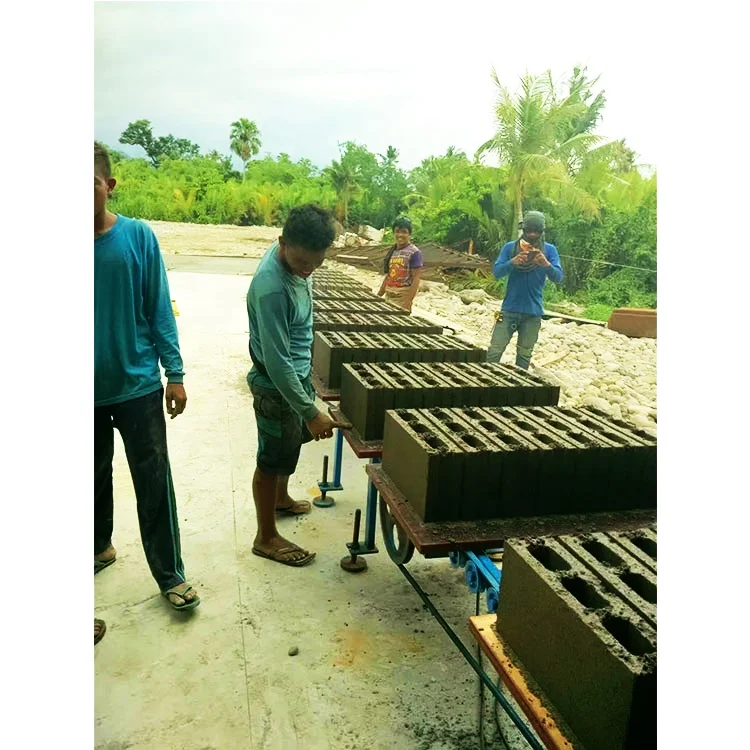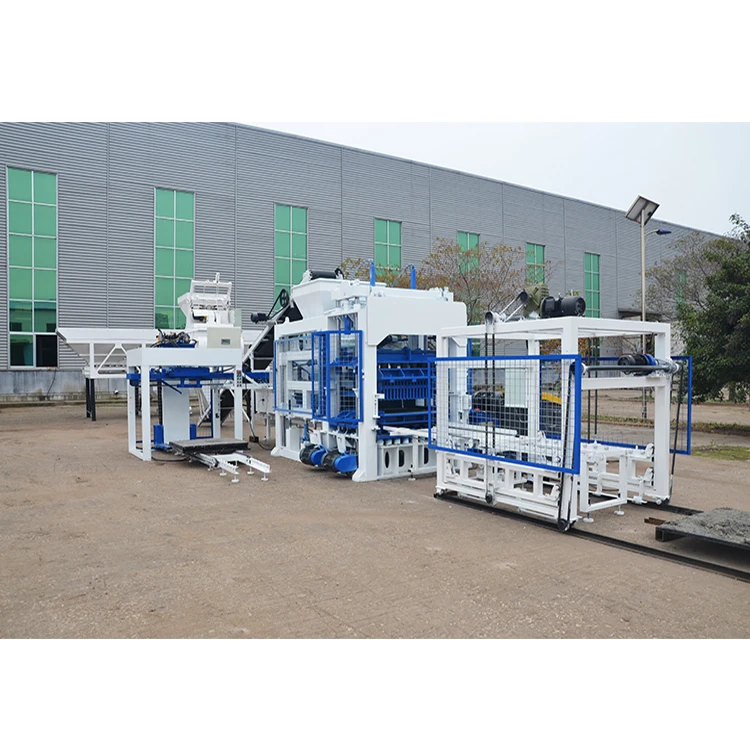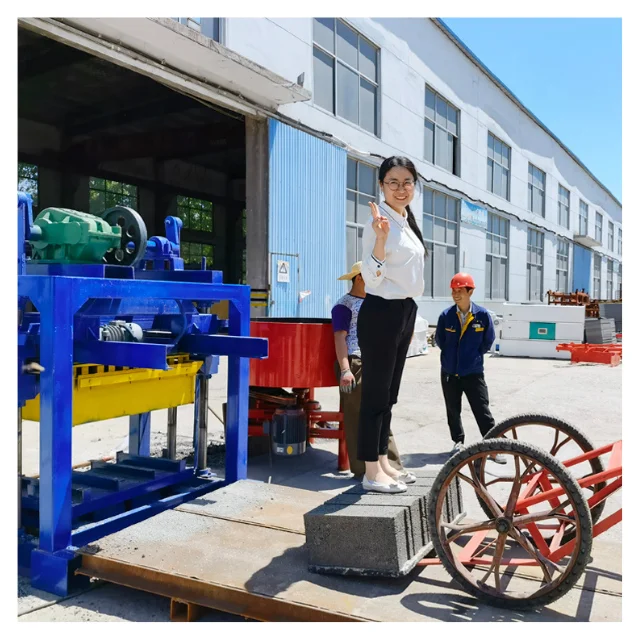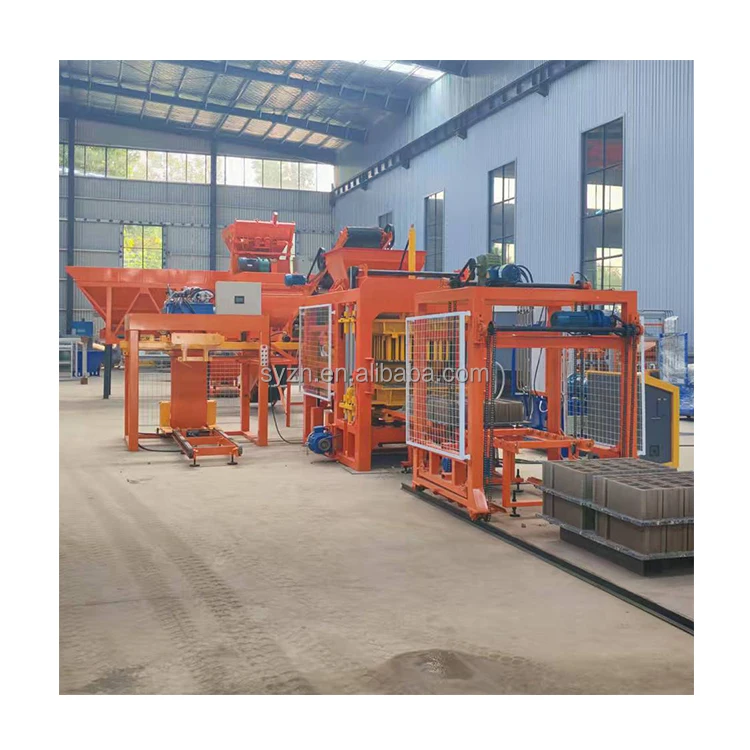


Description
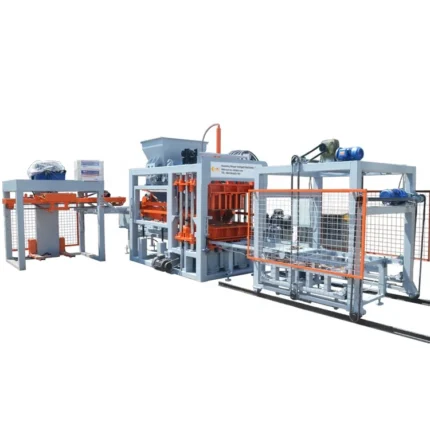
Integrated Control System — PLC logic, hydraulic station and platform vibration are configured together so the operator sets parameters once and the machine maintains them across shifts.
Technical Specifications
| Parameter | Value |
|---|---|
| Model | QT6-15 |
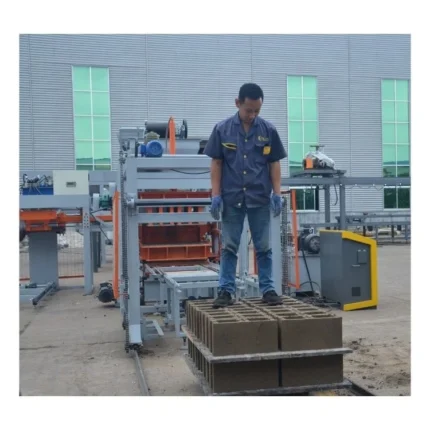
| Product Type | Automatic Hydraulic Concrete Block Making Machine |
| Overall Dimensions (L×W×H) | 8200×1700×2950 mm |
| Total Mass | 7 T |
| Overall Power | 37 kW |
| Vibration Form | Platform Vibration |
| Vibration Frequency | 0–60 Hz |
| Vibration Force | 45 kN |
| Pallet Size | 880×850 mm |
| Moulding Mode | Automatic loading, vibration moulding |
| Demolding Method | Hydraulic |
| Control System | PLC with touch screen HMI |
| Hydraulic System | Independent integrated hydraulic station |
| Recommended Factory Area | 1200 m² |
| Molding Cycle | 15–20 s (basis to be confirmed) |
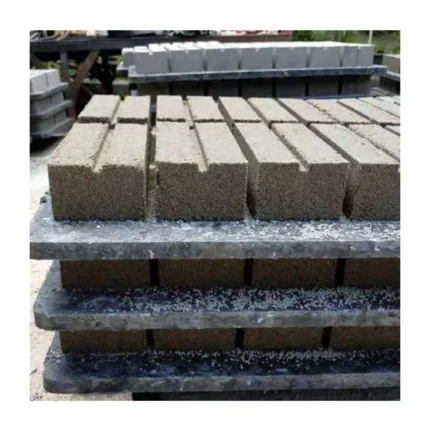
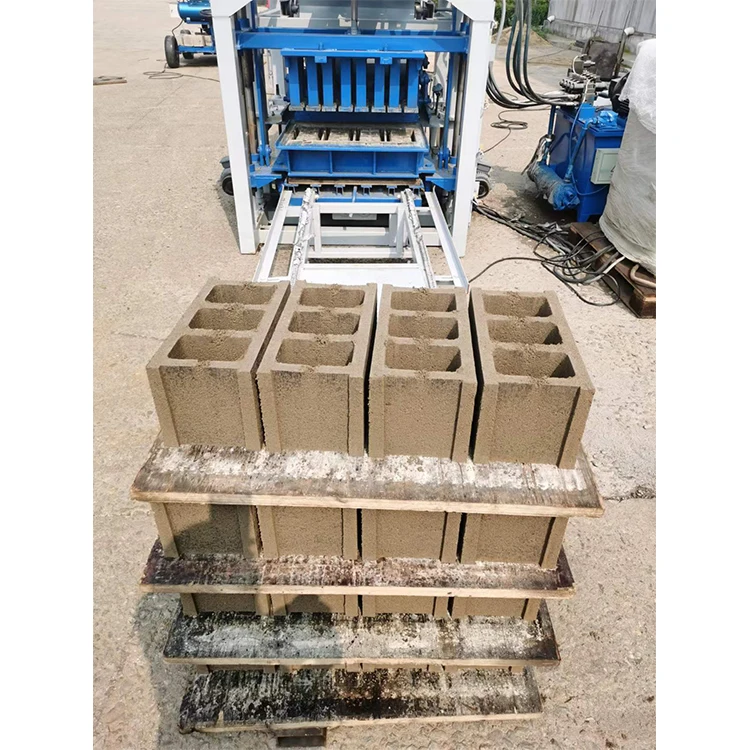
| Output — Hollow Block 400×200×200 mm | 8640–11520 pcs/8 hr |
| Output — Hollow Block 400×150×200 mm | 11520–15360 pcs/8 hr |
| Output — Solid Brick 240×115×53 mm | 46080–61440 pcs/8 hr |
| Output — Rectangular Paver 200×100×60 mm | 17280–23040 pcs/8 hr (cycle 20–25 s) |
| Output — Zigzag Paver 225×112.5×60 mm | 17280–23040 pcs/8 hr (cycle 20–25 s) |
| Block Compressive Strength | >15 MPa (source value — verify) |
| Warranty | 1 year for the whole machine (excluding spare parts) |
Application Suitability
| Application | Material or Output | |
|---|---|---|
| Hollow block production for wall construction | Crushed stone, sand, cement and local aggregates | |
| Solid brick manufacturing for load-bearing structures | Fly ash, slag, gravel blends with reduced cement dosage | |
| Rectangular and zigzag paving brick production | High-density concrete mixes for outdoor surfaces | |
| On-site block production for housing projects | Locally sourced waste ash and aggregate materials | |
| Format expansion for existing concrete product plants | Multiple block and paver formats on a single press |
Why "Pieces per Hour" Is Not Enough for an Automatic PLC Controlled Block Machine
Capacity figures mean nothing without the block format attached to them.
Buyers often receive a headline number — something like "1400 pieces per hour" — and assume it applies across the board. In reality, that number might be tied to a thin paver with a short cycle, while the hollow block that actually drives the project’s revenue runs at a completely different pace. I have watched commissioning stall because the plant layout was designed around an optimistic output that never materialised once the target format hit the press [NEED_CITE: block format impact on cycle time and daily output].
The automatic PLC controlled block machine listed here carries output ranges for five distinct formats, each with its own mould cavity count and cycle assumption. Without this breakdown, a buyer cannot size the curing area, order enough pallets, or schedule shifts accurately.
What PLC Intelligence Actually Removes from the Operator
On a semi-automatic press, the operator times every vibration burst, decides when to release the mould, and judges when the block is ready to strip. Fatigue and inconsistency creep in by the third shift. The PLC on this automatic PLC controlled block machine replaces those judgements with programmed logic: a safe interlock circuit prevents the mould from dropping before the pallet is seated, and built-in fault diagnosis flags hydraulic pressure drops or sensor misalignment before they produce a batch of cracked units.
The touch-screen HMI means parameter changes — vibration frequency, dwell time, hydraulic pressure staging — are stored as recipes. Switching from hollow blocks to pavers becomes a matter of calling up the saved profile rather than recalibrating by hand.
Batch-to-Batch Consistency Through Isolated Hydraulics
Vibration is necessary for compaction but destructive to precision components. The independent hydraulic station on this press sits apart from the main frame, shielded from the 45 kN vibration force and the concrete dust that saturates the moulding area. Seals, valves and pump elements last longer, and more importantly, hydraulic pressure remains stable from the first block of the morning to the last [NEED_CITE: hydraulic system isolation in high-vibration environments].
Consistent pressure means consistent block density. When a housing project specifies a minimum compressive strength, the margin between pass and reject often comes down to whether the hydraulic system can hold its set point through thousands of cycles without drift.
Reading the Specs That Actually Matter
Platform vibration at 0–60 Hz with 45 kN of force determines how tightly the aggregate packs into the mould. Higher frequency with lower amplitude works well for fine-sand paver mixes, while coarser hollow block blends need a lower frequency that lets larger particles settle. The adjustable range lets the operator match the vibration profile to whatever aggregate is available locally, rather than reformulating the mix to suit the machine.
The 880×850 mm pallet size dictates curing rack dimensions and forklift capacity. A buyer who already operates a curing yard built for a different pallet footprint will face a choice between replacing racks or running a mismatched system. This is a conversation that must happen before the order is placed, not after the containers arrive.
At 37 kW overall power, the electrical supply must support sustained draw plus inrush from the hydraulic pump motor. Undersized transformers or long cable runs from the main panel can cause voltage sag that trips the PLC mid-cycle.
The Hidden Cost of Skipping Configuration Details
When voltage and frequency are left unconfirmed, the machine arrives and the control panel does not match the local grid. I once flew to a Nordic site where the HMI displayed only Chinese characters because the language had never been specified — four days of downtime while a new firmware image was sourced and flashed. That same risk applies to any export market where the standard supply is not 380V/50Hz [NEED_CITE: voltage and frequency standards by export market].
Pallet handling and stacking are another frequent gap. If the quotation covers the press but not the automatic stacker, the buyer discovers on commissioning day that blocks must be moved and stacked by hand, cutting effective output and adding labour the business plan did not budget for.
Why This Configuration Approach Works
Block machinery is the single focus here, which means the press, mould, pallet and handling equipment are specified as one matched system. The QT6-15 does not ship with a generic pallet that might or might not fit the buyer’s curing racks; pallet size and material are confirmed against the actual site conditions.
Configuration is set against the buyer’s mix design and target block format rather than a catalogue default. Mould design covers the formats the buyer’s market actually sells, and custom drawings are available when standard options do not match. The automation level is selectable — a plant can start with the semi-automatic pallet handling mode and add automatic stacking and cubing as volume grows, without replacing the press.
Documentation & Verification
- Line layout and capacity calculation naming the block format for every output figure
- PLC program language and HMI display language confirmed before production begins
- Voltage and frequency matched to the destination grid before wiring
- Hydraulic and electrical schematic package for local maintenance teams
- Factory test record showing cycle times on the buyer’s specified block format
- Operation and maintenance manual with wear parts and mould replacement intervals
Installation, Commissioning & Support
- The 8200×1700 mm footprint requires a level concrete slab within the recommended 1200 m² factory area
- A dedicated circuit rated for the 37 kW total load must be in place before the machine is energised
- The 7 T mass is shipped dismantled; reassembly and alignment are handled during on-site commissioning
- First-run parameter setting covers vibration frequency, hydraulic staging and PLC recipe storage for each block format
- Operator training addresses PLC fault diagnosis, mould change procedure and daily hydraulic fluid inspection
- Wear parts list and mould inventory are provided so the first replacement order can be planned before stock runs out
What to Include in Your Inquiry
To match the QT6-15 to your production line, share the specific block formats and dimensions you need, along with the daily volume target for each. Confirm the local voltage, frequency and the PLC display language your operators require. If you already have curing racks, forklifts or pallet-handling equipment on site, include those dimensions so the pallet specification aligns with what is already in place.
Frequently Asked Questions
Q: How is QT6-15 output capacity verified per block format?
A: Each capacity figure in the specification table is tied to a specific block dimension and mould cavity count. Hollow block 400×200×200 mm runs 6 pieces per mould, while the same press produces 32 solid bricks per cycle. Cycle time ranges are listed alongside so buyers can calculate realistic daily throughput for the format they actually plan to sell.
Q: What PLC display language options are available?
A: The touch-screen HMI can be configured to multiple languages, but the specific language must be confirmed before the control panel is programmed. Voltage and frequency are set at the same stage. Leaving these unconfirmed risks a machine that cannot be operated or maintained on arrival.
Q: What automation level does the QT6-15 ship with?
A: The standard configuration includes PLC-controlled moulding, automatic loading and touch-screen recipe management. Pallet feeding, stacking and cubing are configurable based on the buyer’s current labour model and budget, with an upgrade path available for adding these stations later without replacing the core press.
Q: How is the hydraulic system protected from vibration damage?
A: The independent integrated hydraulic station is mounted separately from the main vibrating frame. This isolation prevents the 45 kN platform vibration and concrete dust from degrading seals and valves prematurely, keeping hydraulic pressure stable across extended production runs.
Q: How are mould changes handled to preserve throughput?
A: Mould change procedure and time depend on the format set and the tools available on site. The PLC stores recipes for each installed mould so parameter recall is immediate, but the mechanical swap time should be confirmed during the specification stage to ensure it fits within the planned production schedule.