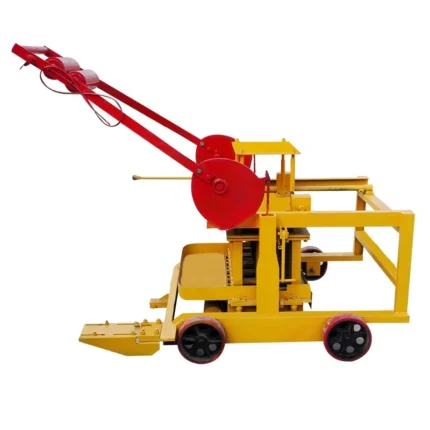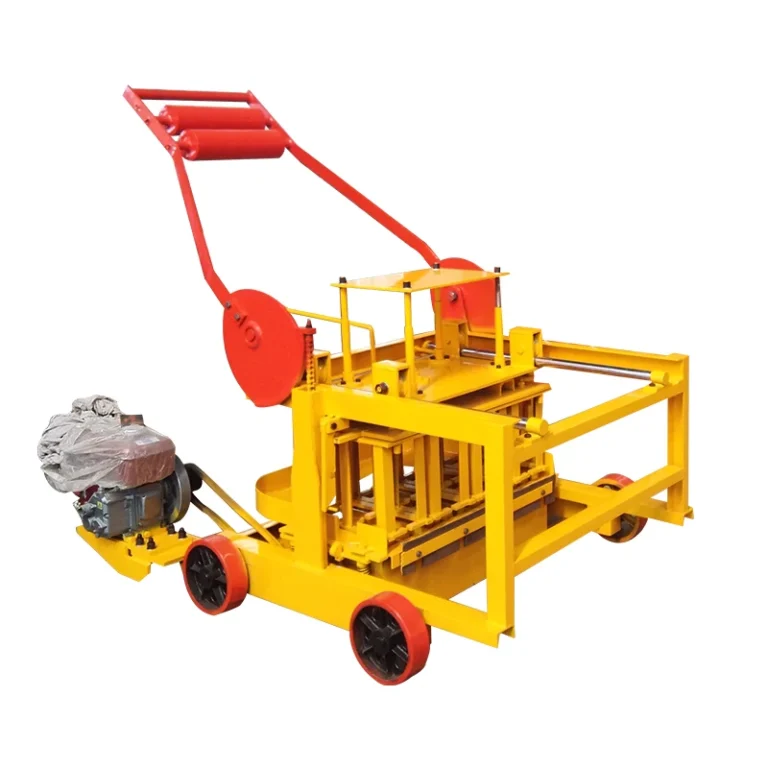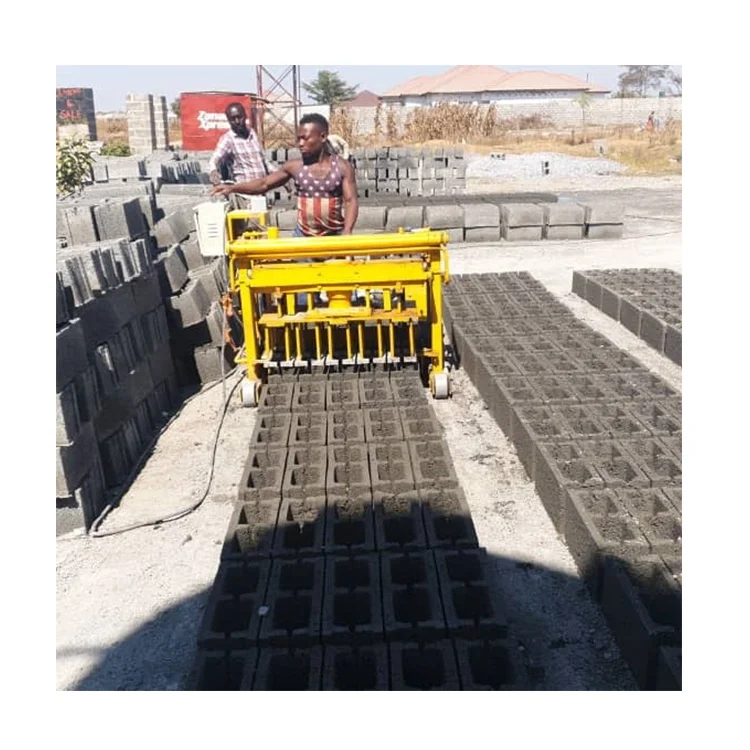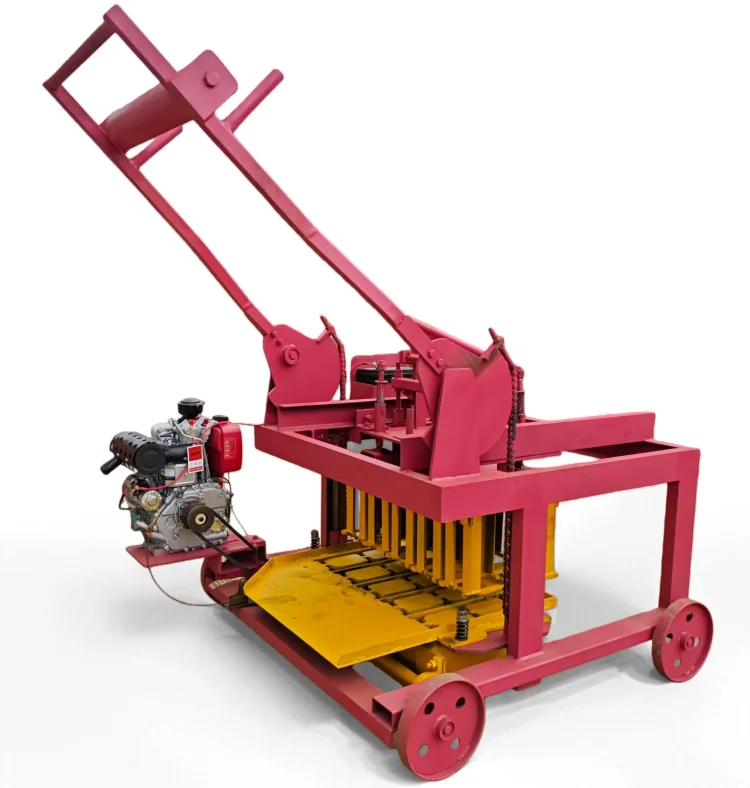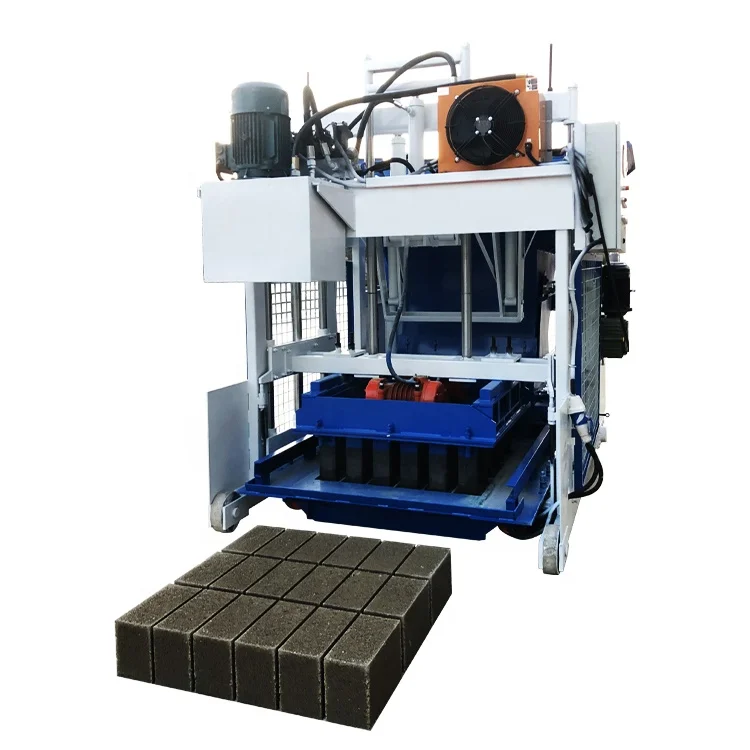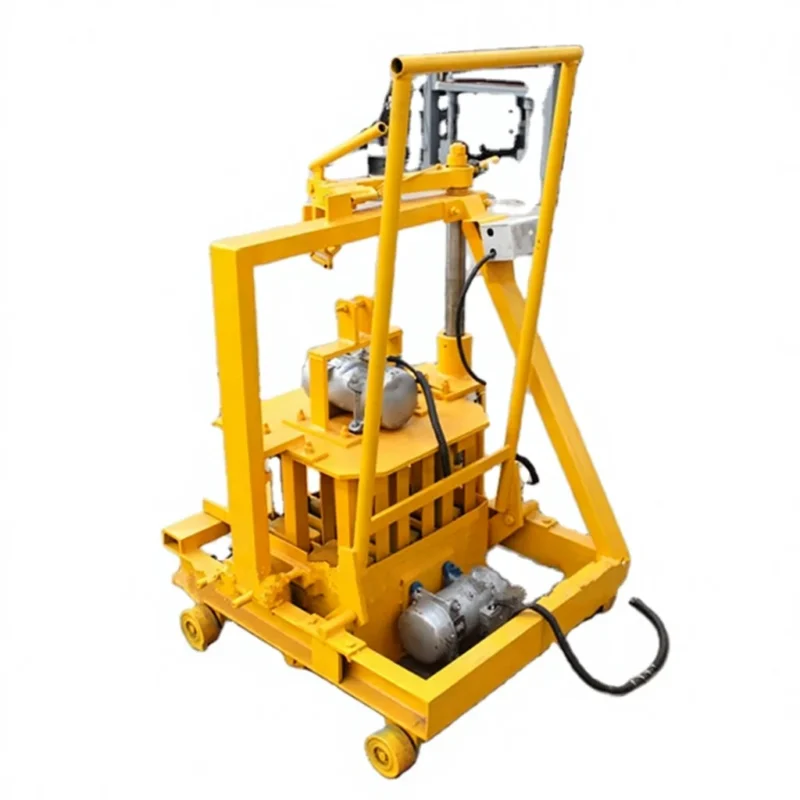


Description
Configuration matched to your site conditions — the QMJ2-45 is specified against your actual local aggregate, target hollow block format, and existing power supply, not a catalogue default.
Technical Specifications
| Parameter | Value |
|---|---|
| Model | QMJ2-45 |
| Product Type | Mobile Egg-laying Block Making Machine |
| Machine Operation | Mobile / egg-laying (pallet-free design) |
| Power Source | Electric |
| Labour Requirement | 1 to 3 workers |
| Mould Change System | Manual, supports multiple hollow brick formats |
| Cycle Time | 25–30 s (basis not stated in source) |
| Output Capacity (400×200×200 mm hollow) | 2 pcs/mould, 160 pcs/h, 1280 pcs/8 hr |
| Output Capacity (400×100×200 mm hollow) | 4 pcs/mould, 320 pcs/h, 2560 pcs/8 hr |
| Pallet Requirement | Not required (blocks laid directly on ground) |
| Automation Level | Semi-automatic / manual mobile |
| Stacking Method | Manual |
| Control System | Not stated in source (PLC options available upon configuration) |
| Voltage & Frequency | Configurable (must be confirmed before shipment) |
| Standards | ISO 9001:2000, CE (confirm certificate validity and scope) |
Application Suitability
| Application Scenario | Material or Output Context |
|---|---|
| On-site housing project production | Hollow blocks from locally sourced crushed stone, sand, and cement |
| Remote infrastructure block making | Pallet-free operation where curing racks and forklifts are unavailable |
| Entrepreneur first plant setup | Low-capital hollow brick production with minimal footprint |
| Supplement to stationary line | Mobile capacity added for specific site contracts or overflow demand |
What "Cycles per Hour" Actually Means for a Mobile Egg-Layer
Hourly output only matters when tied to the exact block format you intend to sell.
I have seen buyers quote a mobile machine’s cycle time without realising that a 25–30 second cycle producing two 400×200×200 mm hollow blocks yields a very different daily tonnage than the same cycle producing four 400×100×200 mm units. When the block format is not stated alongside the capacity figure, the number is meaningless for planning labour, raw material delivery, or curing space. The QMJ2-45 automatic mobile block making machine must be evaluated against the specific hollow brick dimension your local market demands, with cycle time confirmed on that exact format and your intended mix design [NEED_CITE: block format assumptions in capacity quotations].
Removing the Operator Variable from Block Consistency
A mobile egg-laying press deposits blocks directly onto the ground, which means the operator controls travel speed, positioning, and start-stop timing. On a PLC controlled mobile egg-laying block machine, these variables can be governed by the control system rather than left to operator habit. Consistent travel speed and dwell time at each lay point reduce the density variation that shows up as weak blocks at the far end of a production run.
Language, Voltage, and the Commissioning Gap
The control cabinet must speak the language of the workers who will run it. I once dealt with a batch of mobile machines where the PLC interface arrived in English for a Spanish-speaking crew — the workers were afraid to adjust vibration parameters, the mix was under-compacted, and blocks crumbled on handling. Before a QMJ2-45 ships, the voltage, frequency, and display language must be confirmed in writing against the site’s actual electrical supply and the operator’s working language [NEED_CITE: voltage and frequency standards by export market].
Reading the Specifications That Matter
Vibration force and hydraulic pressure are the two parameters that determine whether a hollow block holds together after demoulding, yet neither is stated in the standard QMJ2-45 source data. For a mobile egg-laying machine, vibration must be matched to the buyer’s aggregate gradation — a coarse local crushed stone needs different force characteristics than a fine river sand mix. The labour envelope of 1 to 3 workers sets the baseline: if you plan to run at the higher end of that range, consider whether an upgraded control system with preset mould programs will reduce the skill threshold for the second and third operators. Mould change is manual, so the time required to swap from a 200 mm to a 150 mm hollow format directly affects how many formats you can realistically produce in a single shift.
The Cost of Unconfirmed Electrical and Control Specifications
When voltage and control language are left to assumption, the machine arrives and sits idle while transformers are sourced or the interface is reprogrammed. Commissioning delays cascade into missed project deadlines, and the contractor ends up hand-stacking blocks that should have been machine-produced. For a PLC controlled mobile egg-laying block machine, the control specification is not a detail — it is the difference between a productive first week and a month of troubleshooting [NEED_CITE: CE machinery directive requirements for industrial equipment].
Why Configuration Support Matters Here
Block machinery is our single focus, which means the QMJ2-45 is not sourced from a general machinery catalogue but specified as part of a matched system. Configuration is set against your actual mix design, local aggregate, and target block format rather than a default setting. Mould design covers the formats your market actually sells, with custom drawings available where standard options do not fit. The automation level is selectable — a buyer can start with manual operation and plan a control upgrade path as production volume justifies it. Installation support includes operator training so the crew understands mould change procedure, vibration adjustment, and daily maintenance from day one.
Documentation & Verification
- Machine specification sheet confirming QMJ2-45 configuration against your chosen hollow block format
- Capacity calculation stating the exact block dimension and cycle time assumed
- Mould drawing and format list matching your local market requirements
- Voltage, frequency, and control language confirmation signed before production
- Factory test record with output measured on your specified hollow brick format
- Wear parts and mould availability list with first-replacement lead times
Installation, Commissioning & Support
- Ground preparation requirements for pallet-free egg-laying operation on your site surface
- Electrical supply confirmation matching the QMJ2-45 configured voltage and frequency
- Assembly and levelling procedure for the mobile frame before first production run
- Control system language and parameter setup during on-site commissioning
- Operator training covering mould change, vibration adjustment, and daily greasing points
- Wear parts supply plan with lead times aligned to your production schedule
What to Include in Your Inquiry
Provide the specific hollow block dimensions your market requires, along with your local aggregate type and cement source. State your site’s available voltage and frequency, and the preferred control display language for your operators. If you have an existing stationary line, describe how the automatic mobile block making machine will supplement it — this affects mould selection and output planning.
Frequently Asked Questions
Q: How is the hourly output of the QMJ2-45 verified before shipment?
A: Output is verified during factory testing using the exact hollow block format and mould the buyer has ordered. The test record states the block dimension, cycle time achieved, and pieces produced per hour under test conditions. We do not quote capacity without tying it to a specific format, because the same machine produces different volumes across 200 mm, 150 mm, and 100 mm hollow widths.
Q: Can the QMJ2-45 be upgraded to PLC control at a later stage?
A: The machine is configurable with PLC control, and the upgrade path depends on the base electrical architecture installed at purchase. Buyers planning future automation should specify PLC-ready wiring and sensor mounting points during initial configuration, as retrofitting these later requires more extensive electrical work and production downtime.
Q: What electrical and control details must be confirmed before the machine ships?
A: Voltage, frequency, and PLC display language must all be confirmed in writing before production begins. A 380V/50Hz machine delivered to a 440V/60Hz site will not commission without a transformer, and a control interface in the wrong language creates operator hesitation that affects block quality and machine safety.
Q: How does a pallet-free mobile machine maintain block consistency?
A: Consistency on an egg-laying machine depends on controlled travel speed, consistent vibration duration at each lay point, and a stable mix design. PLC control can govern travel and vibration timing, reducing the operator variable. The mix must be matched to the machine’s vibration characteristics and the local aggregate available at the production site.
Q: What is involved in changing moulds on the QMJ2-45?
A: Mould change is a manual procedure involving removal of the current mould assembly and fitting of the replacement. The time required depends on operator familiarity and whether the machine was specified with quick-release mould clamps. Buyers producing multiple formats should confirm mould change time during factory acceptance testing.