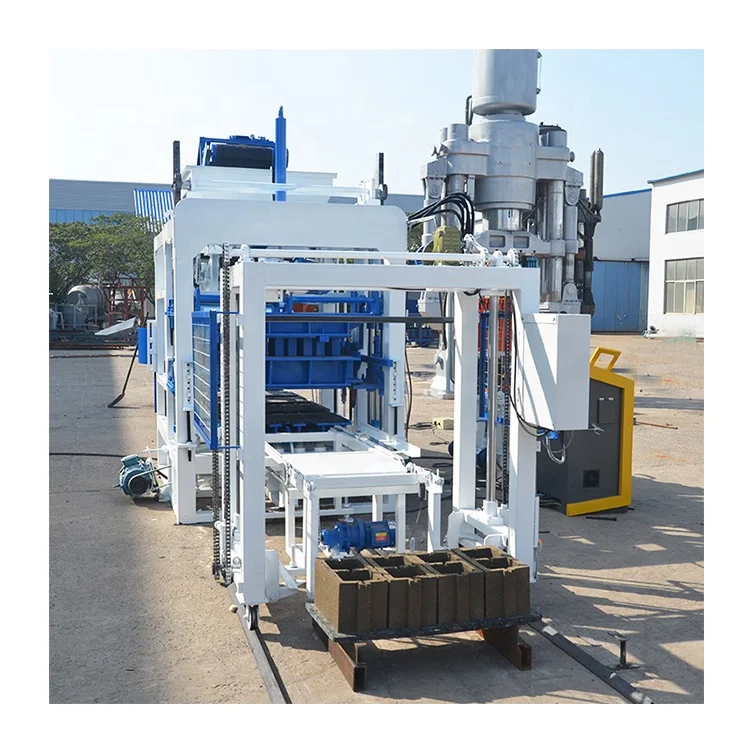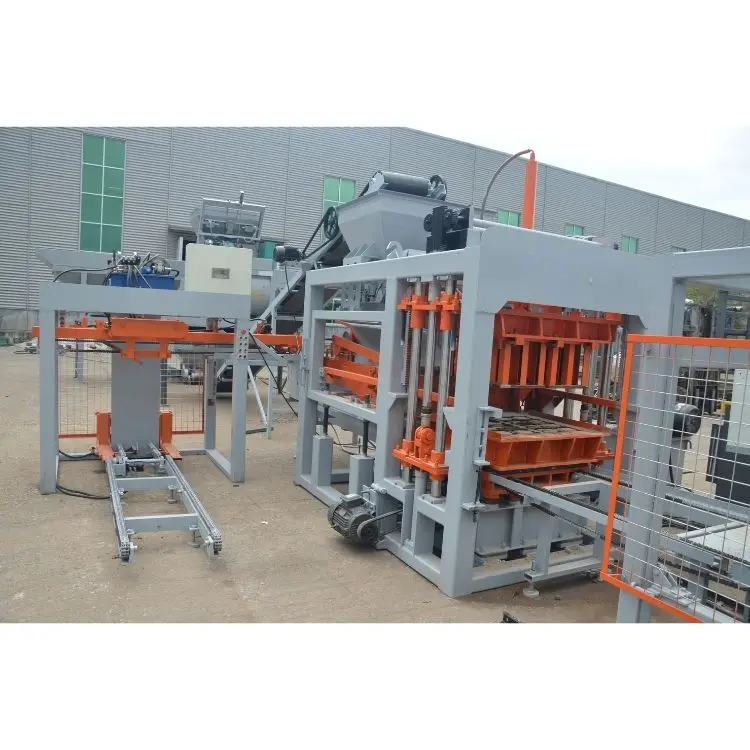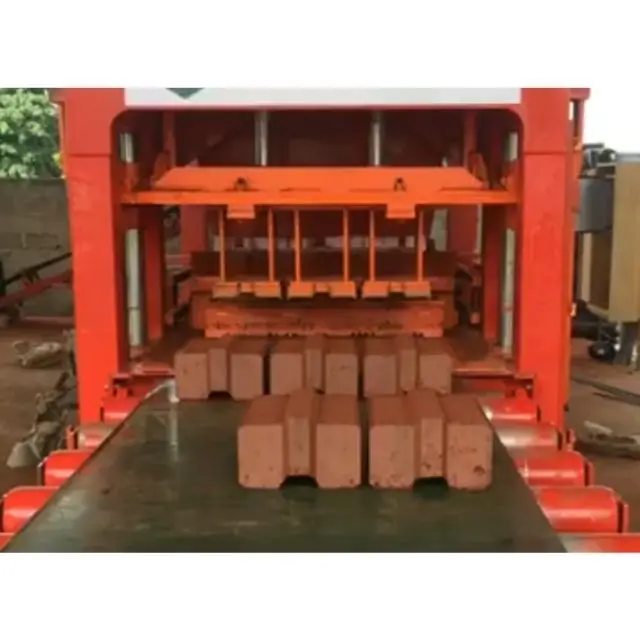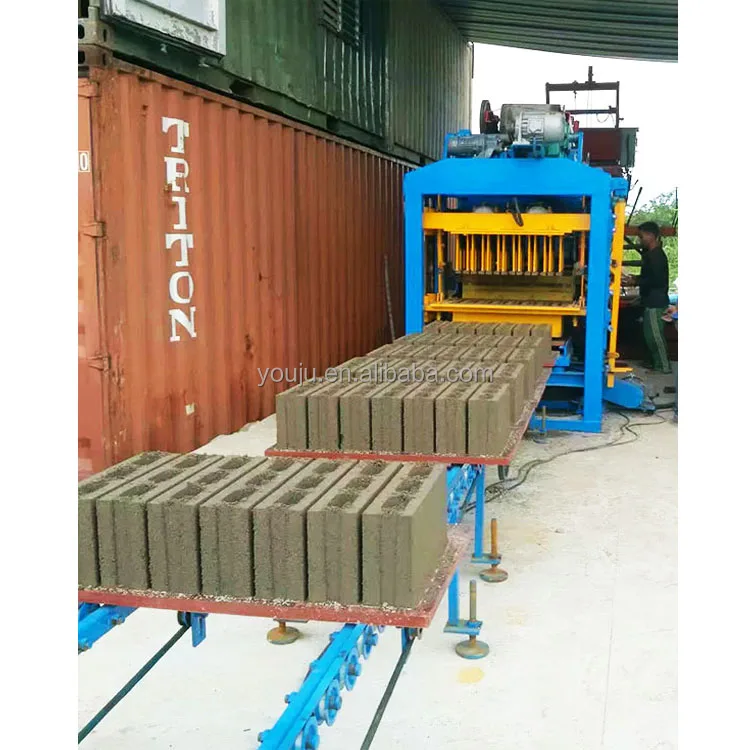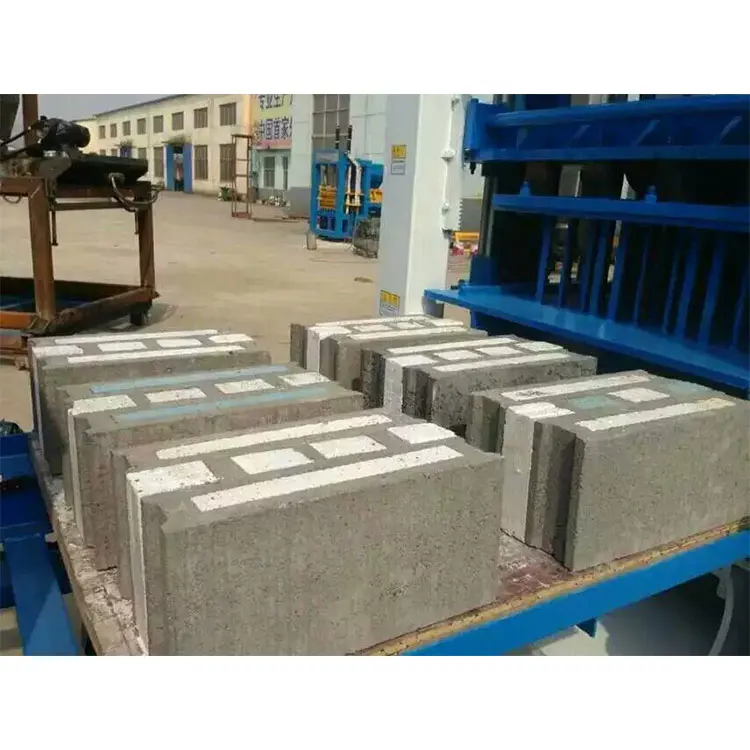


Description
Intelligent Control Integration — Every PLC parameter on the QT10-15 is confirmed against your local voltage, frequency, and operator language before the control cabinet is wired, eliminating the commissioning standstill that happens when a machine arrives with a default interface nobody on the floor can read.
Technical Specifications
| Parameter | Value |
|---|---|
| Model | QT10-15 |
| Product Type | Fully Automatic Concrete Block Making Machine |
| Overall Dimensions (L×W×H) | 9350×2320×2950 mm |
| Rated Hydraulic Pressure | 21 MPa |
| Main Vibration Form | Platform Vibration |
| Vibration Frequency Range | 2800~4500 r/min |
| Vibration Force | 60 kN |
| Pallet Size | 1100×900 mm |
| Molding Cycle | 15-25 s (basis not stated in source — confirm block format / material / thickness) |
| Overall Power | 44 kW |
| Total Mass | 10 T |
| Demolding Method | Hydraulic |
| General Water Consumption | 8 T/Day |
| Factory Area Required | 500 m² |
| Control System | PLC with person-machine conversation interface |
| Automation Level | Fully automatic production line |
| Voltage & Frequency | Configurable — confirm before commissioning |
| PLC Display Language | Configurable — confirm before shipment |
Application Suitability
| Application | Material or Output |
|---|---|
| Hollow block production for structural walls | Crushed stone, sand, cement, fly ash |
| Solid block manufacturing for load-bearing construction | Gravel, sand, cement, slag |
| Paver and interlocking brick production | Fine aggregate, cement, pigment for colored pavers |
| Curbstone and kerbstone forming | Coarse aggregate, cement, high-density mix designs |
| Porous and permeable brick for drainage systems | Open-graded aggregate, cement, controlled water content |
Why the PLC Language Setting Should Be Decided Before the Machine Ships
An automatic QT10-15 block machine PLC controlled in the wrong language is a manual machine waiting for a translator.
I spent two days on a site in the Middle East watching an operator press the wrong sequence because the fault code on the screen meant nothing to him. The hydraulic pressure was fine, the vibration motor was running, but the line sat idle because the PLC display defaulted to English and the local electrician read Arabic. That delay had nothing to do with the press and everything to do with a checkbox that was never ticked before the cabinet left Shandong [NEED_CITE: PLC interface language standards for exported industrial machinery]. The automatic QT10-15 block machine PLC controlled system is only as intelligent as the configuration data loaded into it before dispatch.
How the PLC Removes Operator Guesswork from the Pressing Cycle
On a semi-automatic line, the operator decides when the mold fills, when vibration starts, and when the press releases. Every one of those decisions introduces variation between the first block of the morning and the last block before lunch. The automatic QT10-15 block machine PLC controlled system locks each phase of the cycle into a repeatable sequence — feed time, vibration duration, pressure hold, demolding speed — so the ten-thousandth block in a run matches the first.
Batch Consistency When the Raw Material Shifts
Local aggregate in one quarry can differ in moisture and grading from the next delivery, and the mix that worked Tuesday may produce weak blocks on Thursday. The PLC on this line allows the operator to adjust vibration frequency within the 2800–4500 r/min range and modify hydraulic hold pressure without rewiring the cabinet. Those adjustments are logged, so when a batch tests low on compressive strength, you can trace exactly which parameter set was running [NEED_CITE: batch traceability requirements in concrete product manufacturing].
Reading the Numbers Behind the Press
The 21 MPa rated hydraulic pressure and 60 kN vibration force work together — pressure compacts the mix from above while platform vibration settles the aggregate from below. If the vibration force is too low for a coarse gravel mix, the block surface will be pitted regardless of how much pressure is applied. The 1100×900 mm pallet size determines how many blocks fit per cycle, and that pallet must match the curing rack spacing and the forklift tine width already in your yard. The 44 kW overall power draw means the main breaker and cable run must be sized before the machine arrives, not after [NEED_CITE: electrical supply sizing for industrial hydraulic presses]. A 500 m² factory area is the minimum footprint for the press, mixer, pallet return, and curing rack access combined.
What Happens When the Automation Level Does Not Match the Line
A fully automatic press connected to manual pallet handling creates a bottleneck at the stacking station. Blocks pile up at the press output faster than workers can move them, and the PLC fault log fills with pallet-backup alarms. The buyer paid for automation at the press but still needs the same crew count on the curing side. The other direction is equally costly: a semi-automatic press on a line with automatic stacking means the stacker sits idle waiting for the operator to finish each cycle. Matching automation across every station is where the actual labor reduction happens.
Configuration Confirmed Against Your Actual Conditions
The QT10-15 is specified as a matched system — press, mold, pallet, and handling — not assembled from separate suppliers who do not communicate. Voltage and frequency are confirmed against your site supply before the control panel is built, so the motor contactors and PLC power supply arrive correct. The mold is designed for the block format your market actually buys, including custom drawings when a standard mold does not fit your product range. Automation level is selectable, so you can start with the press automated and add stacking later without replacing the PLC. Installation includes operator training on the exact interface your crew will use every day.
Documentation & Verification
- Line layout drawing showing QT10-15 station spacing with pallet return path and curing rack positions
- Capacity calculation sheet stating which block format the 15-25 s cycle time assumes
- PLC program backup with confirmed language and parameter set for your mix design
- Hydraulic and electrical schematic matching the as-built cabinet wiring
- Factory test record showing vibration force and pressure readings against your submitted aggregate sample
Installation, Commissioning & Support
- 500 m² minimum floor area confirmed against your actual building dimensions before foundation work begins
- 44 kW total load verified against your site transformer capacity and dedicated breaker sizing
- PLC display language and voltage set to your confirmed specification before the cabinet leaves the factory
- Hydraulic pressure and vibration frequency tuned on-site using your local aggregate and mix proportions
- Operator training covers fault code reading, mold change procedure, and daily greasing points on the QT10-15
- Wear parts list with hydraulic seal and vibration motor bearing part numbers for first reorder
What to Include with Your Inquiry
Send the block formats you currently sell or plan to produce, along with target daily output per format. Confirm your site voltage, frequency, and the language your operators read on a screen. Let us know whether your existing curing racks and forklifts constrain the pallet size, and whether stacking and cubing need to be included in the line or handled separately.
Frequently Asked Questions
Q: How do I verify the real daily output of this machine for my specific block format?
A: Request a capacity calculation that names the exact block dimensions and molding cycle used. A generic pieces-per-hour figure means nothing without knowing whether it assumes a hollow block, a paver, or a curbstone. The 15-25 s cycle range covers different formats, and your actual output depends on which mold is installed and what mix you run.
Q: What PLC language and voltage options are confirmed before the machine ships?
A: Both are confirmed during the order process, not assumed. The PLC display language is set to match your operators, and the control cabinet is wired for your site voltage and frequency. A written confirmation document is issued before production so there is no mismatch when the machine arrives on your floor.
Q: How does the automation level affect crew size and future expansion?
A: Full automation at the press reduces the operator count at the pressing station, but labor savings only materialize when pallet handling, stacking, and curing are also automated. The system supports adding automatic stacking and cubing later without replacing the PLC or the press frame.
Q: How are vibration force and hydraulic pressure matched to my local aggregate?
A: Your aggregate sample and mix design are tested to determine the vibration frequency and pressure hold time that produce target block strength. The 2800–4500 r/min range and 21 MPa hydraulic system are adjusted to those values, and the settings are recorded in the PLC for repeatable production.
Q: What remote diagnostics does the PLC provide for batch consistency?
A: The PLC logs cycle parameters for each production run, allowing you to trace which vibration and pressure settings were active when a particular batch was made. Fault codes display in your confirmed language so maintenance staff can respond without calling for translation.