Description
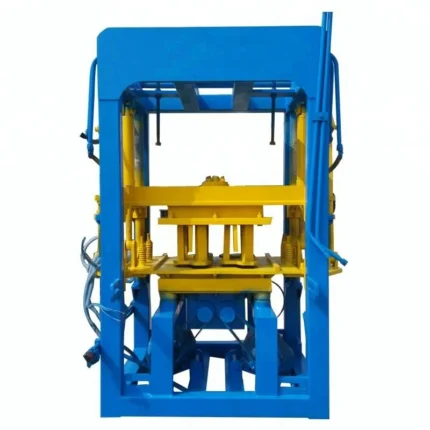
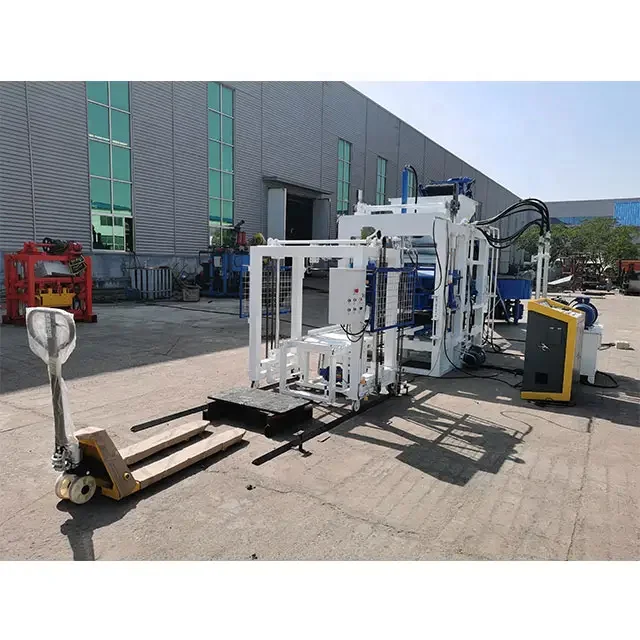
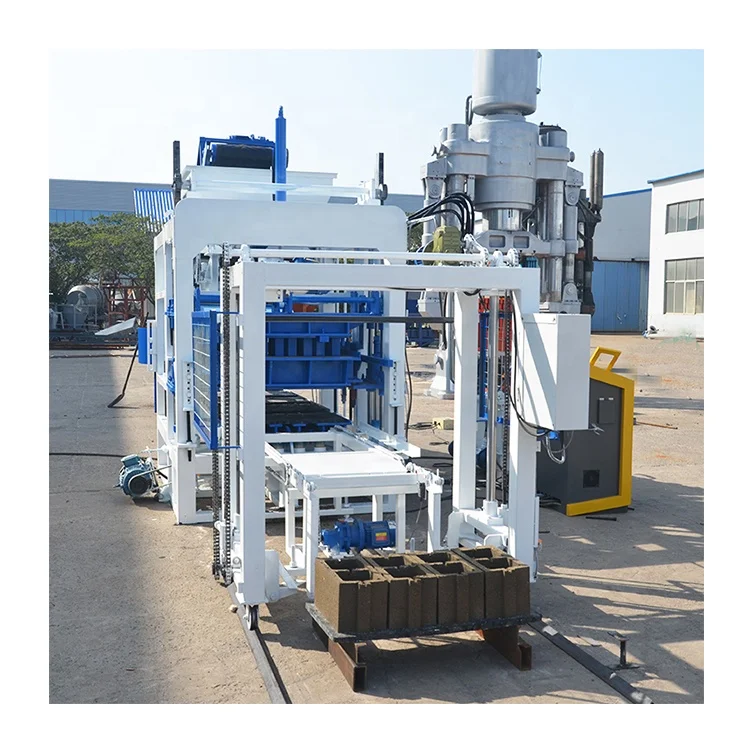
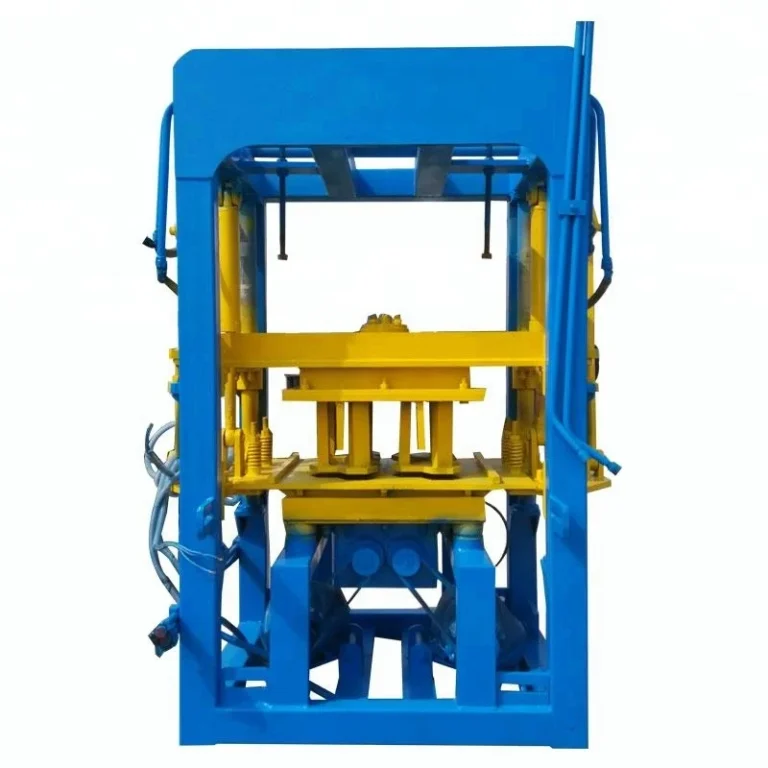
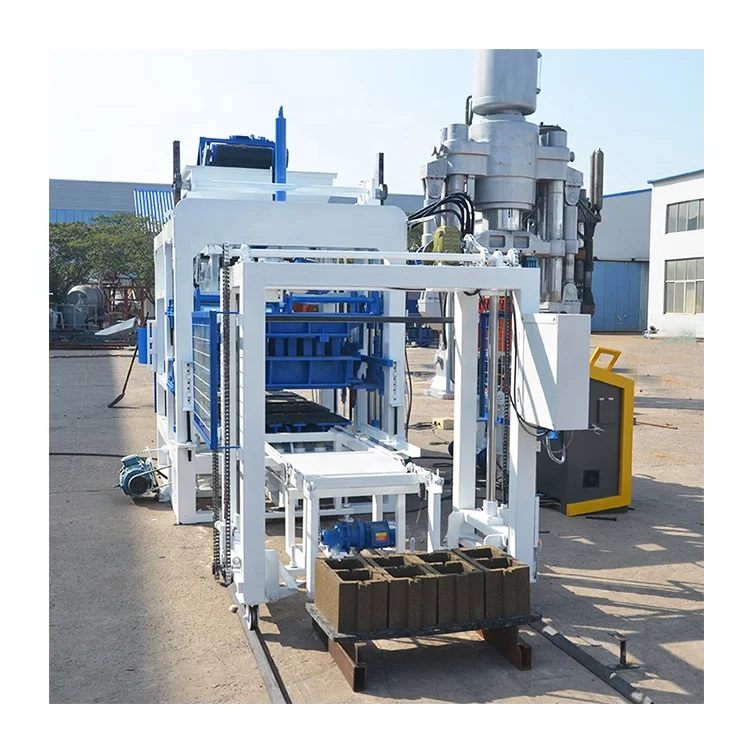
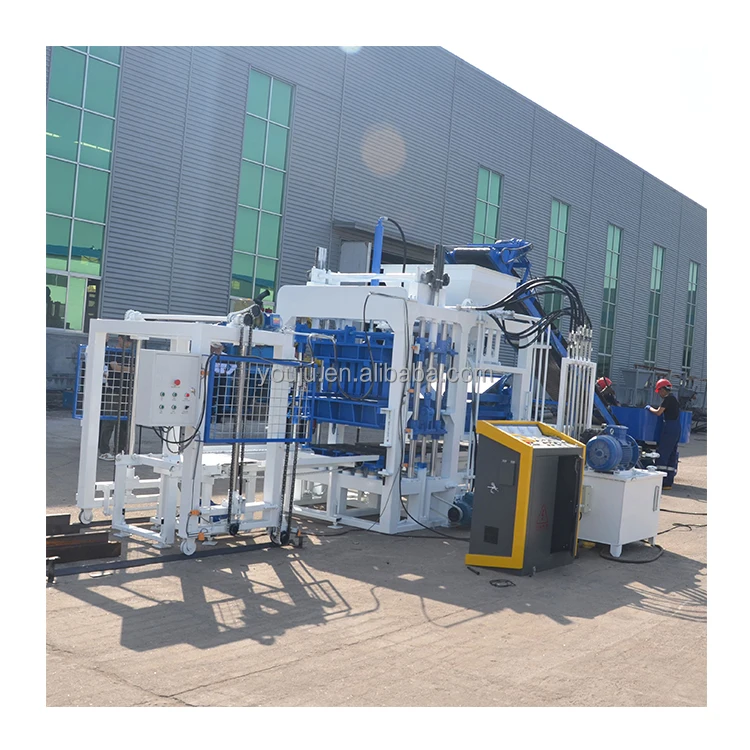
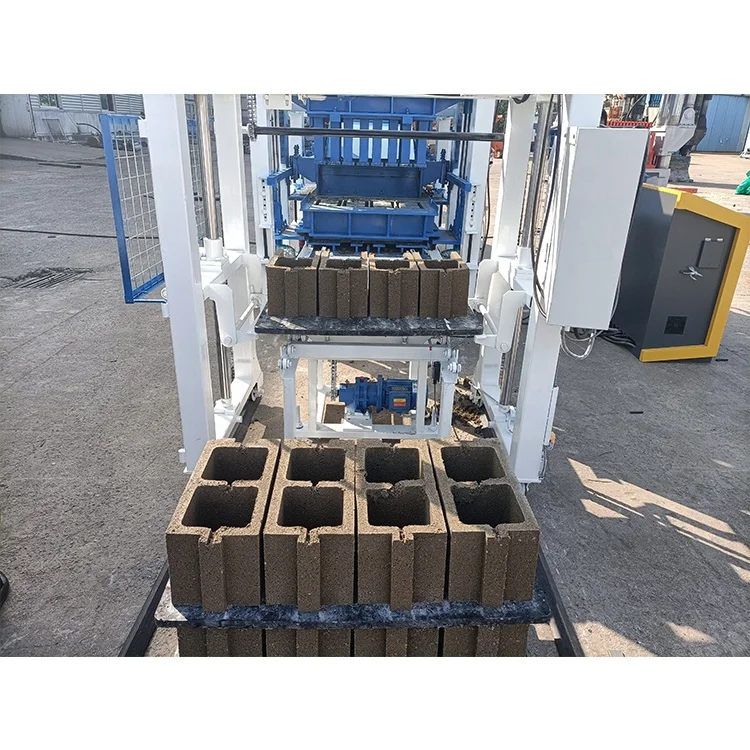
PLC-Driven Consistency — The QT4-16 pairs hydraulic demolding with platform vibration under intelligent logic control, removing guesswork from the operator and keeping cycle parameters locked across every shift.
Technical Specifications
| Parameter | Value |
|---|---|
| Model | QT4-16 |
| Product Type | Automatic Hydraulic Concrete Block Making Machine |
| Overall Dimensions (L×W×H) | 7400×1950×2800 mm |
| Total Mass | 5 T |
| Rated Pressure | 21 MPa |
| Vibration Force | 40 KN |
| Vibration Frequency | 2800-4500 r/min |
| Main Vibration Form | Platform Vibration |
| Pallet Size | 900×550 mm |
| Molding Cycle | 15-20 s (basis not stated in source — confirm block format and material) |
| Demolding Method | Hydraulic |
| Factory Area Required | 600 m² |
| Control System | PLC intelligent control with man-machine interface, malfunction diagnosis, remote control function |
| Automation Level | Full Automatic |
Application Suitability
| Application | Material or Output |
|---|---|
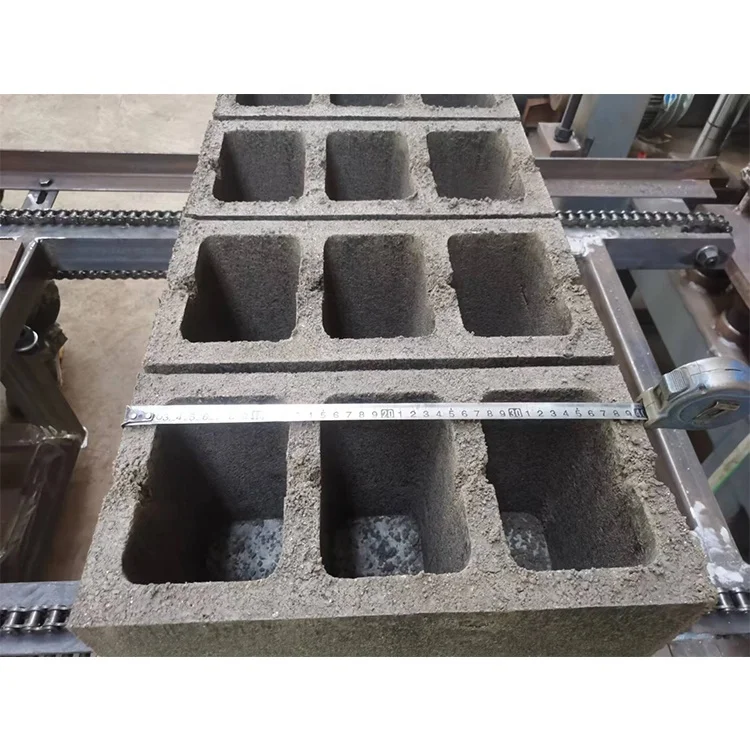
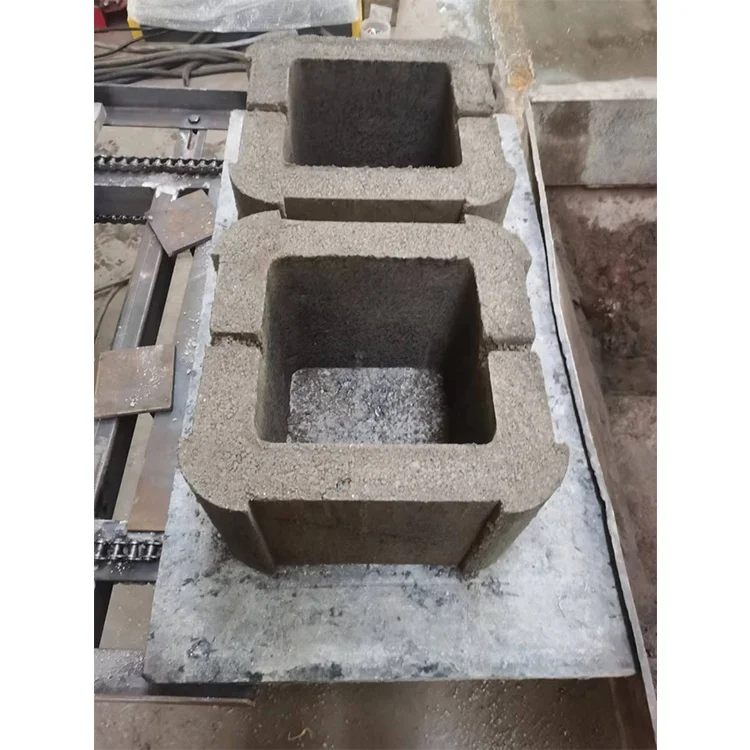
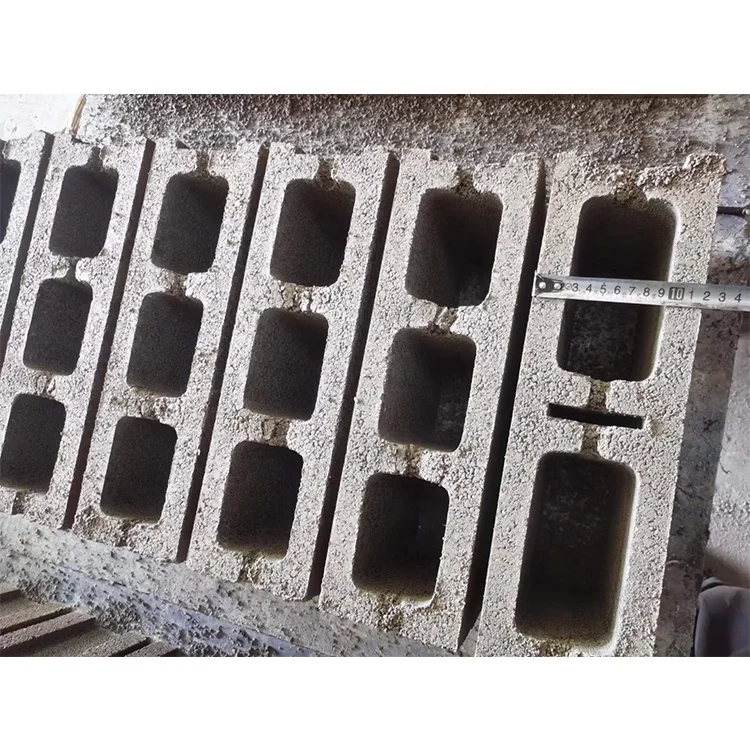
| Hollow Block Production | Crushed stone, sand, cement, fly ash |
| Solid Block Production | Gravel, slag, cement blends |
| Paving Block Production | Colored concrete mixes, fine aggregates |
| Interlocking Block Production | Standard concrete mixes with specific moulds |
| Curbstone Production | Heavy-duty concrete mixes |
Why the Control Language Must Be Decided Before the Crate Is Nailed Shut
A PLC screen the operator cannot read turns an automatic machine back into a manual one.
I once spent three days in a humid workshop outside Lagos because the HMI on a block press was locked in English and the local crew could not navigate the fault menus. The automatic QT4-16 block making machine PLC controlled interface is powerful, but only if the display language, voltage, and frequency are confirmed before the control cabinet leaves the factory. When those details slip, commissioning stalls and the first week of production is lost to translation rather than output. [NEED_CITE: industrial HMI language requirements by export market]
Logic Control That Removes the Operator From the Equation
The PLC on this press handles the full production program: feed timing, vibration duration, hydraulic pressure application, and demolding sequence. Once the parameters for a specific block format are saved, the automatic QT4-16 block making machine PLC controlled system recalls them on demand, so a Monday morning hollow block run and a Thursday afternoon paver run both start from a verified baseline rather than a supervisor’s memory.
Fault Diagnosis That Catches Problems Before Scrap Piles Up
The malfunction diagnosis system monitors sensor feedback across the hydraulic and vibration circuits. When a value drifts outside its set window, the HMI flags the specific station and suggests a corrective step. This is what separates a controlled stop from a press full of half-formed blocks. The remote control function also allows off-site engineers to review fault logs and adjust setpoints without waiting for a flight. [NEED_CITE: PLC remote diagnostics standards in concrete equipment]
Pressure and Vibration: Why Both Numbers Matter
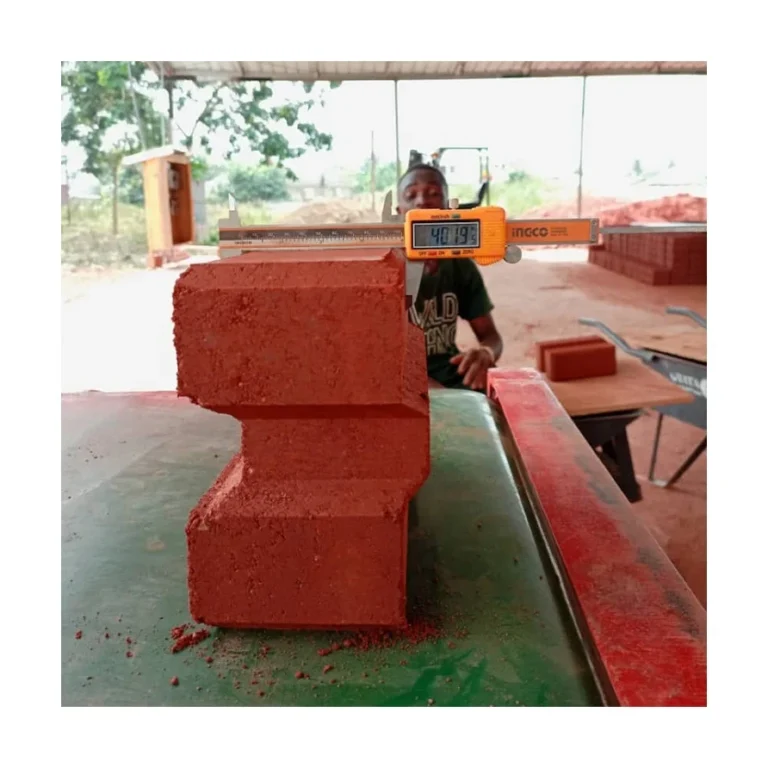
Block density is not decided by hydraulic pressure or vibration force alone — it is the result of both working against the same mix at the same moment. The QT4-16 applies 21 MPa rated pressure while the platform delivers 40 KN at 2800-4500 r/min. If the vibration frequency is too high for the aggregate size, the mix segregates; if the pressure arrives before vibration settles the material, the block cracks on demold. Matching these two forces to the buyer’s actual crushed stone gradation and cement ratio is where most off-catalogue machines fail. The 900×550 mm pallet size also dictates curing rack spacing and forklift tine width, so confirming the pallet spec against the existing curing area avoids a second round of steelwork after arrival.
What Happens When Automation Scope Is Assumed Rather Than Specified
A buyer who expects pallet feeding, stacking, and cubing to be included in a "full automatic" quotation sometimes discovers those stations were optional extras. The result is a press that cycles perfectly while green blocks pile up at the discharge end, waiting for someone to carry them by hand. Confirming the automation boundary — what the base QT4-16 includes and what the upgrade path covers — before the purchase order is signed prevents that bottleneck. [NEED_CITE: automation scope definitions in block making equipment contracts]
Why Procurement Here Reduces Integration Risk
The machine, mould, pallet, and handling stations are specified as one system rather than sourced from separate vendors and bolted together on site. Configuration starts from the buyer’s mix design and target block format, not a catalogue default. Mould design covers the formats the local market actually buys, with custom drawings available. The automation level is selectable, so a plant can begin with the base press and add stacking modules later. Installation includes operator training on the specific HMI and fault menus the crew will use daily.
Documentation & Verification
- Line layout showing capacity per block format assumed
- PLC specification sheet with confirmed display language
- Hydraulic and electrical schematic matching shipped cabinet
- Factory test record run on buyer’s target block size
- Mould drawing and format list for every ordered cavity
- Packing photographs and customs documentation support
Installation, Commissioning & Support
- 600 m² factory area must be level and cured before the 7400 mm frame is set
- Dedicated circuit matching confirmed voltage and frequency for the 5 T press
- PLC cabinet powered and language verified before hydraulic commissioning begins
- Vibration frequency tuned to local aggregate during first live run
- Operator training covers fault diagnosis menus and mould change sequence
- Wear parts list supplied with part numbers for hydraulic seals and platform springs
What We Need From You to Size the Line Correctly
Share the block formats your market moves fastest, the daily volume you need per format, and the aggregate sources available within a workable freight radius. Include your site voltage and frequency, the PLC display language your operators read, and whether pallet stacking and cubing are part of this scope or a later phase.
Frequently Asked Questions
Q: How do I confirm the 15-20 second cycle applies to my specific block format?
A: Request a capacity calculation that names the exact block dimensions, wall thickness, and mix design used as the basis. The cycle time for a 400×200×200 mm hollow block differs from a 60 mm paver, and only a format-specific sheet tells you what daily output to plan for.
Q: Which PLC display languages are available before the machine ships?
A: The HMI can be configured in several languages including English, Spanish, French, Arabic, and Russian. The chosen language must be confirmed before the control cabinet is assembled, because changing it after dispatch requires a firmware reload on site.
Q: What can the remote control function actually monitor?
A: The remote link allows an off-site engineer to view fault logs, review cycle parameter history, and adjust setpoints such as vibration duration and feed timing. It does not replace on-site maintenance but shortens diagnosis time when an unfamiliar alarm appears.
Q: Can pallet feeding and stacking be added after the base QT4-16 is running?
A: Yes. The automation architecture supports adding pallet feeding, automatic stacking, and cubing modules as a later phase. The electrical cabinet is pre-wired for these additions, so the upgrade does not require replacing the main PLC.
Q: How are vibration frequency and pressure matched to my local aggregate?
A: During commissioning, the vibration frequency within the 2800-4500 r/min range is tuned while test blocks are formed and measured for density. The hydraulic pressure is then adjusted until the target block strength is achieved with the buyer’s specific crushed stone and cement ratio.