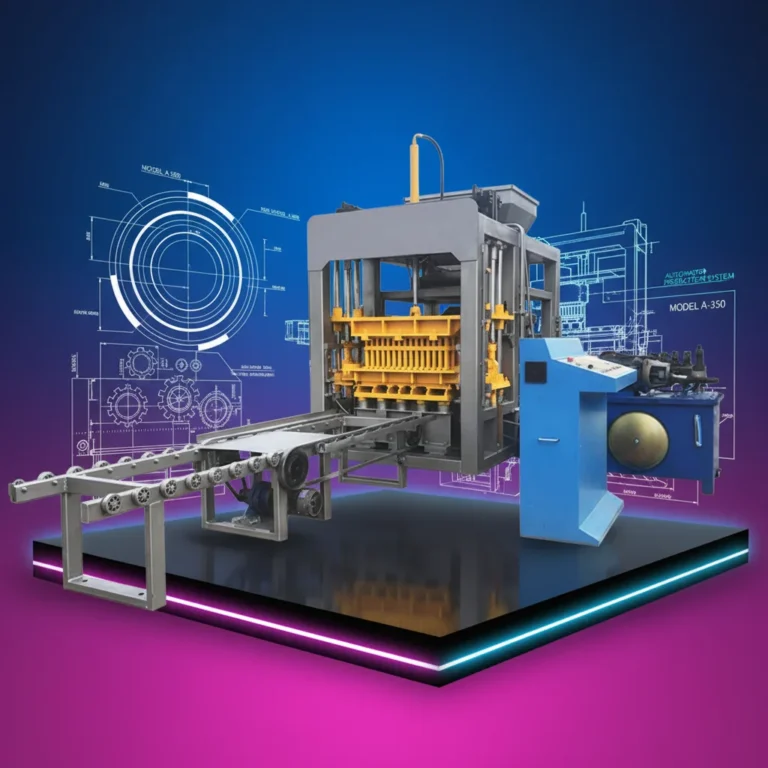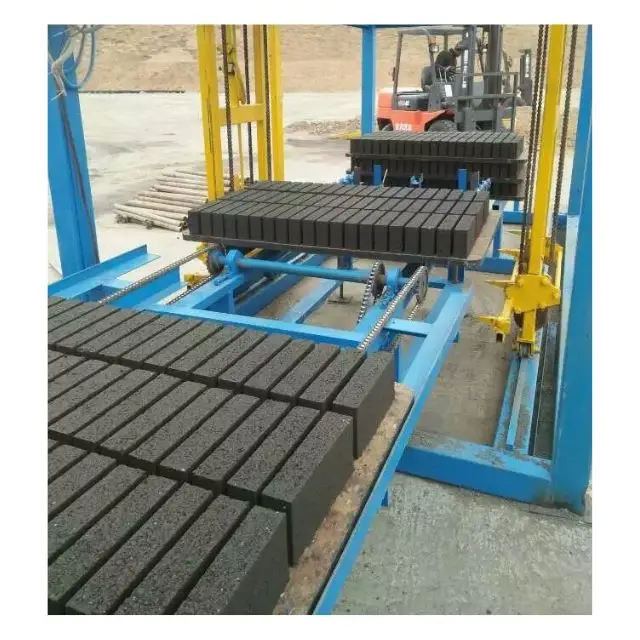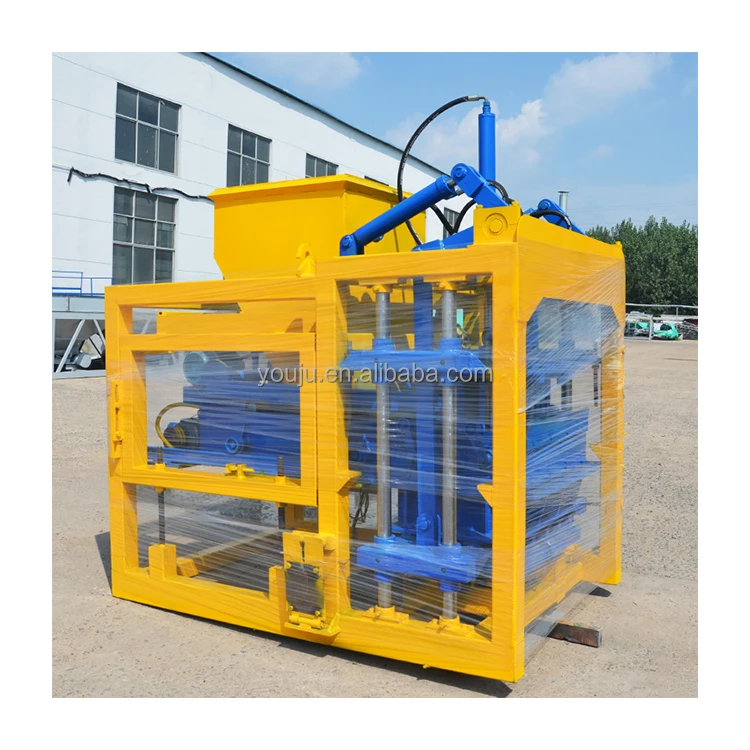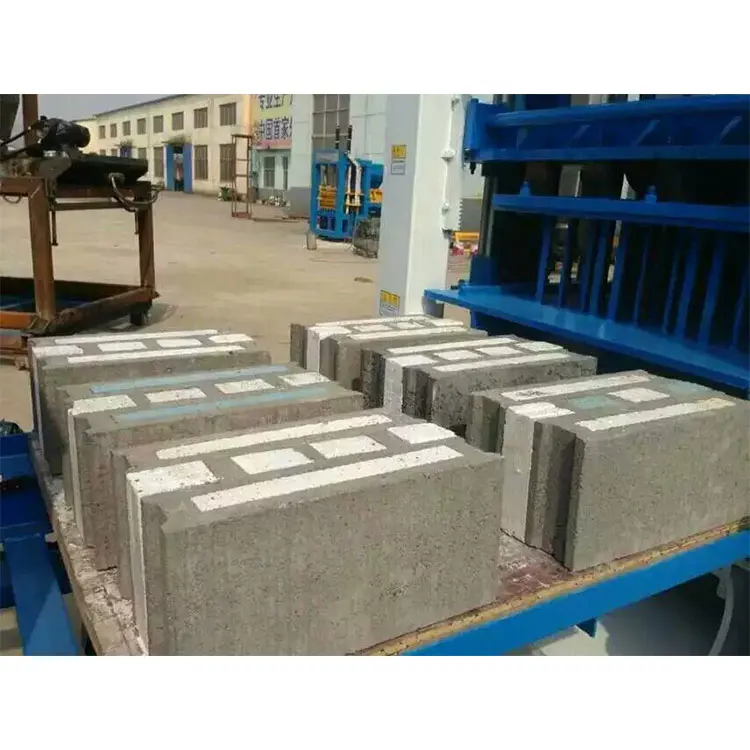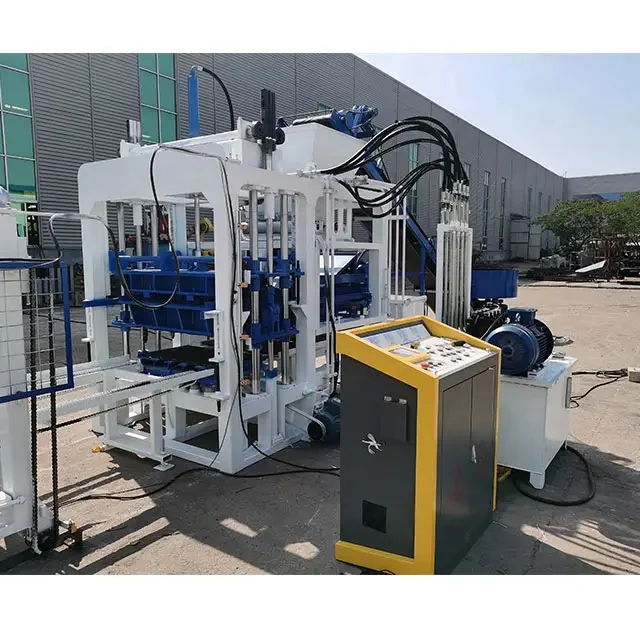
Description
Matched Control Systems — PLC and hydraulic parameters tuned to your local aggregate before commissioning, not set to catalogue defaults.
Technical Specifications
| Parameter | Value |
|---|---|
| Model | QT4-18 |
| Product Type | Automatic Concrete Block Making Machine |
| Overall Dimensions (L×W×H) | 2500×1750×2200 mm |
| Rated Pressure | 16 MPa |
| Vibration Form | Platform Vibration |
| Pallet Size | 950×550 mm |
| Molding Cycle | 18–25 s (basis to be confirmed by block format) |
| Overall Power | 27.5 kW |
| Control System | PLC with frequency converter |
| Electrical Components | Schneider |
| Mould Lifting Mechanism | Double-sided synchronous gears |
| Pallet Feeder Power Source | Hydro-cylinder |
| Automation Level | Automatic (mixer, pallet conveyor, molding machine, block conveyor, hydraulic station, electronic console) |
| Supporting Equipment Compatibility | JQ500 pan mixer, 8 m / 6 m belt conveyor, stacker, block clamper, cement silo, batching plant, trolley |
| Mould Change Method | Manual bolt release (M24), conveyor-assisted transfer |
| Output Capacity | Basis not stated in source — confirm block format, material, and thickness |
Application Suitability
| Application | Material or Output |
|---|---|
| Hollow block production for building walls | Crushed stone, river sand, cement, water |
| Solid brick manufacturing for load-bearing structures | Fly ash, sand, cement blends |
| Paving block and kerbstone for municipal projects | Coarse aggregate with higher cement ratio |
| On-site production by housing contractors | Locally sourced sand and gravel mixes |
| First plant setup by entrepreneurs | Standard concrete masonry unit formats |
What the Moulding Cycle Number Actually Means for Your Shift
The 18–25 second cycle only translates into daily output once your block format, mix design, and pallet return speed are factored in.
I spent years on assembly lines and later in field technical support, and one pattern repeats across every region: a machine quoted at a single cycle time produces far fewer blocks than the buyer expected because the format used for that quote was a small solid brick, not the hollow block the buyer actually sells. When the local aggregate has a different particle shape or moisture content, the vibration and pressure settings must be re-matched or the blocks crack during curing. The QT4-18 automatic concrete block making machine PLC controlled cycle can be adjusted on-site, but only if the baseline test was done with your actual material [NEED_CITE: effect of aggregate grading on concrete block compressive strength].
How PLC Control Reduces Operator Dependency
The PLC electronic console paired with a frequency converter manages the pallet feed, vibration duration, hydraulic press stroke, and block discharge in one sequence. Operators no longer time each step manually, which removes the variation that creeps in during long shifts. The Schneider electrical components are specified so that replacement contactors and relays remain available through local distributors in most export markets.
Synchronising the Press with the Rest of the Line
A press that finishes its cycle faster than the pallet return system can deliver the next pallet simply stands idle. The hydro-cylinder-driven pallet feeder on the QT4-18 is timed to the demould stroke so the next pallet arrives as the mould lifts. This coordination matters more as you add upstream and downstream stations — a JQ500 pan mixer, belt conveyor, and stacker must each match the press rhythm or the bottleneck shifts rather than disappears [NEED_CITE: line balancing principles in concrete block production].
Reading the Specification Sheet Against Your Production Reality
The 16 MPa rated pressure and platform vibration together determine the green density of the block before curing. Higher pressure alone does not guarantee stronger blocks if the vibration frequency is not matched to the aggregate size distribution. The 950×550 mm pallet size defines the maximum mould footprint; choosing a pallet dimension that fits your existing curing racks and forklift avoids costly re-racking later. The double-sided synchronous gear mechanism keeps the mould box level during lifting, which reduces uneven wear on mould liners and maintains dimensional tolerance across production runs. The 27.5 kW overall power rating means a dedicated circuit with appropriate breaker sizing is required at the site before installation begins.
The Hidden Cost of Skipping the Voltage Conversation
Confirming voltage, frequency, and PLC display language after the machine has shipped is a recurring problem I have seen on multiple job sites. A motor wound for 380 V / 50 Hz running on a 440 V / 60 Hz supply overheats within weeks, and a PLC menu in an unreadable language forces operators to guess parameter meanings during mould changes. Re-winding motors and replacing control boards mid-project costs far more than a five-minute confirmation call before production begins [NEED_CITE: voltage and frequency standards by export market].
Why Sourcing the Line from One Supplier Matters Here
The QT4-18 is specified as a matched set — press, pallet feeder, mould, and handling stations are sized against one another rather than assembled from unrelated catalogues. Configuration starts from your actual mix design and target block format, not a default table. Moulds are built to the formats your market sells, with custom drawings available when standard formats do not cover your requirements. Automation level is selectable, so you can begin with semi-automatic pallet handling and add stacking or cubing stations later without replacing the press. Factory test records document cycle time and block dimensions under your chosen mould before the machine leaves the workshop.
Documentation & Verification
- Line layout showing QT4-18 cycle synchronisation with mixer and stacker
- Machine specification sheet with confirmed voltage and frequency
- Mould drawing and format list matched to your market
- Factory test record on your target block format before dispatch
- Hydraulic and electrical schematic for on-site troubleshooting
- Operation and maintenance manual in confirmed PLC display language
Installation, Commissioning & Support
- Foundation slab sized for 2500×1750 mm footprint and vibration load
- Dedicated circuit for 27.5 kW total draw with correct breaker rating
- Machine shipped in dismantled state; reassembly guided by technical team
- PLC parameters set to your mix and block format during commissioning
- Operator training on mould change using M24 bolt release procedure
- Wear parts and mould liner list provided for first reorder cycle
What to Include in Your First Inquiry
Send your target block format with dimensions, the local aggregate type and source, and the daily output you need to meet project schedules. Confirm your site voltage, frequency, and the language your operators read. If you already have a mixer, curing racks, or forklifts on-site, share their specifications so the pallet size and conveyor heights are matched from the start.
Frequently Asked Questions
Q: How is the PLC control language and voltage confirmed before shipment?
A: We request your site voltage, frequency, and preferred display language during the inquiry stage and record them in the production order. The PLC program is loaded and verified during the factory test so the interface reads correctly when the QT4-18 automatic concrete block making machine PLC controlled system powers up on your floor.
Q: Can I start semi-automatic and add stacking later?
A: Yes. The QT4-18 automation level is modular. You can run manual pallet handling and block transfer at the start, then add an automatic stacker or cubing station later. The PLC program accommodates the additional stations without replacing the main controller.
Q: How does the 18–25 second cycle translate to daily output?
A: The cycle range applies to the press stroke only. Real daily output depends on block format, pallet return speed, and mixer capacity. We provide a capacity calculation stating the exact block format assumed so your projection matches actual production.
Q: What is the mould change procedure and expected changeover time?
A: The mould is released via M24 bolts and transferred with conveyor assistance. The double-sided synchronous gear system keeps the mould box level during lifting, reducing alignment adjustments. Changeover duration depends on operator familiarity and crane availability on-site.
Q: How are vibration and pressure settings matched to my local aggregate?
A: We ask you to send a sample of your local sand or crushed stone before production. The QT4-18 vibration force and hydraulic pressure are then adjusted during the factory test to match your mix design, ensuring block strength meets your market standard from the first production run.