
Description
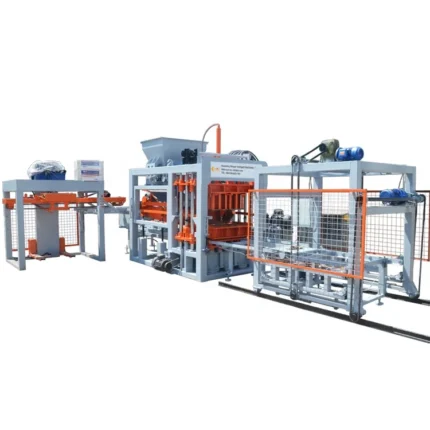
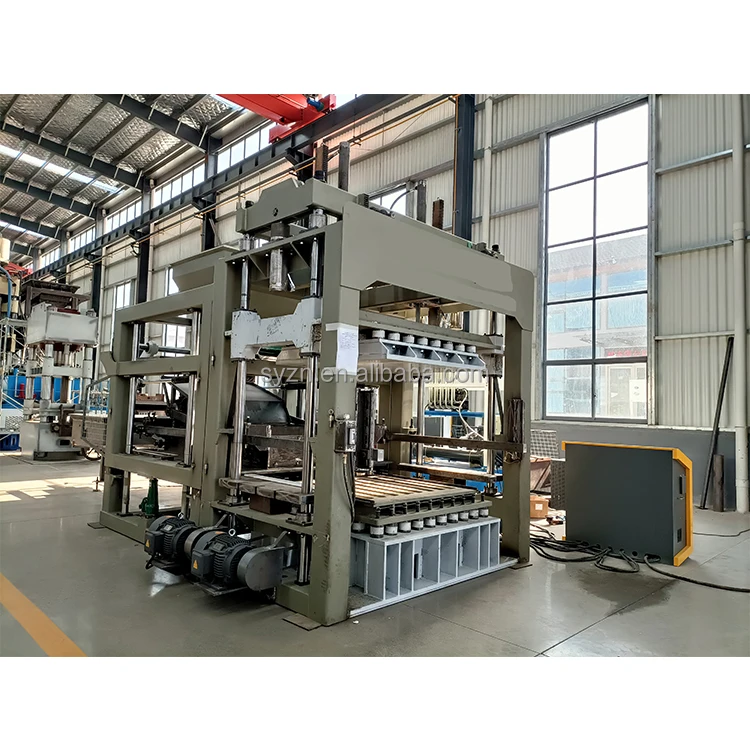
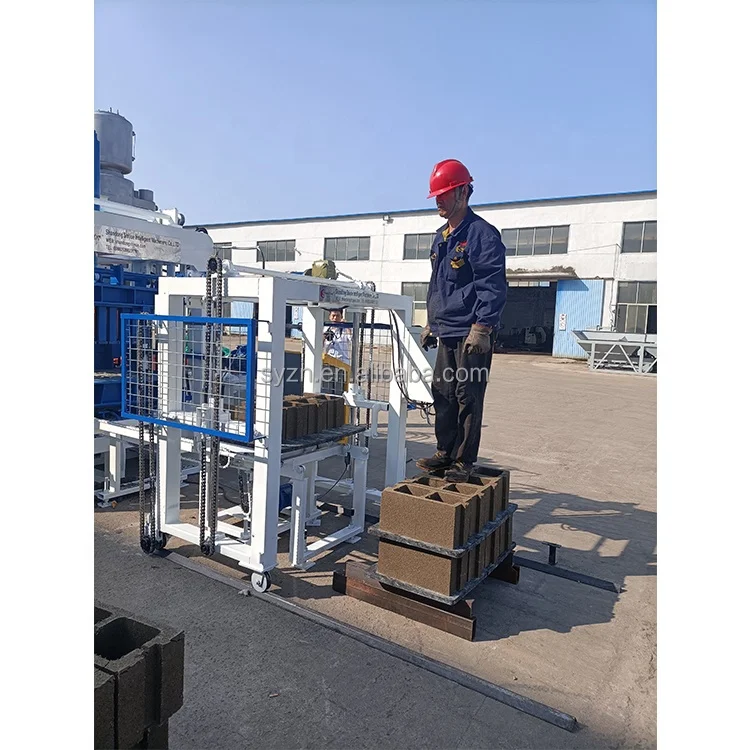
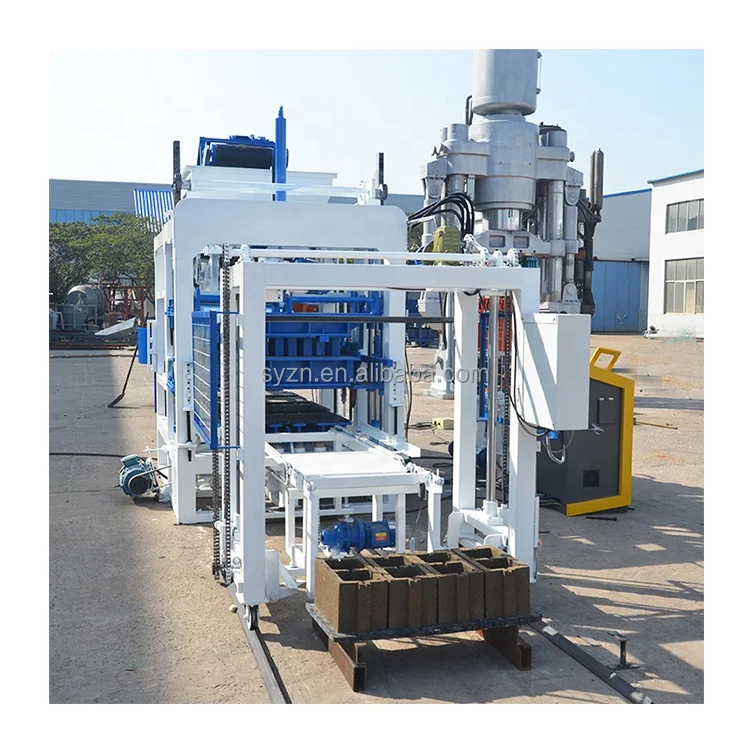
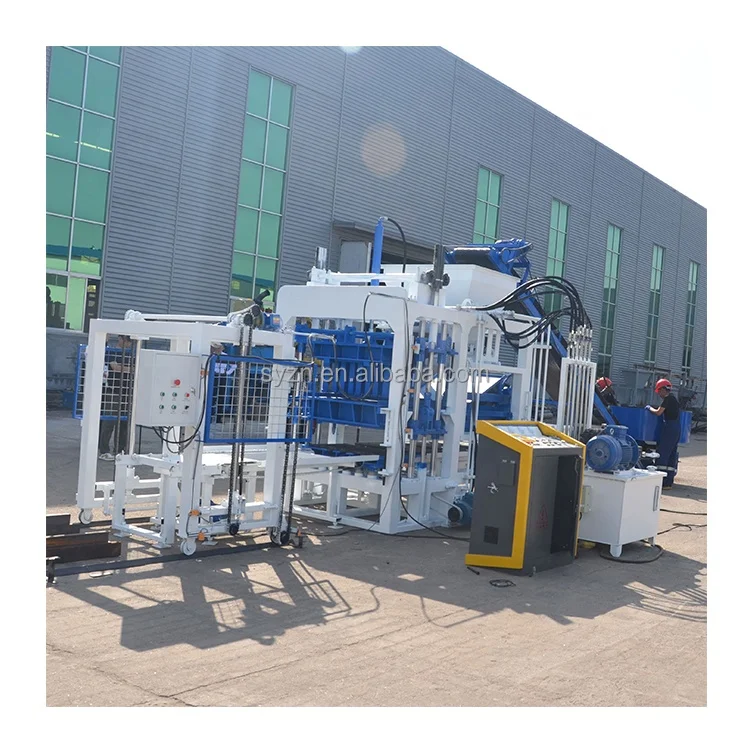
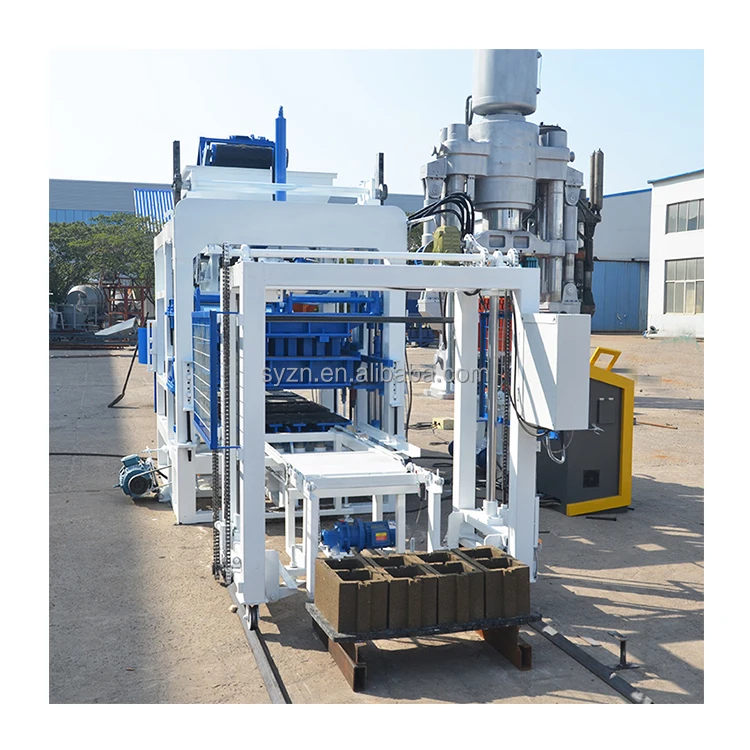
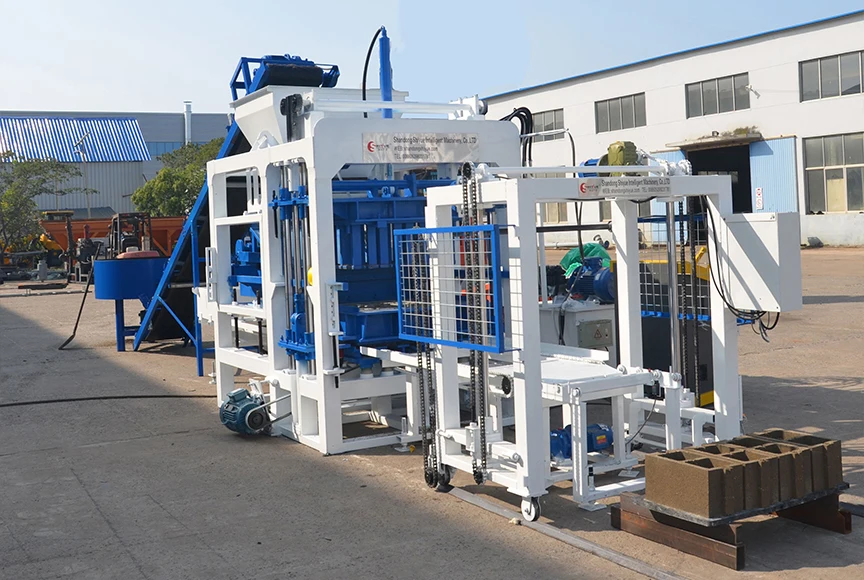
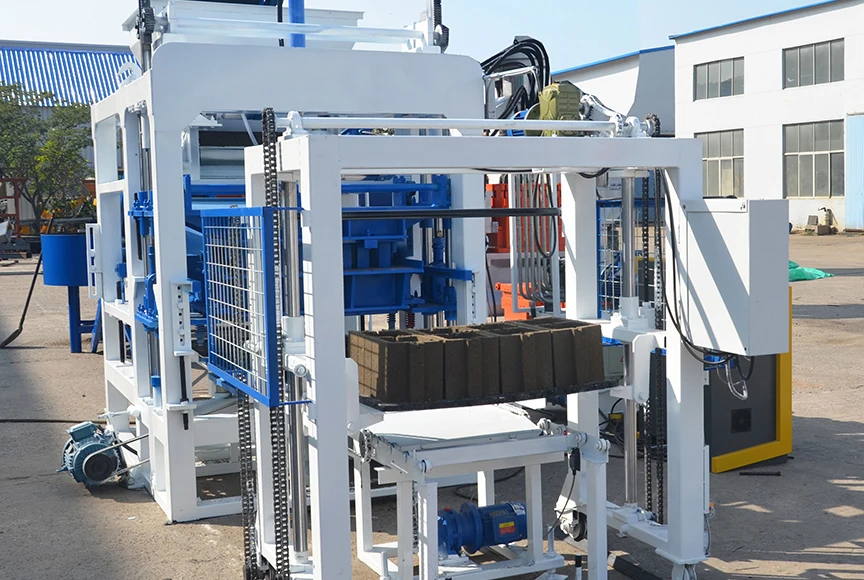
PLC-Driven Consistency — the QT4-18 block machine pairs programmable logic control with automated pallet feeding so cycle timing stays uniform even when operators rotate shifts.
Technical Specifications
| Parameter | Value |
|---|---|
| Model | QT4-18 |
| Product Type | Concrete Block Making Machine |
| Overall Dimensions (L×W×H) | 3900 × 1600 × 2300 mm |
| Molding Cycle | 15–25 s |
| Exciting Power (Vibration Force) | 40–50 KN |
| Total Power | 24 KW |
| Mixer Model | JQ350 |
| Pallet Size | 850 × 550 × 25 mm |
| Total Weight | 3 T |
| Control System | PLC control system |
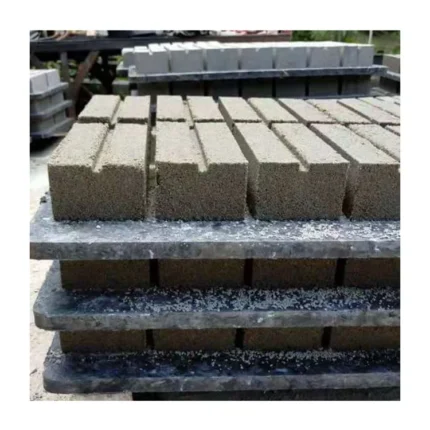
| Production Capacity (Hollow block 400×200×200 mm) | 1200–1680 pcs/hr |
| Production Capacity (Hollow block 400×150×200 mm) | 1800–2400 pcs/hr |
| Production Capacity (Solid brick 240×115×53 mm) | 3240 pcs/hr |
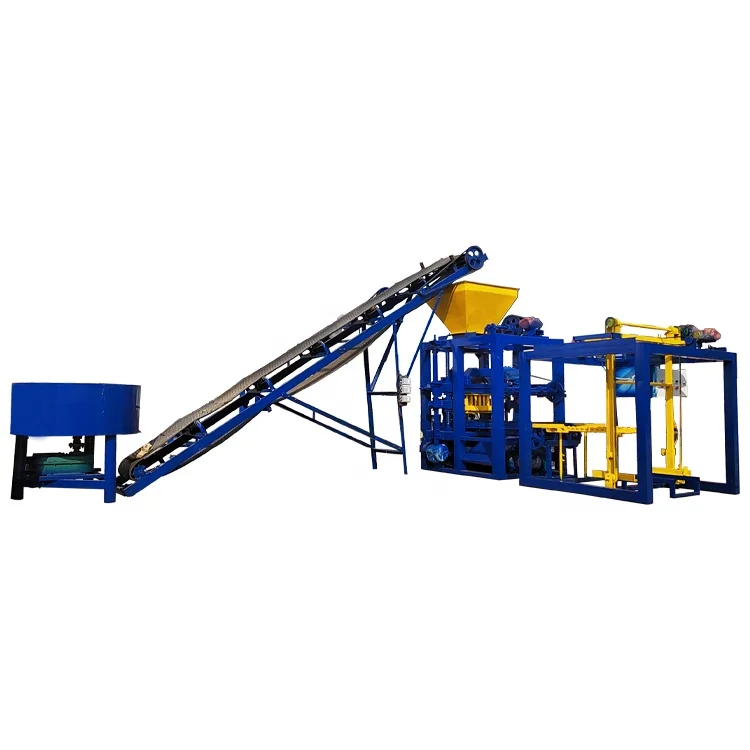
| Included Equipment | Block making machine, hydraulic station, PLC control system, pallet feeder, brick conveyor, block sweeper, manual hydraulic trolley |
Application Suitability
| Application | Material or Output |
|---|---|
| Hollow block production for load-bearing walls | Crushed stone, sand, cement, fly ash blends |
| Paver manufacturing for walkways and plazas | Aggregate-cement mixes with fine surface finishes |
| Solid brick output for infill and partition walls | Dense concrete mixes with standard curing |
| Curbstone forming for road and drainage edges | High-strength coarse aggregate formulations |
Why the PLC Screen Language Matters More Than the Press Tonnage
A control panel the floor crew cannot read turns an automatic QT4-18 concrete block making machine into a very expensive manual press.
I once commissioned a self-loading stacker line in Jordan where the HMI defaulted to Chinese on the first morning. The operator froze, the stacking sequence had to be restarted from scratch, and half a shift vanished before anyone thought to check the language setting. [NEED_CITE: PLC interface language standards for exported industrial machinery]. The automatic QT4-18 concrete block making machine avoids that scenario by confirming the display language, alarm text, and button mapping against the buyer’s crew before the crate leaves the factory.
Sequencing the Pallet Feed to Match the Press Cycle
The pallet feeder on the automatic QT4-18 concrete block making machine is timed through the PLC so that a fresh pallet arrives at the molding station the instant the previous block set clears the sweeper. When the molding cycle sits between 15 and 25 seconds, even a slight delay in pallet delivery forces the press to idle, cutting into the hourly output that the buyer budgeted for. The PLC holds the sequence in memory, so a power interruption does not scramble the feed order — the line resumes from the last completed step rather than restarting the entire batch.
Keeping Hydraulic Pressure Steady Across Format Changes
Switching from a 400×200×200 mm hollow block to a 240×115×53 mm solid brick changes the mold cavity volume and therefore the hydraulic resistance the press encounters. The hydraulic station on the automatic QT4-18 concrete block making machine maintains set-point pressure through a closed-loop valve, compensating for the different back-pressure each mold creates. [NEED_CITE: hydraulic closed-loop pressure regulation in concrete block presses]. Without that compensation, operators would have to manually adjust relief valves every time a mold swap happens, inviting inconsistency that only shows up once the blocks reach the curing rack.
Reading the Specs Behind the Output Figures
The vibration force range of 40–50 KN and the total power draw of 24 KW together define how densely the QT4-18 compacts the mix. Higher vibration force drives air out of the cavity faster, shortening the molding cycle, but only if the hydraulic pressure is sufficient to keep the mold head seated — otherwise the block top surface feathers and rejects climb. The 850 × 550 × 25 mm pallet size dictates how many blocks fit per cycle and how those pallets will stack in the curing area; a buyer whose existing forklift forks are spaced for 1 000 mm pallets will face an awkward mismatch. The JQ350 mixer must keep pace with the press cycle, delivering a fresh batch roughly every 15–25 seconds to prevent the hopper from starving and the PLC from pausing the line.
What Happens When the Control Language Is an Afterthought
I have watched a fully automatic line sit idle for an entire morning because the fault code on the HMI was in a language the maintenance technician could not decode, and the printed manual was still sealed in its shipping wrap. [NEED_CITE: commissioning delays caused by untranslated PLC interfaces in export equipment]. The block sweeper and brick conveyor on the QT4-18 continue running on the last valid command, which means a misread alarm can let defective blocks travel all the way to the curing rack before anyone notices. Locking the PLC language, alarm messages, and emergency stop labels to the buyer’s working language before shipment removes that entire failure mode.
Why the Line Is Specified as One System
Shiyue treats the block machine, mold, pallet, and handling equipment as a single matched set rather than bolting together components from separate vendors. The pallet feeder, brick conveyor, and block sweeper are all wired into the same PLC that governs the press, so cycle times stay synchronized instead of drifting apart over a long production run. Molds are designed against the buyer’s target block format and local aggregate, not pulled from a catalog default. The automation level is selectable — a buyer can begin with the standard pallet feeder and manual trolley, then add automatic stacking later without replacing the PLC. Installation support includes operator training on the actual control language and sequence logic that will be running on day one.
Documentation & Verification
- Line layout drawing stating capacity per block format assumed
- PLC program backup with confirmed display language and alarm list
- Hydraulic and electrical schematics matching as-built configuration
- Factory test record run on buyer’s specified mold and pallet size
- Operation and maintenance manual with wear parts and mold list
- Voltage and frequency confirmation sheet signed before dispatch
Installation, Commissioning & Support
- Foundation plan sized to the 3900 × 1600 mm machine footprint and 3 T operating weight
- Dedicated 24 KW circuit with voltage and frequency matched to site supply
- Pallet feeder and brick conveyor aligned to the press during on-site assembly
- PLC parameter set verified against the buyer’s mold and cycle time targets
- Operator training delivered in the confirmed control language on day one
- Wear parts list covering hydraulic seals, vibration springs, and mold liners
Preparing a Useful Inquiry
Share the block formats your market actually buys, the daily volume you need per format, and the local aggregate you plan to run. Tell us the voltage and frequency at your site, the language your floor crew reads, and the pallet size your existing curing racks and forklifts already handle. With those details the proposal can state capacity per format rather than a single headline number.
Frequently Asked Questions
Q: How does PLC control improve batch consistency compared to manual operation?
A: The PLC holds molding cycle, vibration duration, and hydraulic pressure set-points in memory, so every block in a run receives identical treatment. Manual operation relies on the operator watching a timer and adjusting valves, which introduces variation shift by shift. The automatic QT4-18 concrete block making machine removes that variable, keeping block dimensions and compressive strength within a tighter band across long production runs.
Q: Can the automation level be upgraded further to include automatic stacking and cubing?
A: Yes. The PLC architecture leaves I/O channels available for an automatic stacker and cubing station to be added later. Because the pallet feeder and brick conveyor are already synchronized through the same controller, integrating stacking hardware requires wiring and parameter updates rather than a full control replacement, protecting the original investment.
Q: How are vibration force and hydraulic pressure calibrated for local aggregate mix designs?
A: During factory testing the mold is run with a mix that matches the buyer’s local aggregate and cement ratio. Vibration force within the 40–50 KN range and hydraulic pressure are adjusted until the block meets the target compressive strength and surface finish. Those set-points are then saved in the PLC so the line starts production at validated parameters.
Q: What is the procedure for confirming voltage and control language before commissioning?
A: Before production begins, a voltage and frequency confirmation sheet is signed by the buyer, and the PLC program is compiled with the agreed display language and alarm text. The HMI is powered on during the factory test so the buyer can verify button labels and fault messages via video call before the crate is sealed.
Q: How does the cycle time vary between hollow block and paver formats?
A: The molding cycle ranges from 15 to 25 seconds depending on cavity depth and mix density. A 400×200×200 mm hollow block requires a longer vibration phase than a thin paver, pushing the cycle toward the upper end of that range. The PLC adjusts timing per mold, so operators simply select the recipe rather than recalculating manually.