

Description
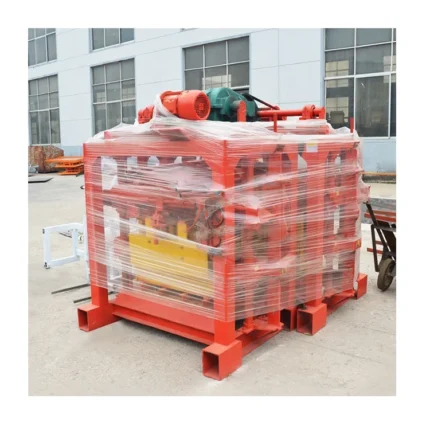
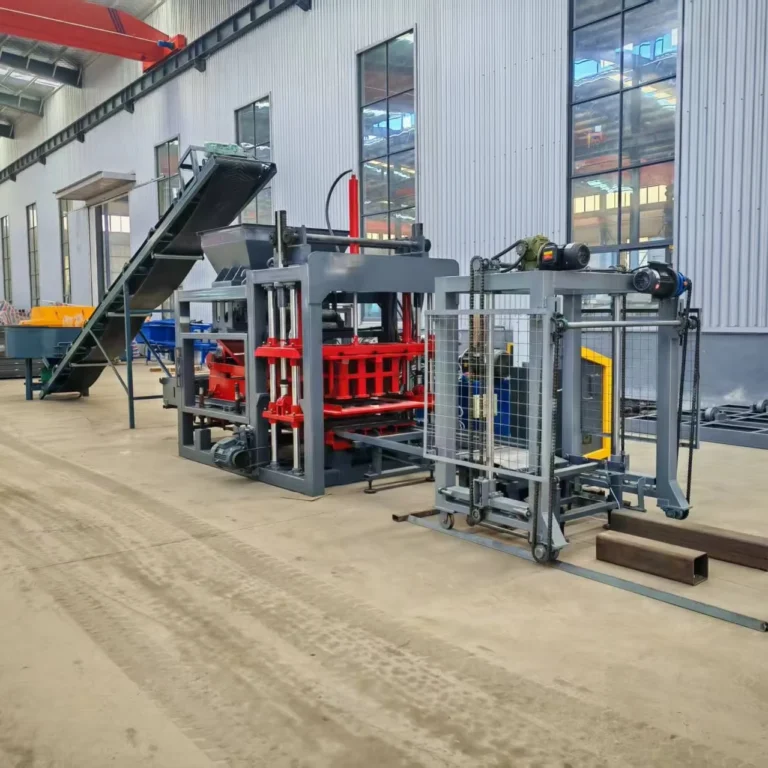
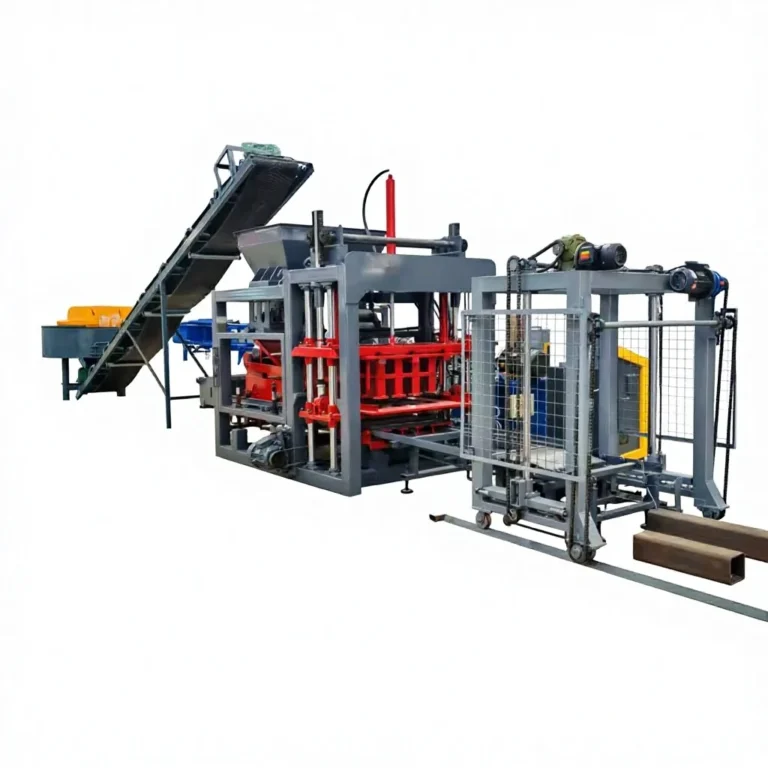
Configuration Set Against Actual Production — Each QTJ4-35 leaves our Linyi workshop with its vibration force, mould selection and belt conveyor timing matched to the buyer’s confirmed block format and local aggregate, not a catalogue default.
Technical Specifications
| Parameter | Value |
|---|---|
| Model | QTJ4-35 |
| Product Type | Automatic Concrete Block Making Machine |
| Overall Dimensions (L×W×H) | 1350×1460×1800 mm |
| Moulding Cycle | 35 s |
| Vibration Frequency | 2800 r/min |
| Exciting Power (Vibration Force) | 30 kN |
| Rated Power | 11.15 kW |
| Mixer Model | JQ350 |
| Pallet Size | 850×450×20 mm |
| Total Weight | 1500 kg |
| Output Capacity | 408 pcs/h based on 400×200×200 mm hollow block (4 pcs/mould) |
| Output Capacity | 510 pcs/h based on 400×150×200 mm hollow block (5 pcs/mould) |
| Output Capacity | 2100 pcs/h based on 240×115×53 mm solid brick (18 pcs/mould) |
| Applied Products | Concrete hollow blocks (8-inch, 6-inch), solid bricks |
| Raw Materials | Crushed stone, sand, cement, dust, fly ash |
| Automation Level | Automatic with belt conveyor |
| Control System | To be confirmed (PLC / relay / manual options available) |
| Voltage & Frequency | To be confirmed before production |
Application Suitability
| Application | Material or Output |
|---|---|
| Small-scale hollow block plant | 8-inch and 6-inch hollow blocks from crushed stone and cement |
| Solid brick production for local masonry | Standard solid bricks from sand, cement and fly ash |
| On-site construction block making | Hollow blocks produced directly at the building project |
| First block plant for entrepreneurs | Mixed hollow block and solid brick output using locally available aggregates |
What "Automatic" Really Means for Your Daily Output
An automatic block making machine PLC controlled or relay-driven only removes manual inconsistency when the control logic matches your actual block format and mix design.
I have watched buyers pay a premium for automation, then discover on commissioning day that the PLC was programmed for a 6-inch block while their market orders are all 8-inch hollow. The automatic block making machine PLC controlled system cycles perfectly — but for the wrong product. The belt conveyor feeds, the vibration fires, and the press completes its 35-second cycle, yet every pallet carries a block the buyer cannot sell [NEED_CITE: block format assumptions in PLC programming]. Confirming which block format the control sequence is built around is the single most important question before the machine enters production.
How the Control System Shapes Batch Consistency
The QTJ4-35 pairs its 30 kN vibration force with a 35-second moulding cycle, but consistency from the first pallet to the last depends on whether the control system holds those parameters steady. A relay-based setup will cycle reliably for a single block format all day. A PLC-controlled configuration allows the operator to store parameters for multiple formats, so switching from hollow block to solid brick does not require manual timing adjustments. For a plant owner moving away from semi-automatic operation, this is where the automatic block making machine PLC controlled logic begins to replace operator judgement with repeatable machine settings.
The Belt Conveyor’s Role in Removing Manual Variance
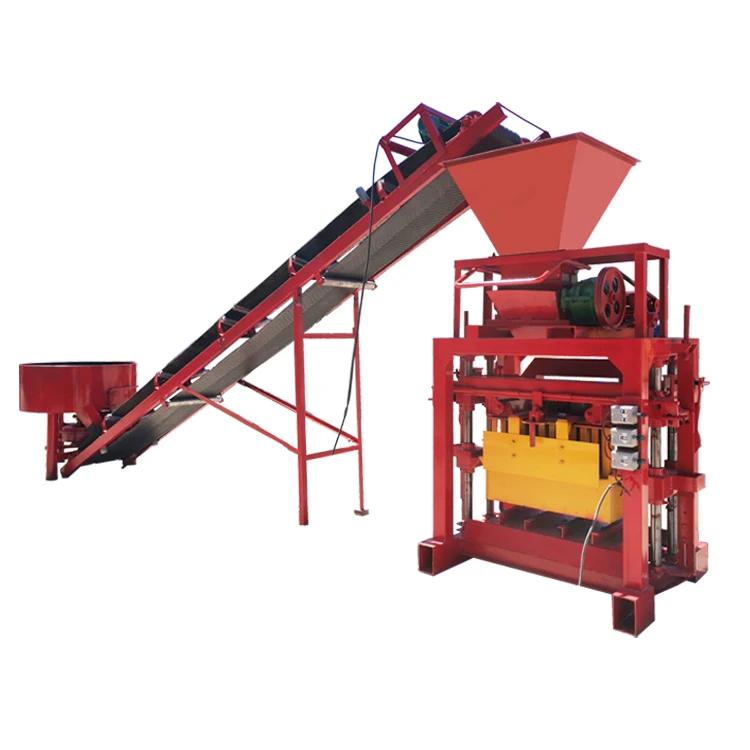
On a semi-automatic line, a worker shovels material into the mould hopper, and the fill depth changes with every shovel. The QTJ4-35’s belt conveyor delivers a measured volume of mix to the hopper at a fixed interval, so the mould fills to the same level each cycle. This matters most when producing hollow blocks, where uneven fill causes thin top faces and low break strength. The vibration at 2800 r/min then compacts that consistent fill into uniform density across all cavities [NEED_CITE: material feeding consistency and block compressive strength].
Reading the Specs That Determine Real Output
The 30 kN exciting power at 2800 r/min is the combination that sets block density. Vibration frequency controls how quickly the mix particles settle; exciting power controls how tightly they pack. On the QTJ4-35, these two values are fixed by the motor and eccentric block design, so the variable the buyer controls is the mix itself — the ratio of crushed stone to sand to cement and the moisture content. The 850×450×20 mm pallet size determines how many blocks cure per rack, which in turn decides how much curing floor space the plant needs. A buyer whose existing forklift cannot handle a pallet wider than 900 mm will find this pallet size fits without equipment changes. The four-lead channel steel frame absorbs vibration so the press body does not walk across the workshop floor during continuous operation, and upper-plus-lower mould compression ensures the top face of every block is as dense as the bottom.
When the Wrong Configuration Reaches the Site
A machine arrives with 380V/50Hz wiring, and the buyer’s workshop in Johannesburg runs on a different supply. Three weeks pass before a transformer is sourced, the installation crew has flown home, and the commissioning window is gone [NEED_CITE: voltage mismatch delays in block machine installation]. I now have the electrical team confirm voltage, frequency and PLC display language line by line before the QTJ4-35 is crated. The same discipline applies to the mould: if the buyer’s market needs interlocking pavers and the quotation only covers hollow blocks, the machine’s format flexibility is paid for but never used.
Why Sourcing This Machine Through a Single-System Approach Matters
Block machinery is our only product line, so the QTJ4-35’s mould, pallet, belt conveyor and vibration system are specified as one matched set rather than assembled from separate suppliers. The capacity calculation we send with each quotation states the block format assumed, the mould cavity count, and the cycle time — so the buyer sees 408 hollow blocks per hour based on 400×200×200 mm, not an unqualified headline number. Mould design covers the formats the buyer’s market actually orders, and custom drawings are available when a non-standard block is required. Automation level is selectable: a buyer can start with relay control and belt conveyor, then add PLC and automatic stacking later. Installation support includes operator training on the specific control configuration shipped, and a wear parts list ensures the first replacement set is on hand before production begins.
Documentation & Verification
- Capacity calculation sheet stating block format, cavity count and 35-second cycle assumption
- Machine specification with confirmed voltage, frequency and control language before production
- Mould drawing and format list showing every block type included in the order
- Pallet specification matched to 850×450×20 mm size and buyer’s curing rack system
- Hydraulic and electrical schematic for the exact control configuration shipped
- Factory test record with belt conveyor and vibration run logged before crating
Installation, Commissioning & Support
- Foundation pad sized to 1350×1460 mm footprint with allowance for belt conveyor extension
- Dedicated power circuit matching confirmed voltage and 11.15 kW rated power draw
- Mixer JQ350 positioned for gravity feed into the belt conveyor intake hopper
- Control panel language and display set to buyer’s confirmed preference before dispatch
- Mould change procedure trained on-site with the specific block formats included in the order
- Wear parts and mould list provided with recommended first-order quantities for spares
Preparing Your Inquiry
Tell us the block formats your market orders most, the daily volume you need for each, and the raw materials available at your site — crushed stone grading, sand type, cement brand and any fly ash or dust you plan to use. Confirm your workshop voltage, frequency and the language your operators read on a control panel. If you already have curing racks and a forklift, share the pallet dimensions they accept so the 850×450 mm pallet is verified before production starts.
Frequently Asked Questions
Q: How do I verify realistic daily output for the block formats I actually sell?
A: Request a capacity calculation that names the block format, mould cavity count and cycle time used for the figure. The QTJ4-35 produces 408 pieces per hour based on 400×200×200 mm hollow blocks at four per mould, but your daily total also depends on pallet handling speed, curing rack capacity and shift length — all of which should appear in the line layout.
Q: What automation level is included in the standard quotation?
A: The base configuration includes the belt conveyor for automated material feeding. The control system — PLC, relay or manual — and any automatic pallet feeding, stacking or cubing are confirmed separately. This lets a buyer start with the conveyor and add pallet automation later as production volume grows.
Q: Why must voltage and PLC display language be confirmed before production?
A: The QTJ4-35’s electrical system is built to the buyer’s confirmed supply. If voltage or frequency is wrong, the machine cannot run on arrival and rewinding motors takes weeks. PLC language must match the operator’s reading ability so parameter changes during format switches are made correctly and safely.
Q: Can the QTJ4-35 be upgraded from relay to full PLC control later?
A: Yes. The machine frame, vibration system and belt conveyor remain the same. Upgrading involves replacing the control panel and adding sensors for automatic pallet feeding or stacking. The upgrade path is discussed at inquiry so the initial wiring and sensor mounts are prepared even if PLC is not selected for the first order.
Q: How quickly can I switch between hollow block and solid brick formats?
A: Mould change time depends on whether the QTJ4-35 is fitted with a quick-change mould clamping system or standard bolt fixing. Confirm which system is included in your quotation. Standard bolt fixing requires more downtime per change, so buyers running multiple formats per shift should request the quick-change option.